
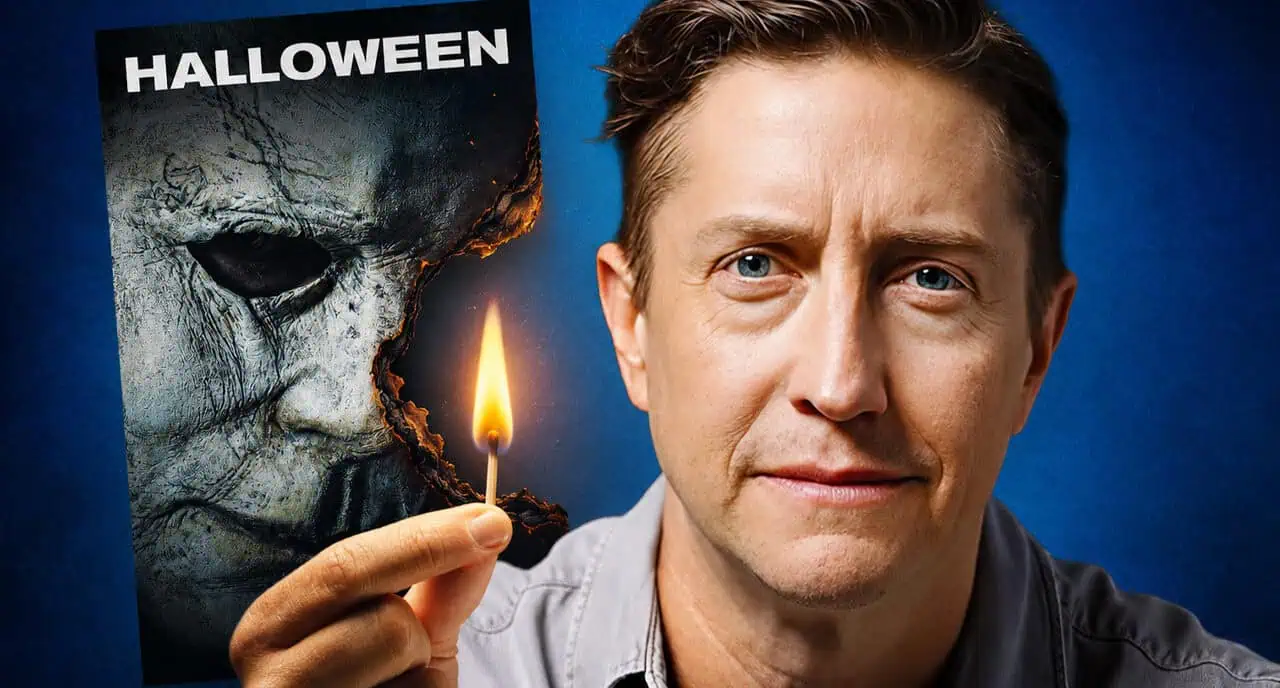

David Gordon Green’s Halloween trilogy may be one of the most mishandled horror trilogies in recent memory. What started on a promising note with Laurie Strode as a gun-toting badass slowly devolved into a franchise that simply could not stick the landing. From the lack of long-term planning to introducing a brand-new character who sidelines Michael Myers himself, here’s why David Gordon Green’s Halloween trilogy ultimately failed.
The Halloween Timeline Was Already a Mess
For newcomers, the Halloween franchise timeline is notoriously confusing. Few horror series are this complicated. At one point, Laurie Strode is Michael Myers’ sister, but not the sister he killed as a child. Then Laurie supposedly dies in a car crash. Michael hunts down his niece Jamie Lloyd for several films. Then suddenly none of that happened.
Then Laurie is alive again. Then she’s dead again. Then Michael Myers stars in a reality TV episode with Busta Rhymes.
By the time the franchise reached the 2010s, rebooting the series for a new generation made perfect sense. Unfortunately, that first gave audiences Rob Zombie’s Halloween films, which remain deeply divisive. After that, the franchise sat dormant while multiple scripts were commissioned and abandoned.
Then David Gordon Green and Danny McBride entered the picture through Blumhouse Productions, an unconventional pairing better known for comedy than horror. The result was a new trilogy:
- Halloween (2018)
- Halloween Kills
- Halloween Ends
Each film was financially successful, but the quality noticeably declined with every entry. While Halloween (2018) initially felt like a smart return to basics, the sequels gradually stripped away much of what made the reboot exciting in the first place.
Removing the Sibling Twist Hurt the Story
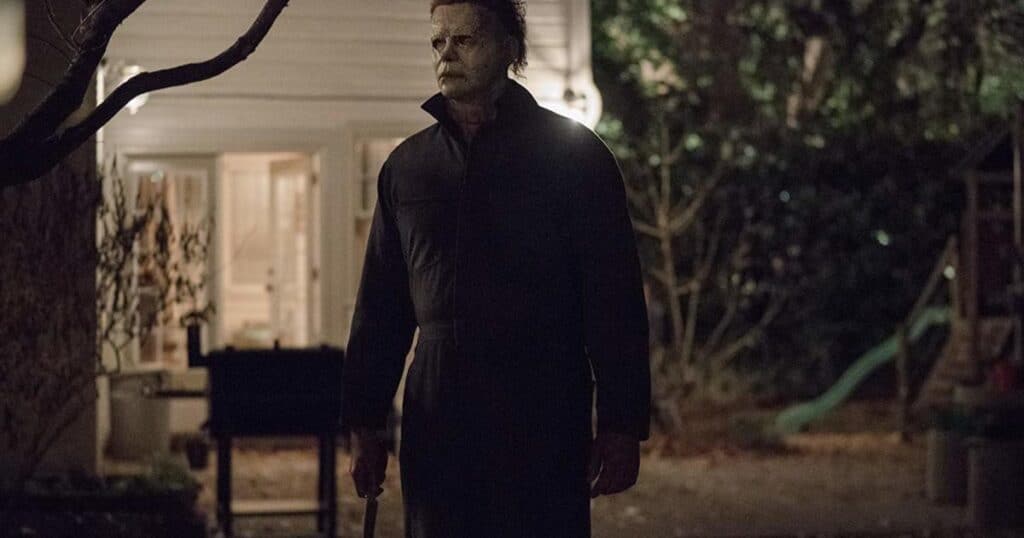
One of the trilogy’s biggest creative decisions was removing the revelation that Michael Myers and Laurie Strode are siblings. Initially, that seemed like a smart move. Making Michael a random force of evil, someone who terrorizes Laurie simply because she crossed his path, aligns more closely with John Carpenter’s original vision for Halloween (1978).
In theory, it makes Michael scarier. In execution, though, it weakens Laurie’s entire arc.
Without the family connection, Laurie’s obsession with Michael starts to feel irrational rather than tragic. Her paranoia becomes harder to justify because, from the outside, she looks like someone who never recovered from a brief traumatic encounter decades earlier. If Michael were still her brother, her fears would feel rooted in reality. He already targeted her once and logically would again. Instead, Laurie spends decades preparing for a man who technically has no personal reason to come after her.
That also removes one of the franchise’s defining qualities. Unlike franchises such as Friday the 13th, Halloween traditionally centered around bloodlines and inherited terror. The idea that Michael Myers would hunt down his own family gave the series its unique identity. Removing that element stripped away part of what made Halloween feel different.
Laurie Strode’s Character Arc Makes No Sense
Jamie Lee Curtis’s Laurie Strode is one of horror’s most iconic final girls. Without Laurie, there arguably is no Sidney Prescott from Scream. That’s why it’s so frustrating that her character arc across the trilogy feels wildly inconsistent.
In Halloween (2018), Laurie is portrayed as deeply traumatized by the events of 1978. She lives in isolation, turns her home into a fortress, and loses custody of her daughter because her paranoia consumes her life. Everything about her character suggests someone preparing for war. But then Halloween Ends takes place after Michael Myers has murdered dozens more people, including Laurie’s own daughter, and Laurie suddenly acts surprisingly normal and well-adjusted. She’s baking pies, flirting at the grocery store, and preaching about moving on. It feels completely backwards.
If anything, Laurie should have been more emotionally stable in 2018 when Michael was locked away in an asylum. By Ends, with Michael still missing after a massacre, she should have been more consumed than ever. Instead, the trilogy flips her characterization entirely.
Even stranger, the films repeat old mistakes. Halloween II famously sidelined Laurie in a hospital bed for most of the runtime, and Halloween Kills essentially does the exact same thing after erasing that sequel from continuity. If the point of rebooting the timeline was to improve on past problems, why repeat them?
Corey Cunningham Completely Derails Halloween Ends
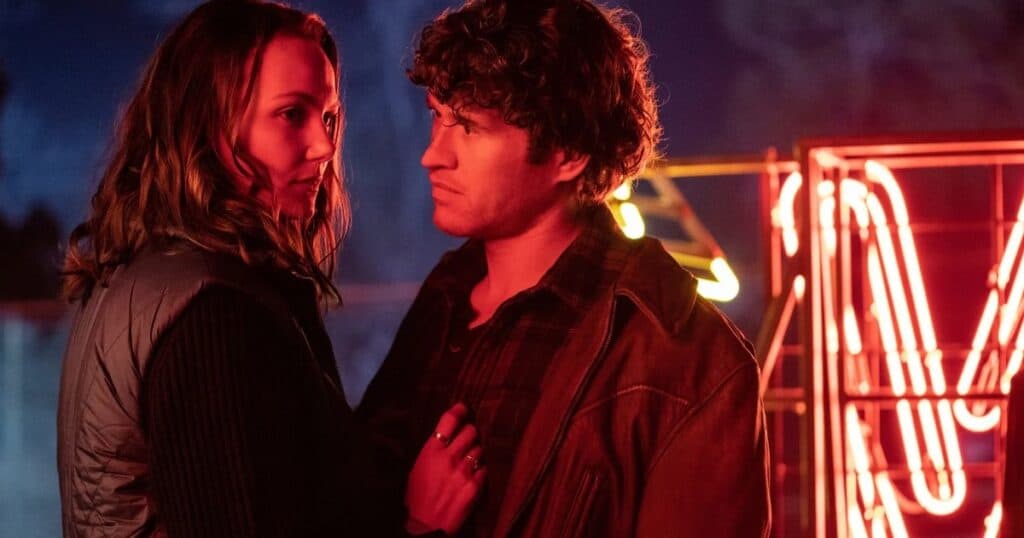
When people criticize Halloween Ends, most of the frustration centers around one character: Corey Cunningham. The problem isn’t necessarily the idea itself. A story about evil infecting a new generation could have worked. he issue is that Halloween Ends was supposed to be the grand finale of Laurie Strode versus Michael Myers. Instead, the movie spends most of its runtime focused on Corey.
Rohan Campbell does the best he can with the material, but the script makes Corey feel like a bizarre distraction from the story audiences actually wanted. At times, Corey even overshadows Michael himself. He kills more people than Michael in the film. He steals Michael’s mask. He physically overpowers him at one point. Michael Myers, one of horror’s most iconic villains, ends up looking like a frail old man living in a sewer. That completely diminishes the mystique surrounding the character.
For a spin-off movie, maybe this concept works. For the final chapter of Laurie Strode’s story, it feels like a massive miscalculation.
The Trilogy Didn’t Need Another Dr. Loomis
The trilogy also introduces Dr. Sartain, a clear replacement for Dr. Loomis. The problem is that Halloween already explored this dynamic extensively. Donald Pleasence’s Loomis became increasingly obsessive throughout the original franchise, but he worked because he was integral to Michael’s mythology.
Sartain, by comparison, feels unnecessary. His motivations barely make sense, especially once the sibling connection between Laurie and Michael no longer exists. He becomes obsessed with forcing a confrontation between two people who technically have no meaningful relationship anymore.
Even his master plan is ridiculous. He orchestrates Michael’s escape so he can “study” him, but what exactly was the long-term strategy? Follow Michael around while he murders people? Michael Myers is many things, but subtle is not one of them.
Sartain exists largely to provide exposition and create a forced twist, but Michael Myers never needed a secondary villain to make the story interesting.
Allison Was Set Up as the New Final Girl, Then Wasted
Laurie’s granddaughter Allison initially seemed positioned to become the franchise’s next great final girl. In Halloween (2018), she has strong setup moments:
- She notices suspicious figures watching her
- She rejects toxic relationships
- She stands up for herself
- She survives the chaos surrounding Michael Myers
By the end of the film, she genuinely feels like the future of the franchise.
Then the sequels gradually undermine her. In Halloween Kills, she loses agency and becomes more reactive than proactive. In Halloween Ends, things completely fall apart. Allison falls for Corey almost immediately despite the enormous number of red flags surrounding him. The relationship feels forced, rushed, and frustrating.
Rather than evolving into a worthy successor to Laurie Strode, Allison becomes increasingly disconnected from the role the trilogy originally seemed to build for her.
Michael Myers Somehow Is and Isn’t Supernatural
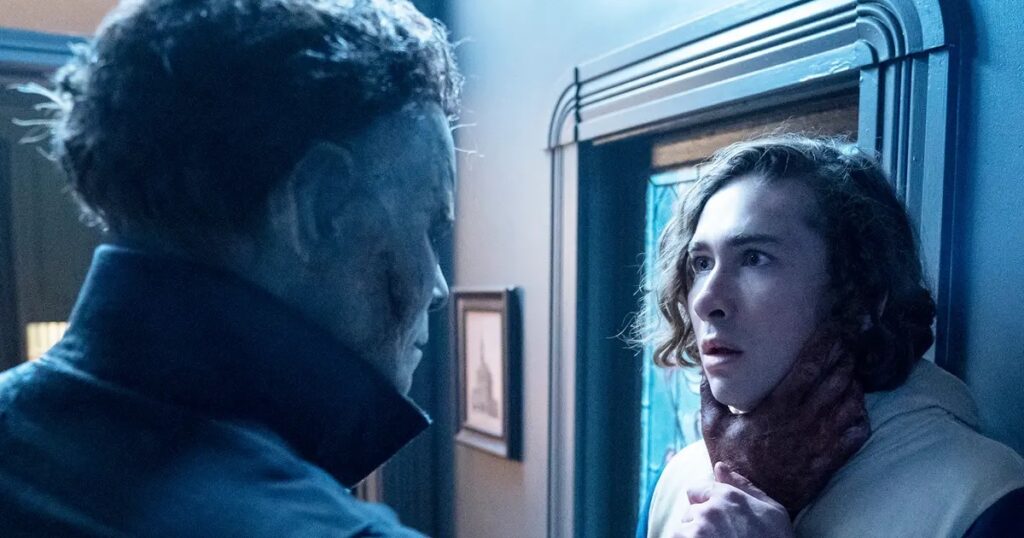
One of the strangest contradictions in the trilogy is David Gordon Green’s insistence that Michael Myers is not supernatural. Because the movies absolutely portray him as supernatural. Even in Halloween (2018), Michael performs feats that stretch human believability:
- Crushing skulls with stomps
- Pulling teeth in seconds
- Surviving extreme physical trauma
Then Halloween Kills pushes things even further. Michael survives brutal beatings, overwhelms armed mobs, and tears through firefighters like a slasher version of the Terminator. The film even implies that killing people strengthens him. There’s simply no realistic explanation for how he survives the events of Kills if he’s meant to be an ordinary man in his 60s.
Then Halloween Ends introduces the bizarre implication that Michael’s evil can somehow transfer to Corey through intense eye contact. At that point, the trilogy fully abandons any grounded realism. Which is fine; horror villains becoming supernatural isn’t inherently bad. But the movies constantly contradict their own rules about what Michael actually is.
The Comedy Feels Completely Out of Place
Comedy can absolutely work in horror. Done correctly, humor relieves tension and makes the scares hit harder afterward. The problem is that the humor in this trilogy often feels wildly disconnected from the tone of the films.
The most infamous example is the extended “banh mi sandwich” conversation between two police officers in Halloween (2018). The scene drags on awkwardly, kills momentum, and ultimately leads nowhere.
Then there’s:
- Julian’s exaggerated comic relief
- Big John and Little John in Halloween Kills
- The bizarrely cartoonish band kids in Halloween Ends
Some moments even become unintentionally funny. An accidental death scene early in Ends is staged so awkwardly that many viewers laughed instead of reacting with horror.
The tonal inconsistency becomes a major issue across all three films.

“Evil Dies Tonight” Became a Meme for a Reason
The idea behind Halloween Kills isn’t terrible. A terrified town uniting to hunt Michael Myers could have been compelling. Unfortunately, the execution is painfully clumsy. Anthony Michael Hall’s Tommy Doyle feels underwritten despite being positioned as a major character.
The hospital mob subplot becomes even worse when the townspeople mistake another escaped patient for Michael Myers despite the two looking absolutely nothing alike.
The film tries to make a statement about mob mentality and fear, but it only succeeds in making the residents of Haddonfield look unbelievably stupid. “Evil dies tonight” quickly became less of a rallying cry and more of an internet punchline.
Legacy Characters Were Reduced to Nostalgia Bait
Halloween Kills brings back several legacy characters from the original film, including:
- Marion Chambers
- Lindsey Wallace
- Leigh Brackett
- Lonnie Elam
- Tommy Doyle
The problem is that most of them exist solely for nostalgia before being killed off. Many of these characters contribute almost nothing meaningful to the story.
One exception is Kyle Richards as Lindsey Wallace, who actually survives and gives one of the stronger supporting performances in the trilogy.
Still, most of the returning characters feel more like checklist fan service than fully realized additions to the narrative.
The Kills Are the Trilogy’s Biggest Strength
If there’s one area where the trilogy consistently delivers, it’s the kills. Michael Myers becomes an absolute machine across these three films, racking up an enormous body count with brutal efficiency. The violence is inventive, relentless, and often genuinely entertaining for slasher fans.
That rewatch value is a major reason many horror fans still enjoy parts of the trilogy despite its storytelling problems. Even critics of the films usually admit that Michael himself remains intimidating whenever the movies allow him to simply be Michael Myers.
The Real Problem Was the Lack of a Plan
Ultimately, most of the trilogy’s issues trace back to one core problem: There was no clear long-term plan.
That lack of direction is increasingly common in modern franchises. Storylines are introduced without proper setup, themes shift dramatically between installments, and characters behave inconsistently depending on what each individual movie needs.
The Corey Cunningham storyline in Halloween Ends is the clearest example of that problem, but the cracks were visible long before then.
Despite strong box office numbers, David Gordon Green’s Halloween trilogy feels like a series that never fully understood what it wanted to be.
The Future of Halloween
The future of the Halloween franchise remains uncertain, though another reboot feels inevitable. Rumors surrounding the upcoming Halloween television series suggest the franchise may experiment with an anthology approach similar to Halloween III: Season of the Witch. Given how often this franchise resets its continuity, another fresh start would hardly be surprising.
The hope is simply that the next creative team approaches the series with a stronger long-term vision and perhaps a filmmaker with deeper horror roots. Because while David Gordon Green’s trilogy certainly had flashes of greatness, it ultimately became a cautionary tale about what happens when a beloved horror franchise loses focus.
Some of the previous episodes of the show can be seen below. To see more, head over to our JoBlo Horror Originals YouTube channel – and subscribe while you’re there!






The comment section exists to allow readers to discuss the article constructively and respectfully, focused on the topic at hand.
What’s Not Allowed