

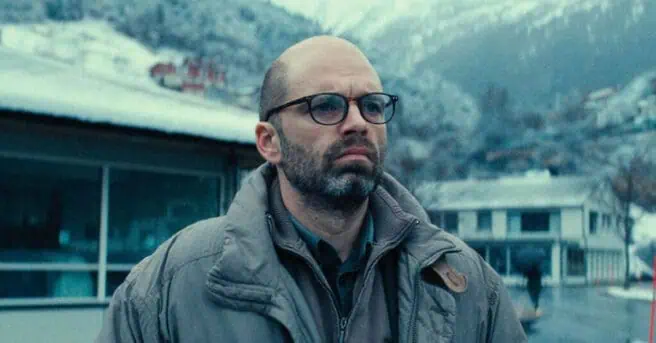
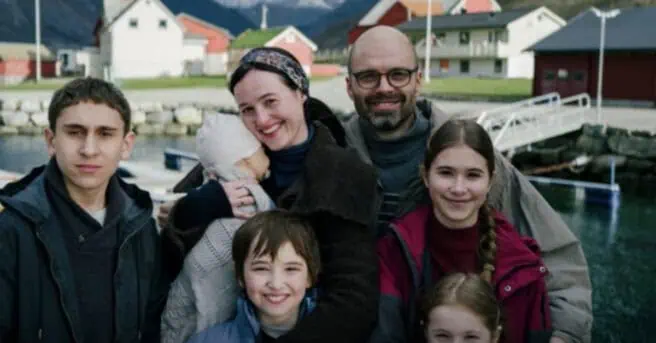
One of the most uncomfortably provocative movies of the year is Cristian Mungiu’s Fjord, which I was blown away by at its Cannes premiere. It’s the story of a Romanian couple, Mihai (Sebastian Stan) and Lisbet (Renate Reinsve), who relocate to Norway, but wind up caught up in a bureaucratic nightmare that takes them away from their kids. Mihai and Lisbet are religious and conservative, with them strictly disciplining their kids and practicing beliefs in line with their religion – something which makes their liberal neighbours and colleagues deeply uncomfortable. When one of the kids shows up with a bruise, social services swoops in, accusing the parents of being abusive, and not only separating them from their kids, but also pressing criminal charges.
But, are they actually guilty?
It becomes clear pretty early on that while they are conservative and harbour some values a more liberal-minded person may consider harmful, they are not actually abusive, and are loving parents. Mungiu’s film becomes an explosive examination of how extremism of any kind – on either side – can ruin lives, with this the first mainstream movie I can remember in some time that has antagonists one might consider liberal, although to be sure the movie isn’t dogmatic. It challenges you to empathize with people you likely won’t agree with. At Cannes, I predicted it would be a shoo-in for Best Foreign Film at the Oscars, but it seems like that place might be taken by the more comforting La Bola Negra, although one would hope it will at least still get a nomination.
When the movie played TIFF, I was given the chance to speak to the movie’s stars and director. While talking with Renate Reinsve, Sebastian Stan and Mungiu, I asked about how Fjord challenges its audience’s beliefs at every turn, while also digging into Stan’s physical transformation as well as the on-screen rapport Stan and Reinsve carried over from their last film together, A Different Man.
Check out the interview above. Fjord is now playing in theaters.























The comment section exists to allow readers to discuss the article constructively and respectfully, focused on the topic at hand.
What’s Not Allowed