
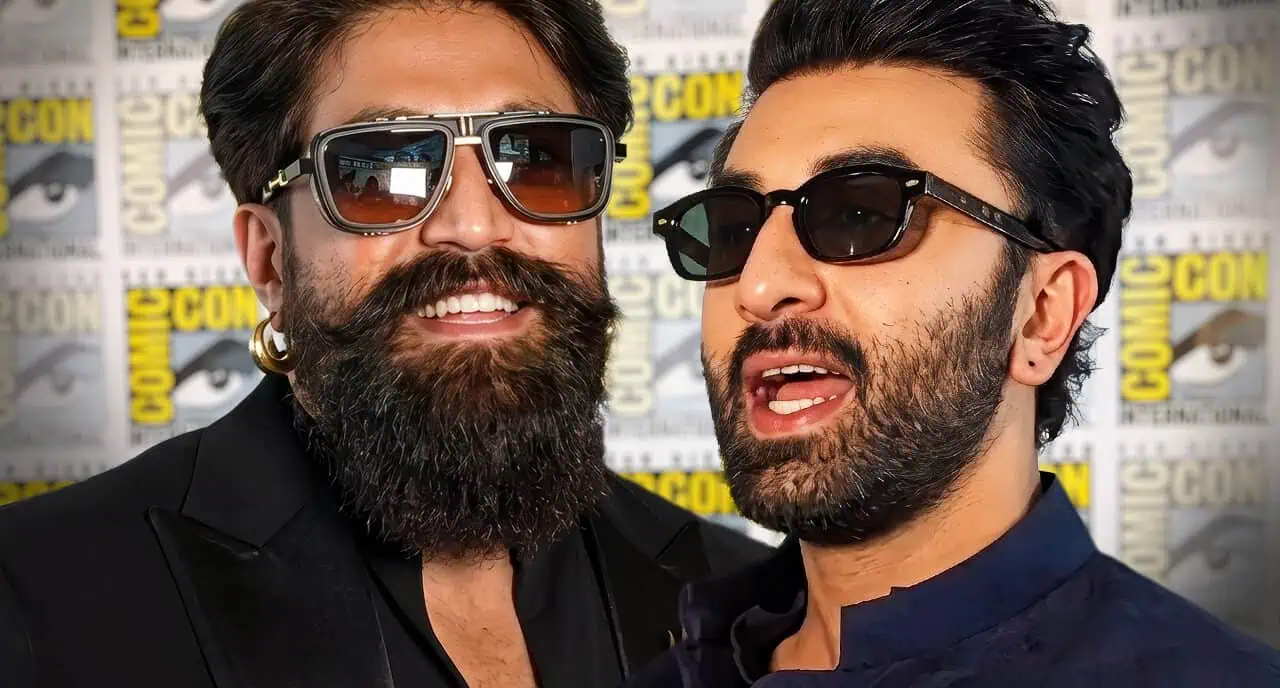
Indian films have really started to pick up steam in North America. It’s now fairly common for them to crack the top 10 at the box office. In recent years, movies like Dhurandhar, Kalki 2898 AD, and Baahubali 2 have all opened in the top five, earning more than $10 million each. That’s especially impressive considering these films receive relatively little mainstream marketing in North America and primarily rely on support from the Indian diaspora. That said, Indian cinema has also started connecting with broader American audiences, with RRR being a prime example.
If the filmmakers have their way, the next pan-Indian production to make a major splash in North America will be the two-part epic Ramayana. Directed by Nitesh Tiwari and produced by Namit Malhotra—the head of VFX powerhouse DNEG (the studio behind the visual effects for The Odyssey)—the film stars Bollywood superstar Ranbir Kapoor and pan-Indian icon Yash. Based on the ancient Sanskrit epic of the same name, this ambitious two-part saga is among the most anticipated productions in the history of Indian cinema.
The filmmakers have been promoting the movie aggressively over the last few months. We first spoke with them at CinemaCon, and recently caught up with them again at San Diego Comic-Con, where they debuted the film’s new trailer, which has yet to be officially released online.
It was a thrill speaking with both Kapoor and Yash, who are among the biggest stars in Indian cinema. Kapoor is coming off one of the biggest hits in the country’s history, Animal, while Yash has Toxic: A Fairy Tale for Grown-Ups on the way (its trailer is absolutely wild). Both men were eager to explain why Indian films are increasingly connecting with North American audiences and shared their hopes for Ramayana.
The first part of Ramayana is set to hit theaters on November 6, 2026, coinciding with Diwali, one of the biggest moviegoing weekends of the year in India. Check out our interviews with the cast and filmmakers above, and let us know if Ramayana is a movie you’ll be checking out!



















The comment section exists to allow readers to discuss the article constructively and respectfully, focused on the topic at hand.
What’s Not Allowed