
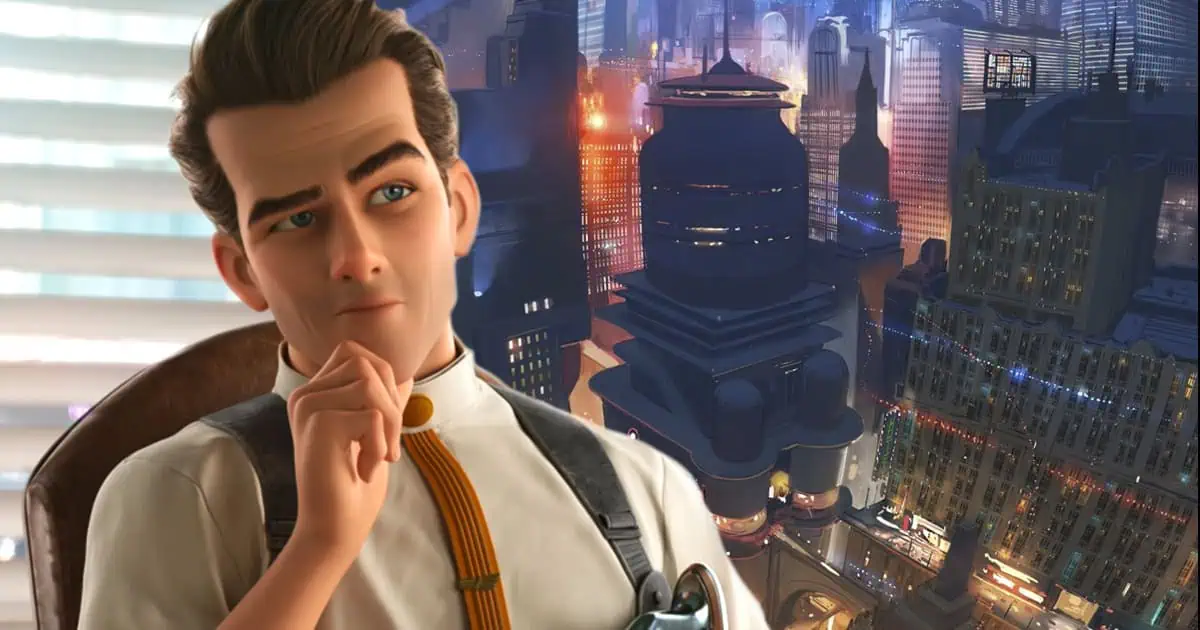

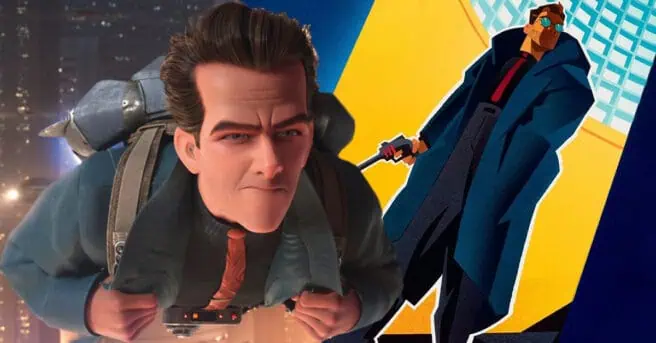
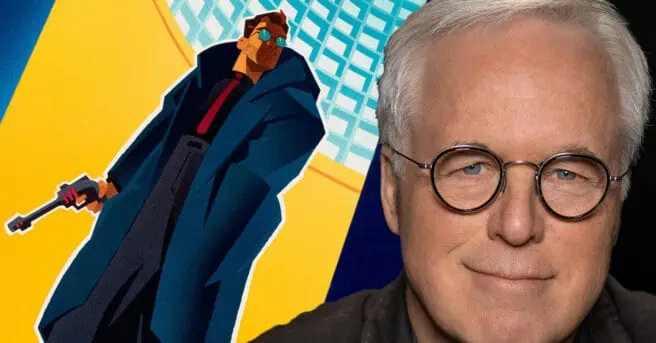
After 30 years of on-and-off development, Brad Bird’s Ray Gunn is finally arriving on Netflix on December 18, 2026 (following a limited theatrical release on December 4th, which includes 70mm screenings). You can check out the new trailer embedded above. The long-gestating project serves as a striking reminder of what adult animation is truly capable of. In addition to telling a hard-boiled detective’s story in a bustling retrofuturistic metropolis (it’s set in an alternate, futuristic version of 1939), the film’s mature themes evoke a broader gamut of emotions while operating outside family-friendly fare. There’s something for everyone in Ray Gunn. Still, by wearing its noir roots on its sleeve, Bird’s new film stands as something rare and wonderful in an industry overrun by talking animals, little kids lost in the unknown, and themes that, while well-intentioned, risk sending mixed signals. In it, Sam Rockwell voices the titular private eye who, along with his alien partner (Tom Waits), gets drawn into a murder plot involving a multimedia star, Venus Nova (Scarlett Johansson).
A Bold Departure for Feature Animation
In late July, we visited Netflix Animation Studios in Burbank, California, for a behind-the-scenes look at Ray Gunn, and what we saw was nothing short of incredible. After screening a portion of the film, engaging in a one-on-one with Brad Bird, and meeting with the film’s composer, Michael Giacchino, we were joined by VFX Supervisor Adel Abada and Art Director Wendell Luebbe for a deep dive into the film.
Throughout the presentation, we saw early screen tests, concept art, and film clips that inspired Bird’s latest animated opus. While the demonstration was highly visual, we’d like to share with you now a portion of what we learned about this wildly detailed cinematic breath of fresh air.
Bringing Venus Nova and Eyera to Life
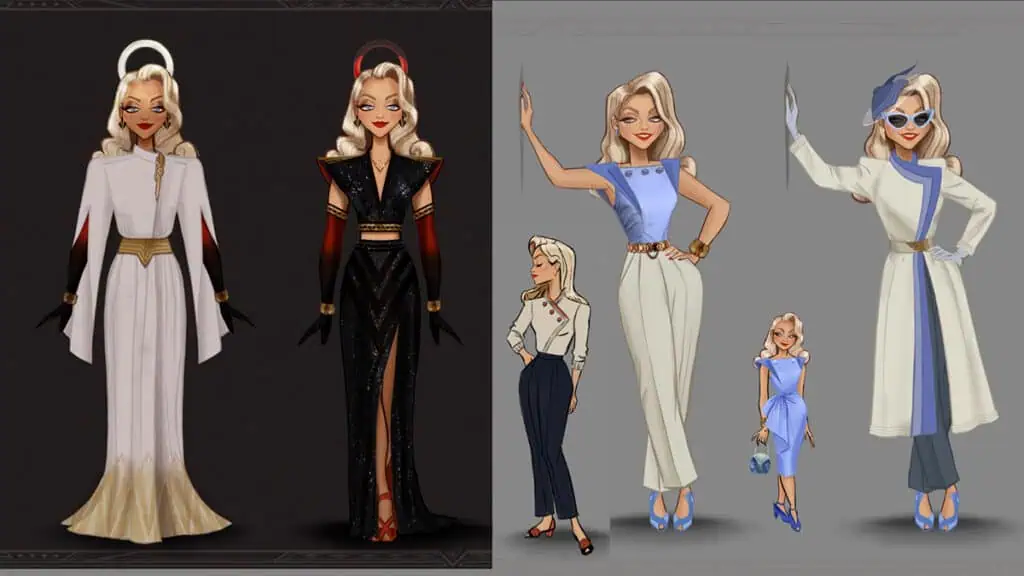
One character you’ll meet in Ray Gunn is Venus Nova, a world-famous pop star and multimedia celebrity voiced by Scarlett Johansson. After much scrutiny, Venus Nova’s look landed as a combination of the 1940s actress and pin-up model Veronica Lake and the husky-voiced Golden Age actress Lauren Bacall. Venus Nova appears in 23 different outfits throughout the film, with fourteen groom variations prompted by 1940s starlets. Bacall’s signature gaze directly inspires her half-open eye look.
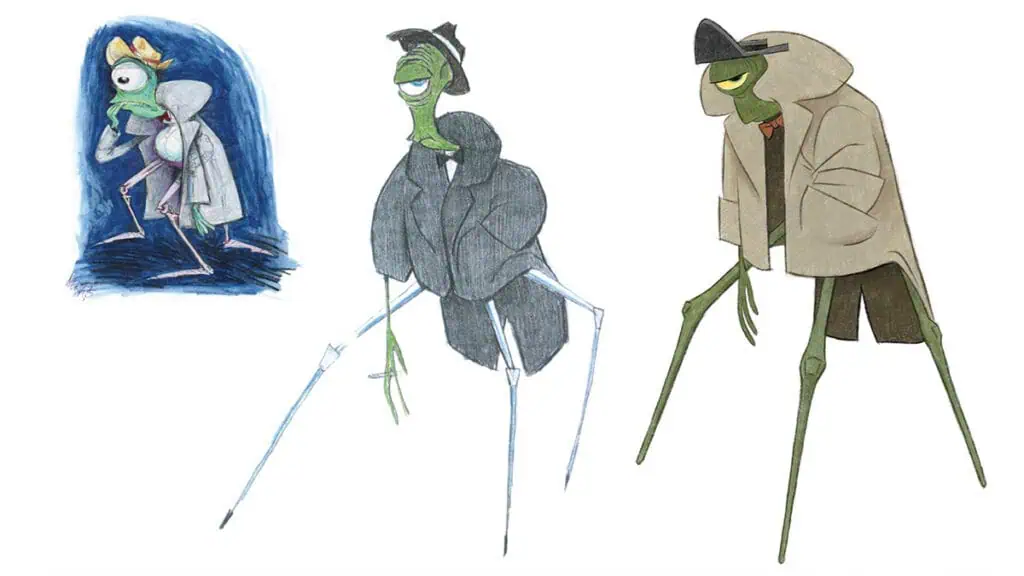
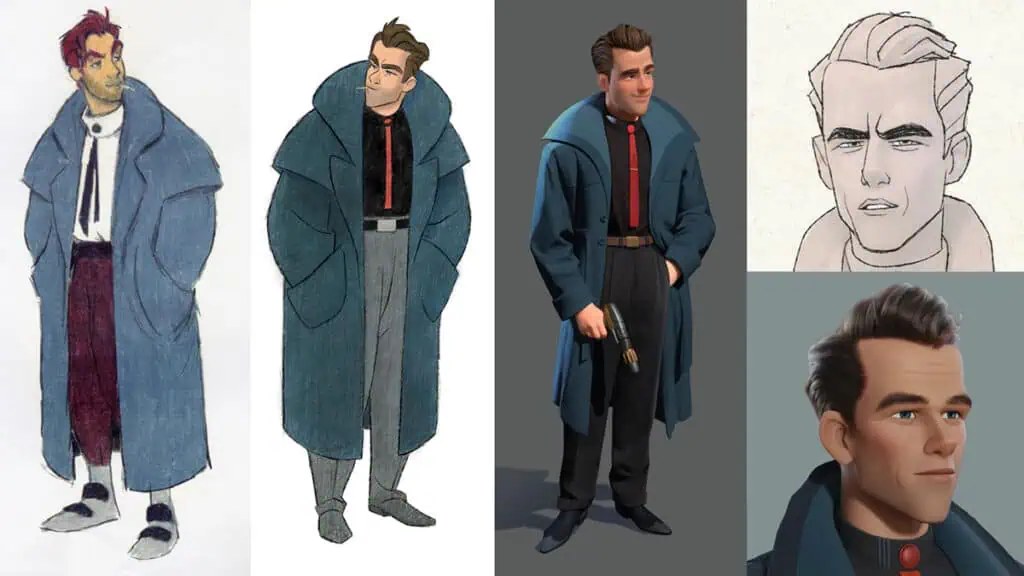
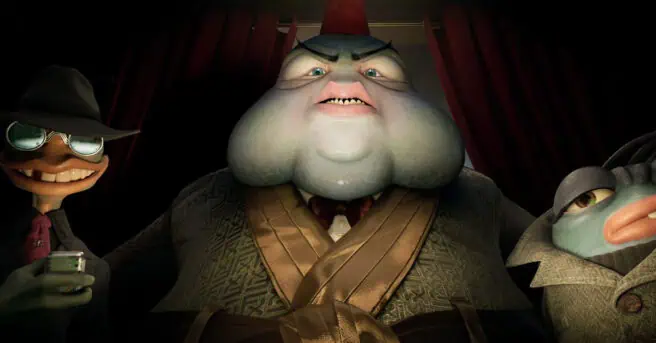
Ray Gunn also introduces audiences to Eyera, Ray’s loyal alien sidekick and photographer assistant, voiced by the legendary musician Tom Waits. Before arriving at the character’s tripod body shape and green-skinned exterior, early designs presented Eyera as a half-organic, half-Terminator gumshoe. His oversized coat is directly inspired by Peter Falk’s beloved TV detective Lieutenant Frank Columbo.
Animating Eyera became challenging when the artists decided to give him a third leg. Adding an extra appendage completely changes how a character is animated. In Eyera’s case, he’s able to crawl on walls and position himself low to the ground like an arachnid. His walk is unique, especially when needing to compensate for the billow and drag of his oversized clothing. As bipedal creatures, humans find it difficult to relate to other methods of movement. However, in animation, your imagination can soar, letting you explore the possibilities of alternate traversal and behaviors.
Designing Metropia: Retrofuturism and Stepped Architecture
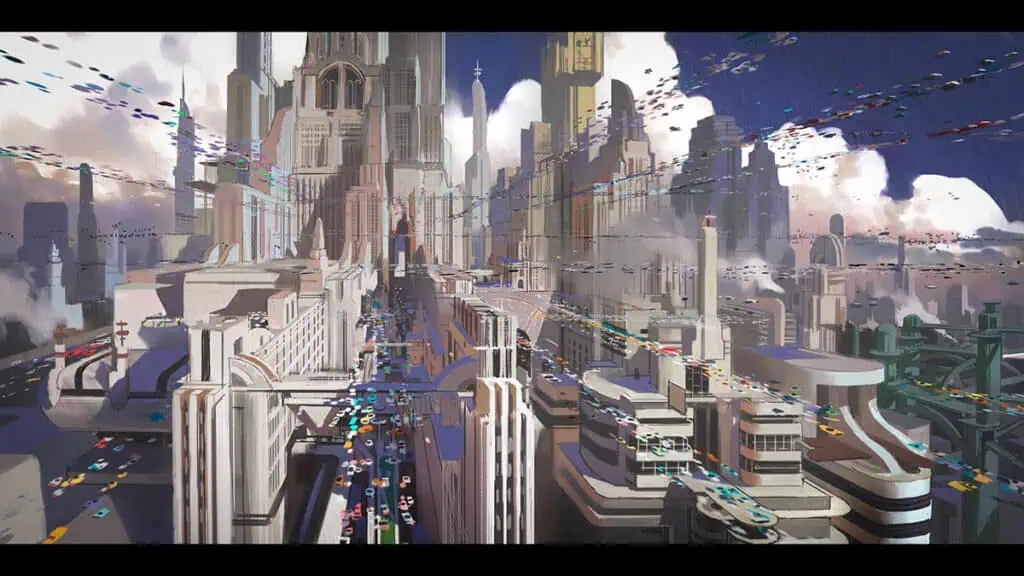
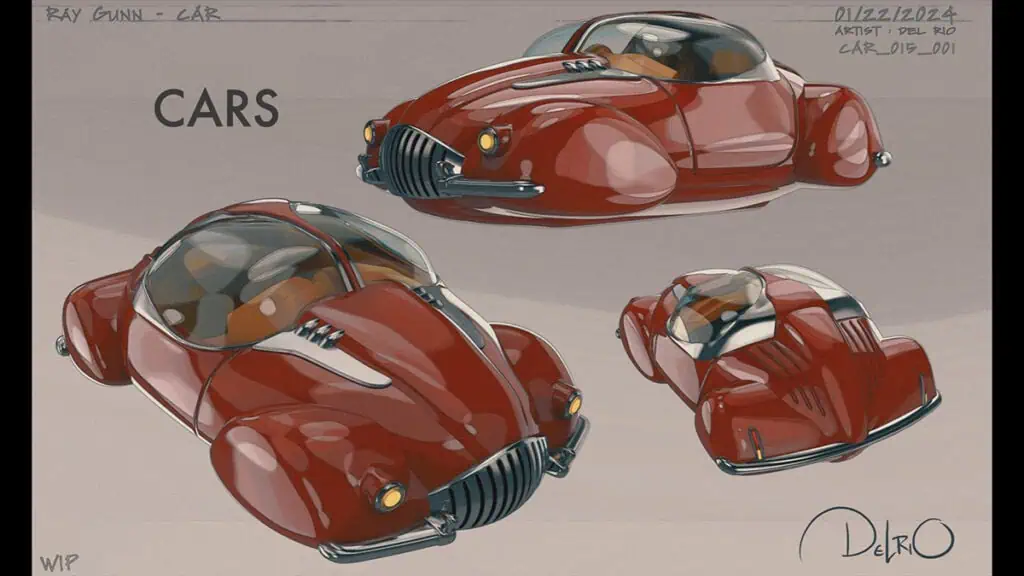
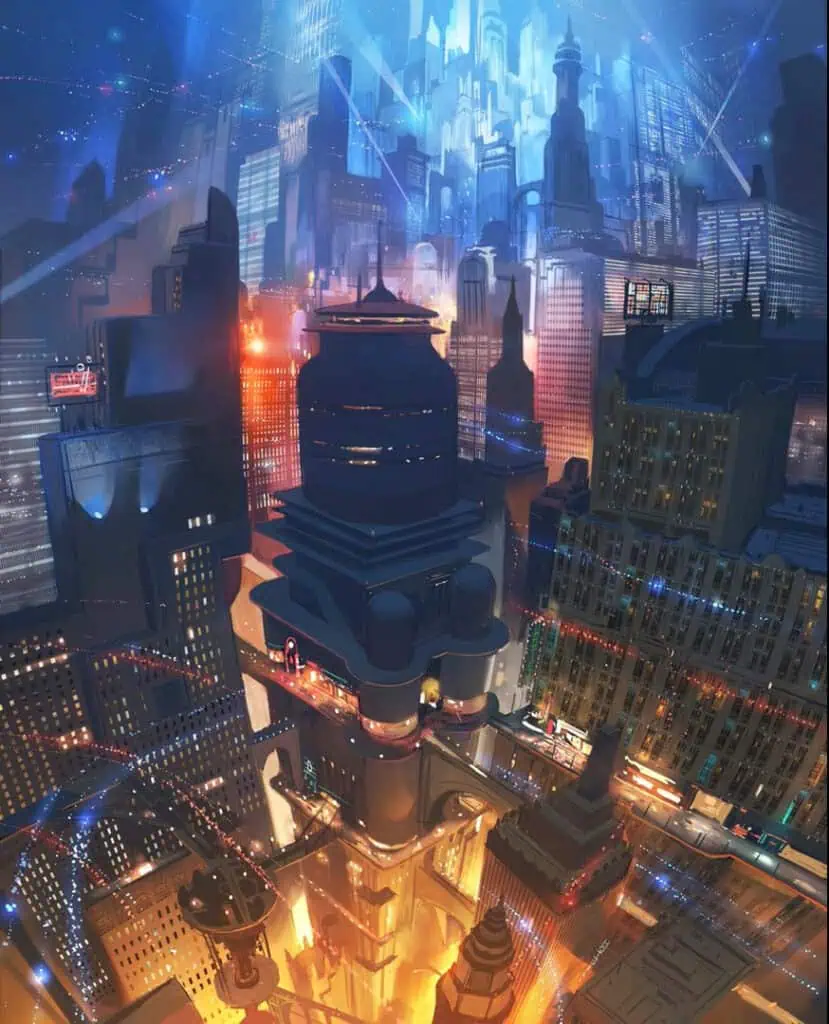
While watching the first half hour of the film, I could not help but marvel at the architecture around Metropia, the sprawling city where Ray Gunn’s story takes place. Viewers familiar with Bird’s Incredibles will recognize the director’s use of retrofuturism in his latest feature, with Streamline Moderne motifs informing building structures, products, and the city’s design flow. Hugh Ferris, an architect from the 1920s, inspired the design team to take a “stepped” approach to building placement. Stepped refers to a New York zoning law that prioritizes sunlight in the Big Apple. With so many structures clustered together in a high-density area, gaps and curved edges are used to let sunlight onto the streets. While noir films are typically dark, Bird wanted Ray Gunn to be bright, colorful, and alive.
Instead of developing one giant city, the design team created smaller “backlots” for individual scenes and then stitched them together. During the presentation, we saw a map of the entire city, an impressive blueprint of complex streets, alleys, and storefronts peppered throughout a maze of towering monoliths. It looked like Times Square on steroids. In addition to Metropia’s neon-lit entertainment district, quieter areas resemble New York City’s Greenwich Village, giving the club-laden district a Bauhaus feel. The area stands in direct contrast to the intense verticality of Metropia’s busiest areas, lining the city’s quieter perimeter with alien housing reminiscent of Chihuly’s glassblowing.
Noir Lighting and Visual Storytelling
Lastly, Abada and Luebbe spoke about Ray Gunn’s cinematography, saying the overall goal was to highlight the contrast between light and dark. Once work began on the film in earnest, Bird said he loved the idea of creating a bright utopia with a dark underside. He also wanted the film to pay homage to the noir motifs that inspired it, and lighting was a significant part of that visual process. According to Abada and Luebbe, movies that directly influenced Ray Gunn’s cinematography include 1988’s Tucker: The Man and His Dream and the work of Russell Metty, including Spartacus, The Omega Man, The Stranger, and Touch of Evil. Obviously, Ray Gunn is made using vibrant colors, but the same rules of black-and-white filmmaking apply. Could we eventually see a black-and-white version of Ray Gunn? Only time will tell.
After experiencing the presentation, it’s clear that film noir fans will see many nods to the beloved genre throughout Ray Gunn, particularly in the use of light and shadow. A significant part of achieving Ray Gunn’s look is adjusting the film’s lighting, contrast, and camera lenses. The film’s overall look is elegant and simplistic, but not because it’s boring, far from it. Instead, the world looks more alive than most live-action noirs, especially against the Streamline Moderne architecture and structured lighting.
A Masterpiece Decades in the Making
The work being done on Ray Gunn looks meticulous, painstaking, and inspired. Everyone involved in its production is dedicated to making Bird’s long-gestating passion project the best it can be. As I’ve said, I’ve seen the first half-hour of the film and was gob-smacked by what the artists and visionaries at Netflix Animation have achieved. Now feels like the perfect time to release an animated film of this scope and scale, and I can’t wait for everyone to experience the hard-boiled magic of Bird’s next masterpiece.
Click here for our exclusive one-on-one interview with Brad Bird!
Or, click here for our roundtable wrap-up with Brad Bird and Michael Giacchino!





The comment section exists to allow readers to discuss the article constructively and respectfully, focused on the topic at hand.
What’s Not Allowed