
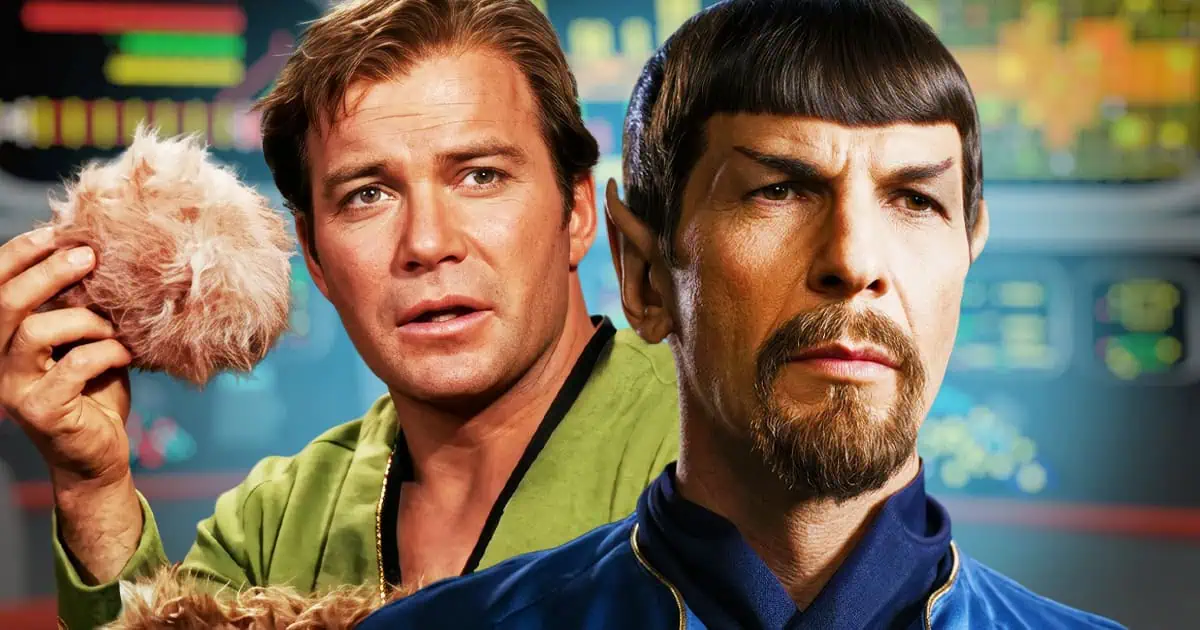

Star Trek has been one of my favourite franchises for as long as I can remember. With sixty years of television and cinema behind it, the franchise has expanded into a massive universe with something for everyone. But today, it’s a special day as on September 8th, 1966, the original series premiered with the episode “The Man Trap”. To celebrate the franchise’s anniversary, we’re going back to where it all began. Every Star Trek fan remembers the episode that made them fall in love with the franchise. For some it’s The Trouble with Tribbles. For others it’s Balance of Terror or The City on the Edge of Forever. All these years later, these stories still define what Star Trek can be.
Over the course of just three seasons, Star Trek: The Original Series gave us thought-provoking sci-fi, thrilling space adventures, unforgettable moral dilemmas, and some of the most iconic characters in television history. Not every episode was a winner (looking at you, Spock’s Brain), but when the show was firing on all cylinders, it produced some of the greatest science fiction ever put to screen.
So, let’s punch it to warp speed and look back at the 10 best Star Trek: The Original Series episodes. The Original Series ran for 79 episodes (or 80 if you count The Cage) between 1966 and 1969. The episodes below were chosen based on storytelling, cultural impact, character development, and long-term influence on the Star Trek franchise, or, you know, just because I love them.
The City on the Edge of Forever (Season 1, Episode 28)
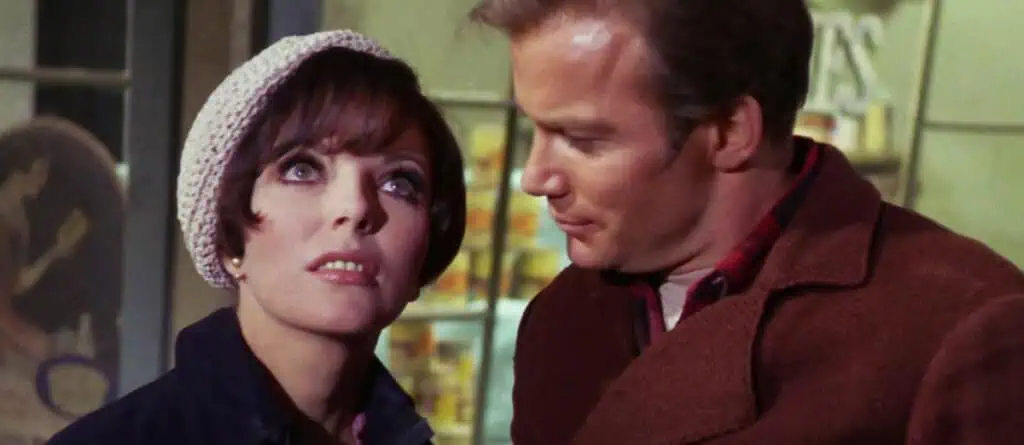
After Dr. McCoy accidentally alters history, Kirk and Spock travel to 1930s Earth to restore the timeline before the future is lost forever.
- Release Year: 1967
- Season / Episode: Season 1, Episode 28
- Directed By: Joseph Pevney
- Written By: Story by Harlan Ellison; teleplay by D. C. Fontana
- Why It’s Essential: A heartbreaking time-travel masterpiece featuring one of the greatest moral dilemmas in television history.
Any self-respecting list of the best episodes of The Original Series—or Star Trek in general—has to include The City on the Edge of Forever. It just does. So, yes, we’re getting this one out of the way right now, but not because it’s an overrated or lazy pick. It’s here because it really is that good.
Harlan Ellison’s tragic time-travel story is gripping on its own, but what truly makes the episode unforgettable is the impossible moral choice at its center. Watching Kirk forced to sacrifice his own happiness—and the woman he loves—to save humanity’s future is heartbreaking. Joan Collins is terrific as Edith Keeler, and her natural chemistry with William Shatner gives the story a bittersweet, romantic quality that still hits hard sixty years later. It’s a perfect masterpiece of sci-fi drama that proves TOS was always at its best when it focused on deeply human stakes.
Balance of Terror (Season 1, Episode 14)
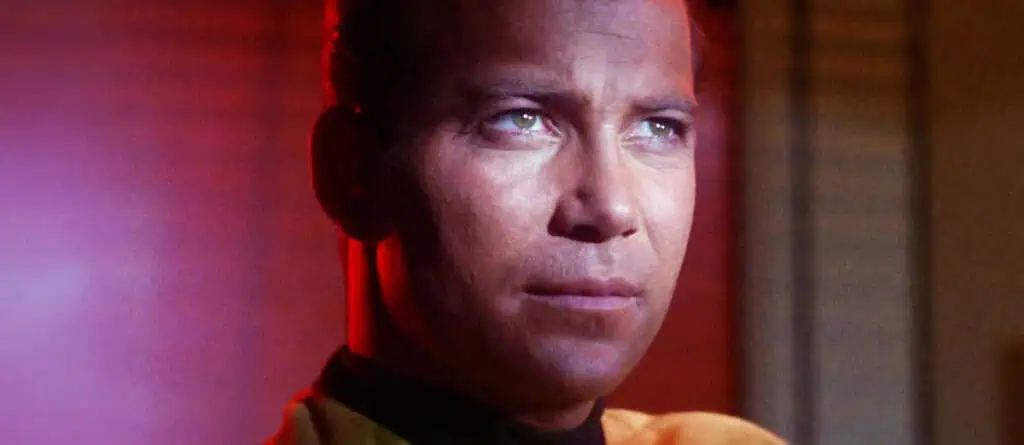
Following a deadly attack along the Neutral Zone, Kirk matches wits with a mysterious Romulan commander in a tense battle of strategy and survival.
- Release Year: 1966
- Season / Episode: Season 1, Episode 14
- Directed By: Vincent McEveety
- Written By: Paul Schneider
- Why It’s Essential: Introduces the Romulans while delivering one of Star Trek’s finest tactical cat-and-mouse battles.
Balance of Terror is essentially a classic submarine thriller set in deep space, and it remains one of the tensest hours of television The Original Series ever produced. Beyond introducing the Romulans with a genuine sense of mystery and menace, it gives Kirk his definitive tactical battle as captain, pitting him against a Romulan Commander (played brilliantly by Mark Lenard) who is very much his equal.
The episode is so foundational that Star Trek: Strange New Worlds explicitly revisited these events in A Quality of Mercy—an alternate-future finale that showed how tragically things would have gone if Captain Pike, rather than Kirk, had been in command. It even lovingly recreated TOS’s iconic, moody, dramatic eye-lighting (which never made much tactical sense, but looked incredibly cool).
But what elevates Balance of Terror into an absolute masterpiece is the ugly prejudice that bubbles up the moment the crew realizes Romulans look identical to Vulcans. Lieutenant Stiles instantly questions Spock’s loyalty, forcing the series to confront the reality that even in a utopian future, humanity still has work to do. It’s a brilliant, gritty character wrinkle in an already perfect sci-fi thriller.
The Trouble with Tribbles (Season 2, Episode 15)
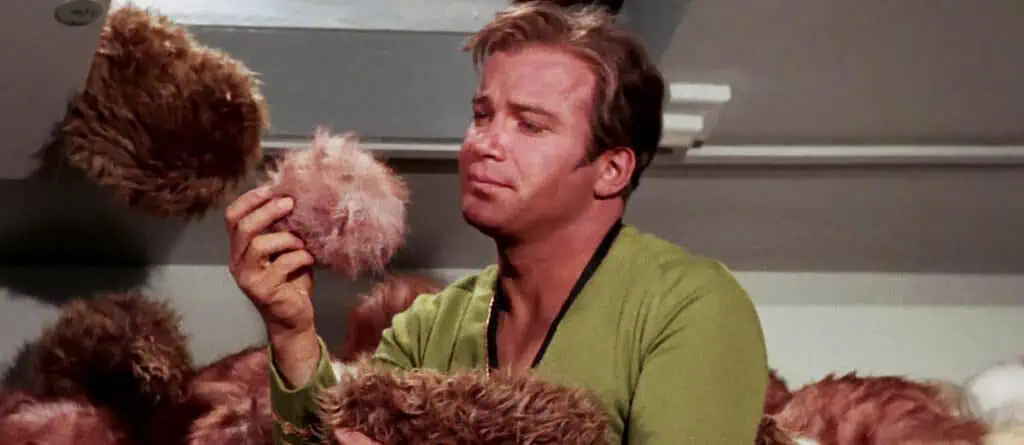
The Enterprise is overrun by rapidly multiplying furry creatures while tensions rise between Starfleet and the Klingons aboard a busy space station.
- Release Year: 1967
- Season / Episode: Season 2, Episode 15
- Directed By: Joseph Pevney
- Written By: David Gerrold
- Why It’s Essential: The franchise’s definitive comedy and the debut of one of science fiction’s most recognizable creatures.
The Trouble with Tribbles proves that Star Trek didn’t always need heavy philosophy, grim moral dilemmas, or galactic stakes to be brilliant. Easily the show’s most legendary comedy, it features impeccable comic timing and a premise so delightfully silly that it remains utterly irresistible. Plus, the rapidly multiplying, purring furballs themselves became one of the most enduring icons in sci-fi history.
William Shatner’s comedic chops shine brightly here, with Kirk growing increasingly, hilariously exasperated as the creatures invade his ship, his food, and eventually rain down upon his head. The absolute highlight of the episode is his baffled interrogation of Scotty after a bar fight with the Klingons. Learning that Scotty sat idly by while the Klingons insulted Kirk, but immediately threw down the moment they badmouthed the Enterprise, is a perfect character beat that tells you everything you will ever need to know about the Chief Engineer.
The episode’s legacy is so monumental that Star Trek: Deep Space Nine later delivered the ultimate tribute with Trials and Tribble-ations, a pitch-perfect, digitally inserted crossover that lovingly celebrated this 1967 classic without ever losing its own unique charm.
Amok Time (Season 2, Episode 1)
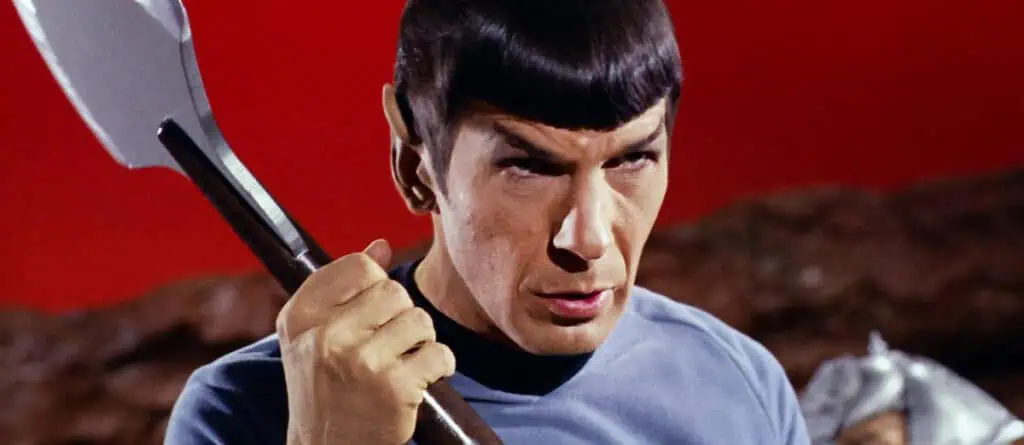
Spock returns to Vulcan to undergo the ancient mating ritual known as Pon Farr, where tradition forces him into a deadly personal conflict.
- Release Year: 1967
- Season / Episode: Season 2, Episode 1
- Directed By: Joseph Pevney
- Written By: Theodore Sturgeon
- Why It’s Essential: Introduces Pon Farr, explores Vulcan culture, and cements the friendship between Kirk, Spock, and McCoy.
By the end of the first season, Leonard Nimoy’s Mr. Spock had become the breakout star of Star Trek. Fan mail was pouring in, and viewers were desperate to learn more about the mysterious first officer. It only made sense, then, that the second-season premiere would take a deep dive into Spock’s psychology and the brutal reality of Vulcan culture.
The exploration of the Vulcan mating ritual (pon farr) and Spock’s harsh homeworld is, to borrow a catchphrase, fascinating. But what makes Amok Time truly essential is how it solidifies the legendary trinity of Kirk, Spock, and McCoy. To save his friend’s life, Kirk risks his entire career by defying Starfleet orders and redirecting the Enterprise to Vulcan—only to be forced into a ritual battle to the death against his own first officer.
The climax is driven by Gerald Fried’s bombastic fight music, which became one of the most instantly recognizable, heavily parodied scores in television history. (Personally, I can’t hear those dramatic brass hits without picturing Jim Carrey shrieking the tune while swinging a medieval weapon in The Cable Guy.)
But the real heart of the episode is its ending: one of Spock’s incredibly rare displays of pure, unbridled emotion—minus any alien spores—when he realizes Kirk survived the ordeal. That sudden, beaming smile says more about their timeless friendship than anything else could.
Space Seed (Season 1, Episode 22)
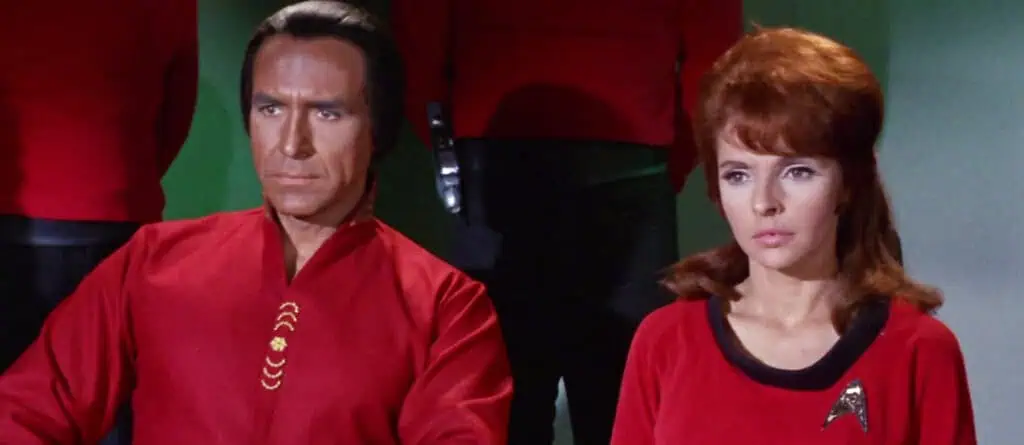
The crew awakens Khan Noonien Singh, a genetically engineered superhuman from Earth’s past whose ambition soon threatens to seize control of the Enterprise.
- Release Year: 1967
- Season / Episode: Season 1, Episode 22
- Directed By: Marc Daniels
- Written By: Carey Wilber
- Why It’s Essential: Introduces Khan and lays the groundwork for Star Trek II: The Wrath of Khan.
Space Seed introduced arguably the greatest adversary in Star Trek history. Long before The Wrath of Khan cemented him as an all-time cinematic icon, Ricardo Montalbán made Khan Noonien Singh feel terrifyingly brilliant, physically imposing, and intensely seductive. He isn’t just a brute-force villain; he is charismatic enough that you completely understand why an army once followed him—and why the Enterprise’s own historian, Marla McGivers, is so easily pulled into his dangerous orbit.
What makes Khan such a fascinating threat is that he isn’t an alien monster or a cosmic anomaly, but a genetically engineered tyrant from Earth’s own dark past. He represents human ambition and perceived superiority taken to their most absolute extremes. The episode allows Kirk to push back against that ideology not just with his flying dropkick, but philosophically, defending the virtues of a mature humanity.
It’s an episode that feels massive in hindsight. While Space Seed is a deeply suspenseful thriller in its own right, knowing that this specific encounter lays the volatile groundwork for the franchise’s cinematic masterpiece years later gives every single scene an extra layer of legendary weight.
The Devil in the Dark (Season 1, Episode 25)
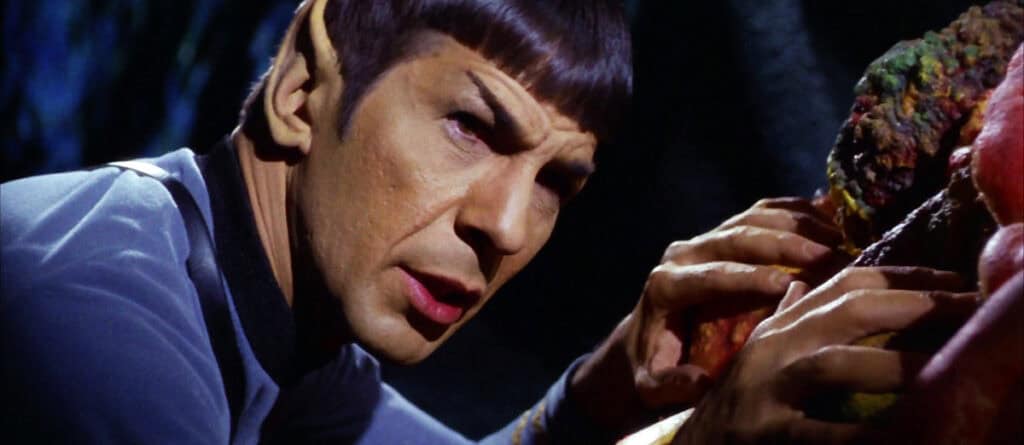
The Enterprise investigates a series of deadly attacks at a mining colony, only to discover that the mysterious creature responsible may not be the monster it appears to be.
- Release Year: 1967
- Season / Episode: Season 1, Episode 25
- Directed By: Joseph Pevney
- Written By: Gene L. Coon
- Why It’s Essential: A classic lesson in empathy that transforms a monster story into one of Star Trek’s defining moral adventures.
The Devil in the Dark could have easily been a cheap, straightforward monster-of-the-week creature feature. Instead, it becomes a beautiful story about communication, empathy, and the lethal danger of assuming that anything unfamiliar must be hostile.
Spock’s mind meld with the Horta is one of the most memorable sequences in television history. Sure, the sight of Leonard Nimoy crying out in genuine agony while psychically bonding with a creature that looks like a shag rug covered in melted crayons should be ridiculous—and, honestly, it kind of is—but the emotional sincerity of the actors makes it work beautifully.
The episode also gives DeForest Kelley some of his finest material. Forced to treat a silicon-based alien with standard medical gear, McCoy delivers one of his most iconic classic catchphrase variations: “I’m a doctor, not a bricklayer!” But what really makes the story endure is its timeless message: the unknown doesn’t always need to be feared or destroyed. Sometimes, it just needs to be understood.
Mirror, Mirror (Season 2, Episode 4)
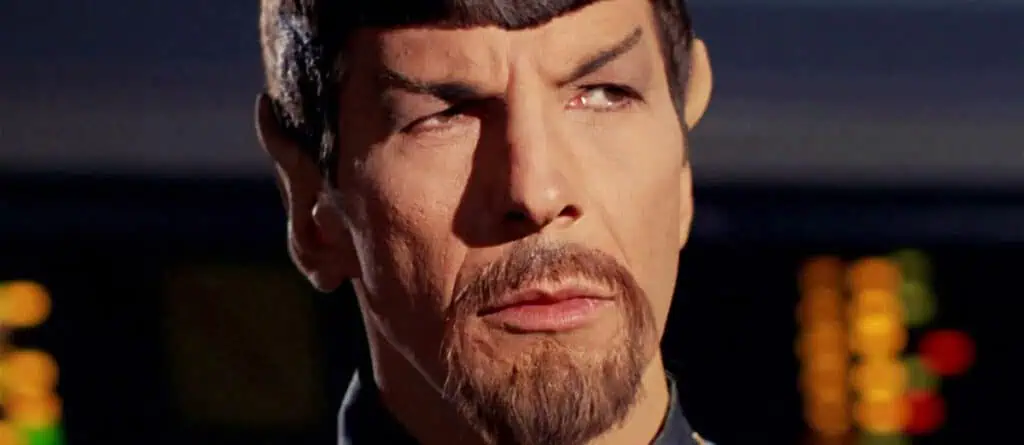
A transporter accident sends Kirk and several crew members into a parallel universe where the ruthless Terran Empire rules by violence and fear… and Spock has a goatee.
- Release Year: 1967
- Season / Episode: Season 2, Episode 4
- Directed By: Marc Daniels
- Written By: Jerome Bixby
- Why It’s Essential: Debuts the Mirror Universe, a concept that became one of Star Trek’s most enduring recurring settings.
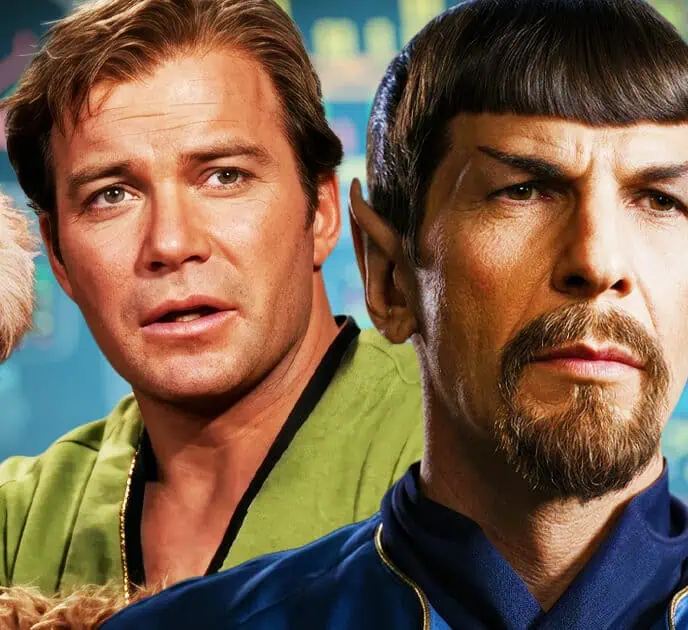
The concept of a brutal alternate reality where the Enterprise serves a ruthless, conquering “Terran Empire” is instantly unforgettable. The midriff-baring uniforms, the casual assassinations for career advancement, and, of course, Evil Spock’s iconic goatee all help make this dark reflection of the Star Trek universe feel delightfully pulpy and dangerous.
But what elevates Mirror, Mirror is that it isn’t just a simple “what if everyone was evil?” exercise. The real suspense comes from watching Kirk, McCoy, Scotty, and Uhura desperately navigate this twisted society without blowing their cover. It also gives the cast a chance to play slightly warped versions of themselves—particularly Leonard Nimoy, whose Mirror Spock is colder and more calculating, yet still possesses a logic that Kirk can ultimately reason with. (While it would have been fun to see more of the tyrannical Mirror Kirk, we did at least get to see William Shatner “break bad” a season earlier in The Enemy Within.)
When Kirk finally finds a way home, he doesn’t just run for the exit; he pauses to challenge Mirror Spock, pointing out that the Empire’s cruelty is mathematically unsustainable. That philosophical parting shot helped to lay the groundwork for future returns to the Mirror Universe in Deep Space Nine, Enterprise, and Discovery.
Journey to Babel (Season 2, Episode 10)
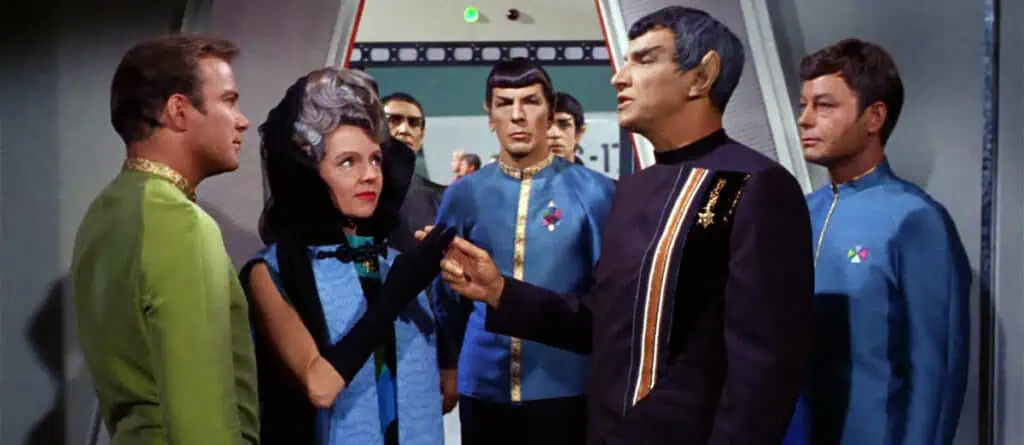
While transporting delegates to a crucial peace conference, the Enterprise becomes the scene of a murder investigation and a growing diplomatic crisis.
- Release Year: 1967
- Season / Episode: Season 2, Episode 10
- Directed By: Joseph Pevney
- Written By: D. C. Fontana
- Why It’s Essential: Introduces Spock’s parents while greatly expanding the political and cultural scope of the Federation.
Journey to Babel holds a special place in my heart because it was the very first episode of The Original Series I ever saw. I actually bought it on VHS when I was a kid after saving up the $30 it cost—which is a completely ridiculous price for a single episode by today’s standards—so needless to say, I watched this tape until it practically wore out.
Personal nostalgia aside, this is easily one of the greatest world-building episodes in the entire franchise. It introduces Spock’s parents, the stoic Vulcan ambassador Sarek (Mark Lenard, returning in a brilliant new role) and his human mother, Amanda. Their arrival adds new layers to our favourite First Officer, exposing the friction between his Vulcan and human sides. The episode also broadens the scope of the Star Trek universe by giving us our first real look at Federation politics, filling the corridors with diverse alien delegates, including debuts for the Andorians and Tellarites.
It’s part family drama, part political thriller, and part murder mystery, but it all works because the episode keeps coming back to Spock. Seeing him caught between his duty to his ship, his loyalty to his father, and the emotional pull of his mother gives the character real texture and helps make Journey to Babel one of the most important Spock episodes in the entire series, as well as one of my personal favourites.
The Doomsday Machine (Season 2, Episode 6)
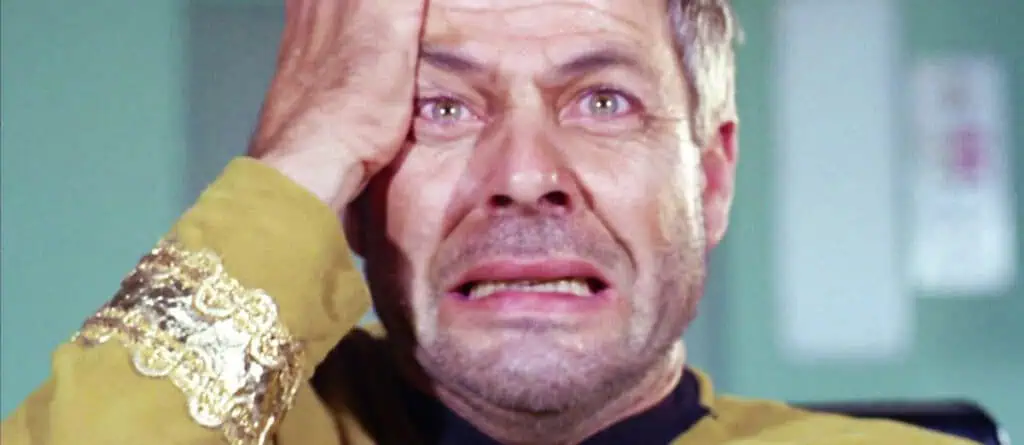
The Enterprise encounters a massive, planet-destroying weapon carving a path of destruction across the galaxy, forcing Kirk to find a way to stop it.
- Release Year: 1967
- Season / Episode: Season 2, Episode 6
- Directed By: Marc Daniels
- Written By: Norman Spinrad
- Why It’s Essential: A gripping action-thriller driven by an unforgettable guest performance and one of the series’ greatest space battles.
Boasting an apocalyptic threat, battered starships, and a powerhouse guest performance by William Windom, The Doomsday Machine is one of the greatest action-thrillers The Original Series ever delivered. It’s essentially Moby-Dick in deep space—only instead of a white whale, our Ahab is hunting a giant, automated, planet-killing space cone. Yes, the prop looks a bit like an over-baked papier-mâché windsock, but the sheer terror it inspires is completely genuine.
Windom gives the story its tragic, beating heart. As Commodore Matt Decker, he’s a broken man consumed by survivor’s guilt after losing his entire crew, turning his obsession toward destroying the machine at any cost. This setup creates incredible tension when Decker uses his superior rank to commandeer the Enterprise from a deeply resistant Spock, launching a suicidal frontal assault.
The titular planet-killer is a beautifully simple threat: mysterious, unstoppable, and completely indifferent to life. Combined with Kirk’s desperate race to regain control of his ship and Sol Kaplan’s driving, cinematic musical score, The Doomsday Machine remains one of the show’s most intense and purely entertaining episodes.
A Taste of Armageddon (Season 1, Episode 23)
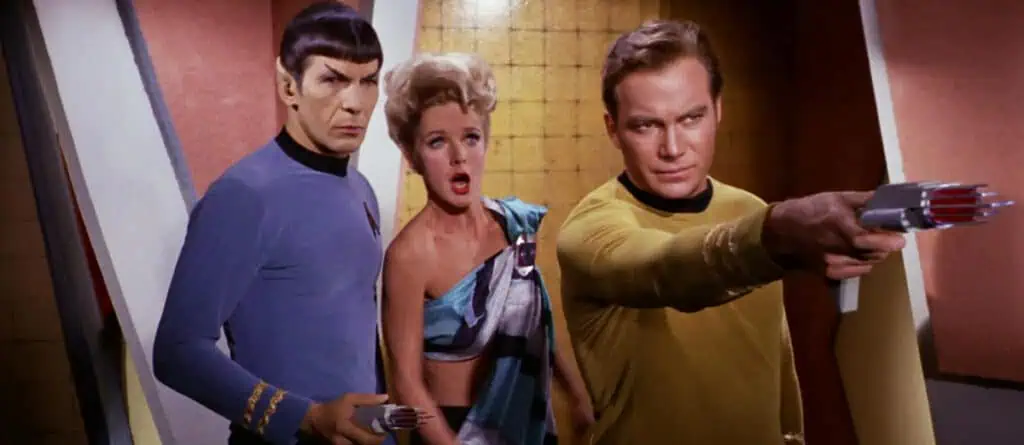
The Enterprise visits a planet where two civilizations wage war through computer simulations, with the designated casualties willingly reporting for execution.
- Release Year: 1967
- Season / Episode: Season 1, Episode 23
- Directed By: Joseph Pevney
- Written By: Robert Hamner
- Why It’s Essential: One of Star Trek’s sharpest anti-war stories, examining the dangers of sanitizing conflict through technology.
Sure, A Taste of Armageddon may not be one of the first episodes mentioned when people talk about the very best of The Original Series, but as a piece of classic Star Trek social commentary, it’s fantastic.
The premise is chillingly simple: two planets have been at war for centuries, but instead of actually launching attacks, they run the conflict through computers and then require the “casualties” to report to disintegration chambers. War has become clean, orderly, and bureaucratic, with all the horror stripped away so the societies can continue functioning as if mass death is just another civic responsibility.
It takes the idea of sanitized warfare to a disturbing extreme, and Kirk’s response is one of his best TOS speeches. He fundamentally rejects the twisted logic of a society that has made murder efficient, painless, and permanent. In a bold, incredibly risky move, Kirk forces both worlds to confront the visceral reality of actual violence. “I think you’ll find that they’re just as terrified, appalled, horrified as you are, that they’ll do anything to avoid the alternative I’ve given you,” he says. “Peace or utter destruction. It’s up to you.“
It might not be the flashiest episode on this list, but it’s a great example of Star Trek using a big concept to say something genuinely uncomfortable.
Frequently Asked Questions
What is the best episode of Star Trek: The Original Series?
Many fans and critics consider The City on the Edge of Forever to be the greatest episode of Star Trek: The Original Series. Written from a story by Harlan Ellison, it combines time travel, romance, and one of William Shatner’s most emotional performances as Captain James T. Kirk.
Which Star Trek episode introduces Khan?
Space Seed marks the first appearance of Khan Noonien Singh, played by Ricardo Montalbán. The episode later served as the foundation for Star Trek II: The Wrath of Khan.
Which episode introduces the Mirror Universe?
Mirror, Mirror is the first episode to feature the Mirror Universe, an alternate reality ruled by the brutal Terran Empire. The concept later became one of the franchise’s most popular recurring storylines.
Which episode introduces the Romulans?
Balance of Terror is the Romulans’ first appearance in Star Trek. The episode also establishes the Neutral Zone and remains one of the franchise’s greatest tactical space battles.
Which episode explains pon farr?
Amok Time introduces pon farr, the Vulcan mating cycle, while also giving audiences their first visit to Vulcan and expanding the mythology surrounding Mr. Spock.
Which Star Trek: The Original Series episodes are the funniest?
The Trouble with Tribbles is widely regarded as the funniest episode of the series thanks to its lovable Tribbles, escalating chaos aboard the Enterprise, and the cast’s outstanding comic performances.
How many episodes are in Star Trek: The Original Series?
Star Trek: The Original Series aired from 1966 to 1969 and consisted of 79 episodes (or 80 if you count The Cage) across three seasons.
To Boldy Go…
Obviously, narrowing The Original Series down to just ten episodes means leaving some classics behind. Believe me, I agonized over this one, and I’m still filled with regret. A few honourable mentions include The Tholian Web, Arena, The Corbomite Maneuver, Errand of Mercy, The Enterprise Incident, The Enemy Within, and A Piece of the Action.
So what would make your list? Set a course for the comments and let me know your top ten episodes of Star Trek: The Original Series.








The comment section exists to allow readers to discuss the article constructively and respectfully, focused on the topic at hand.
What’s Not Allowed