


If you see a girl dressed in formal wear and covered in blood, chances are the first image your brain conjures is Sissy Spacek looking absolutely mortified as her classmates laugh at her. Or was it Angela Bettis? Chloë Grace Moretz? Summer H. Howell? We’ve seen several different versions of Stephen King’s Carrie over the years, and everyone has their preference. From a meek Carrietta White you just want to protect to an overly religious mother who’s more horrifying than most full-blown monsters, every adaptation has a slightly different flavor. That makes sense when they’ve been made across five decades, with each filmmaker bringing something different to King’s story.
From characters whose fates change to entirely different endings, let’s compare the adaptations and see which version comes out the winner.
The History of Carrie: From Stephen King Novel to Screen
Before we dissect the adaptations, we need to look at the story’s original incarnation. Carrie was Stephen King’s first published novel, although he’d written several novels before it that went unpublished. At the time, King was working as an English teacher and writing short stories for various men’s magazines. Carrie was originally intended to be another submission, but he kept working on it until it eventually became a novel.
The book wasn’t an immediate blockbuster. Its hardcover edition sold only around 15,000 copies, but the 1976 film adaptation helped turn it into a publishing sensation. A paperback edition accompanied the movie, and the novel spent 14 weeks on the New York Times bestseller list. Carrie was the book that allowed King to quit his job and become a full-time author.
But how did the movie get made if the book hadn’t been a major hit before the adaptation?
Director Brian De Palma happened to be friends with someone who recommended King’s novel to him and helped him get an early copy. With King still relatively unknown, the rights were reportedly purchased for a mere $2,500. Working with a budget of $1.8 million, De Palma set out to adapt the story, making changes along the way, partly because of budget limitations.
De Palma’s Carrie, or Carrie ’76, as I’ll refer to it throughout this article, was a massive success when it arrived in 1976. It grossed more than $30 million worldwide, and in a rare achievement for a horror movie, both Sissy Spacek and Piper Laurie received Academy Award nominations for their performances. Carrie had broken the mold.
Then the franchise went quiet for nearly two decades. We got a maligned musical version in the 1980s, but the less said about that, the better.
In the early 2000s, NBC was exploring properties that could become weekly supernatural television series, following the popularity of shows like Buffy the Vampire Slayer. The network commissioned a feature-length television adaptation of Carrie that could also serve as a backdoor pilot for a potential series. Unfortunately, despite praise for Angela Bettis and Patricia Clarkson as Carrie and Margaret White, the movie failed to generate enough interest to launch a series. Carrie was put on ice once again.
The 2010s brought a very digital lifestyle, with cyberbullying becoming an increasingly prominent issue. It seemed like the perfect opportunity to revisit Carrie from a contemporary perspective. MGM and Screen Gems teamed with Boys Don’t Cry director Kimberly Peirce to make an updated version that would emphasize the digital harassment so prevalent among young people.

Chloë Grace Moretz took the lead, with Julianne Moore playing her mother. There was reportedly significant studio interference, with some of the darker, more character-driven material cut from the film. The result grossed approximately $84.8 million worldwide against a $30 million budget, making it commercially successful, but it ultimately proved forgettable for me. It was often treated as a pale imitation of De Palma’s film, with CGI upgrades that took away much of the original’s tension.
Finally, we arrive at Mike Flanagan’s television adaptation for Prime Video. Flanagan had long been chipping away at his version of The Dark Tower for Amazon, a massive undertaking in its own right. When the opportunity to tackle Carrie came along, he initially wasn’t interested. Like many of us, he felt De Palma had already done a pretty damn good job. Then he realized how much the episodic format would allow him to take the story in a different direction.
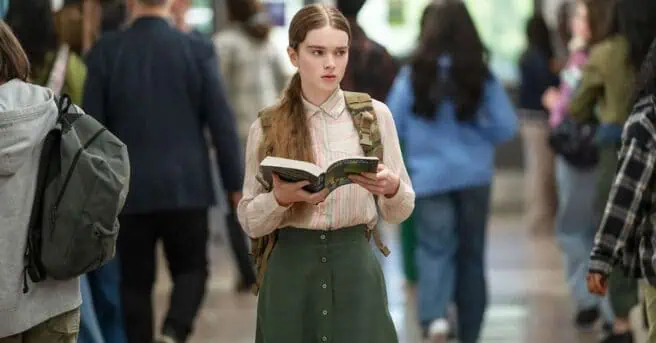
Flanagan’s Carrie stars Summer H. Howell in the title role and expands King’s story across eight episodes. The series premiered in October 2026, and Prime Video has already renewed it for a second season.
Carrie has become such a part of the cultural zeitgeist that I personally can’t even hear the word prom without thinking about it. Yet depending on the version, your experience may vary. Will you go with Brian De Palma’s dreamlike horror classic, the CGI mayhem of the Chloë Grace Moretz version, or Mike Flanagan’s more expansive television approach? Let’s find out which one works best.
The Basic Story of Carrie
Each adaptation makes its own changes, which we’ll address as we go along. First, though, here’s the basic story we’re comparing.
The novel centers on Carrie White, a lonely 16-year-old girl relentlessly bullied at school and abused at home by her deeply religious mother. Everything comes to a head when Carrie gets her first period in the school showers and has tampons thrown at her because she doesn’t understand what’s happening. Her mother never explained menstruation to her because she considers it sinful.
Following the incident, Carrie’s chief tormentor, Chris Hargensen, is barred from attending the prom. Another of the girls involved, Sue Snell, feels remorse and persuades her popular boyfriend, Tommy Ross, to take Carrie to the dance. Chris, however, plots revenge by manipulating the prom king and queen vote so that Carrie will win.
When Chris dumps pig’s blood on Carrie in front of the school, the humiliation pushes her over the edge. Her telekinetic powers emerge in a devastating rampage that leaves most of the people at the prom dead. Carrie returns home, where her mother tries to kill her. Carrie uses her powers to stop her mother’s heart, then dies herself outside, in Sue Snell’s arms.
That’s the basic framework. Now let’s see how the different adaptations handle the characters, the major set pieces, and the ending.
The Actors and Characters: Which Version Gets Them Right?
One recurring theme here is going to be, “They get more layers in the Flanagan show.” That’s simply the nature of television. De Palma had 98 minutes to work with, while Flanagan had eight hour-long episodes to expand the characters. That doesn’t mean we shouldn’t point out those differences, because that’s kind of the point of this comparison.

Carrie White: Sissy Spacek, Angela Bettis, Chloë Grace Moretz, and Summer H. Howell
Sissy Spacek set the standard with her iconic, sensitive portrayal of Carrie. She’s so timid and meek that her transformation becomes all the more impressive and believable.
Angela Bettis brings a highly awkward version of the character who always looks as though she’s on edge. You feel like she’ll snap at any moment. Chloë Grace Moretz is awkward, too, and the film uses her wardrobe to make her look more homely. It feels a little like She’s All That, especially once she’s dressed up for prom. For me, Moretz mostly feels miscast.
Summer H. Howell’s Carrie has been homeschooled, and the death of her father puts a spotlight on her living situation, forcing her to attend high school and her mother to get a job. The fish-out-of-water angle makes her disconnection from her classmates feel more understandable than simply boiling everything down to “she’s the weird girl nobody likes.” Summer makes Carrie more empathetic than she’s ever been, with her love of books highlighting how different she is from her tech-heavy classmates.
There was some controversy when Summer was first cast because people thought she was too pretty. But remember, in the book, Carrie was never meant to be ugly. She was bullied for her weight and unfashionable clothes, not to mention the religious beliefs that made her stand out from the other kids. Even when she’s dressed up for prom, she’s beautiful. Sure, you can complain that she’s not fat or doesn’t have bad skin, but this is Hollywood. I don’t think that’s ever going to happen, and the impact of the character isn’t diminished because of it.
Margaret White: Piper Laurie, Patricia Clarkson, Julianne Moore, and Samantha Sloyan
Margaret White is Carrie’s overly religious, abusive mother. She knows Carrie has some kind of power but views it as something ungodly.
Piper Laurie’s portrayal set the standard, really nailing the fanatical parent in both her demeanor and wardrobe. She can be operatic and campy, but it works. Patricia Clarkson’s version is colder and quieter, and her relationship with Carrie is much more rigid. Carrie feels more like a burden to her.
Julianne Moore’s Margaret is absolutely nuts. She’s banging her head against a wall and looks genuinely unwell. She blames Carrie’s affliction on the fact that she had sex out of wedlock and enjoyed it. She even laments that she didn’t kill Carrie as a baby. This woman is all sorts of messed up, and we see that the thought of killing her daughter has never left her.
In Flanagan’s version, Margaret cares so much about Carrie that she believes her actions are necessary to protect her. I think most of us expected more of a Bev Keane (Midnight Mass) approach from Samantha Sloyan, and her version is certainly more manipulative, using social media to shape a narrative. Her relationship with Carrie feels more maternal, with much of her evil coming from an overprotectiveness that she mistakes for love.

Chris Hargensen and Billy Nolan: Bullies Without a Conscience
Chris Hargensen is pretty stereotypically evil in most versions. She’s the popular girl who’s always gotten her way and uses bullying to stay on top of the food chain.
Nancy Allen feels genuinely cruel in the role, and you can sense her contempt for Carrie. Emilie de Ravin isn’t much better, showing little remorse and constantly trying to make Carrie’s life miserable. Portia Doubleday is practically a caricature, she takes so much glee in bullying Carrie. Her version also posts the shower video, allowing the humiliation to echo throughout the narrative more directly.
Flanagan tries to make us empathize with Alison Thornton’s version, but she still comes across as a spoiled brat who doesn’t seem to learn her lesson until it’s too late. The show does a good job of showing how someone could be driven to that point, though. She uses social media to create an account called Carrie Red, targeting Carrie and practically everyone else at school. She’s in full “burn it all down” mode, which is pretty appropriate given the ending.
Chris partners with Billy Nolan, who most people will remember was played by John Travolta in the 1976 film. Like Chris, Billy is usually evil to an almost absurd degree. Then again, this is a guy who has to kill a pig to get its blood, so he probably isn’t all there in the head.
Whether it’s Travolta, Jesse Cadotte, Alex Russell, or even Arthur Conti’s version throwing bricks off bridges, they’re all sides of the same coin. These are evil bastards who can’t see the consequences of their actions, which makes their eventual fates all the more satisfying.
Miss Desjardin: Carrie’s One Reliable Ally
Miss Desjardin is the one person consistently on Carrie’s side. She’s the teacher who intervenes after the shower incident and punishes the girls who participated.
In De Palma’s film, Betty Buckley’s character is actually named Miss Collins, even though she serves the same role as Miss Desjardin. Maybe they wanted to go with a name that was easier to pronounce.
Whether it’s Buckley, Rena Sofer, or Judy Greer, this character looks out for Carrie in a way few others do. At times, though, her motivation seems more focused on punishing the girls for bullying Carrie than helping Carrie herself.
Amber Midthunder’s version takes more of a backseat, with other characters, including Tim Bagley’s counselor and Matthew Lillard’s principal, serving as people who look out for Carrie. Midthunder’s character is a bit preoccupied with other events.
Sue Snell: The Guilt That Drives the Story
Sue Snell is always a difficult character to pull off, but the most successful version is Amy Irving’s in Carrie ’76. She seems genuinely remorseful about the shower incident and really tries to make things right.
Kandyse McClure’s 2002 Sue is arguably the most empathetic of the bunch, never really participating in the bullying. She takes Carrie to the mall to get makeup and helps her navigate the things her mother never taught her.
Gabriella Wilde’s version goes so hard when Carrie first gets her period that I thought the film was going to try something new and make Sue a villain. She’s nearly as bad as Chris. It makes her eventual turn in that same scene much less impactful.
Siena Agudong’s Sue is more layered and more closely connected to Chris, trying to make her see the error of her ways. She seems genuinely interested in looking out for Carrie, even if I think her connection with Carrie feels a little surface-level.

Tommy Ross: Friend or Romantic Interest?
Tommy Ross is a strange role because he’s dating Sue Snell but goes to prom with Carrie. It’s really only the 1976 version where the arrangement feels completely innocent, with their interactions coming across as friendly rather than romantic. William Katt does a great job of making Tommy likable and not remotely skeevy.
In 2002, there’s not much chemistry between the actors, and Tobias Mehler’s performance is pretty hammy. The grossest version is easily the 2013 film, where Ansel Elgort’s Tommy calls Carrie beautiful and keeps giving her the eye. It feels over the line, especially since his girlfriend is the one pushing him to take Carrie to prom. He’s supposed to be her friend, not a romantic partner.
Joel Oulette makes Tommy into a bit of a golden retriever. He’s an overall good dude and one of the few people who makes Carrie feel normal. Rather than having Sue ask her boyfriend to take Carrie to prom, they break up, making the pairing between Tommy and Carrie feel more natural.
Now that we’ve gotten through the character differences, let’s get into the major scenes and how they change from version to version. Obviously, there are some big spoilers ahead, so you’ve been warned.
The Shower Scene: The Moment That Changes Everything
There’s no better way to show the cruelty of bullying than having a girl experience her first period in the school showers without understanding what’s happening, only for her classmates to throw tampons at her and tell her to plug it up. It’s an especially cruel moment, and it can be hard to watch.
De Palma’s approach is dreamlike, with the camera gliding through the girls’ locker room in a way that almost feels like a softcore porno. When Carrie is in the shower, there’s a sensuality to the way she cleans herself. So when the blood starts pouring, it’s all the more horrifying. She thinks something is seriously wrong and just wants someone to help her. Instead, her classmates insult and humiliate her in an unimaginable way. We’re made painfully aware of just how cruel these girls can be.
The 2002 version has a similar dreamlike glow, although some of that comes from the limitations of a television movie. This time, Carrie is dealing with the situation privately when the other girls barge in, chanting “Period!” It’s an even more invasive humiliation.
The 2013 film essentially recreates the original scene, adding the element of Chris filming Carrie on her cell phone. That change makes the humiliation feel particularly relevant to the digital age, even if the scene itself doesn’t bring much new to the table.
Thankfully, Flanagan’s series skips the shower setup entirely, since that particular arrangement doesn’t really fit the modern era. Hell, it didn’t even fit the 2013 film particularly well, but they clearly wanted to keep the iconic scene. Instead, the incident is shown through Carrie’s pants, and she’s thrown into the shower to clean up. It has a similar vibe to the 2013 version, with the girls filming the incident and using it for social media.
Thank God for Miss Desjardin (or Collins), Carrie’s savior in every version.

The Prom Scene: Which Adaptation Gets the Bloodbath Right?
It’s hilarious to me that so many of these adaptations thought it was necessary to include an awkward montage of the girls getting dressed together for prom. I just had to bring that up.
The prom itself follows a very similar structure in every version. Carrie wins prom queen, Chris drops the pig’s blood on her, and Carrie unleashes telekinetic mayhem.
De Palma uses split-screen photography and intense strings to sell the chaos. It’s easily the most visually interesting version, allowing us to witness the destruction from multiple angles. The students truly feel trapped with a monster, and the sequence is all the more disturbing because Miss Collins is murdered, too. Nobody is safe once Carrie loses control.
The 2002 version puts a huge emphasis on prom. Tommy asks Carrie out around the 45-minute mark, and the prom and final sequence take up nearly an hour of the runtime. This may as well be called Prom: The Movie. The sequence is hampered by the television budget, but it does its best to portray the chaos. Honestly, it’s not bad if you can get over the very 2002-ness of it all.
The Moretz version replays the shower video after the blood is dropped on Carrie, making the humiliation even worse. There’s also more emphasis on how much Tommy’s death affects her. But the sequence becomes a crazy CGI monstrosity in which most people are taken out by an invisible force. I always lose it when Moretz starts flying around like she’s Scarlet Witch.
Sadly, one thing Flanagan brings back that really doesn’t work is the use of interviews discussing prom. Sure, it can be interesting to hear the characters reflect on the events and provide additional context, but those interviews undercut the prom scene itself. I’m sure part of the thinking was, “We’ve seen this done so many times, let’s try something different.” And the interviews do draw from the novel. But the result is a prom sequence that feels undercooked and less impactful.
Not to mention that Carrie is taken over by the worst character ever, losing so much of her agency in the process. It’s almost as though Flanagan was worried about making Carrie too much of a bad guy. Then there are the other people with powers and the convoluted character connections, which take away from the scene rather than enhancing it.
Tommy’s death has mostly stayed the same across the adaptations: the empty bucket that held the pig’s blood falls and hits him directly in the head. It’s one of those moments where you go, “Wait, that actually killed him?” The Flanagan version improves it a little by having Carrie accidentally hit him with the catwalk Chris and Billy had been standing on.
I absolutely love karmic retribution in movies, so Carrie getting revenge on her classmates will always be a highlight for me. That’s why it’s disappointing when so many people survive in the newer adaptations. I’ll always prefer the “nobody gets out” approach of De Palma’s version.
The Ending: Which Carrie Has the Best Finale?
The novel’s destruction extends beyond the prom, with Carrie wreaking havoc on her way through town. De Palma keeps most of the carnage focused on the school, where more than 200 people die in the gymnasium. The 2002 version establishes through police interviews that 234 people died, although we see quite a few survivors as Carrie makes her way out of the gym.
The Moretz version shows far fewer deaths, with most people escaping. It’s easily the lowest body count of the bunch. The novel puts the total at 440, so none of these adaptations quite matches the scale of destruction King envisioned.
Every version has Carrie killing Chris and Billy in their car, with some variation in how the scene unfolds. Thankfully, none of the adaptations tries to save either of them.
In Carrie ’76, Carrie returns home after the prom, skips the destruction of the town, and heads straight inside to wash off the pig’s blood. Her mother tries to kill her, but that turns out to be a terrible mistake. Even as Sissy Spacek’s Carrie kills Margaret, she seems frightened by what she’s doing. It’s not something she wanted to do. Carrie ultimately brings the house down around them, seemingly killing them both.
The 2002 version makes a significant change. Margaret tries to drown Carrie in the bathtub, but Carrie uses her telekinetic powers to stop her mother’s heart, drawing directly from the novel. Sue Snell then saves Carrie, allowing the story to end on a more hopeful note.
In 2013, Moretz’s Carrie cleans herself in the bathtub before her mother arrives, leading to a struggle. Carrie finally kills Margaret by impaling her with sharp objects. Sue shows up and witnesses the destruction of Carrie’s house firsthand. I suppose it’s a way of making Carrie more sympathetic, since she saves Sue and even tells her she’s pregnant. The pregnancy subplot comes from the novel and appears more directly in this version, although Flanagan’s series also alludes to it through a pregnancy scare.

Summer Howell’s Carrie is actually cleaned up by her mother, who eventually decides she has no choice but to kill her. Carrie feels betrayed, but there’s still love there. Rather than impaling Margaret with knives, she brings the house down on both of them. Sadly, that means we lose the moment when Carrie finally overcomes her mother, and Margaret’s death is instead given to Kate Siegel’s interviewer character. Which… uh, that’s certainly a choice.
I’ll only touch on it briefly, but Flanagan’s series also builds an entire universe around the story, with other people who have powers appearing throughout. The interviews serve as a framing device for the narrative, and Carrie even gets a best friend who can project herself. It’s all a little too X-Men and government conspiracy for my liking, especially when compared with the much more straightforward horror story at the center of King’s novel.
It’s really hard to come up with a better ending than De Palma’s. Carrie’s hand popping out of the ground remains one of horror cinema’s most memorable jump scares. The sequence was so influential that Friday the 13th later delivered a similar shock with Jason bursting out of the water. Can you imagine how different horror cinema might have been without that ripple effect?
The 2002 television movie ends with Sue and Carrie driving off together, clearly leaving the door open for the weekly series that never happened.
The 2013 film apparently decided the graveside jump scare wasn’t enough and added another one in a hospital room. Sue is in the middle of labor when Carrie’s arms reach out of her and grab her. It’s a brilliant example of taking a simple, effective jump scare and doing too much with it, losing the thrills along the way.
Flanagan’s version doesn’t kill Carrie, since the series is designed to continue her story. Instead, she drives off with her telekinetic best friend, leaving things wide open for the future. There’s certainly more story to tell, but I still prefer the finality of De Palma’s ending.
A Quick Shoutout to The Rage: Carrie 2
I also want to give a brief shoutout to The Rage: Carrie 2. This movie is heightened and pretty over the top, but it’s honestly not terrible. It reeks of the 2000s, yet there are some genuinely interesting ideas here.
Even so, it makes the baffling decision to bring back Amy Irving’s Sue Snell, only to kill her off. That’s one choice I still can’t get behind.
Final Verdict: Which Carrie Adaptation Did It Best?
Every version has its strengths and weaknesses, some more obvious than others. Each adaptation pulls something different from King’s novel, and De Palma’s film retains plenty of elements from the original story while adding its own unforgettable cinematic touches.
Which version of Carrie do you prefer? Do you like your villains one-dimensionally evil, or do you prefer them with a few more layers? And which actress makes the best Carrie White and Margaret White pairing?
Personally, I’ll always go with De Palma’s original for nearly everything. There are some great performances in Flanagan’s version, but it goes a little too X-Men for my liking. And the less said about the Chloë Grace Moretz version, the better.
Where do you stand? Let us know in the comments below, and we’ll see you in the next one!










The comment section exists to allow readers to discuss the article constructively and respectfully, focused on the topic at hand.
What’s Not Allowed