

Clive Barker is a man of many ventures, including getting absolutely wrecked by studio interference. While a lot of his movies have negligible differences between theatrical cuts and director’s cuts, Nightbreed is something else entirely. Rivaling something like Blade Runner in terms of how many versions exist, it is a beautiful and complicated story of hopes getting dashed, people leaving the film, and a studio that flat-out didn’t know what it was getting.
While all the major versions are available to get one way or another, what are the major differences and, maybe more importantly, what is the best one to watch? Whose voice was dubbed and then redubbed by the actor in later versions? What name change makes the movie feel a lot more like its source material? And what makes this one of the best creature features that we almost never talk about?
Head on to Midian as we look at the complex history and cuts of Clive Barker’s Nightbreed.
Which version of Nightbreed is best?
For most viewers, the 2014 Director’s Cut is the best version of Clive Barker’s Nightbreed to watch. It restores substantial story material missing from the 1990 theatrical release, gives Boone and Lori more meaningful character arcs, and better develops the monsters of Midian. The longer Cabal Cut offers additional footage for dedicated fans, but its extra length makes the Director’s Cut the stronger overall choice.
The Three Versions of Nightbreed at a Glance
- Theatrical Cut (1990): The shortest version, shaped heavily by studio edits and presented more like a conventional horror slasher.
- Director’s Cut (2014): The recommended version for most viewers, restoring important story and character material while reworking the theatrical cut.
- Cabal Cut: A longer fan-driven reconstruction that includes additional footage, making it most appealing to viewers interested in the film’s restoration history and alternate material.
The Birth of Midian: From Cabal to the Big Screen
On February 16, 1990, 20th Century Fox and Morgan Creek Productions unleashed Nightbreed onto unsuspecting theatergoers. It had a budget of $11 million and was hyped on the poster as a new reason to fear the night from the mind of Clive Barker. The poster was full of cool-looking monsters, grayed out above a nicely green-colored title.
Audiences had just been blown away and come in droves to Hellraiser and Hellbound: Hellraiser II in 1987 and 1988, but what they walked into was a confusingly disjointed, 102-minute slasher movie starring a famous director as the bad guy.
It wasn’t anything that the poster or trailer advertised, and it bombed with both critics, who were just as confused as the audience, and moviegoers. It made only $16 million against that $11 million budget and was quickly forgotten by fans. Well, casual ones. Fans of Barker wanted to see the REAL version of the movie. The one that Barker shot before it was edited down to something barely resembling his work.
That would take some time, but let’s see how we got there.
In 1988, Clive Barker released a novella called Cabal that ran 195 pages and was included in a larger publication containing some other stories. By that point, Barker was also a massive name in horror, not only on the page but on the screen as well. He had been a playwright since the mid-1970s, and his written works had been published since the extremely popular Books of Blood started coming out in 1984.
More importantly to us here, he had started getting involved in film in 1985 when he wrote Underworld (or Transmutations, depending on the version you’ve seen). Then he was highly disappointed by what the producers of Rawhead Rex did to his boy. And his story. And his dreams.
While he wrote the script for that one, the final product was so far from what he wanted that he vowed never to write a script unless he could have more control over it. Ya know, like direct it too.
Enter Hellraiser, adapted from his novella The Hellbound Heart. It was so good that Stephen King even gave us that famous quote about seeing the future of horror and his name being Clive Barker. It was a massive success for both the production company behind the property and first-time director Barker. While he didn’t end up directing Hellbound: Hellraiser II, his name was out there. The future of horror, apparently.
This thing was aiming to be big. The studio famously wanted “The Star Wars of Horror Films,” at least until they didn’t. Barker’s love of monsters and what they go through outwardly, instead of just being feared by the public at large, led him to write Cabal in the first place. He thought it would make a good movie that he would like to direct himself.
Not only that, it was a planned trilogy of films that, well, we’ll see how that worked out. Morgan Creek agreed to a three-picture deal that included a sequel to Nightbreed, a title they changed from Cabal because they thought it was more commercially viable and didn’t think the original name meant anything.
I love it when you know people who greenlight movies don’t even read the source material, because Cabal is kiiiiiind of important when the main character renames himself that in an act that shows he wants to save his fellow monsters. But alas, that’s kind of what gets us to the conundrum in the first place.
They shot the movie on sound stages at Pinewood Studios as well as on location in both the UK and Canada, while giving the FX team a few months to play around with what they wanted to do. Matte paintings by Ralph McQuarrie gave the proceedings extra flair, and a soundtrack by Danny Elfman gave the movie an almost mystical quality as it danced around on screens.

While David Cronenberg, who plays one of the main villains, and cinematographer Robin Vidgeon didn’t get along, Barker was able to shoot enough footage to get nearly a three-hour movie. He was obligated to deliver an R-rated movie instead of an unrated or X-certificate movie, and that’s just not going to play well at close to three hours.
After some test screenings where they tweaked the soundtrack as well as the ending, he presented his final version at almost two and a half hours. The studio said absolutely not, and it was cut first to two hours and then again to one hour and 42 minutes.
This was so distressing that editor Richard Marden left the project in protest, leaving Clive Barker heartbroken after reshoots and cuts had completely changed what the original movie was intended to be.
Then the marketing happened.
Studio Interference, Alternate Media, and the Plot of Nightbreed
The head of marketing allegedly couldn’t even make it through the entire movie, so he marketed based on what he saw and what he thought would sell well. The posters didn’t properly convey the movie, and the TV teasers amounted to a brief foray into slasher territory, which was also not what this movie is about.
The theatrical trailer was sent back by the MPAA an astonishing 12 times, and they said that the monsters, the very soul and backbone of the film, could not be seen anywhere in the trailer.
The studio hated the final product even after they cut it down, as they thought it was confusing and overly violent. Gee, I wonder why. They refused to show it to critics, arguing that people who watch horror movies don’t read reviews anyway, and pushed it back from late 1989 to the dead zone for films known as February.
It was claimed this was to allow the final touches and edits to happen, but it’s pretty clear that they wanted this movie buried and done with.
Oddly enough, while traditional marketing failed miserably, the movie did have some tie-in products to go with it. Epic Comics produced a four-issue release adapting the original script, which made it wildly different from the final product, and the comic would inexplicably run for 25 issues before it was canceled.
Even more confusingly, Nightbreed would be turned into TWO video games. One was called Clive Barker’s Nightbreed: The Interactive Movie, and another was Clive Barker’s Nightbreed: The Action Game. These, too, were wildly different versions created by Impact Software Development and published by Ocean Software.
The interactive movie has multiple gameplay styles, including point-and-click, action RPG, and platforming, while the action game is messy and overly difficult. Neither is particularly appealing, but they make sense coming out for home computers at the time.
I find it ironic that we got two different versions of the same game, just like we eventually got two versions of the same movie. Three, actually, but we are getting ahead of ourselves.
How Nightbreed and Cabal Tell the Same Story
Nightbreed and its novella roots, Cabal, actually follow each other fairly closely in terms of the overall story and the characters found within. It was through Barker’s ambition and creative genius that the visuals of the film reached beyond what the book’s source material attempts to convey.
They both follow a man named Boone who is suffering from some sort of psychosis and is told by his psychiatrist, Decker, that he is responsible for a string of killings that have been happening in the area.
Boone ends up in a hospital where he meets a seemingly crazy man named Narcisse, who speaks of a place called Midian where the monsters live. Narcisse then brutally slices much of his own face.
Boone escapes and ends up in Midian, where he is attacked by a couple of monsters who live there, resulting in Boone getting bitten. Boone gets away but runs into Decker, who is with the police. Before they shoot and seemingly kill Boone, Decker tells him that he was actually the one committing all of the murders and that he has successfully framed Boone.
Boone’s body eventually disappears from the morgue, and his girlfriend Lori goes out to search for both Boone and the place called Midian that she had heard about. Lori befriends a woman on the trip whom Decker later seduces and murders, while Lori makes it to Midian and saves a young monster, thus gaining the favor of the creature’s mother.
Decker confronts Lori and admits that he was the one who framed Boone and killed everyone before attempting to kill her. She escapes and is saved by the clearly alive Boone.
Lylesburg, the head honcho in Midian, banishes Boone and Lori for potentially endangering Midian, and then the cops arrest Boone. Decker convinces the police chief of the nearby city to storm into Midian and arrest or kill everything there. They gather a mob of like-minded citizens to join them, including a priest named Ashbury.
Lori and Narcisse rescue Boone from jail, but by the time they return to Midian, much of the Nightbreed has been killed by the lynch mob. Boone kills Decker and is renamed Cabal by Baphomet, who created Midian. Baphomet tells Boone to find a new place for his monsters to live in peace and rebuild.
Both the book and film have massive similarities, except the 1990 movie is framed in a much different way after being trimmed and edited down. This disappointing version of the film was the only way to watch Nightbreed for quite some time, too.
The Road to Restoration: From VHS Workprints to the Cabal Cut
On home video, Nightbreed initially came out in its theatrical form on VHS and LaserDisc before a slim, bare-bones DVD made the rounds in 2002.
Then something miraculous happened through the power of fandom.
PAL VHS workprints of Nightbreed were discovered in Clive Barker’s Seraphim office. They were then sent over to Clive’s own archive website to be scanned digitally and shown at the HorrorHound convention in 2009.
This thing was RAW. It had repeating scenes, bad audio, and was overly long, but it did lead to something special.
A few years later, from 2012 to 2013, Russell Cherrington, a friend of Barker and the company Seraphim, asked for the raw footage since he had missed the HorrorHound screening and wanted to see how different it was. Over the next couple of years, he and a man named Jimmi Johnson edited the raw footage together with the US DVD and made a much more cohesive film.
Clive Barker even credited Russell as the restoration director, as the film that was long thought lost was turned into something much closer to his original vision.
But that wasn’t all, and that’s where it becomes almost Blade Runner-like in how the film itself evolved.
Russell took the new and improved version, dubbed Version 1 here, on the road. It was first screened at a Mad Monster Party event in Charlotte, North Carolina. As this was the first really watchable version of the new and improved so-called “Cabal Cut,” there was an introduction and Q&A panel. They even got Morgan Creek to OK it so they could advertise it and make it a bigger deal.
Version 1 became Version 2, then 3, then 4, all the way to Version 7, as it was edited over and over again based on notes provided by Barker himself as well as feedback from fans who got to see the evolving product at roadshows.
Then came the ultimate compliment, and a case of the “Snyder Cut” before the Snyder Cut happened.
Well, and greed. Definitely greed as well.
Morgan Creek saw the campaign launched to show the world what the movie could have been, as well as the demands of the fanbase to put out a better, more complete version on a higher-quality platform. And that’s exactly what we got.
The 2014 Director’s Cut
In 2014, we got what we now know as the Director’s Cut, which Morgan Creek commissioned Scream Factory to make using what had been recovered for the circuit cut, along with additional material found in a 20th Century Fox warehouse.
This was released on a two-disc edition and a limited three-disc edition that was incredibly well received, especially since this was at the peak of Scream Factory releases. It was even supervised by the man himself.
You’d think that would be enough, kind of like how Event Horizon recovered every single thing they could find and put together a definitive release on physical disc. But never count out fans. This footage was out there, so we would eventually get the final version of the Cabal Cut in 2019.
The Theatrical Cut sits at one hour and 42 minutes, with the Director’s Cut coming in at two hours. The Cabal Cut comes in at two and a half hours, and there’s even a YouTube upload that clocks in at over three hours.
So, what’s the difference, and which one should you seek out?
Nightbreed: Theatrical Cut vs. Director’s Cut
First off, it should be said that the Director’s Cut doesn’t simply add in 19 minutes of unused footage and call it a day. Even that would be a lot more than some of the unrated or director’s cuts of horror films that plug back in less than 10 seconds of gore or nudity.
The Director’s Cut of Nightbreed REMOVED about 20 minutes of the theatrical cut and put in another 40 or so minutes of what they shot and the studio originally cut out.
One of the most subtle but important changes is the Director’s Cut restoring the whimsical Danny Elfman score that was swapped out for a typical action-horror score by the studio.
First, let’s start out at the beginning. The difference between what moviegoers got in 1990 and the restored Director’s Cut is night and day, setting the two movies almost completely apart. The original release of Nightbreed, as we said, was turned into a slasher.
1. The Opening and Boone’s Destiny
This narrative is pushed right from the start, with the movie opening on the admittedly cool serial killer Buttonface slaughtering a family.
It’s cool for what it is as a kill set piece, but once you see the other cut, you understand.
The Director’s Cut opens with what can best be described as a lore dump, and I mean that in the best possible way. We get a history of Midian and even learn that Boone is dreaming of this place.
That’s a huge difference.
With the city of Midian and its history being introduced first thing, we have the expectation set that Boone and that place will be the focal point of the story. It also gives Boone an arc of destiny, where we know he’s supposed to end up there.
The slaughter scene isn’t even cut out, which is interesting. It’s just placed somewhere else within the film.
2. Boone and Lori’s Relationship
The next big change is with Boone himself. In the theatrical, or slasher, version of the movie, he is kind of meek and clearly easily controlled by Decker. His relationship with Lori is superficial and not a strong part of the story, and ultimately, he doesn’t seem as destined for Midian as you’d expect him to be.
The Director’s Cut changes this aspect. He seems destined for Midian and is clearly drawn there. He knows what he wants to do and never doubts what his destiny is.
Lori is a massive change as well. She is a typical horror girlfriend in the theatrical cut, whose presence and motives are paper-thin, whereas the Director’s Cut gives her much more life and purpose.
There’s a whole musical number that was restored, one that not only shows the actress’s range but also the pain inside Lori regarding her relationship.
She is much more sympathetic to Boone’s plight and wants to help him get to where he is supposed to be. It makes her motives and actions much stronger and honestly makes a lot more sense when she does things like breaking Boone out of prison or helping the creatures of Midian when they need a friend the most.
Instead of a throwaway character like in a lot of horror movies, she becomes yet another strong female protagonist in a Clive Barker movie.
3. Decker’s Fate and the Possibility of a Sequel
Decker has his own arc that changes quite a bit, too, going from slasher villain to hateful architect of Midian’s downfall. That includes his ultimate fate as well.
In the theatrical cut, the studio needed its bad guy dead, and preferably killed by the main good guy. At the end, with the ongoing storming of Midian, we get just that, with Boone ultimately killing Decker after Decker kills a few folks inside Midian, including our buddy Narcisse.
What’s different here is that he stays dead in the theatrical version but is resurrected in the Director’s Cut by Ashbury, who now seeks vengeance for being turned into a monster and having his religion proven false.
Remember now, this was supposed to be a series of movies, too, so it was shot with Decker coming back again as a main series villain instead of just a one-off.
While it takes some of the bite away from the death and fight scene, it also adds a bit of gravitas to Decker himself and makes him far more than just a standard slasher villain.
4. The Monsters of Midian and the Ending
Finally, the monsters of Midian and the ending of the film itself feel drastically different in the two cuts.
The theatrical cut sees the denizens of Midian as just FX spectacle monsters, and in fact, we see far fewer of them for far less time than we should. The ending is also very abrupt and just has Boone and Lori driving off together, seemingly making Midian and its survivors merely set pieces and not the heart of the story.
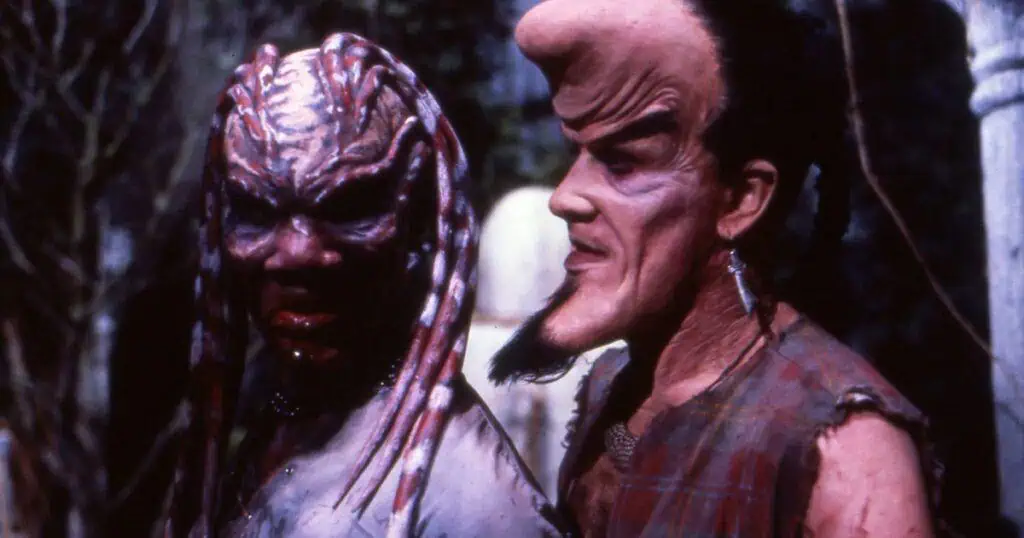
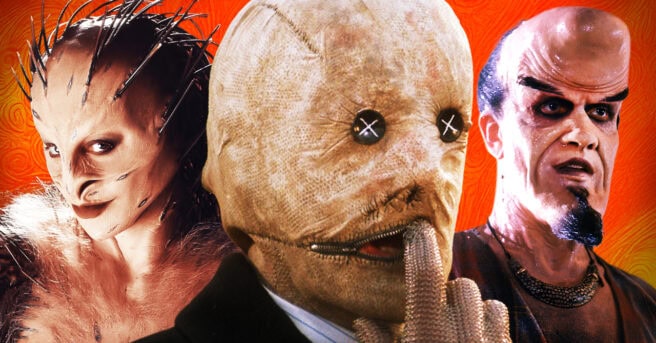
The Director’s Cut restores much of this, as we see many more of the existing monsters as well as ones we didn’t see before. They also have much more of a backstory and their own world and history.
The ending is better for them, too, with Boone being appointed as their new leader and tasked with finding them a new home and helping rebuild their population.
Even Lori takes her own life so that Boone will bring her back as one of the members of Midian rather than be parted from him. It’s a much deeper true-love angle between them.
To go along with that, Pinhead himself, Doug Bradley, has his voice restored as Lylesburg in the Director’s Cut, after being dubbed over by the studio in the original release.
What Does the Cabal Cut Add?
The Cabal Cut goes further in reconstructing Barker’s original vision, combining material from different cuts and workprints to present a longer, rougher version of the film.
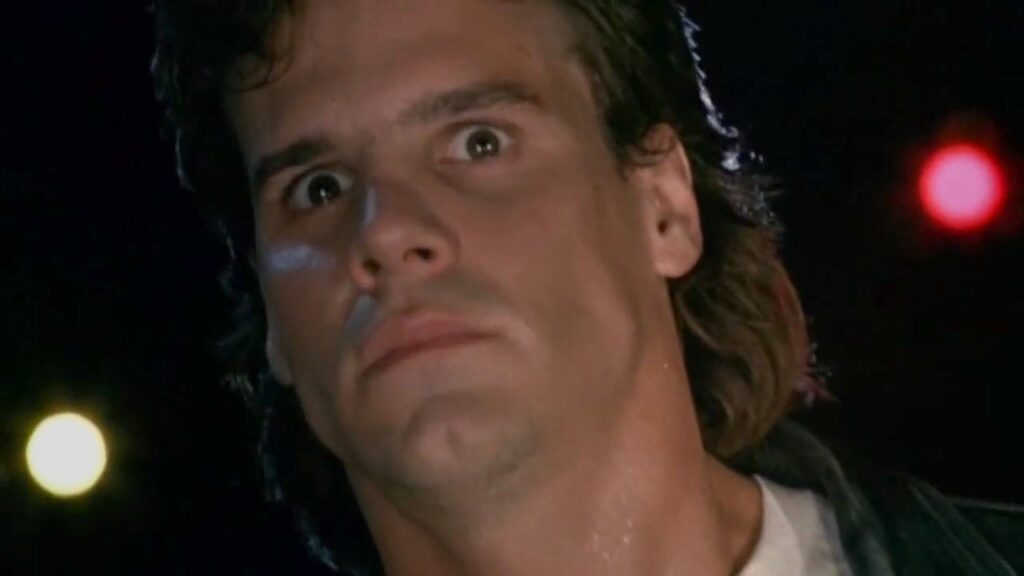
Decker has a much more disturbed psyche and even has the mask calling out to him to unleash its rage. The police officer that he kills actually has a much bigger arc in this one and survives, no less.
Joyce ends up choosing the side of Midian and saves Babette from being killed in the climactic fight.
The biggest addition to the Cabal Cut is just how massive and long the fight for Midian is. It’s pretty much the entire last hour of the movie and has many more deaths, both among the monsters of Midian and the militia known as “The Sons of the Free.”
It’s very brutal, loud, and gory, but for those who like the feel of an epic battle between good and evil, it’s a fun diversion from the other cuts.
And that brings us full circle to the original question: Which version should you seek out?
Which Version of Nightbreed Should You Watch?
The theatrical cut isn’t what I’m going to recommend here, but let’s be honest: it lasted long enough and gave us enough of a taste that the next two versions were able to come through.
It’s fine on its own if you are just looking for a weird 1990s boilerplate monster-slasher movie with some fun effects, but it doesn’t deserve the Clive Barker moniker, nor does it really stick with you after the fact.
The Cabal Cut, as rare as the physical disc is, is also fine, but a bit too long. It restores much of what was lost in the original translation, but some of the additions that you can only find here are not worth the additional time spent with the film.
At two and a half hours, the length simply doesn’t justify the journey. But again, there is a free, over-three-hour version available on YouTube for completionists.
Ultimately, it’s the Director’s Cut that had the foresight to add back in the meaningful bits of the story and what Barker’s original vision was, while also subtracting about 20 minutes’ worth of theatrical-cut material that just doesn’t gel well with the new version.
That Director’s Cut is the most common one found on streaming and is currently available a couple of different ways on physical media, which is always nice.
Nightbreed is a great 1990s horror movie from one of the masters of the 20th century… but only with the Director’s Cut.















The comment section exists to allow readers to discuss the article constructively and respectfully, focused on the topic at hand.
What’s Not Allowed