
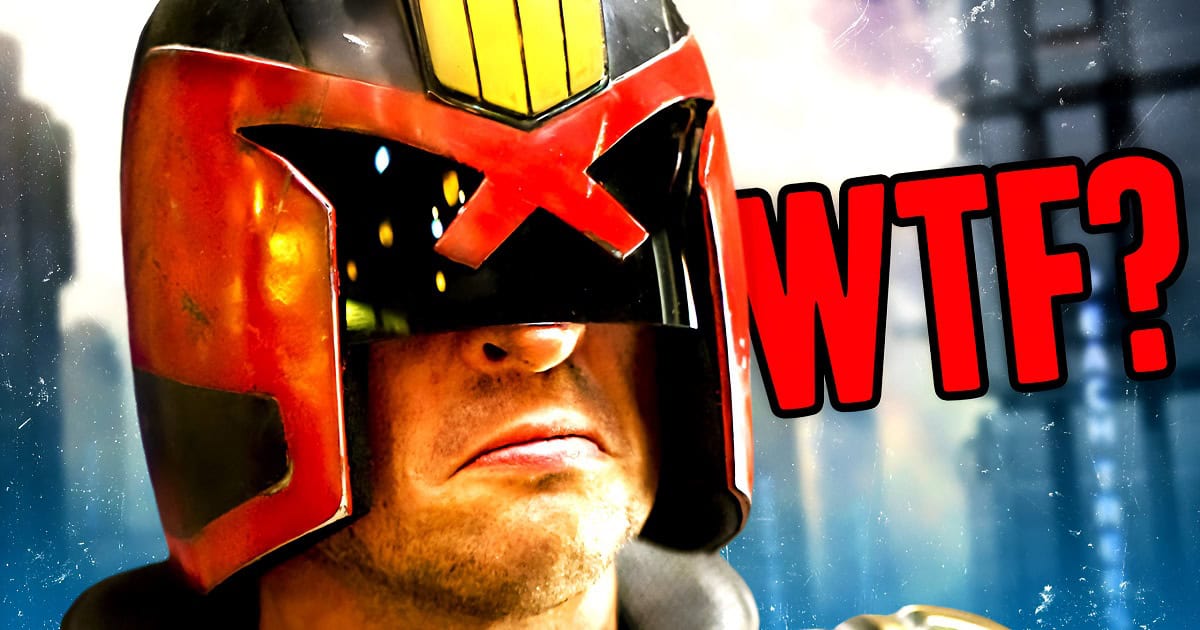

Is there anything cooler than Karl Urban as Judge Dredd? The way he effortlessly takes down criminals. The way he looks like a total badass on a motorcycle. And most importantly, the way he never takes off that helmet. Because if there’s one rule in a Judge Dredd movie, it’s that one.
So let’s slow things down, dive into the details of this dystopian world, and figure out why we never got the sequel everyone was begging for. This is what happened to Dredd.
The Origins of Judge Dredd
The Judge Dredd character began in 2000 AD, offering readers a brutal vision of the future where law enforcement officers act as judge, jury, and executioner. At first, the comic wasn’t sure who its main character would be. But eventually, the focus landed on one figure: Judge Dredd. A man who:
- Never removes his helmet
- Speaks with absolute authority
- Follows the law to the letter
But beneath that? There’s satire.
Dredd’s design carries clear fascist undertones, emphasizing a key idea: the law isn’t always right. The comics used this to comment on politics in ways few others dared at the time. And it worked. The character exploded in popularity, spawning decades of stories, many of which are still published today.
The Failed First Film
Before 2012, there was the infamous attempt starring Sylvester Stallone. And yeah… it didn’t go well. The backlash was so strong that plans for a sequel were scrapped entirely, and interest in the property faded for years.
How the 2012 Reboot Came Together
Everything changed when Alex Garland began working on a reboot around 2006, during the post-production of Sunshine and later while filming 28 Weeks Later. His approach was simple and smart:
- No complicated lore
- No heavy backstory
- Just a day in the life of Dredd
Instead of epic world-building, Garland focused on:
- A single mission
- A contained setting
- A rookie partner learning the ropes
He also made a crucial decision: Dredd would not have a traditional character arc. Why? Because that would betray the comics.
Perfect Casting: Karl Urban as Dredd
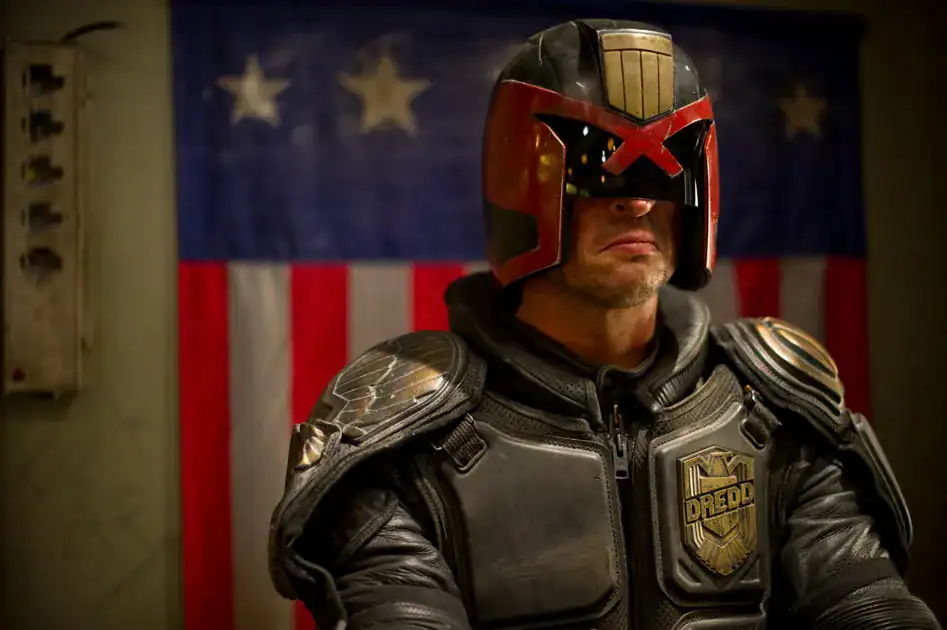
The most important role? Dredd himself. And luckily, Karl Urban wanted it. He understood the challenge:
- Acting with most of his face covered
- Conveying emotion through voice and eyes alone
Urban even trimmed down dialogue during filming to better match the character’s blunt, no-nonsense style.
The rest of the cast included:
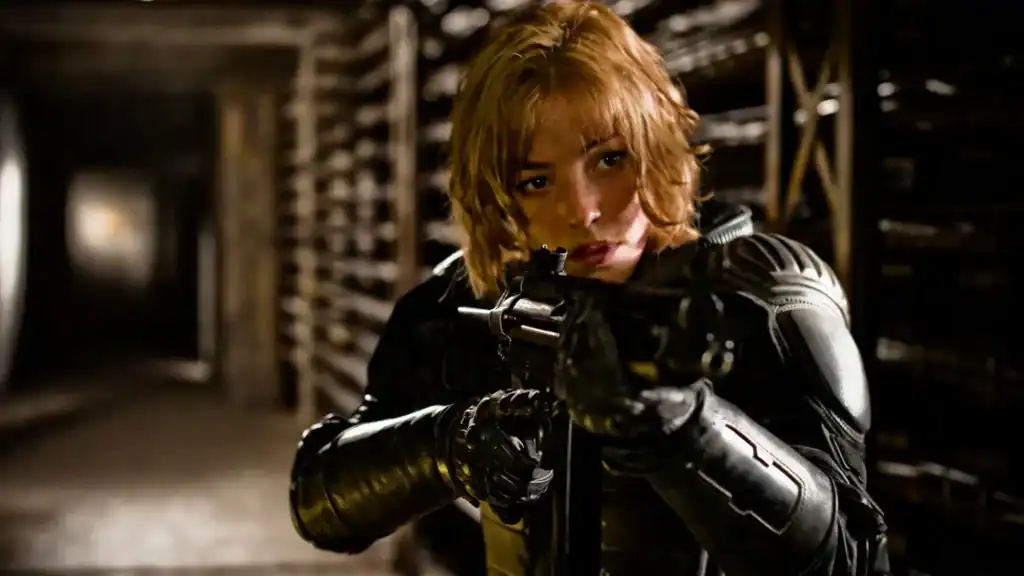
- Olivia Thirlby as Anderson, a psychic rookie
- Lena Headey as Ma-Ma, the film’s ruthless villain
- Wood Harris as one of her enforcers
Behind the Camera: Who Really Directed Dredd?
Officially, the film was directed by Pete Travis. But behind the scenes, things got messy. Travis reportedly clashed with producers during editing and was removed before completion.
Meanwhile, Alex Garland, who was already deeply involved, stepped in to finish the film. According to Urban, Garland was essentially the real director.
The Plot: A Vertical War Zone
The story centers on Peach Trees, a 200-story megablock in Mega-City One. When Ma-Ma executes rival gang members in brutal fashion, it draws the attention of Dredd and his trainee, Anderson. Then everything escalates. Ma-Ma locks down the entire building and orders its residents to kill the judges or die trying.
What follows is simple and brilliant:
- Floor-by-floor progression
- Constant combat
- A near video game-like structure
Yes, there are comparisons to The Raid, but Dredd stands on its own with a distinct tone and world.
World-Building Done Right
Unlike many sci-fi films, Dredd avoids over-the-top futurism. No flying cars. No flashy tech overload. Instead:
- Familiar buildings, slightly exaggerated
- Real-world grit
- Practical design choices
Filming took place in Johannesburg, enhanced with CGI to create Mega-City One.
Even with a modest budget (around $30–45 million), nearly every exterior shot required digital work.
The Look and Gear of Dredd
The design philosophy was grounded and functional:
- The armor resembles modern SWAT gear
- The helmet stays true to the comics
- The Lawgiver weapon is based on a modified 9mm handgun
- The Lawmaster bike? A retrofitted 500cc motorcycle
And yes, Urban did his own riding.
The Genius of “Slo-Mo”
One of the film’s most iconic elements is the drug Slo-Mo. It slows perception to a crawl, allowing users to experience life in ultra slow motion. This isn’t just a visual gimmick, it’s story-driven. Ma-Ma weaponizes it:
- Forces victims to take it
- Throws them off buildings
- Makes them experience every second of their death
The sequences were shot using high-speed cameras at 4,000 frames per second, then enhanced with visual effects.
The 3D That Actually Worked
In 2012, Hollywood was obsessed with 3D. But unlike most films, Dredd used it well.
Cinematographer Anthony Dod Mantle focused on:
- Depth, not gimmicks
- Immersion, not objects flying at the screen
The result? A unique visual identity that still holds up today.
The Sound and Score
Composer Paul Leonard-Morgan created an industrial, gritty soundtrack. For Slo-Mo scenes, he:
- Recorded real instruments
- Slowed them down digitally
Box Office Failure, Cult Classic Success
Dredd was released in the U.S. on September 7, 2012. It earned:
- $6.3 million opening weekend
- About $41 million worldwide
By any metric, it was a financial failure. But critically? A different story.
- ~80% critics score
- ~72% audience score
Over time, it became a full-blown cult classic.

Why We Never Got a Sequel
Despite strong fan support and Urban’s willingness to return, a sequel never happened. There were rumors of:
- A prequel exploring Dredd’s origins
- A trilogy involving Judge Death
Later, a TV series titled Judge Dredd: Mega-City One was announced in 2017. But updates stalled, with Jason Kingsley citing pandemic delays. Since then? Silence.
Final Thoughts
It’s frustrating. Dredd delivered:
- A faithful adaptation
- A unique visual style
- A pitch-perfect lead performance
And yet… no sequel. But at least we have the 2012 film to remind us of what could have been.
A couple of the previous episodes of the show can be seen below. To see more, head over to our JoBlo Horror Originals YouTube channel – and subscribe while you’re there!


The comment section exists to allow readers to discuss the article constructively and respectfully, focused on the topic at hand.
What’s Not Allowed