

Across a career spanning silent-era experiments to Technicolor masterpieces, Alfred Hitchcock refined the art of making audiences feel trapped, uneasy, and complicit in what they were watching. Whether it’s a shower curtain being pulled back or a bird circling overhead, Hitchcock turned simple moments into cinematic landmarks of tension. This list ranks the 10 most iconic scenes from Alfred Hitchcock’s filmography, highlighting the sequences that best showcase his mastery of suspense and visual storytelling. From Psycho to North by Northwest, these moments not only defined his career, but the language of modern thriller cinema itself.
The 10 best Alfred Hitchcock scenes include the shower scene in Psycho, the crop duster chase in North by Northwest, and the binocular reveal in Rear Window. These scenes are considered iconic due to their suspense, editing, and innovative filmmaking techniques.
Top 10 Best Alfred Hitchcock Scenes (Ranked)
- Shower Murder – Psycho (1960)
- Crop Duster Attack – North by Northwest (1959)
- Thorwald Discovery Scene – Rear Window (1954)
- Attic Attack – The Birds (1963)
- Bell Tower Climax – Vertigo (1958)
- Margot Kills Attacker – Dial M for Murder (1954)
- Statue of Liberty Sequence – Saboteur (1942)
- Suggested Assault – Marnie (1964)
- Opening and Closing Scenes – Rope (1948)
- Bus Bombing – Sabotage (1936)
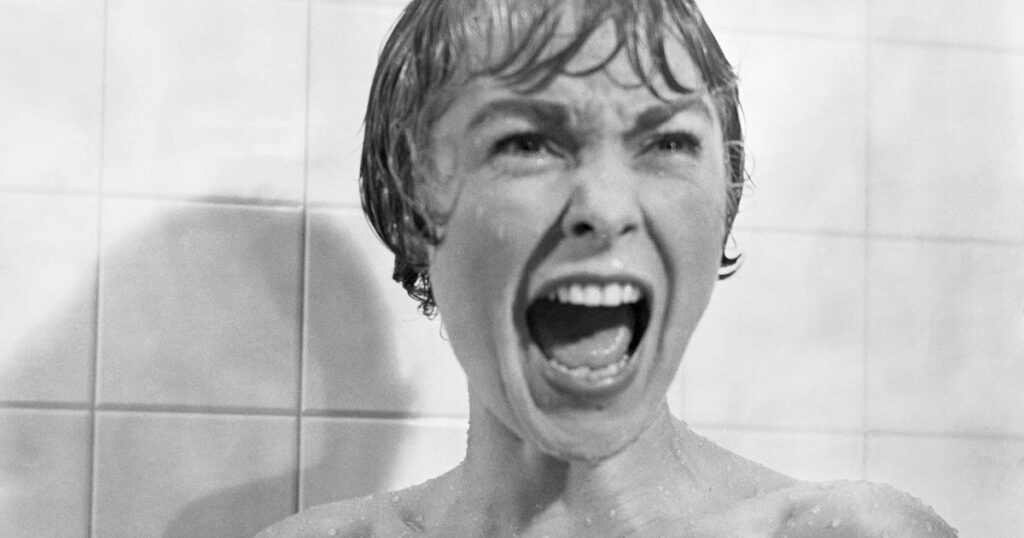
#1. SHOWER MURDER (PSYCHO)
- Film Title: Psycho
- Release Year: 1960
- Scene Name: Shower Murder
- Primary Characters: Marion Crane, Norman Bates
- Setting: Motel bathroom
- Scene Type: Murder / Shock set-piece
- Key Techniques: Rapid montage editing, implied violence, sound design (screeching strings)
- Themes: Vulnerability, voyeurism, sudden violence
- Narrative Function: Inciting shock; disrupts protagonist expectations
- Iconic Elements: 70+ cuts, knife never visibly penetrating skin
Why it’s iconic: Revolutionary editing and sound design create shocking violence without explicit imagery, redefining horror cinema.
Come on, you already knew what the top spot was! The infamous shower scene in Psycho, in which Hitchcock bumps off his leading lady (Janet Leigh) a half hour into the picture, is just as shocking narratively as it is visually (and was even more so in 1960). Of course, as always the case with Hitch, meticulous planning went into this scene, 52 different cuts inter-spliced throughout, each dancing off the harsh sting of Bernard Herrmann’s searing string arrangement. The best part? We don’t see one bit of bodily penetration. Hitch creates something far more sinister in the viewer’s mind than what we’re actually shown. He actually holds the mirror up and reflects the evil in ourselves. The power of editing!
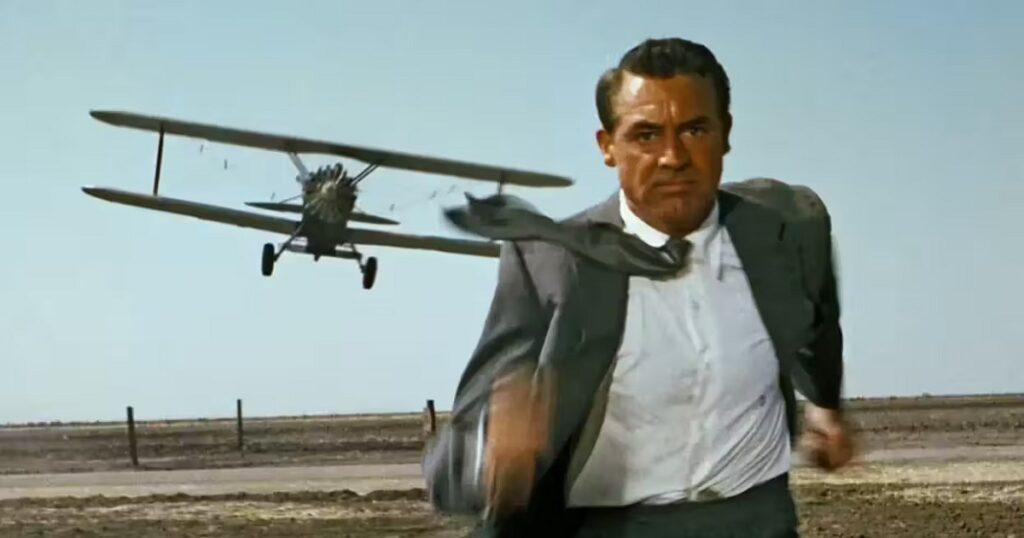
#2. CROP DUSTER ATTACK (NORTH BY NORTHWEST)
- Film Title: North by Northwest
- Release Year: 1959
- Scene Name: Crop Duster Attack
- Primary Characters: Roger Thornhill
- Setting: Rural highway / open farmland
- Scene Type: Suspense / Action
- Key Techniques: Wide framing, delayed payoff, isolation
- Themes: Paranoia, mistaken identity, exposure
- Narrative Function: Escalation of danger
- Iconic Elements: Minimal dialogue, sudden aerial attack
Why it’s iconic: Turns an open, empty landscape into a suspense set-piece, subverting expectations of where danger can exist.
Pick your poison with North by Northwest, one of the best on-the-run suspense thrillers ever crafted. I could have just as easily cited the climactic showdown atop Mount Rushmore, a lofty idea executed to near perfection. Instead, I’ve gone with the iconic crop duster sequence, in which Cary Grant makes a mad dash for his life through a field. The images of Grant running with the plane on his tail are legendary. But that’s not all. After being rained on by some insecticidal dust, Grant makes another run for it, only to come close to being run over by a car. Not to be outdone, Hitch goes pyro when the plane crashes and explodes into flames.
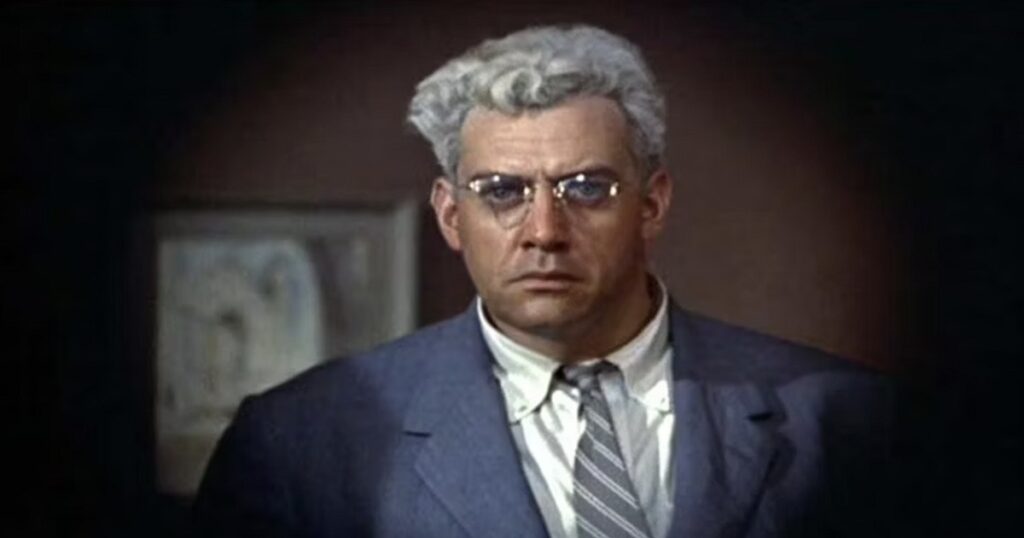
#3. THORWALD DISCOVERY SCENE (REAR WINDOW)
- Film Title: Rear Window
- Release Year: 1954
- Scene Name: Thorwald Discovery Scene
- Primary Characters: L.B. Jefferies, Lars Thorwald
- Setting: Jefferies’ apartment
- Scene Type: Suspense / Confrontation
- Key Techniques: POV framing, lighting contrast, slow reveal
- Themes: Voyeurism, guilt, exposure
- Narrative Function: Confirmation of danger
Why it’s iconic: Masterful use of perspective and silence builds unbearable tension as the watcher becomes the target.
Possibly Hitch’s finest hour, at least technically. The master heightens an overt voyeurism and male gaze he’d been subverting for years in movies and delivers them full bore in Rear Window, a work of A-grade entertainment. The mystery, the suspense, the claustrophobia, the tension, all the notes are played virtuosically. But if I had to single out a specific moment, I’d go with the shot where Thorwald (Raymond Burr) suddenly discovers LB (Jimmy Stewart) spying on him in the apartment across the way. The POV shot pans back and forth innocuously, and when it swings back into focus, Thorwald’s ugly mug staring dead into the camera is an ultimate gasp moment. It was in 1954 and still is now.
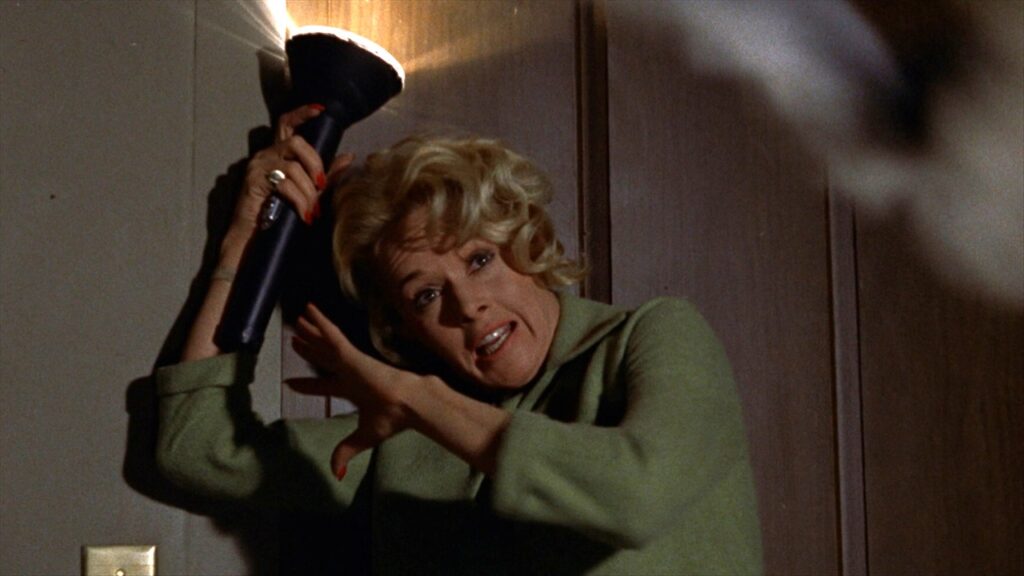
#4. ATTIC ATTACK (THE BIRDS)
- Film Title: The Birds
- Release Year: 1963
- Scene Name: Attic Attack
- Primary Characters: Melanie Daniels
- Setting: Attic room
- Scene Type: Horror / Assault
- Key Techniques: Sound design (no score), chaotic editing
- Themes: Nature’s wrath, helplessness
- Narrative Function: Climactic horror escalation
- Iconic Elements: Sustained bird assault in confined space
Why it’s iconic: Sustained chaos and lack of musical score create a raw, unsettling depiction of nature turning hostile.
Anyone who saw The Girl on HBO knows just how harrowing the final attack in The Birds was to achieve, especially for actress Tippi Hedren, who was brutally assaulted by real birds during the shoot. Not that I lend credence to the lecherous claims the film makes about Hitch as whole, but as a fastidious filmmaker, yeah, I buy the multiple takes and the physical torment and exhaustion created as a result. But if we’re talking verisimilitude, there’s never a false note onscreen. It’s like Marilyn Burns in the OG Texas Chainsaw Massacre; at some point “acting” is no longer the case. Hedren, like Burns, was truly living the horror in the moment. And it translates on screen!
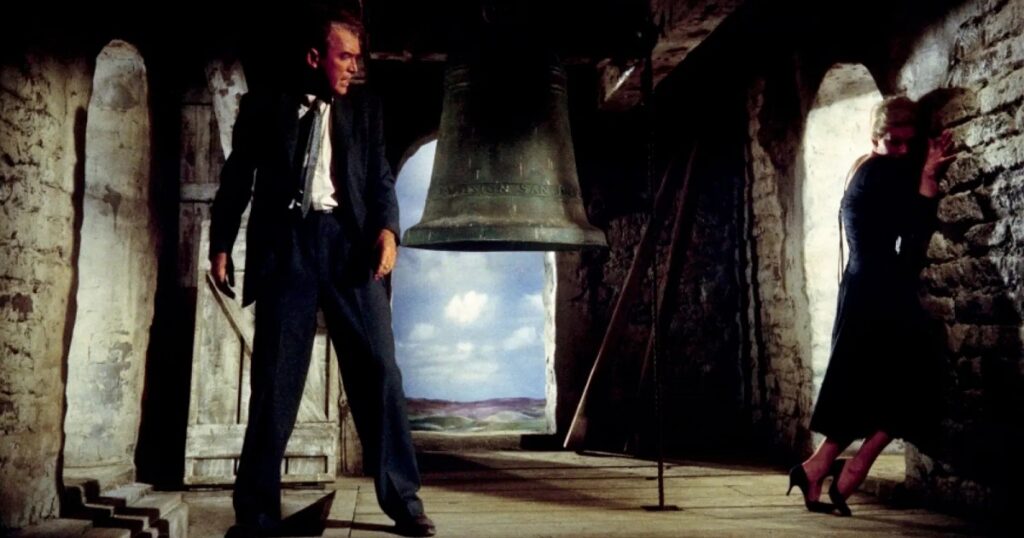
#5. BELL TOWER CLIMAX (VERTIGO)
- Film Title: Vertigo
- Release Year: 1958
- Scene Name: Bell Tower Climax
- Primary Characters: Scottie Ferguson, Judy Barton
- Setting: Mission tower
- Scene Type: Psychological climax
- Key Techniques: Dolly zoom, subjective camera
- Themes: Obsession, illusion, guilt
- Narrative Function: Final resolution
- Iconic Elements: Vertigo effect visualizing acrophobia
Why it’s iconic: Combines psychological obsession with innovative camera work to visualize fear and vertigo.
Can’t blame Jimmy Stewart, Kim Novak would give any man Vertigo! That said, Hitchcock uses the titular dizziness as a great visual tool, with cool in-camera optical FX to make us feel like Stewart – completely panicked! One specific scene crystallizes this motif: the oft-cited tower sequence. When Stewart chases Novak up a vestibule tower, jarring zoom-down and pull-up shots stir a sense of vertigo in us, which, given Stewart’s affliction, is emotionally motivated as well. And if that wasn’t bad enough, Novak falling past the window purview is sure to make your heart drop upon first showing. Imagine seeing that for the first time in 1958!
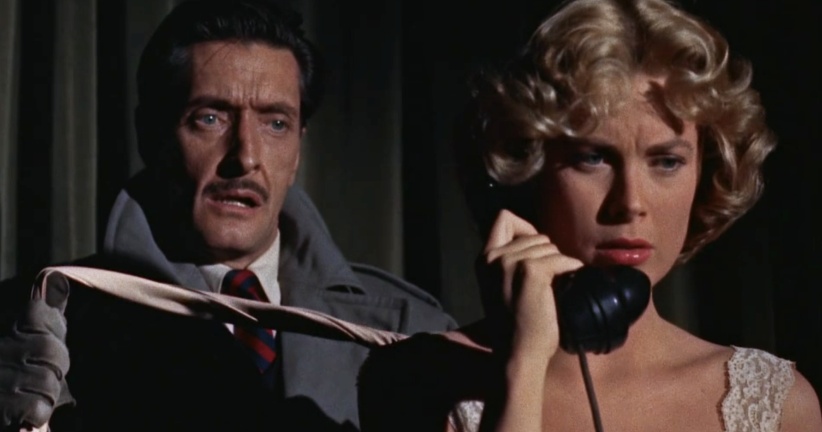
#6. MARGOT KILLS ATTACKER (DIAL M FOR MURDER)
- Film Title: Dial M for Murder
- Release Year: 1954
- Scene Name: Margot Kills Attacker
- Primary Characters: Margot Wendice
- Setting: Apartment living room
- Scene Type: Self-defense / Murder
- Key Techniques: Blocking, real-time tension, color emphasis
- Themes: Survival, entrapment
- Narrative Function: Plot reversal
- Iconic Elements: Sudden use of scissors as weapon
Why it’s iconic: A sudden, brutal act staged in real time that showcases Hitchcock’s precision in confined spaces.
Out of all of Hitchcock’s dalliances with death, few ring as memorable as what Grace Kelly pulls on her assailant in Dial M for Murder. When the dastardly Anthony Dawson skulks into Kelly’s apartment in the dark, sneaking up on her from behind (as she’s on the phone with Jimmy Stewart), he swaddles a necktie around her throat with intentions to kill. A struggle ensues, and with her life slowly leaking out, Kelly suddenly reaches for pair of large scissors, quickly jabbing them into Dawson’s back. He recoils and ultimately succumbs. This is a masterfully crafted scene; the shot selection, the lighting, the music, the suspense, all of it.
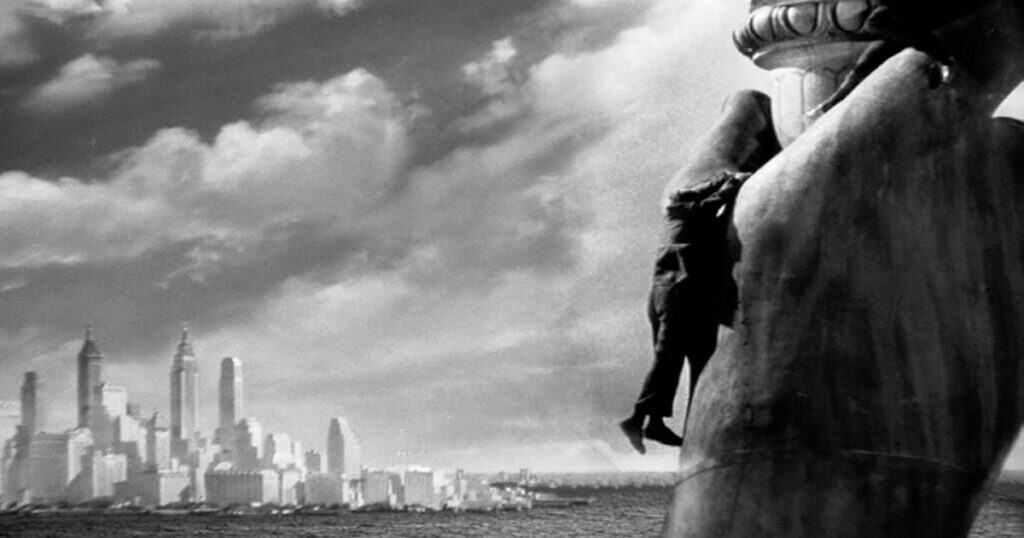
#7. STATUE OF LIBERTY SEQUENCE (SABOTEUR)
- Film Title: Saboteur
- Release Year: 1942
- Scene Name: Statue of Liberty Sequence
- Primary Characters: Barry Kane, Frank Fry
- Setting: Statue of Liberty
- Scene Type: Thriller climax
- Key Techniques: Vertical staging, symbolic imagery
- Themes: Justice, patriotism
- Narrative Function: Final confrontation
- Iconic Elements: Villain falls from torch
Why it’s iconic: Climactic suspense unfolds on an American landmark, blending spectacle with high-stakes tension.
For a foreigner, Hitchcock sure tackled American landmarks more fearlessly than any of his native counterparts ever did. The jaw-dropping Statue of Liberty cliffhanger sequence in the early work Saboteur is a perfect example of such, and I have to believe such a set-piece made him want to up the ante when we shot the Mount Rushmore scene in North by Northwest. And I’m glad he did! In any event, the Statue of Liberty scene is awesome to this day, and must have been flat out heart-stopping in 1942. The action is basically a chase scene that culminates in a dude hanging from Ms. Liberty’s torch. As the seam of his jacket slowly tears, suspense mounts into a fatal finale.
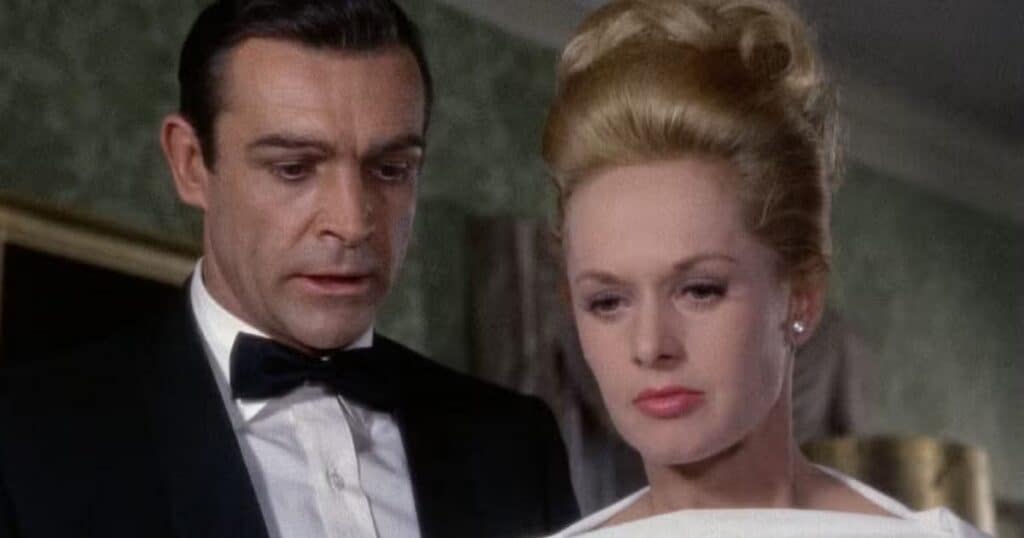
#8. SUGGESTED ASSAULT (MARNIE)
- Film Title: Marnie
- Release Year: 1964
- Scene Name: Suggested Assault Scene
- Primary Characters: Marnie Edgar, Mark Rutland
- Setting: Cabin bedroom
- Scene Type: Psychological drama
- Key Techniques: Suggestion over depiction, performance focus
- Themes: Control, trauma, consent
- Narrative Function: Character turning point
- Iconic Elements: Ambiguous, disturbing implication
Why it’s iconic: Disturbing psychological complexity challenges audiences with morally uncomfortable subject matter.
Tippi Hedren as the titular Marnie becomes victimized by Sean Connery in a very disturbing, if only suggestive assault scene. “But I do want to go to bed, Marnie. I very much want to go to bed.” Marnie just stands there still, silent, eyes lifeless… Connery advances and shreds her clothes off. An embrace follows suit, then a kiss, and as Marnie gives in, Connery pushes her onto the bad, a lustful glint in his eye. For 1964, it’s pretty damn harrowing.
#9. OPENING & CLOSING SCENES (ROPE)
- Film Title: Rope
- Release Year: 1948
- Scene Name: Murder Opening & Reveal Ending
- Primary Characters: Brandon Shaw, Phillip Morgan, Rupert Cadell
- Setting: Apartment
- Scene Type: Experimental / Suspense
- Key Techniques: Long takes, real-time illusion
- Themes: Intellectual arrogance, morality
- Narrative Function: Framing device (beginning + resolution)
- Iconic Elements: Hidden body in plain sight
Why it’s iconic: Long-take illusion and real-time storytelling create an immersive, claustrophobic experiment in tension.
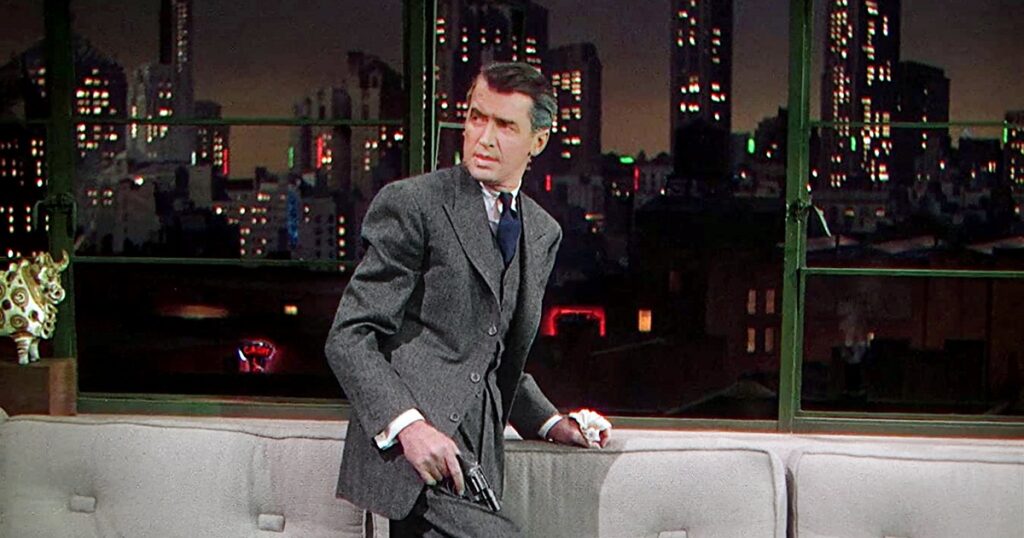
Since the entire conceit of Rope (one of my favorite Hitchcock films) is to appear as if the movie plays out in one single continuous take, we could technically cite the whole film as one of Hitch’s greatest “scenes.” That said, the opening and closing scenes are really quite magnificent. As we pan to a window to start and immediately cut inside an apartment, we see a man being strangled to death by two men with a rope. They cram the corpse into a credenza, then inconspicuously host a party in the apartment, serving food and drinks right off the dead man’s tomb. But when Jimmy Stewart shows up in the end and lays down a harsh diatribe, the neon signs blinking in and out of the apartment, Hitch tightens the rope with a satisfactory finale.
#10. BUS BOMBING (SABOTAGE)
- Film Title: Sabotage
- Release Year: 1936
- Scene Name: Bus Bombing
- Primary Characters: Stevie
- Setting: London bus route
- Scene Type: Suspense / Tragedy
- Key Techniques: Dramatic irony, ticking clock
- Themes: Innocence, inevitability
- Narrative Function: Shock event
- Iconic Elements: Bomb detonates before expected
Why it’s iconic: A slow-building sequence of dread that shocks by defying audience expectations of safety.
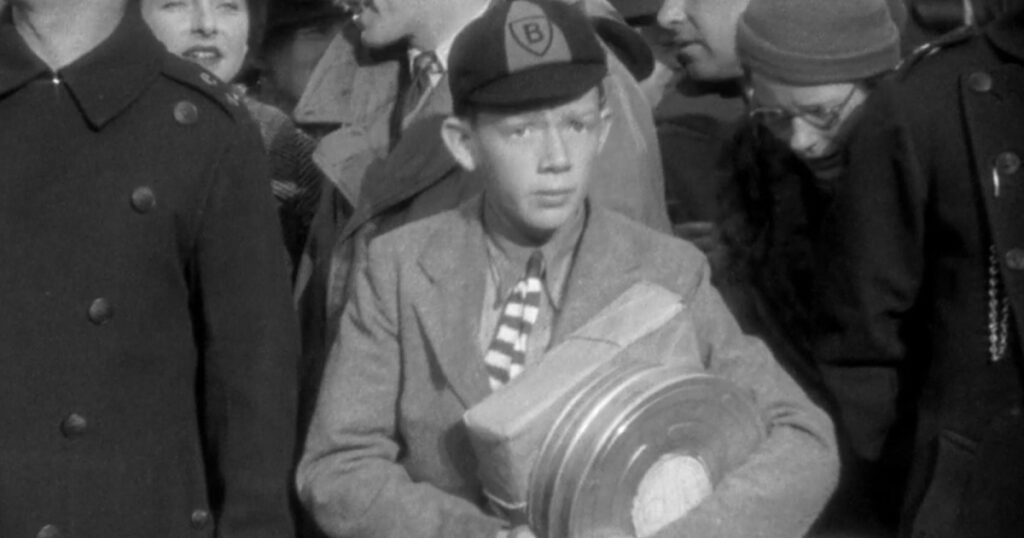
This is perhaps his first great example of suspenseful mastery (a young boy unwittingly delivering a bomb to a bus in the 1936 film Sabotage), and it remains a classic example of Hitchcock’s talent. It’s literally a ticking clock scenario, as the audience is given the bomb’s detonation time. Hitch toys with us by repeatedly showing clocks winding down to said explosion point. And since the boy is in a public square, completely oblivious of what he holds, the collateral damage of the bomb exploding offers a horrific what-if situation. Of course, the result is just as shocking as the setup was tense. Trivially, Hitchcock regretted ending the scene the way he did, as it lent the exact shock value he wanted to avoid. If done over, he would have offered the audience relief.
| Rank | Scene | Film | Year | Type of Suspense | Key Technique |
|---|---|---|---|---|---|
| 1 | Shower Murder | Psycho | 1960 | Shock / Horror | Rapid editing, sound design |
| 2 | Crop Duster Attack | North by Northwest | 1959 | Environmental Suspense | Empty space tension |
| 3 | Thorwald Discovery Scene | Rear Window | 1954 | Voyeuristic Tension | Restricted POV, silence |
| 4 | Attic Attack | The Birds | 1963 | Survival Horror | No score, escalating chaos |
| 5 | Bell Tower Climax | Vertigo | 1958 | Psychological Suspense | Camera distortion, vertigo effect |
| 6 | Margot Kills Attacker | Dial M for Murder | 1954 | Domestic Thriller | Confined staging, real-time tension |
| 7 | Statue of Liberty Sequence | Saboteur | 1942 | Action Suspense | Public landmark escalation |
| 8 | Suggested Assault | Marnie | 1964 | Psychological Drama | Implication over depiction |
| 9 | Opening & Closing Scenes | Rope | 1948 | Real-Time Suspense | Long takes, continuous staging |
| 10 | Bus Bombing | Sabotage | 1936 | Political Suspense | Delayed payoff, built dread |
These ten scenes represent Alfred Hitchcock’s most influential work in suspense cinema, spanning psychological thrillers, environmental terror, and groundbreaking editing techniques that defined modern filmmaking.
Frequently Asked Questions About Alfred Hitchcock Scenes
What is Alfred Hitchcock’s most famous scene?
The most famous scene is the shower scene in Psycho (1960), known for its rapid editing, piercing score, and shocking impact on audiences.
What is considered Alfred Hitchcock’s best scene?
Many consider the crop duster attack in North by Northwest (1959) his best scene due to its innovative use of space, tension, and visual storytelling.
Why are Alfred Hitchcock’s scenes so effective?
Hitchcock’s scenes are effective because he uses camera perspective, editing, and sound to control what the audience sees and feels, building suspense through anticipation rather than action.
Which Alfred Hitchcock movie has the most suspense?
Rear Window (1954) is often cited as his most suspenseful film because it traps the audience in a single viewpoint while gradually revealing danger.
What makes the Psycho shower scene so iconic?
The shower scene in Psycho (1960) is iconic for its fast-paced editing, minimal on-screen violence, and the use of music to intensify fear.
Did Alfred Hitchcock rely on special effects?
Hitchcock relied more on practical filmmaking techniques like editing, lighting, and camera angles than on special effects, making his suspense feel grounded and realistic.
What is a good Alfred Hitchcock movie to start with?
A great starting point is Psycho, Rear Window, or North by Northwest, as they showcase his signature suspense style.







The comment section exists to allow readers to discuss the article constructively and respectfully, focused on the topic at hand.
What’s Not Allowed