
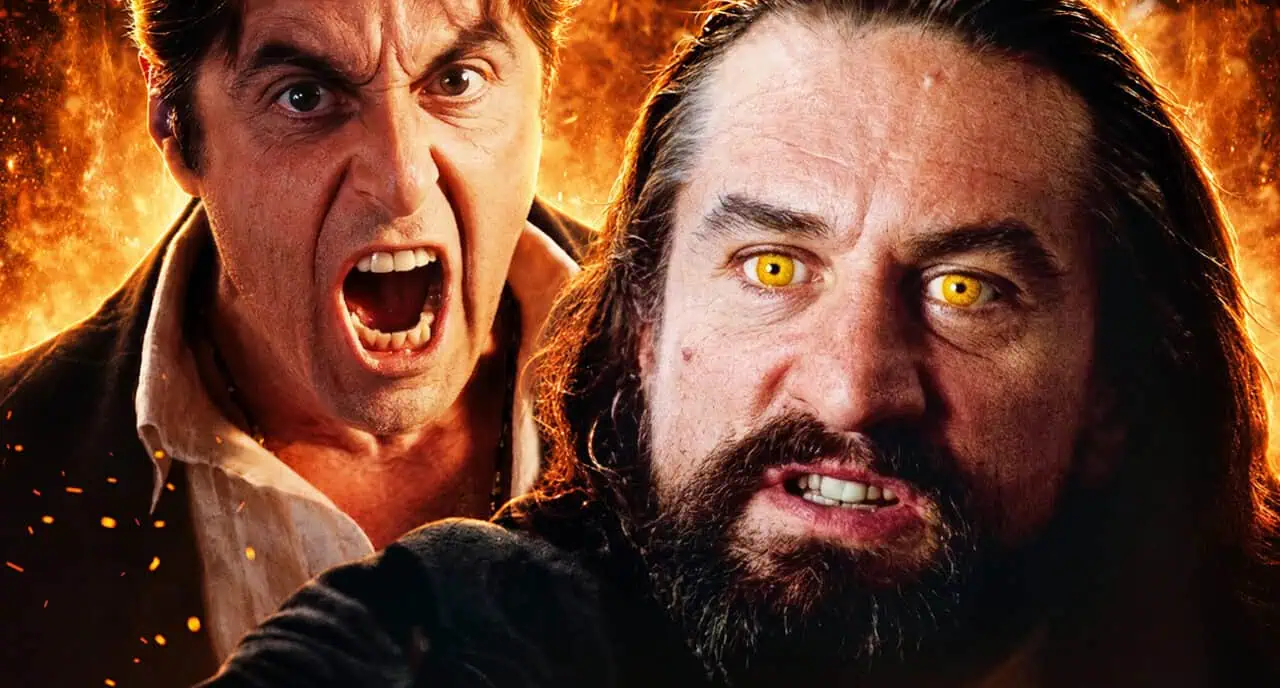

When you find yourself standing in line at the grocery store wondering, “Who gave the greatest performance as Satan in a horror movie?” you’ll quickly realize two things. First, there are surprisingly few actors who’ve actually played the Devil on the big screen. Second, the ones who have? They absolutely crushed it. You’ll probably also notice everyone around you slowly backing their shopping carts away. But that’s their problem.
It’s a fascinating question. What makes a great cinematic Lucifer? Is it quiet menace? Unchecked charisma? Pure evil? Or is the best Devil the one who can convince you he’s actually making a pretty good point?
Today we’re counting down the greatest performances of Satan in horror, and the level of acting talent on this list is almost unfair. We’re talking about some of the greatest actors to ever live… playing the greatest villain who ever lived.
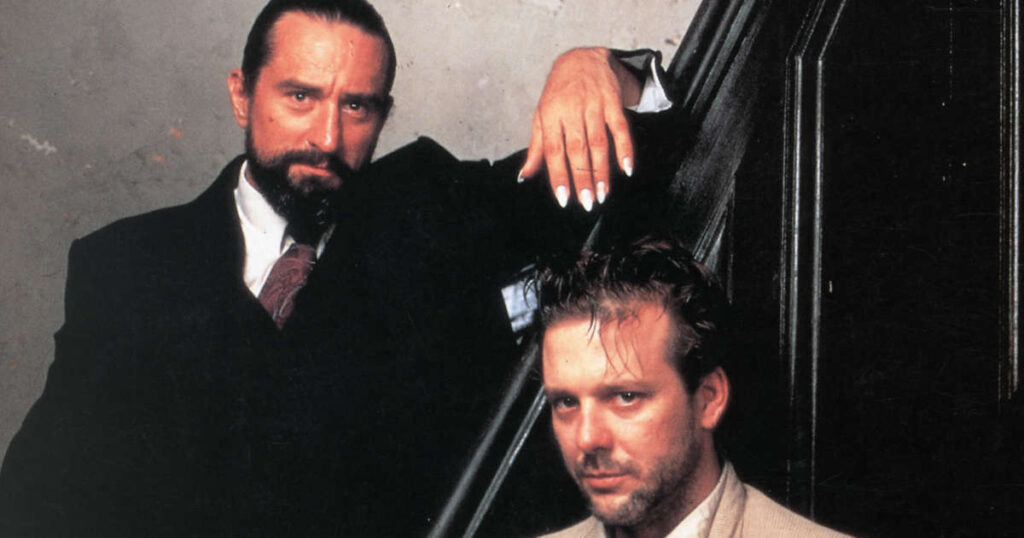
Robert De Niro as Louis Cyphre — Angel Heart (1987)
Based on William Hjortsberg’s novel Falling Angel, Alan Parker’s Angel Heart blends horror and film noir into one unforgettable nightmare. Mickey Rourke stars as private investigator Harry Angel, hired by the mysterious Louis Cyphre to track down a missing singer who supposedly owes him a debt.
If you’ve never seen the movie… well, De Niro’s inclusion on this list is already a bit of a spoiler. Just say his character’s name out loud a few times. Louis Cyphre. Yeah.
Though the truth isn’t revealed until the film’s final act, De Niro plays every scene as though he already knows exactly how this story ends. His performance never relies on screaming, monstrous transformations, or flashy supernatural effects. Instead, he’s unsettling from the moment he appears. Everything about him feels just… wrong. The long, immaculate fingernails. The perfectly groomed beard and ponytail. The expensive suits. The unnervingly calm voice. Even when he’s sitting perfectly still, he radiates authority.
As Cyphre himself asks: “If I had cloven hooves and a pointed tail… would you be more convinced?” Exactly. That’s what makes the performance so effective. He doesn’t need to look like the Devil because he already behaves like someone who’s completely beyond human concerns.
When Angel Heart finally reveals those glowing yellow eyes near the climax, it’s genuinely chilling not because of the visual effect itself, but because De Niro has spent the entire movie convincing you that this man has always been something far worse than human. It’s one of horror’s great payoff moments.
De Niro Makes Every Minute Count
Despite relatively little screen time, De Niro dominates Angel Heart. His presence hangs over every scene, even when he’s nowhere to be found. He speaks in a soft, measured whisper that’s somehow more threatening than shouting ever could be. This isn’t a man who raises his voice because he’s never needed to. He walks through the film with the confidence of Jimmy Conway from Goodfellas or Vito Corleone from The Godfather… if they happened to spend their weekends collecting souls through occult bargains.
He’s not somebody you’d want to owe money. He’s definitely not somebody you’d want to owe your soul. Honestly, I’d prefer to stay several zip codes away from Louis Cyphre at all times.
The Boiled Egg Scene Is Horror Perfection
One of the film’s most memorable moments is deceptively simple. Cyphre sits across from Harry Angel, calmly cracking and eating a boiled egg while carrying on a perfectly ordinary conversation. Except nothing about it feels ordinary. Every crack of the shell sounds violent. Every movement of those long fingernails feels deliberate. Watching someone casually eat a boiled egg inches from your face is unsettling enough. Watching Robert De Niro do it while staring into your soul somehow turns breakfast into psychological warfare.
It’s one of those scenes where almost nothing happens, yet you can’t look away.
Building the Devil
The performance wasn’t an accident. De Niro reportedly obsessed over Louis Cyphre’s appearance, importing clothing from Rome, having custom canes flown in from France, and even taking the wardrobe home so he could rehearse fully in costume. That level of preparation shows. Everything about Louis Cyphre feels intentional, from the way he dresses to the way he moves, speaks, and watches people. He’s seductive without being charming, polite without ever feeling kind, and terrifying without raising his voice.
It’s one of Robert De Niro’s most underrated performances and one of the finest portrayals of Satan ever committed to film.
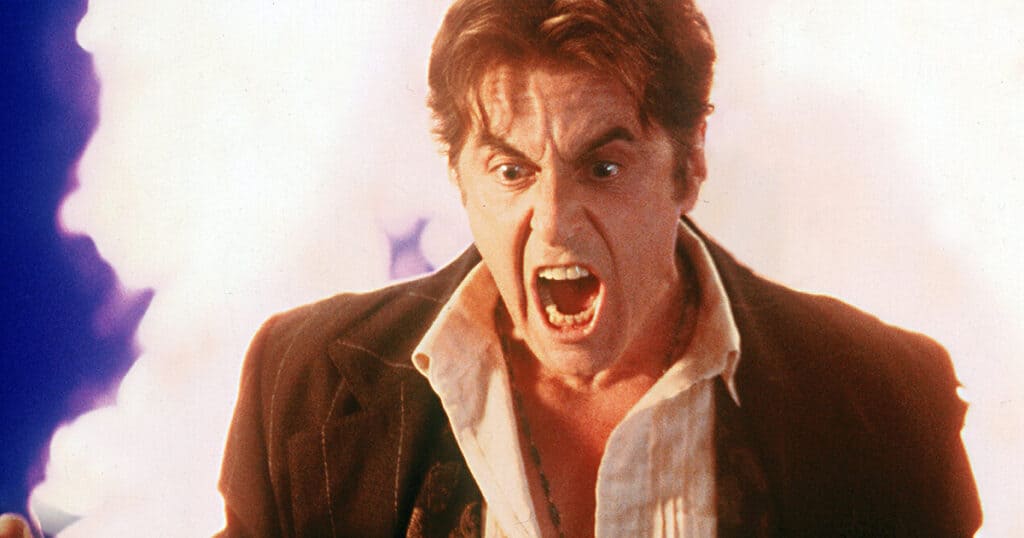
Al Pacino as John Milton — The Devil’s Advocate (1997)
If Robert De Niro’s Devil whispers, Al Pacino’s practically grabs a microphone. Louis Cyphre is patient, restrained, and quietly terrifying. John Milton is loud, charismatic, hilarious, and completely intoxicated by humanity’s worst impulses. Where De Niro tempts from the shadows, Pacino throws a party.
And somehow, both approaches work perfectly.
Based on Andrew Neiderman’s novel of the same name, The Devil’s Advocate stars Keanu Reeves as Kevin Lomax, an undefeated Florida defense attorney whose remarkable success earns him an invitation to work for a prestigious New York law firm run by the charismatic John Milton. Naturally, Milton is Satan. And, naturally, he’s also Kevin’s father.
The Devil Loves Success
Unlike many cinematic Devils, John Milton doesn’t hide in caves, abandoned churches, or the depths of Hell. He lives exactly where you’d expect temptation to flourish. At the top. His office is enormous. His penthouse overlooks Manhattan like Olympus. His law firm has its fingers in everything from chemical weapons to environmental disasters. Money, influence, politics. Milton doesn’t just influence the powerful. He is power.
Yet one of Pacino’s smartest choices is that Satan doesn’t always look powerful. He frequently dresses down, blends into crowds, and enjoys being underestimated. That confidence is what makes him dangerous. He already knows he’s won.
Kevin Is the Perfect Target
Milton doesn’t corrupt Kevin overnight. He simply recognizes what’s already there. Kevin grew up without a father. He’s brilliant. He’s ambitious. He’s never lost a case. More importantly, he genuinely believes he deserves everything that’s coming to him. Milton barely has to push. He offers Kevin money. Status. Luxury. Beautiful women. Professional prestige. Everything Kevin already wanted.
Pacino excels as the ultimate mentor figure because that’s always been one of his greatest strengths as an actor. Whether he’s inspiring, manipulating, or outright corrupting someone, he knows exactly how to make every conversation feel personal. Kevin doesn’t think he’s being seduced, he thinks he’s finally being appreciated. That’s the Devil’s greatest trick.
Satan Knows How to Party
Of every Devil on this list, John Milton is easily the most fun. He’s the life of every room. One minute he’s chatting with strangers on the subway, the next he’s ringside at a Roy Jones Jr. fight. Then he’s out painting the town with Kevin while quietly destroying Kevin’s marriage from afar. That’s what makes Milton so fascinating. He genuinely enjoys himself. He delights in excess. He’s less interested in torturing souls than he is proving that people will happily damn themselves if you give them enough opportunities.
And he’s probably right.
Pacino Chews Every Inch of the Scenery
This is one of those performances where “subtle” was never part of the assignment. Pacino attacks every monologue like it’s the final scene of the movie. He rants about greed. He laughs at organized religion. He mocks God. He predicts an interconnected future where technology feeds humanity’s endless vanity, arguing that everyone will eventually believe themselves to be emperors. For a movie released in 1997, that’s a surprisingly sharp prediction.
Even smaller moments become unforgettable. Milton casually dips his finger into holy water. It immediately begins to boil. No flashy visual effects. Just one simple gesture. That’s all Pacino needs.
One of Horror’s Greatest Monologues
Then comes the finale. Kevin has lost everything. His wife is dead. The illusion has shattered. He finally understands exactly who John Milton really is. Which gives Al Pacino the opportunity to unleash one of the greatest villain speeches ever put on film. Milton tears apart Kevin’s attempts to blame everyone else for his choices. Greed. Vanity. Pride. Nobody forced Kevin into any of it. He wanted it.
Then Pacino shifts gears entirely, launching into his legendary rant about guilt, free will, and God Himself. Whether you agree with anything Milton says is beside the point. For those few minutes, Pacino makes Satan sound weirdly persuasive. That’s what separates this performance from almost every other cinematic Devil. Even after revealing himself as the literal Prince of Darkness, he’s still magnetic. You want to keep listening. You know he’s lying. You know he’s manipulating everyone in the room. And yet, you almost understand why people keep following him. That’s an extraordinary feat of acting.
For me, Al Pacino’s John Milton remains the greatest portrayal of Satan ever put on film.
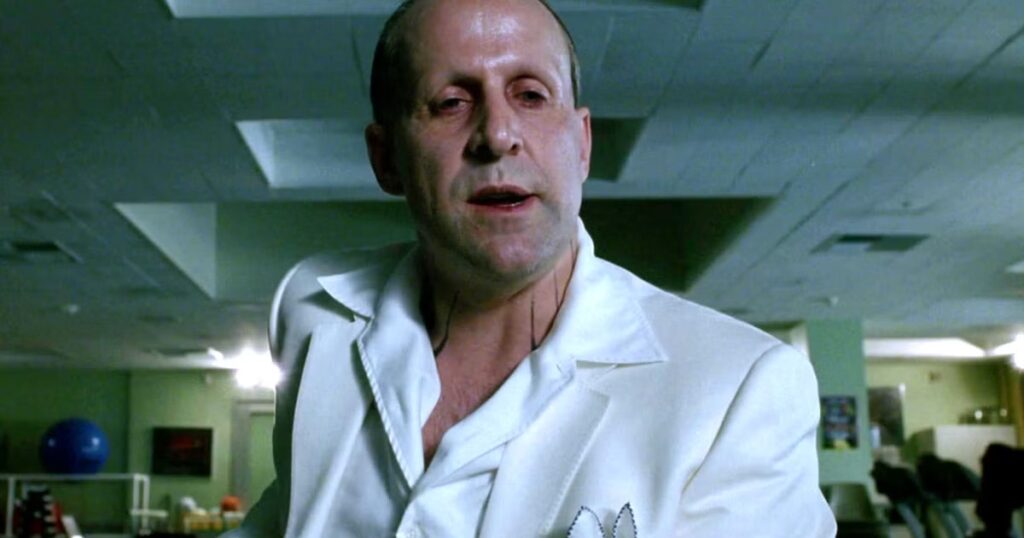
Peter Stormare as Lucifer — Constantine (2005)
Most movie Devils spend two hours manipulating events from the shadows. Peter Stormare only gets about ten minutes, but somehow he steals the entire movie.
By the time Lucifer finally appears in Constantine, John Constantine (Keanu Reeves) already knows exactly what’s going to happen when he dies. After a lifetime of damning his own soul, he expects Satan himself to come personally collect the prize. So, when Constantine reaches the end of his rope, he does the unthinkable. He summons the Devil. And down he comes. Not rising from Hell, but descending from above. Covered in black tar-like blood. Bare feet sizzling against the floor. Wearing an immaculate white suit. It’s one of horror’s greatest character introductions.
A Devil Unlike Any Other
Stormare doesn’t resemble the regal Devils played by Robert De Niro or Al Pacino. He looks sick, almost decaying. Like someone who’s been wandering the earth for thousands of years without ever bothering to clean himself up. Then he starts talking. Calmly. Politely. Almost cheerfully. He lights Constantine’s cigarette and casually mentions that he owns stock in the tobacco company. Of course he does.
Then he smiles and tells Constantine he’s built an entire amusement park waiting just for him in Hell. It’s oddly conversational, which somehow makes it even creepier. He even calls Constantine “Sonny,” creating the unintentionally hilarious coincidence that Keanu Reeves has now played Satan’s son in The Devil’s Advocate and become one of Lucifer’s favorite collectibles in Constantine. Seriously, why does Keanu keep ending up in movies where Satan takes a special interest in him? The man hasn’t aged in decades. He’s universally beloved. He’s starred in two of the greatest Devil movies ever made. I’m not saying somebody made a deal… Actually, yes I am.
Just kidding. Keanu would never.
Equal Parts Funny and Revolting
Stormare constantly walks the line between comedy and genuine discomfort. One second he’s making sarcastic jokes. The next, he’s rubbing his filthy bare feet up Constantine’s leg while making an uncomfortable “boys will be boys” remark. You immediately want the scene to end. Not because it’s poorly acted. Because it’s too well acted.
Everything about this Lucifer feels invasive. He doesn’t just invade your soul. He invades your personal space. Your comfort zone. Your entire sense of safety. Then, after learning that the son of Satan is attempting to cross into Earth with Gabriel’s help, Lucifer lets out an unsettling hiss, licks the air like some kind of reptilian predator, and sprints away with impossible speed.
It’s bizarre. It’s hilarious. It’s terrifying. And somehow all three emotions happen simultaneously.
The Scariest Devil on This List
If De Niro feels like he wants your soul and Pacino wants your ego, Stormare feels like he wants to make you deeply uncomfortable long before he ever drags you to Hell. There’s something profoundly wrong about him. His movements are unpredictable. His body language constantly shifts between graceful and animalistic. He smiles too much. He stands too close. Even his jokes feel contaminated.
It’s an incredible piece of physical acting.
A Devil Who Gets Outplayed
Lucifer eventually returns to collect Constantine just as John’s sacrifice has earned him redemption. Then Constantine pulls off one final trick. By willingly giving his life to save someone else, he earns his place in Heaven. Lucifer, who arrived expecting to claim another soul, is forced to let him go. For someone supposedly playing four-dimensional chess with humanity, Satan gets outmaneuvered surprisingly easily.
Still, he does rip the cancer directly out of Constantine’s lungs with his bare hands. So he’s got that going for him.
Stormare Reinvented Lucifer
One of the most fascinating things about this performance is just how much of it came from Peter Stormare himself. Originally, Lucifer was envisioned as more of a stereotypical punk-rock Devil, complete with leather pants, tattoos, a dog collar, and spiked hair. Stormare hated the idea. He argued that audiences would spend the entire scene staring at the costume instead of listening to what Satan was saying. Instead, he proposed almost everything audiences now associate with the character. The white suit. The shaved eyebrows. The unsettling entrance. Several of the dialogue choices. Even Lucifer descending from above instead of emerging from below.
Director Francis Lawrence has also revealed that another early concept imagined the Devil as a twisted reflection of Christ, complete with black blood and a crown of thorns made from insects before the studio rejected the design. Both versions sound nightmare-inducing, but Stormare’s interpretation became iconic for a reason. He proved that sometimes the most frightening Devil isn’t the loudest one. It’s the one who smiles.

Gabriel Byrne as “The Man” — End of Days (1999)
If Peter Stormare gives us the creepiest Devil, Gabriel Byrne gives us the most complete package. He’s seductive. He’s physically terrifying. He’s manipulative. He’s funny. And when necessary, he can literally turn into a giant flaming demon. Not many Satans can say that.
One Hell of an Entrance
End of Days wastes absolutely no time introducing its version of Lucifer. A mysterious supernatural force erupts from beneath New York City and possesses an unsuspecting businessman who made the unfortunate decision to excuse himself to the restroom during dinner. Bad timing. The unseen entity slams him around the bathroom like Jim Carrey fighting himself in Liar Liar before finally taking control of his body.
Moments later, he strolls back to the table and immediately starts making out with his friend’s wife. Not exactly subtle. Then he walks away. The restaurant explodes behind him. He never looks back. It’s one of the coolest “walking away from an explosion” shots of the ’90s.
Meanwhile, across town, Arnold Schwarzenegger is giving one of the most underrated dramatic performances of his career as broken ex-cop Jericho Cane. Yes, this is the movie where Arnold starts his morning by blending leftover pizza, Pepto-Bismol, and Chinese food into a breakfast smoothie. Mental health comes in many forms. Somehow, that smoothie perfectly establishes just how completely broken this guy has become before he’s forced to stare the Devil in the face.
Evil Made Flesh
Once Gabriel Byrne fully settles into his stolen body, he becomes one of the most fascinating movie Devils ever put on screen. He’s a perfect middle ground between Robert De Niro’s quiet menace and Al Pacino’s larger-than-life charisma. He can be charming. He can be funny. He can be terrifying. And he can switch between all three in the span of a single conversation.
Byrne’s Satan doesn’t waste time proving exactly who he is. He casually murders people. He whispers suggestions that send innocent bystanders to their deaths. He strolls through hospitals, blowing cigarette smoke into patients’ ventilators before pinning them to the ceiling like grotesque works of art.
He’s pure, unapologetic evil. Yet none of it ever feels cartoonish. That’s because Byrne plays Lucifer with complete sincerity. There’s no winking at the audience or chewing the scenery. He behaves like these atrocities are simply another day at the office.
When violence is required, he’s more than capable. He punches Udo Kier’s head clean off his shoulders. He casually shrugs off gunfire. And when all else fails, there’s that towering, flame-covered demon ability. As far as movie Satans go, Gabriel Byrne really does have the full package.
The Devil Is a Salesman
What truly elevates Byrne’s performance isn’t the supernatural spectacle. It’s the manipulation. One of the film’s best scenes comes when Satan visits Jericho Cane in his apartment. Instead of threatening him outright, he recreates the murder of Jericho’s wife and daughter, offering him the one thing he wants more than anything else in the world. His family. All Jericho has to do is betray the young woman destined to stop Hell’s plans. That’s the Devil’s entire business model. Not force. Temptation.
Byrne delivers the scene with heartbreaking sincerity, arguing that God is the real villain and Satan is simply offering people what they’ve always wanted. Like Al Pacino’s John Milton, he makes an argument that sounds disturbingly persuasive… right up until you remember who’s making it.
A Different Kind of Devil
One thing End of Days gets right is refusing to recycle the same old Satan clichés. Take the church sequence. Most movie Devils recoil from crosses. Not this one. Byrne simply grabs the cross and drives it straight through a priest’s skull. Problem solved. It’s a wonderfully twisted reversal of expectations and one of the film’s most memorable moments.
Throughout the movie, Byrne carries himself with complete confidence. He calmly stands inside roaring flames as though he’s waiting for his order at McDonald’s. He wanders through nightmare sequences that feel like Freddy Krueger wandered into a biblical apocalypse. He delivers long, persuasive speeches. He transforms into a monster. He physically overpowers nearly everyone he encounters. Honestly, Byrne may have more to do on screen than any Devil on this list.
Time Has Been Kind to End of Days
For years, End of Days was dismissed as another late-’90s supernatural action movie. It’s much better than its reputation suggests.
The Y2K backdrop gives it a unique sense of urgency. Gabriel Byrne delivers one of the best Satan performances ever filmed. And Arnold Schwarzenegger gives one of the most emotionally vulnerable performances of his career.
If you haven’t revisited End of Days in a while, it’s absolutely worth another look.
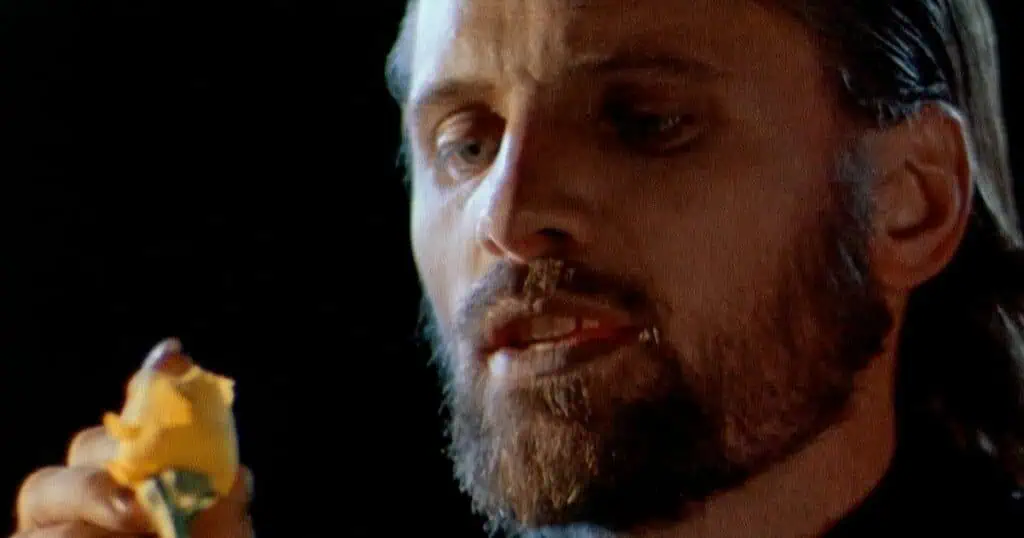
Viggo Mortensen as Lucifer — The Prophecy (1995)
Like Peter Stormare before him, Viggo Mortensen doesn’t get much screen time. He doesn’t need it. His Lucifer appears for only a handful of scenes in The Prophecy, yet somehow becomes one of the film’s most unforgettable characters.
Christopher Walken may own the movie as the archangel Gabriel, but Mortensen almost steals it away at the finish line.
“God Is Love. I Don’t Love You.”
Lucifer first appears outside the church where Katherine steps out for a moment of fresh air amid Heaven’s civil war. There he sits. Perched casually on a pile of broken bricks. Watching. Waiting. Looking like someone who’s been hanging around the apocalypse simply because he had nothing better to do. Visually, he’s somewhere between a gothic rock star and a man who hasn’t slept in centuries.
The first exchange immediately tells you everything you need to know. Katherine gasps, “Oh my God.” Lucifer calmly replies, “God is love. I don’t love you.” That’s one hell of an introduction.
Then things get considerably stranger. He casually informs Katherine that he could “lay you out and fill your mouth with your mother’s feces.” Not exactly Hallmark material. But it perfectly establishes that this Devil isn’t interested in charming anyone. He’s here to make everyone uncomfortable. Mission accomplished.
Equal Parts Poet and Monster
Mortensen’s Lucifer behaves unlike any other version on this list. One moment he’s softly singing. The next he’s growling like an animal. Then he’s chewing on flowers while delivering philosophical observations about humanity and Heaven. It shouldn’t work, but it absolutely does.
His monologue about angels, mankind, and God’s abandonment carries a surprising amount of melancholy beneath the menace. Lucifer isn’t simply evil. He’s bitter. Jealous. Resentful. And deeply invested in watching Heaven tear itself apart. After all, if the angels destroy each other, everyone else loses too.
The Devil Under the Bed
Mortensen’s second major scene is arguably even creepier. He visits Thomas and quietly reveals that he’s been listening to his nightly prayers for years. Not from Heaven. Not from afar. From underneath his bed. That’s the kind of line that sticks with you long after the credits roll.
Like Robert De Niro, Mortensen understands that whispering can often be more frightening than shouting. He barely raises his voice throughout the film. He doesn’t need to. Every word lands exactly where it’s supposed to.
Even Satan Has an Agenda
Unlike most versions of Lucifer, The Prophecy‘s Devil is technically helping the heroes. Not because he’s suddenly become a good guy. Far from it. He simply refuses to let Christopher Walken’s Gabriel overthrow Heaven. If anyone’s going to destroy humanity, it’s going to be him.
That twisted self-interest makes for one of the film’s best scenes when Lucifer finally confronts Gabriel. The encounter feels like a supernatural cousin to the diner scene in Heat. Two legendary actors. Two unforgettable characters. One incredibly uncomfortable conversation. Then, without warning, Lucifer rips Gabriel’s heart out of his chest. Problem solved. Only the Devil could make murder look like conflict resolution.
Strange, Unforgettable, Brilliant
Mortensen’s Lucifer ends the film by becoming increasingly obsessive, delivering one last unsettling declaration of affection before disappearing in a flock of less-than-convincing CGI birds. It’s not the strongest visual effect, but it doesn’t matter. The performance is what people remember.
Viggo Mortensen throws himself completely into the role, creating one of cinema’s weirdest, funniest, and most unsettling portrayals of Satan. He isn’t on screen for long. But like every great Devil, he makes every second count.
Honorable Mentions
Just missing the list are several unforgettable portrayals of the Prince of Darkness.
Tim Curry delivers a wonderfully sinister take in Legend, while South Park‘s Satan remains one of the funniest versions of the character ever created.
There’s also Max von Sydow’s mysterious Leland Gaunt in Needful Things, who may or may not be the Devil himself, and Jack Nicholson’s gleefully vulgar performance in The Witches of Eastwick, another role that leaves plenty of room for interpretation.
Final Thoughts
There you have it, our picks for the five greatest portrayals of Satan in horror movie history.
Whether you prefer Robert De Niro’s quiet intimidation, Al Pacino’s theatrical charisma, Peter Stormare’s skin-crawling creepiness, Gabriel Byrne’s manipulative charm, or Viggo Mortensen’s beautifully bizarre interpretation, each actor found a completely different way to bring the Prince of Darkness to life. And that’s what makes these performances so memorable.
The Devil may wear many faces, but they’re all unforgettable.
Who gave your favorite performance as Satan? Did we miss someone who deserved a spot on the list? Let us know in the comments below!













The comment section exists to allow readers to discuss the article constructively and respectfully, focused on the topic at hand.
What’s Not Allowed