
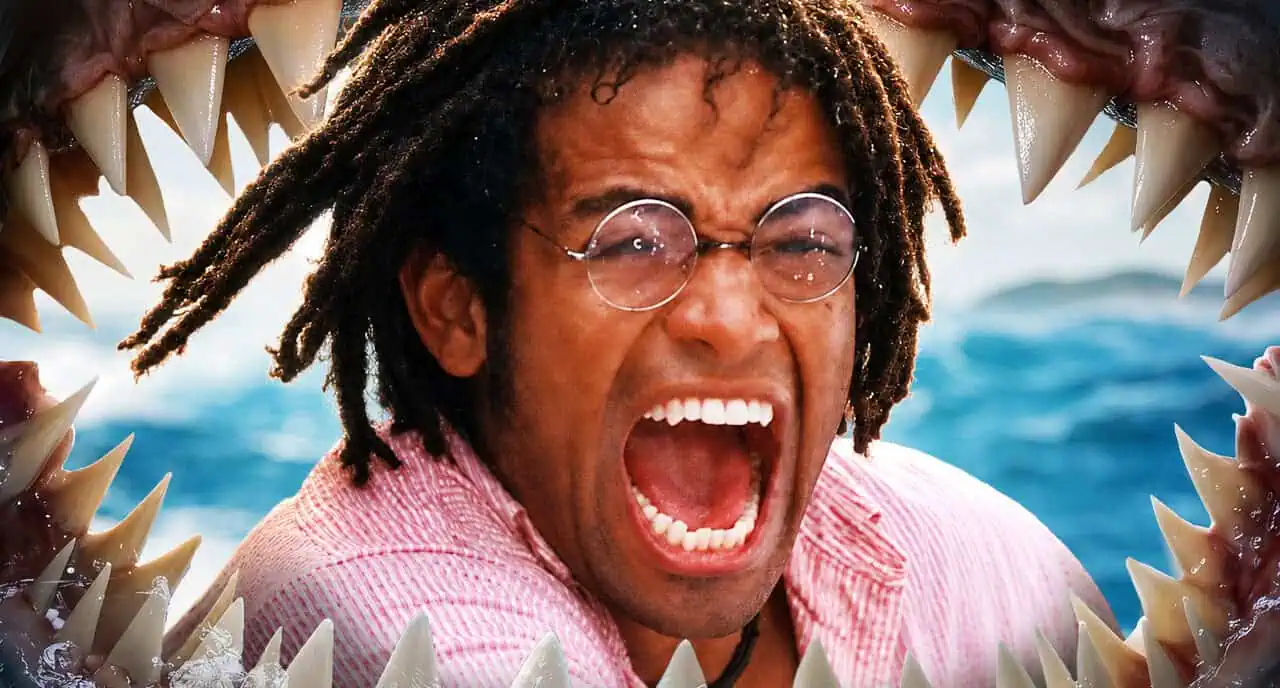

Few sequels have been ridiculed as relentlessly as Jaws: The Revenge. The fourth installment in Universal’s blockbuster franchise has spent nearly four decades as the punchline to countless “worst sequel ever made” lists. Between its absurd premise of a vengeful great white shark somehow targeting the Brody family across the Atlantic, the recycled footage from Steven Spielberg’s original, the infamous roaring shark, and an ending that changed after the film had already opened in theaters, it’s easy to understand why Jaws 4 became synonymous with cinematic failure.
But here’s a piping-hot take: I don’t even think Jaws: The Revenge is the worst movie in the franchise. In fact, I’d argue it’s considerably better than its reputation suggests, and far more entertaining than people give it credit for.
Before getting into what actually works, though, it’s worth looking at what might have been.
The Jaws: The Revenge Novel Explains What the Movie Never Does
One of the biggest criticisms of Jaws: The Revenge is its central premise: a great white shark seemingly hunting the Brody family out of revenge. The film never explains how or why that’s possible.
Ironically, the accompanying novelization by Hank Searls actually attempts to answer those questions. Based on Michael de Guzman’s screenplay, Searls’ novel was published roughly six weeks before the movie premiered on July 17, 1987. While the two versions share the same basic story, the novel includes several major subplots that never made it into the finished film. Whether those ideas would have improved the movie is debatable, but they at least provide internal logic for some of its most unbelievable moments.
Martin Brody Was Originally Supposed to Die
The first major difference involves Police Chief Martin Brody. In the original screenplay, Martin, not Sean, was intended to be the film’s opening shark victim. That plan collapsed when Roy Scheider refused to reprise the role. By that point, Scheider had made no secret of his disdain for returning to the franchise, famously joking that “Satan himself” couldn’t convince him to appear in Jaws 4.
The screenplay also featured a brief appearance by Matt Hooper. Richard Dreyfuss’ character calls Michael Brody to offer condolences after Martin’s death before the two discuss their work as marine biologists. Neither scene survived into the final film.
Hoagie Was Originally a DEA Agent
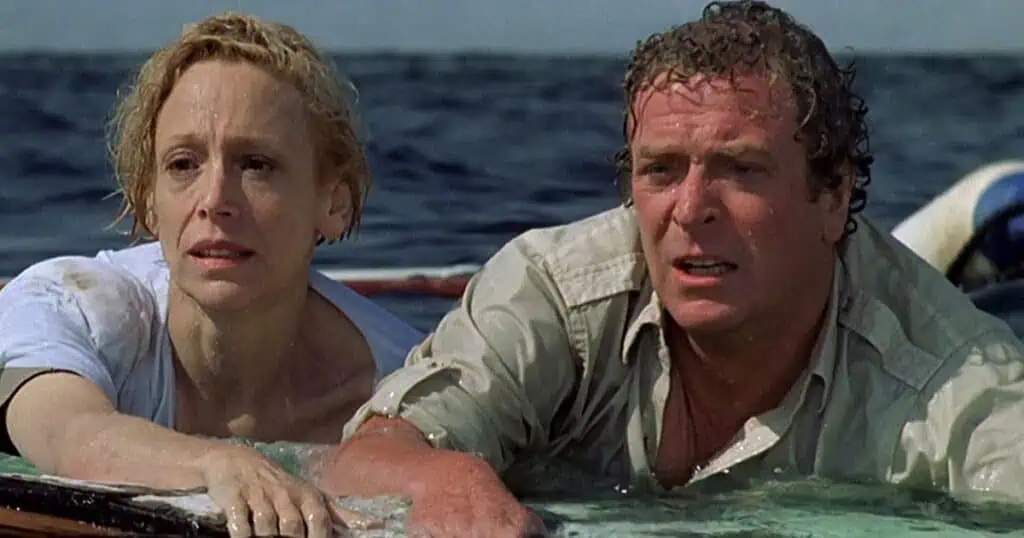
The biggest omission from the movie involves Hoagie, the easygoing Bahamian pilot played with effortless charm by Michael Caine. In the finished film, Hoagie primarily serves as Ellen Brody’s love interest. In the novel, however, he’s a far more interesting character.
Rather than simply flying tourists around the Bahamas, Hoagie is secretly working undercover for the DEA while infiltrating a money-laundering operation connected to Bahamian criminals.
The movie briefly nods toward this storyline during a throwaway exchange. When Michael asks Hoagie what he does when he isn’t flying people, Hoagie casually replies: “I deliver laundry.” It’s an amusing line that plays like a joke, but readers of the novel recognize it as a reference to his covert operation.
Several scenes exploring this subplot were reportedly filmed before ultimately being removed because they distracted from the movie’s main story. Unfortunately, cutting those scenes also stripped Hoagie of much of his depth. Instead of gradually developing feelings for Ellen while balancing an undercover mission, he’s left falling in love with very little narrative setup.
The result is a character who remains immensely likable thanks to Michael Caine’s performance, but who could have been considerably more compelling.
The Voodoo Curse That Tried to Explain the Shark’s Revenge
The novel also introduces perhaps its strangest idea and, paradoxically, one that makes the story more coherent. Rather than portraying the shark as consciously seeking revenge against the Brody family, Searls explains its behavior through a supernatural curse.
According to the novel, a Haitian witch doctor named Papa Jacques places a voodoo hex on Michael’s boat and on young Thea’s lunchbox, using the shark as an unwitting instrument of revenge against the Brodys. In this version, the shark isn’t acting out of personal vengeance at all. It’s being manipulated by supernatural forces.
Yes, it’s undeniably ridiculous. But it’s also the only version of the story that actually explains why Ellen develops a psychic connection to the shark and somehow senses its attacks before they happen.
Without that context, the finished film simply asks audiences to accept that a great white shark can recognize human bloodlines, hold lifelong grudges, and swim thousands of miles across the Atlantic to settle a personal score. As if this even needs to be said, sharks don’t work that way.
You can certainly argue that the voodoo subplot would have made Jaws: The Revenge even stranger, but at least it attempts to establish rules for the movie’s supernatural elements instead of introducing them without explanation.
The Novel Also Raised the Stakes
Searls’ novelization also increases the body count. Despite Jaws: The Revenge featuring the fewest on-screen deaths in the franchise (either two or three, depending on which ending you watch), the novel adds several memorable attacks, including the gruesome deaths of a windsurfer and a local gangster.
It also expands Thea’s storyline by having Papa Jacques’ curse compel her to sleepwalk toward the ocean while the shark waits offshore.
Would any of these additions have transformed Jaws: The Revenge into a classic? Probably not. But they would have gone a long way toward making its supernatural revenge story feel more internally consistent.
What Jaws: The Revenge Actually Gets Right
Enough about what might have been. Let’s talk about what actually works. Because believe it or not, Jaws: The Revenge has far more going for it than most people are willing to admit. No, it isn’t a misunderstood masterpiece. The revenge premise remains laughably absurd, and some of the creative decisions deserve every bit of criticism they’ve received. But judged on its individual scenes rather than its reputation, Jaws 4 delivers several genuinely effective sequences that deserve to be remembered alongside the franchise’s best moments.
Sean Brody’s Death Is One of the Franchise’s Most Terrifying Scenes
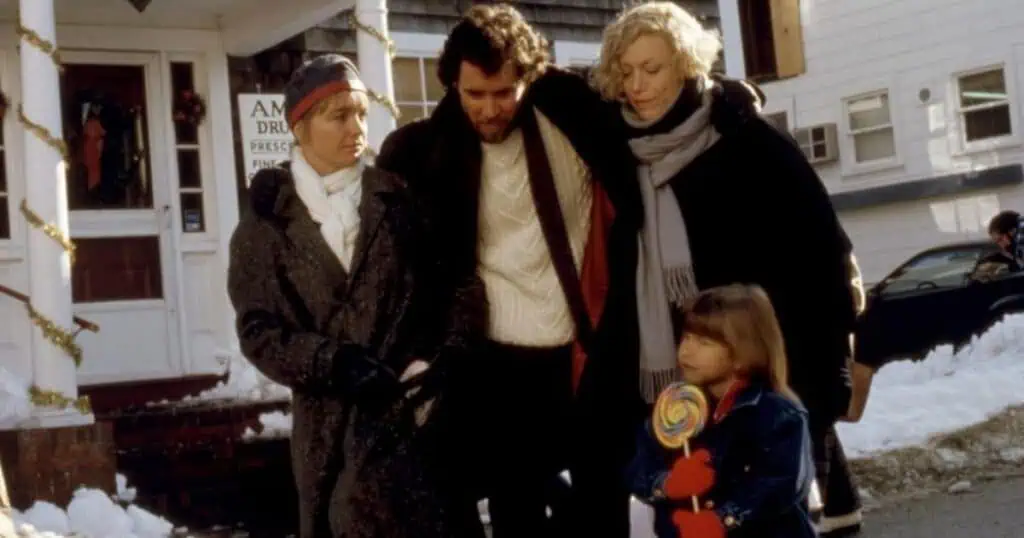
You’ll never convince me that Sean Brody’s death on Christmas Eve isn’t among the most terrifying shark attacks in the entire Jaws series. Maybe it’s childhood trauma talking, but this sequence scared the ever-loving hell out of me when I was a kid… and it still works today.
Director Joseph Sargent stages the attack with remarkable restraint. As a Christmas choir softly sings in the background, Sean realizes his arm has been severed. Reaching instinctively toward the bloody phantom limb before screaming in agony, he desperately calls for help as his boat slowly sinks beneath him. The carolers never hear him.
The contrast between the peaceful Christmas music and Sean’s horrific death is incredibly unsettling, making the scene far more disturbing than if it had relied solely on graphic violence.
Mitchell Anderson also deserves credit for selling the sheer panic of the moment. His performance grounds the sequence emotionally, making Sean’s death feel tragic rather than exploitative.
Best of all, this attack happens before the movie ever introduces its ridiculous revenge premise. Viewed entirely on its own merits, it’s one of the strongest and scariest openings in the franchise.
The Bahamas Gives Jaws 4 Its Own Identity
Once the story leaves snowy New England for the Bahamas, the movie immediately distinguishes itself from its predecessors. Instead of trying to recreate Amity Island for the fourth time, Jaws: The Revenge embraces a completely different atmosphere. The crystal-clear Caribbean water, vibrant beaches, and tropical scenery give the film an almost vacation-like quality that’s surprisingly refreshing after three movies set largely in the same coastal environment.
Filmed in part around Nassau and Paradise Island, the locations remain one of the movie’s greatest assets. The film even incorporates the Bahamas’ famous Junkanoo Festival into Hoagie and Ellen’s evening together, adding a welcome sense of authenticity and local culture that helps the setting feel lived in rather than simply picturesque.
Say what you will about the screenplay, but visually, Jaws: The Revenge is easily one of the most attractive films in the series.
Michael Caine Is Effortlessly Charming
Then there’s Michael Caine. Even people who dislike Jaws: The Revenge usually agree on one thing: Michael Caine is endlessly watchable.
Playing Hoagie, the carefree pilot who sweeps Ellen Brody off her feet, Caine injects every scene with effortless charisma. He never appears embarrassed by the material, nor does he play it with a wink toward the audience. Instead, he commits completely to the role. That confidence elevates nearly every scene he’s in.
Would Hoagie have been an even stronger character if the film had retained the DEA subplot from Hank Searls’ novel? Absolutely. But even without that added dimension, Caine’s natural screen presence makes Hoagie one of the movie’s most likable characters.
His chemistry with Lorraine Gary also feels genuine, which is remarkable considering how underdeveloped their relationship is on the page. It’s no surprise Gary later admitted she was eager to return largely because she’d have the opportunity to work alongside Caine.
Michael Caine’s Famous Quote Overshadows His Performance
Of course, Jaws: The Revenge also produced one of Hollywood’s most famous self-deprecating stories. Asked about the film years later, Caine famously joked: “I have never seen it, but by all accounts it is terrible. However, I have seen the house that it built, and it is terrific.”
The line became so iconic that Caine reportedly repeated it more than 170 times in interviews, eventually earning a Guinness World Record for the “Most Told Anecdote.” It’s a funny story, but it has also overshadowed how good he actually is in the movie.
Caine may have accepted the role for the paycheck, but he certainly didn’t phone in the performance. In fact, he had just won the Academy Award for Hannah and Her Sisters the previous year and missed the Oscar ceremony because he was filming reshoots for Jaws: The Revenge. Whatever his reasons for taking the job, his professionalism shows onscreen.
Lorraine Gary Carries the Emotional Weight of the Film
If there’s one performance that deserves far more appreciation, though, it’s Lorraine Gary’s. As Ellen Brody, Gary shoulders almost the entire emotional burden of the movie. The screenplay asks her to portray a grieving widow, an anxious mother, and eventually someone who develops what amounts to a psychic connection with a killer shark. It’s an impossible balancing act. Yet Gary somehow makes Ellen believable throughout.
At the beginning of the film, she’s emotionally shattered after losing both Martin and Sean. She’s paralyzed by grief, unable to shake the feeling that something terrible is coming for what’s left of her family. By the end, she’s transformed into someone willing to confront the shark head-on, taking control of the boat herself and driving the broken bowsprit into the animal during the climactic confrontation.
It’s a dramatic emotional journey, and Gary sells every step of it. If audiences remain invested in the Brody family at all, it’s largely because of her performance. Even when the screenplay veers into outright absurdity, Gary never does. She plays Ellen’s fear, determination, and grief with complete sincerity, helping anchor a story that often threatens to drift into self-parody.
The Underwater Shipwreck Sequence Is Genuinely Suspenseful
Despite the film’s mind-boggling revenge premise, one sequence remains undeniably effective nearly 40 years later: Michael Brody’s underwater encounter with the shark inside the sunken shipwreck. In my opinion, it’s one of the best suspense scenes in the entire franchise outside of Spielberg’s original. Interestingly, one reason it works so well is something almost nobody ever talks about.
Jaws: The Revenge Featured the Franchise’s Most Advanced Mechanical Shark
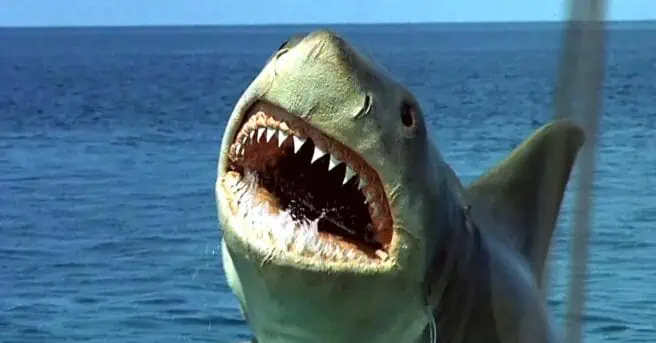
By the time Jaws: The Revenge entered production, Universal had significantly upgraded Bruce. The original shark from Jaws and its immediate sequels relied primarily on pneumatic systems powered by compressed gas. For the fourth film, however, the production switched to a far more sophisticated hydraulic design capable of smoother, more precise movement.
The improvements were substantial. According to Hydraulics & Pneumatics magazine: “The articulated shark was mounted on top of a hydraulically operated scissor lift, which raised and lowered the shark so it would appear that he had surfaced or submerged. The models were operated from a platform capable of rotating 180 degrees underwater, with a hydraulic arm operating the sharks.”
The shark itself consisted of seven articulated sections built from fiberglass, steel, and latex, allowing for much more natural movement than earlier versions. It could even propel itself through the water at roughly eight miles per hour. Ironically, the most technologically advanced shark in the franchise belongs to the movie almost everyone dismisses.
Michael’s Underwater Chase Still Holds Up
Those technical improvements are on full display during Michael’s dive. After his miniature submersible is nearly bitten in half, he escapes into the wreck of a sunken ship while the shark relentlessly stalks him through its dark corridors.
It’s a terrific suspense sequence. Joseph Sargent wisely keeps the shark moving through narrow passageways, forcing Michael to squeeze through tight openings while the predator crashes through walls behind him.
Every time the tension begins to ease, the film finds another way to crank it back up. Jake’s occasional jokes provide brief moments of relief before we’re thrown right back into close-ups of the shark’s lifeless black eyes and rows of razor-sharp teeth.
The sequence also contains what I consider the single biggest jump scare in the movie. Believing he’s finally escaped, Michael pauses long enough to unscrew his oxygen tank. Then, without warning, the shark explodes through the wreck directly in front of him. It’s an outstanding scare. Had audiences encountered this exact sequence in a better Jaws movie, I suspect it would be remembered far more fondly today.
Sometimes a film’s reputation unfairly drags down scenes that deserve to stand on their own. This is one of them.
The Banana Boat Attack Is Pure Nightmare Fuel
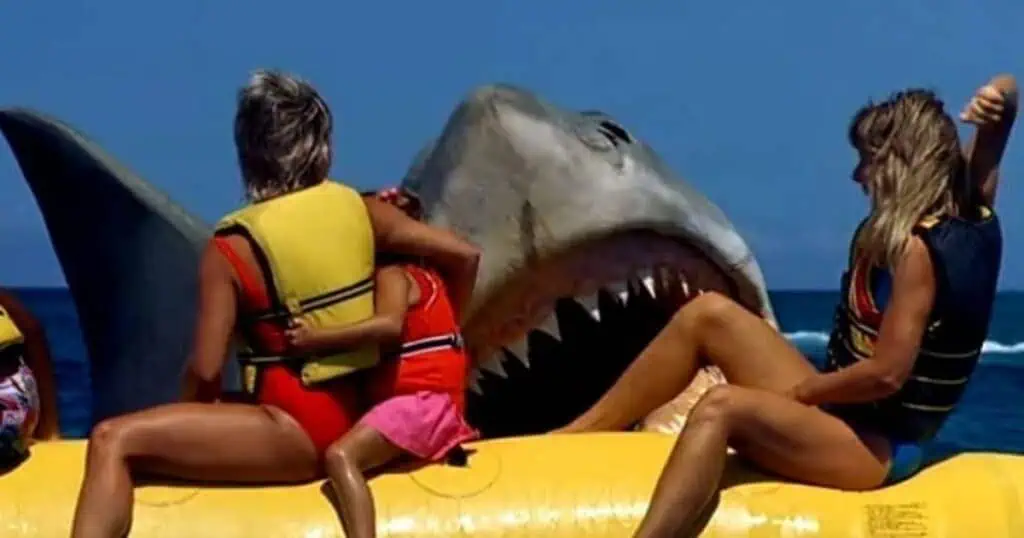
If I had to choose the scariest scene in Jaws: The Revenge, though, I’d go with the banana boat attack. In fact, I’d argue it’s second only to Quint’s death in Spielberg’s original. Everything about the sequence works. The pacing. The editing. The escalating panic. The way the attack unfolds from the perspective of helpless bystanders on shore.
The shark suddenly erupts from the water beneath a crowded inflatable banana boat, throwing its passengers into the ocean. One woman suffers a horrific leg injury before the shark repeatedly attacks her in full view of everyone watching from the beach.
Unlike many shark attacks that rely on quick cuts, this one lingers. We watch the victim desperately struggle to stay afloat as the shark repeatedly surfaces beneath her, violently tossing her through the air before finally dragging her beneath the water in a spreading cloud of blood.
The combination of practical effects, frantic editing, and John Williams’ score makes the entire sequence remarkably effective. Even critics who despise the movie often acknowledge that this attack delivers exactly what audiences came to see. It’s brutal. Chaotic. And genuinely frightening.
Ironically, the Shark Worked Too Well
One of the movie’s greatest strengths also became one of its biggest weaknesses. Steven Spielberg’s original Jaws became a masterpiece largely because Bruce barely functioned. Constant mechanical failures forced Spielberg to show the shark sparingly, creating unbearable suspense through suggestion rather than spectacle. Jaws: The Revenge had the opposite problem. The new hydraulic shark actually worked. Because it moved more convincingly and more reliably, Joseph Sargent showed it constantly.
Instead of building anticipation through mystery, the movie repeatedly puts Bruce front and center. The result is a shark that’s technically more impressive but dramatically less effective. The audience simply sees too much of it. It’s one of the great ironies of the franchise. The first film became legendary because the shark barely worked. The fourth film loses much of its suspense because the shark finally did.
The Tragic Story Behind Judith Barsi
Before moving on, it’s impossible to discuss Jaws: The Revenge without acknowledging one heartbreaking piece of trivia. Judith Barsi, who played Michael’s daughter Thea, died just one year after the film’s release. She was only ten years old.
In 1988, Judith and her mother were murdered by her abusive father, József Barsi, who then set their home on fire before taking his own life. It’s one of Hollywood’s most devastating real-life tragedies.
Lance Guest, who played Michael Brody, later served as one of Judith’s pallbearers. Knowing what happened makes her joyful performance in Jaws: The Revenge especially difficult to watch today.
Then Comes the Finale…
Unfortunately, after delivering several genuinely suspenseful sequences, Jaws: The Revenge crashes headfirst into one of the most infamous endings in blockbuster history. It’s here that the movie fully earns much of its reputation. The climax somehow manages to be thrilling, baffling, unintentionally hilarious, and technically fascinating, all at the same time.
And yes… we absolutely have to talk about the roaring shark.
The Ending Is Every Bit as Ridiculous as You’ve Heard
As much as I’ve defended Jaws: The Revenge, there’s no pretending the finale isn’t completely bonkers. In fact, it’s one of the biggest reasons the film has spent nearly four decades as the butt of endless jokes.
Following the banana boat attack, Ellen Brody does something no one expects: she stops running. Convinced the shark won’t stop until her family is dead, she steals Michael’s sailboat and heads straight for open water with one goal in mind: to kill it.
It’s a satisfying character turn. Ellen begins the film paralyzed by grief and fear, but by the climax she’s actively hunting the very thing that’s haunted her family for years. Unfortunately, the movie quickly undermines that emotional payoff with one baffling creative decision after another.
Yes, the Shark Really Roars
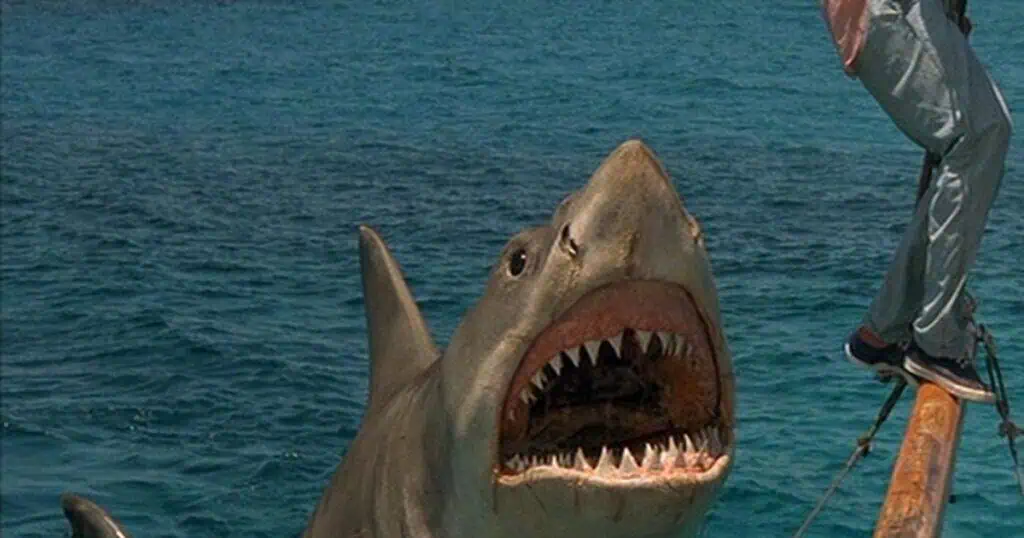
After Jake is apparently swallowed by the shark in an impressively gruesome slow-motion sequence, Ellen rams the broken bowsprit of her sailboat directly into the great white as it launches from the ocean. So far, so good.
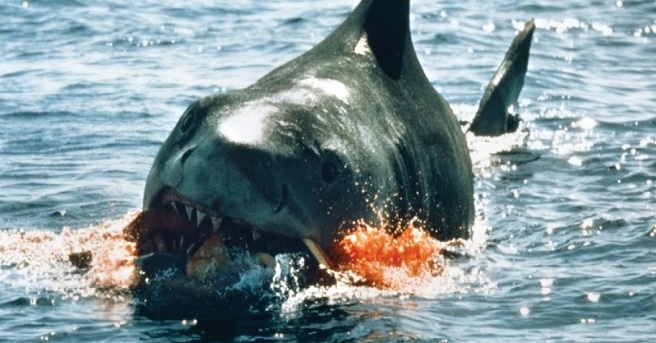
Then… the shark roars. Not growls. Not bellows. It literally roars like a giant land predator. It’s one of the most unintentionally hilarious moments in horror history.
What’s even funnier is how it happened. According to production accounts, supervising sound editor Colin C. Mouat reportedly refused to create an original sound effect because he thought the very idea of a roaring shark was ridiculous. Instead, the roar was lifted from the 1946 Tom and Jerry cartoon The Milky Waif. Knowing that somehow makes the moment even more absurd.
The Alternate Ending Somehow Makes Less Sense
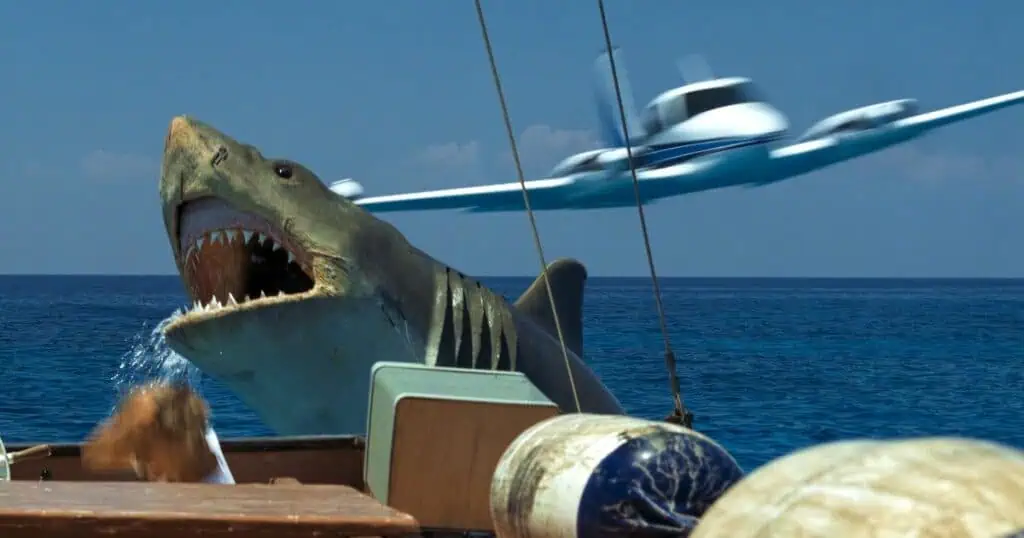
If you think the theatrical ending is strange, the alternate version is even stranger. Originally, the movie ended with Jake’s death. After Ellen impaled the shark with the bowsprit, the animal simply bled to death and sank beneath the ocean.
Test audiences hated it. Universal panicked. Even more remarkably, the studio ordered reshoots after the film had already opened in U.S. theaters.
The revised ending changes two major events. First, Jake inexplicably survives. Then, after being impaled, the shark’s head suddenly explodes for no apparent reason before it sinks beneath the waves in a cloud of blood.
No explanation is offered. It just… explodes.
As if that weren’t enough, the sinking shark footage is recycled directly from Spielberg’s original Jaws. Watch closely and you can still spot details from the 1975 climax, including the ropes attached to Quint’s yellow barrels and remnants of the scuba tank Chief Brody used to blow up the original shark. It’s one of the most shameless examples of recycled footage in blockbuster history.
Is Jaws: The Revenge Really Worse Than Jaws 3?
Here’s where my opinion completely diverges from the consensus. For all of Jaws: The Revenge‘s obvious flaws, I’d still rather watch it than Jaws 3. Every. Single. Time.
Jaws 3 has always struck me as the dullest film in the franchise. Its gimmicky 3D effects were dated almost immediately, and many of the visual effects now resemble something pulled from an early Nintendo game rather than a major Hollywood production.
By comparison, Jaws: The Revenge is never boring. It’s ridiculous. It’s melodramatic. It’s occasionally nonsensical. But it’s almost always entertaining. I’d much rather watch a movie that swings wildly for the fences and occasionally crashes into them than one that simply coasts through two hours without leaving much of an impression.
I also appreciate that Jaws: The Revenge largely ignores the events of Jaws 3, effectively treating it as an afterthought by recasting Michael Brody with Lance Guest after Dennis Quaid played the character in the previous film. Whether intentional or not, it helps the fourth movie feel more like a direct continuation of the original Brody family’s story.
Final Thoughts: It’s Time to Reevaluate Jaws: The Revenge
Let’s be clear. No one is arguing that Jaws: The Revenge is a masterpiece. The revenge premise is absurd. The screenplay often collapses under the weight of its own ideas. The roaring shark deserves every meme it’s inspired. And the alternate ending remains one of the most bewildering finales ever attached to a major studio blockbuster.
But none of that changes the fact that the movie has real strengths. Sean Brody’s opening death is genuinely terrifying. The Bahamas setting gives the film a visual identity unlike any other entry in the franchise. Michael Caine and Lorraine Gary deliver committed, engaging performances that elevate weaker material. The underwater shipwreck chase is legitimately suspenseful. The banana boat attack remains one of the most effective shark sequences outside Spielberg’s original.
Most importantly, Jaws: The Revenge is fun. Nearly 40 years later, that’s worth something. Its reputation has become so exaggerated that many people remember the jokes more vividly than the movie itself.
Is it flawed? Absolutely. Is it goofy? Without question. But I’d argue it’s also one of the most entertaining “bad” movies ever made, and certainly more enjoyable than its infamous reputation suggests.
Sometimes a movie doesn’t need to be great to be worth revisiting. Sometimes it just needs to remind you why going to the movies is fun in the first place. And for all its spectacular missteps, Jaws: The Revenge still manages to do exactly that.
















The comment section exists to allow readers to discuss the article constructively and respectfully, focused on the topic at hand.
What’s Not Allowed