
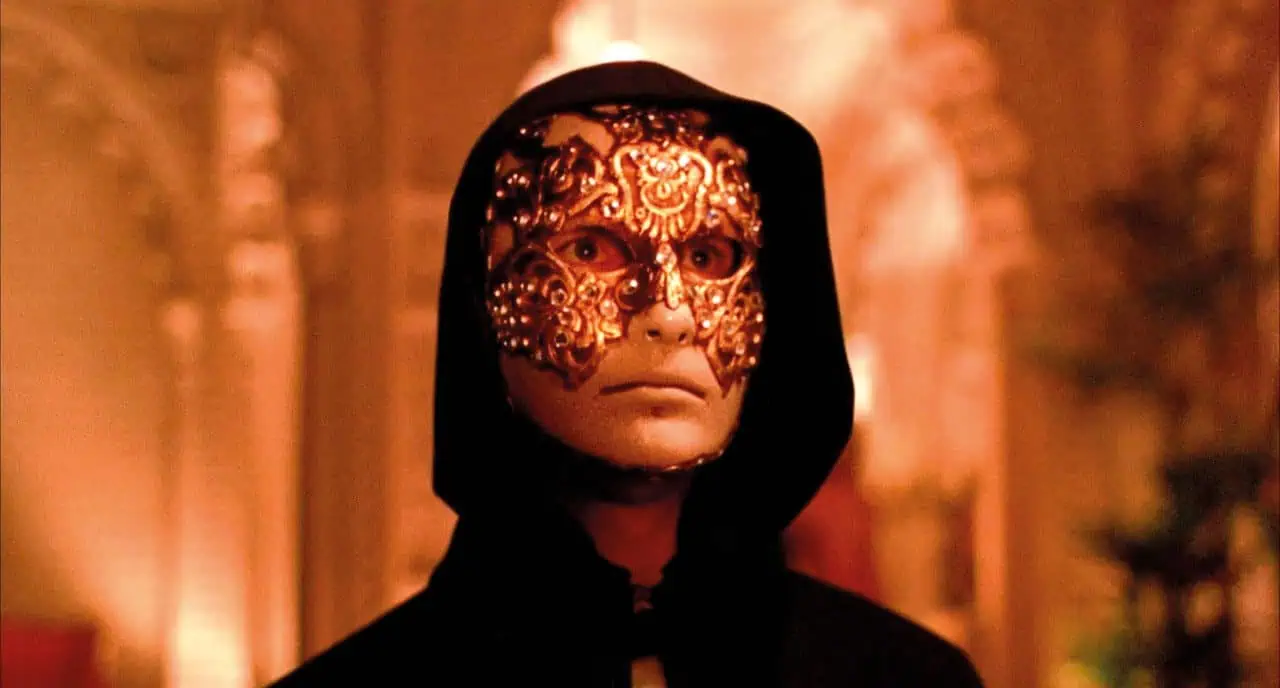
What if I told you one of the most disturbing films ever made wasn’t entirely fiction? Years after Stanley Kubrick’s Eyes Wide Shut hit theaters, real-world scandals involving powerful people began surfacing, leading many viewers to draw unsettling comparisons between the film and events that would later dominate headlines. But is there any substance to those claims? Was Kubrick trying to warn us? Or are people simply projecting modern events onto an already mysterious film?
Only days after delivering what is believed to be the final cut of Eyes Wide Shut, Kubrick was dead. So what exactly are we looking at here? Is Eyes Wide Shut simply a movie? Or was Stanley Kubrick attempting to expose something darker?
Cinema Versus Reality
When Eyes Wide Shut premiered in 1999, critics and audiences weren’t quite sure what to make of it. Some dismissed it as a pretentious drama about marriage. Others praised it as a masterpiece. Many simply called it a strange sex movie.
Then reality started getting weird. Footage from the infamous Bohemian Grove gathering surfaced. Years later, revelations involving powerful individuals, secretive networks, abuse scandals, and elite social circles entered mainstream public discussion. Suddenly, audiences began revisiting Kubrick’s final film through a very different lens.
Whether you believe the connections are meaningful or coincidental, one thing is undeniable: Eyes Wide Shut has never stopped generating conversation.
Through Kubrick’s obsessive attention to detail and extensive research, the film explores what happens when wealth, temptation, power, and secrecy collide. The result is a haunting swan song from one of cinema’s greatest filmmakers. The film’s hypnotic pacing feels almost dreamlike. Watching Eyes Wide Shut is like listening to someone whisper a secret you were never meant to hear. Every scene feels as though it is hiding something beneath the surface.
For years, many dismissed the film as Kubrick’s final eccentric project. Today, however, both the film and the filmmaker are being reexamined by audiences around the world.
More Than Just a Movie
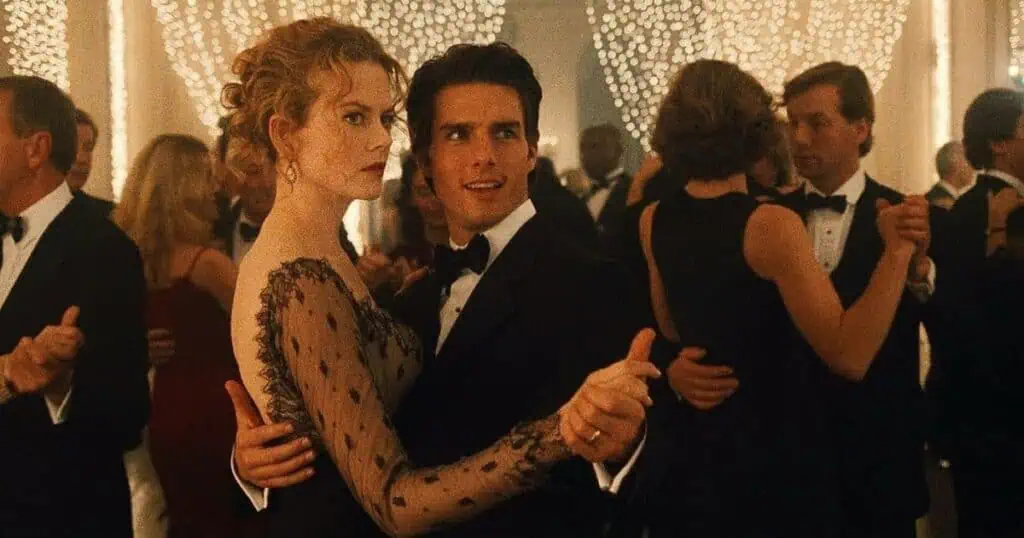
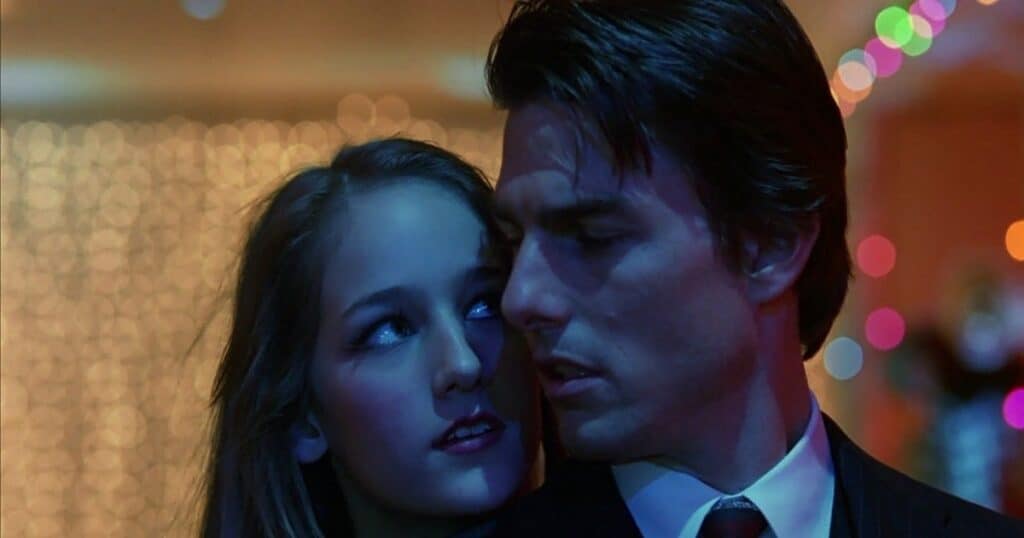
Tom Cruise stars as Dr. Bill Harford, a successful physician whose comfortable world begins to unravel over the course of a single night. As Bill drifts through New York’s shadows, he stumbles into a hidden world of wealth, influence, and forbidden desire. He becomes an outsider peering into a society governed by its own rules.
That’s where Eyes Wide Shut becomes unsettling. This isn’t a whistleblower story. It’s a perspective story. Kubrick places the audience directly into Bill’s shoes. Like Dorothy peeking behind the curtain in The Wizard of Oz, Bill discovers a world he was never supposed to see.
The film is loosely based on Arthur Schnitzler’s 1926 novella Dream Story. Its themes of desire, class divisions, jealousy, temptation, and social power have existed for centuries.
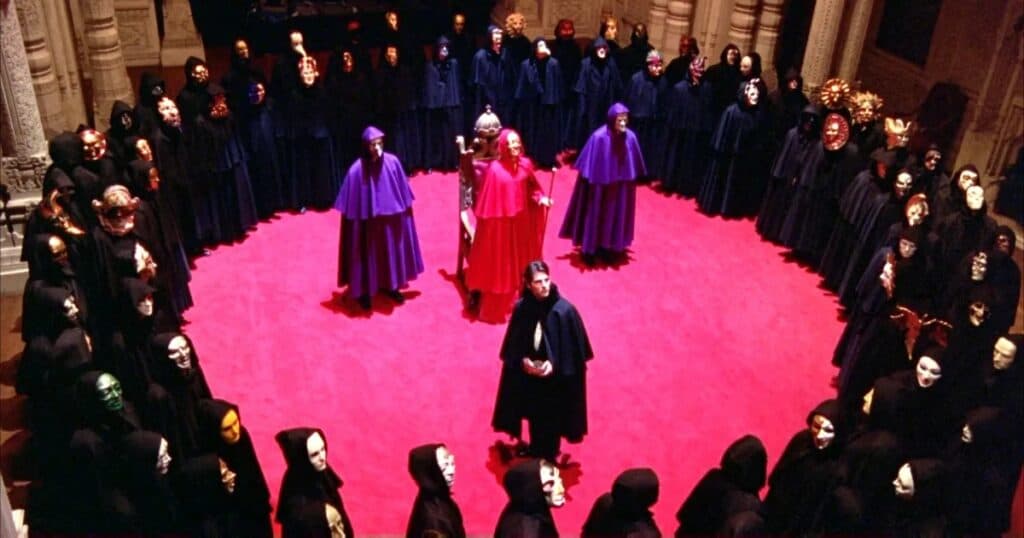
Then comes the sequence everyone remembers: the masked ritual. It isn’t erotic. It’s cold, detached, and deeply unsettling. The scene feels closer to horror than romance. One line captures the entire film: “If I told you their names, you wouldn’t sleep so well.”
At its core, Eyes Wide Shut explores a hierarchy built on wealth, secrecy, and influence. Whether viewers interpret that as literal, symbolic, or psychological remains part of the film’s enduring mystery.
Kubrick’s Obsession With Research
One reason Eyes Wide Shut continues to fascinate audiences is Kubrick’s reputation for exhaustive research. Throughout his career, he immersed himself in books, documents, historical records, and firsthand accounts. His films rarely emerged purely from imagination. They were often built upon real-world influences.
Kubrick studied military strategy for Dr. Strangelove. He researched psychology, violence, and social conditioning for A Clockwork Orange. He spent years preparing many of his projects before cameras ever rolled. Because of that reputation, some viewers believe the secret societies and elite gatherings depicted in Eyes Wide Shut were inspired by more than fiction. Others argue the film simply reflects themes that have existed throughout human history.
Either way, Kubrick’s work invites speculation because he rarely explained his intentions. He preferred to present the finished film and leave audiences to wrestle with its meaning themselves.
The Death of a Legend
After a lengthy and exhausting post-production process, Kubrick delivered what is widely believed to be the final cut of Eyes Wide Shut to Warner Bros. Days later, he died from a heart attack at age 70.
The timing immediately fueled speculation. Some viewed it as a tragic coincidence. Others saw it as another layer in the mystery surrounding the film.
Conspiracy theories emerged almost instantly, suggesting Kubrick had been silenced before revealing something dangerous. No evidence has ever surfaced to support those claims, but the theories remain part of the film’s mythology.
What is certain is that Kubrick never got the chance to publicly explain his final masterpiece. As a result, audiences have spent decades trying to decipher it for themselves.
The Cutting Room Floor
Another long-running mystery involves rumors that Eyes Wide Shut was altered after Kubrick’s death. Some fans believe substantial footage was removed or that major story elements were changed before release. Others insist the theatrical version represents Kubrick’s intended vision.
People involved with the production have repeatedly denied claims that the film was fundamentally altered. The only confirmed studio changes involved digital figures added to obscure explicit sexual imagery in order to secure an American theatrical rating.
Still, rumors persist. Stories circulate about missing scenes, alternate endings, and material that supposedly pushed the film’s themes even further. Whether any of those stories are true remains unknown. Like many Kubrick mysteries, the debate continues.
The Real-World Connections
The release of information surrounding Jeffrey Epstein and his associates dramatically changed how many people interpret Eyes Wide Shut. For decades, discussions about elite abuse networks existed mostly on the fringes of public conversation. After numerous investigations, court documents, and media reports, those conversations moved into the mainstream.
As a result, some viewers began noticing parallels between Kubrick’s fictional world and real-world scandals involving wealth, influence, and exploitation. Characters who once seemed exaggerated suddenly felt more believable. Scenes that once appeared surreal now struck some viewers as disturbingly plausible.
Whether Kubrick was predicting future revelations or simply exploring timeless themes of power and corruption remains a matter of interpretation.
Kubrick’s Filmography and Recurring Themes
Looking across Kubrick’s entire career, recurring themes begin to emerge. Paths of Glory, Dr. Strangelove, and Full Metal Jacket examine war, authority, and the systems that shape human behavior. Spartacus explores resistance against ruling power. A Clockwork Orange examines psychological conditioning and state control. Lolita tackles predatory behavior and moral corruption.
Again and again, Kubrick returned to questions about power, control, and the abuse of authority. Viewed through that lens, Eyes Wide Shut feels less like an outlier and more like the culmination of ideas he had been exploring for decades.
Cults, Celebrity, and Hollywood
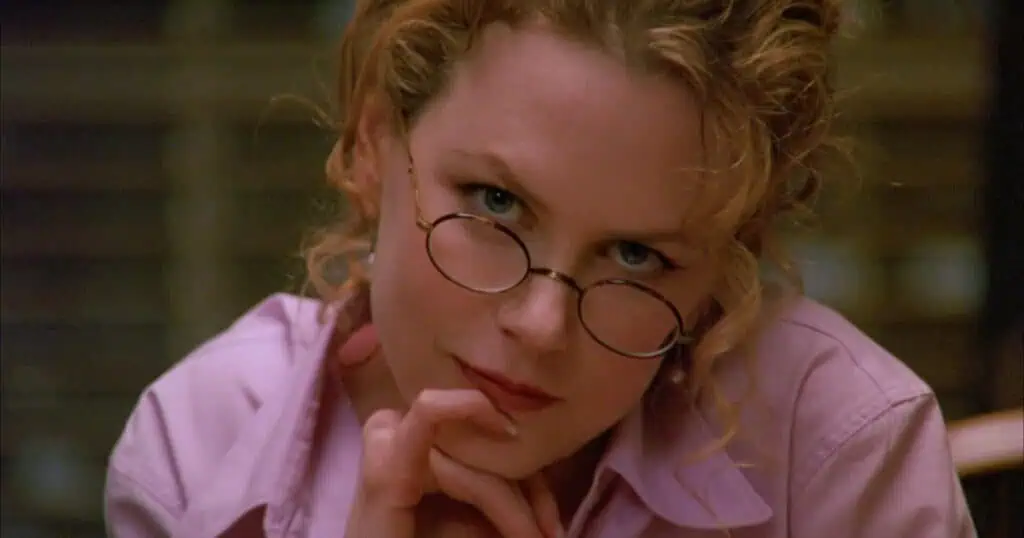
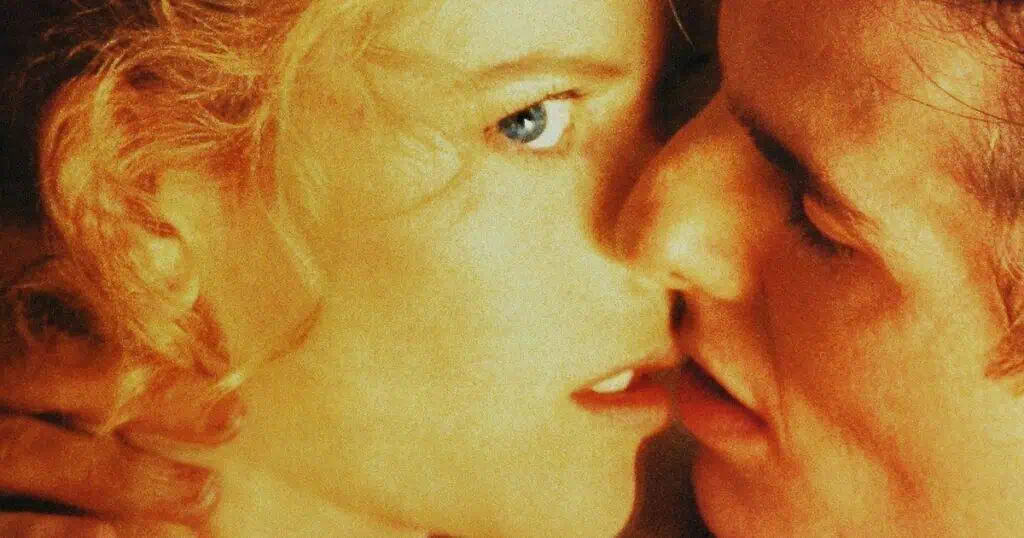
The casting of Tom Cruise and Nicole Kidman added another layer of fascination. At the time, the two were one of Hollywood’s most famous couples. Their real-life marriage inevitably blurred the line between fiction and reality. Kubrick reportedly encouraged both actors to draw upon personal experiences while developing their performances.
The result is a film that often feels uncomfortably intimate. Many viewers also point to Cruise’s association with Scientology and various Hollywood rumors as additional reasons the casting continues to generate discussion.
Whether intentional or not, the celebrity status of the lead actors adds another layer to the film’s exploration of power and influence.
The Location
Kubrick chose Mentmore Towers as the exterior location for the mansion featured in the film’s most infamous sequence. The estate’s historical association with the Rothschild family has become a major talking point among conspiracy-minded viewers.
For some, the location choice was loaded with symbolism. For others, it was simply a visually striking property that matched Kubrick’s artistic goals. Regardless of interpretation, Kubrick was certainly aware of the cultural and historical associations attached to the location.
Stanley’s Symbolism
Like The Shining, Eyes Wide Shut invites endless analysis. Colors, lighting, Christmas imagery, masks, mirrors, circles, and recurring visual motifs appear throughout the film.
The final toy store sequence remains one of the most debated scenes in Kubrick’s filmography. Some viewers see evidence of hidden messages. Others believe audiences are reading too much into ordinary details.
That ambiguity is precisely what makes Kubrick’s work so enduring. The answers are never fully clear.
Predictive Programming
One concept frequently associated with Eyes Wide Shut is “predictive programming.” Supporters of the theory argue that entertainment can normalize shocking truths by presenting them as fiction before the public is ready to accept them. Critics dismiss the concept entirely.
Regardless of where one stands, the theory helps explain why some viewers believe Eyes Wide Shut feels increasingly relevant as new scandals emerge. The line between fiction and reality often appears thinner than we would like to admit.
Final Thoughts
At the end of the day, Eyes Wide Shut remains a work of fiction. Yet it is a work of fiction that continues to inspire debate, analysis, and speculation more than two decades after its release.
Maybe Kubrick was warning us. Maybe he was simply exploring timeless truths about power, secrecy, desire, and corruption. Or maybe the most unsettling possibility is that reality eventually became strange enough to resemble one of Stanley Kubrick’s darkest nightmares.
Whatever the answer, Eyes Wide Shut remains one of the most fascinating and mysterious films ever made and perhaps the most discussed final film in cinema history.














The comment section exists to allow readers to discuss the article constructively and respectfully, focused on the topic at hand.
What’s Not Allowed