
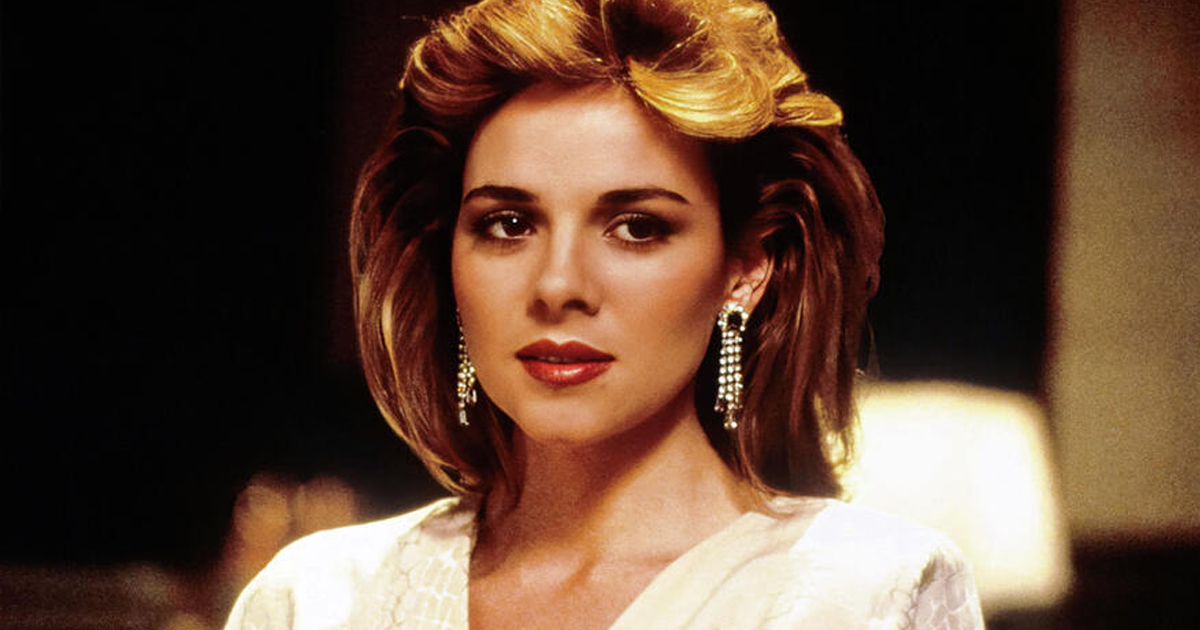

The 1980s were the heyday of movie soundtracks, with seemingly every big movie having an accompanying single they could use to promote the movie on MTV. Inevitably, a lot of movies would come out where the songs were bigger hits than the films themselves — but none more so than Starship’s “Nothing’s Gonna Stop Us Now,” which hit number one on the Billboard Hot 100. It’s such an eighties classic that many don’t even realize that it’s actually from a movie — but it is, and that movie is the 1987 comedy Mannequin, starring Brat Packer Andrew McCarthy and Kim Cattrall, long before Sex and the City. A big enough hit that it spawned a sequel, Mannequin is fairly obscure now, but it’s a fun slice of eighties nostalgia that’s worth another look.
Andrew McCarthy Steps Out of the Brat Pack
Enter Andrew McCarthy. In recent years, more than any of his fellow Brat Pack co-stars, he’s seemingly struggled to reckon with his early success as part of that gang, most memorably in his acclaimed documentary Brats. To hear McCarthy tell it, he was a serious actor trying to make it in Hollywood who got whipped into the tsunami of stardom, with the Brat Pack moniker forever pegging him as a lightweight. But, to give McCarthy some credit, of all his co-stars, arguably he was the one who seemingly ended the decade on the highest note. By the time Judd Nelson and even Rob Lowe had seen their fame drop off, he was headlining hit movies like Weekend at Bernie’s, even if they weren’t exactly the kinds of movies he wanted to be doing.
Mannequin was McCarthy’s first big hit as a solo star. He’d had juicy roles in Class opposite Rob Lowe, and two all-time Brat Pack classics, St. Elmo’s Fire and Pretty in Pink, but 1987 was the year they all tried to stop making movies together to escape the label.
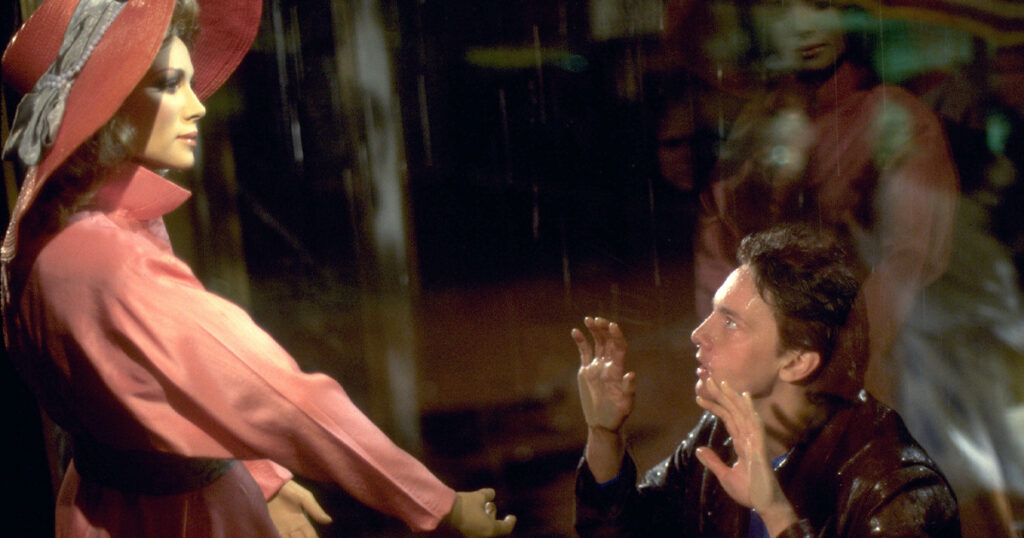
Mannequin, on paper, probably didn’t seem like much. It’s the story of a young sculptor named Jonathan, who gets a part-time job working as a window dresser overnight at a classy department store. He finds himself drawn to a beautiful mannequin who, it turns out, is actually Emmy, a woman from ancient Egypt who, desperate to escape an arranged marriage, found her spirit transformed into a muse to inspire artists over generations. She’s now inhabiting a mannequin and is only granted life when she and Jonathan are unobserved. Hijinks ensue.
How Did Mannequin Ever Get Greenlit?
So what ever made Hollywood greenlight this insipid premise? It started when director/co-writer Michael Gottlieb was walking down Fifth Avenue and saw a beautiful mannequin in the department store window at Bergdorf Goodman, although the premise has a lot in common with the 1948 comedy One Touch of Venus.
It was made independently for Gladden Entertainment, based on the marketing principles of market researcher Joseph Farrell, who would also serve as executive producer. Initially, it was designed as a vehicle for an older comedic leading man in the vein of Dudley Moore, but the makers noticed how strong a presence McCarthy had with their target demo, young women, and he was cast opposite Kim Cattrall. By then, Cattrall had appeared in Porky’s, Police Academy, and John Carpenter’s Big Trouble in Little China. She took the part seriously enough that she spent weeks posing for a sculptor, with the mannequin used for her character in the movie being the result.
The Perfect Eighties Villains
Being an eighties flick, it had to have some smarmy villains, and two of the most obvious choices were cast. James Spader would play the store manager, with it being part of a long series of bad-guy roles he was stuck playing during the era — many of them opposite McCarthy’s good guy. This followed Pretty in Pink and predated their next film together, Less Than Zero. He’d also play a bad guy opposite Diane Keaton in the same year’s Baby Boom.
Outside of McCarthy, though, one of the most familiar faces in the cast was G.W. Bailey, who plays the mall security guard Captain Maxwell, with it being one of a whole whack of similar parts he played in movies like the Police Academyfranchise and Short Circuit. The Golden Girls co-star Estelle Getty — Sophia herself — would be cast as the kindly department store owner, Claire, although at the time none of us recognized her because she wasn’t wearing Sophia’s wig and looked decades younger than she did on that show.
Hollywood Montrose Steals the Movie
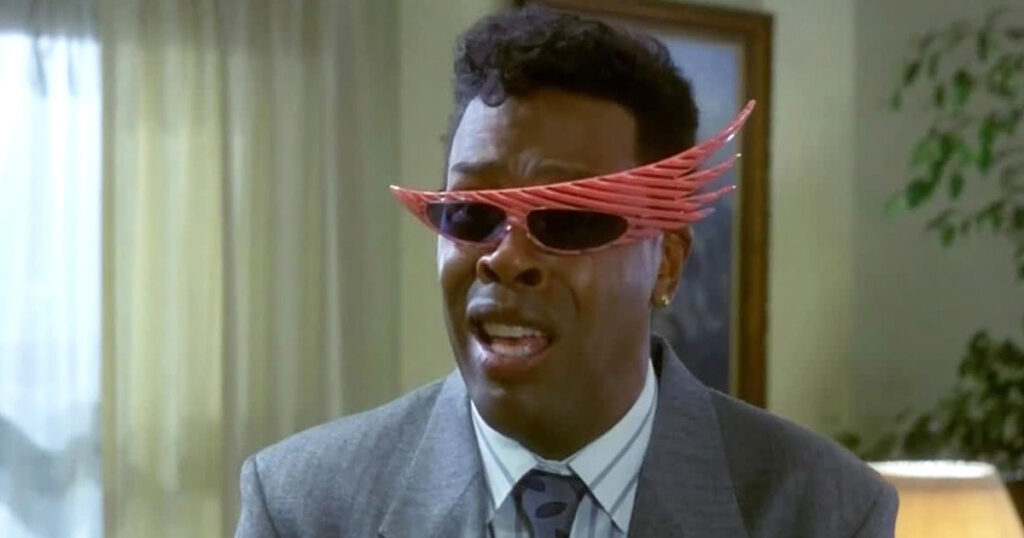
But — the best — and I mean THE BEST — part of Mannequin, outside of that damn song, is Hollywood Montrose. Played by Designing Women co-star Meshach Taylor, Hollywood might be one of the most iconic characters of the decade.
A wildly flamboyant, over-the-top gay character, revisiting Mannequin I thought he might come off as dated, but if anything, he was ahead of his time, with him looking like he’d be right at home reading the models on RuPaul’s Drag Race. He’s Jonathan’s boss at the department store, and while usually such a character would be portrayed either as a bad guy or a joke back in the era, he’s neither.
Hollywood, from the time we meet him, is portrayed as kindly toward Jonathan, with the two immediately becoming best friends. VERY openly gay, he’s like the gay superhero we didn’t know we needed, with him even wearing a superhero-like visor and driving a car that’s painted with his name — Hollywood. Flamboyant doesn’t even begin to describe Hollywood. He’s so gay that his licence plate says “Bad Girl.”
But when the chips are down at the end, it’s Hollywood who saves the day. When Jonathan gets married, Hollywood is both best man and maid of honour. Damn right. He was such a sensation in the role that when they did Mannequin 2: On the Move, he was the only one the makers thought was essential to return.
Critics Absolutely Hated Mannequin
Predictably, the reviews for Mannequin were BRUTAL. No one involved thought the movie would be much good, with G.W. Bailey admitting as much. Leonard Maltin said the movie was “absolute rock-bottom fare, dispiriting for anyone who remembers what movie comedy should be.”
Roger Ebert was even more savage, only giving it half a star and writing, “A lot of bad movies are fairly throbbing with life. Mannequin is dead. The wake lasts 1 1/2 hours, and then we can leave the theater.”
And yet, Mannequin was a hit. It opened President’s Day weekend in 1987 and absolutely trounced its main competitor, the Sylvester Stallone movie Over the Top. It made $42 million domestically on a $7.9 million budget, but was an even bigger hit on home video and cable, where it played endlessly.
Nothing’s Gonna Stop That Song
But, Hollywood Montrose aside, one of the main reasons it was such a hit was that damn song, which became incredibly popular throughout the rest of the decade and is still riffed on — most memorably in The Skeleton Twins.
It was co-written by Diane Warren, who has seemingly written more hit songs than any other human not named Paul McCartney, with it becoming a huge hit for the rock group Starship, who began as Jefferson Airplane in the sixties before becoming Jefferson Starship and then just Starship. It was one of several hits for them in this era, alongside “Sara” and the now-infamous “We Built This City,” which is widely considered one of the worst pop songs ever written.
Ironically, Grace Slick, the band’s frontwoman, who shares singing credits with lead singer Mickey Thomas, has since reacted badly to this era, noting that she didn’t believe in the message of the song: “I don’t like to sing songs where I don’t believe the lyrics. Diane Warren is an amazing pop songwriter, and she, I’m assuming, believes in that state where you’re in love, you get kind of crazy. But I’m older now. I am damn near 50, and I’m singing, ‘Nothing’s gonna stop us now.’”
Whatever the case, the song became one of the biggest hits of the eighties and an essential track on any self-respecting playlist from the decade. Just like the movie that inspired it, it’s not art, but it sure made a lot of people happy.


















The comment section exists to allow readers to discuss the article constructively and respectfully, focused on the topic at hand.
What’s Not Allowed