
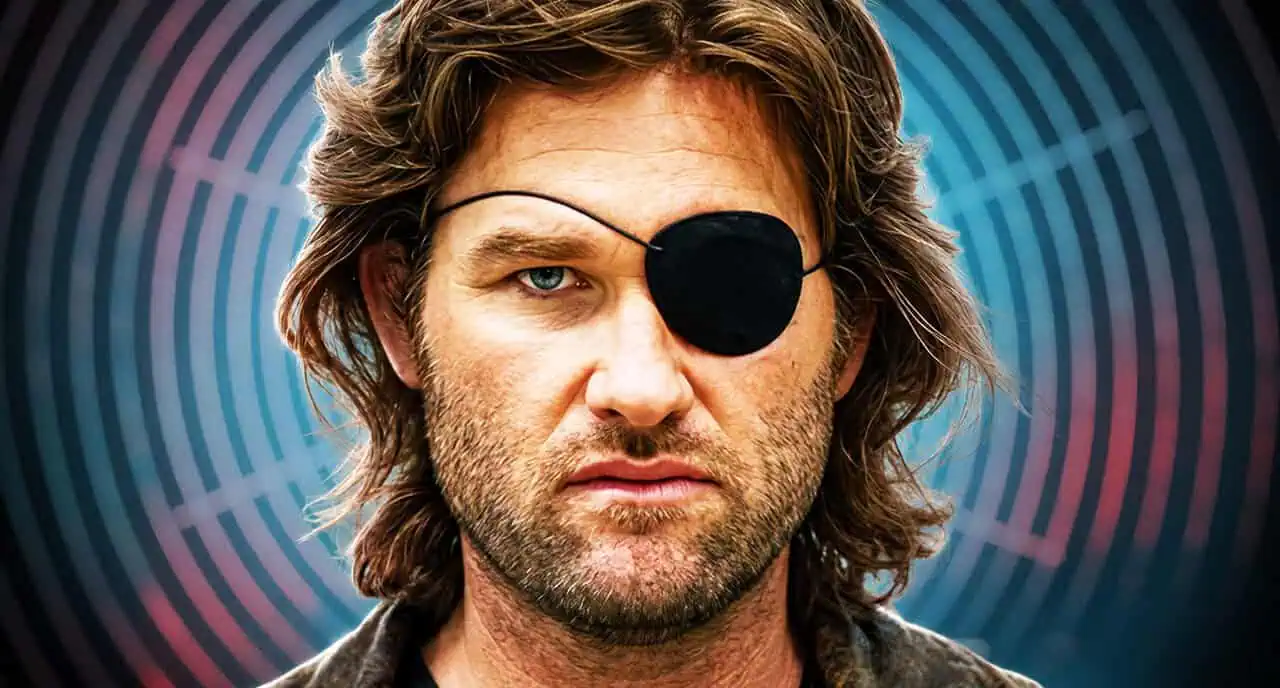
Do you remember in Escape from New York when we found out how Snake Plissken lost his eye? Or why Hauk had an extra reason for being posted as warden of the New York prison? Or what was happening on the West Coast in 1997? No? Well, that is probably because those details were only expanded upon in the thrilling and now very collectible book version of the movie. Originally published in 1981, the Escape from New York novelization has been brought back into print by Echo On Publications, along with a number of other great movie tie-in books. And no, I don’t mean the book the movie was based on, because that doesn’t exist. I’m talking about the tie-in novel written specifically for the film, and boy, is it a fun one.
So buckle in and forget everything you think you know about the characters and the movie as we look at the Snake Plissken Extended Universe, specifically what the Escape from New York novelization added to an already legendary movie.
Escape from New York Was Already a Classic
When Escape from New York came out in July 1981, it was a smash success, grossing around $50 million from a budget of just $6 million. It was John Carpenter‘s third hit in a row after Halloween in 1978 and The Fog in 1980, so naturally it was time to capitalize on the movie with some merchandise. There was the now-infamous board game from Games Workshop, but there was also the ever-popular tie-in novelization.
We talked about the first three Halloween movie novelizations and how different they could be from the movies, and after rereading both The Thing and Escape from New York, I realized there were enough interesting additions and changes here to make this worth talking about.
How many differences could there actually be? Well, it kind of changes the complexion of the entire story. No big deal.
What Is Escape from New York About?
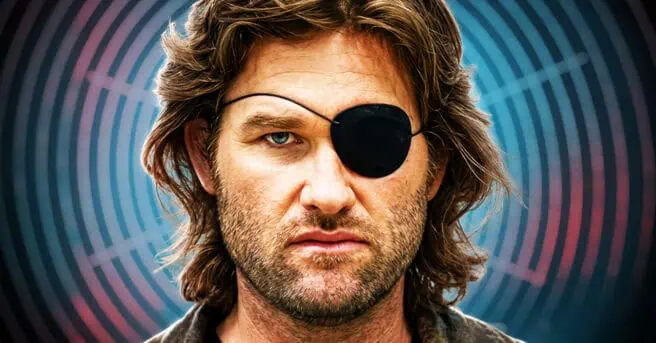
Escape from New York follows Snake Plissken, fresh off being caught after a bank robbery, as he is brought into the prison state of New York and offered a pretty tough deal. Snake has to go into the prison by himself, find the President of the United States after Air Force One crashes into Manhattan, make sure the President’s tape reaches a summit, and get back out within 24 hours.
That’s all well and good for a badass former soldier like Snake Plissken, except Manhattan is now an anything-goes prison filled with gangs, cannibals, and other threats. Snake also has explosives implanted in his neck and an escape route that is going to be difficult, to say the least. He runs into colorful characters like Maggie, his old buddy Brain, Cabbie, and the infamous Duke of New York, who runs the place. Snake sneaks, barters, gambles, trades, and fights his way through the city, accomplishing his mission just in time.
But when push comes to shove, Snake isn’t about to let a little bureaucracy get in the way of another world war.
And that’s the story of the movie we all know and love. Even some people (not me) think it is inferior to its glossier mid-’90s sequel, Escape from L.A.. Those people are obviously wrong, but that’s okay. Everyone should have a bad take from time to time. Lord knows I do.
The greatness of Escape from New York goes well beyond the plot, even if that plot has been copied dozens of times. A Guy Pearce movie even got sued for being just a bit too much like this all-time classic.
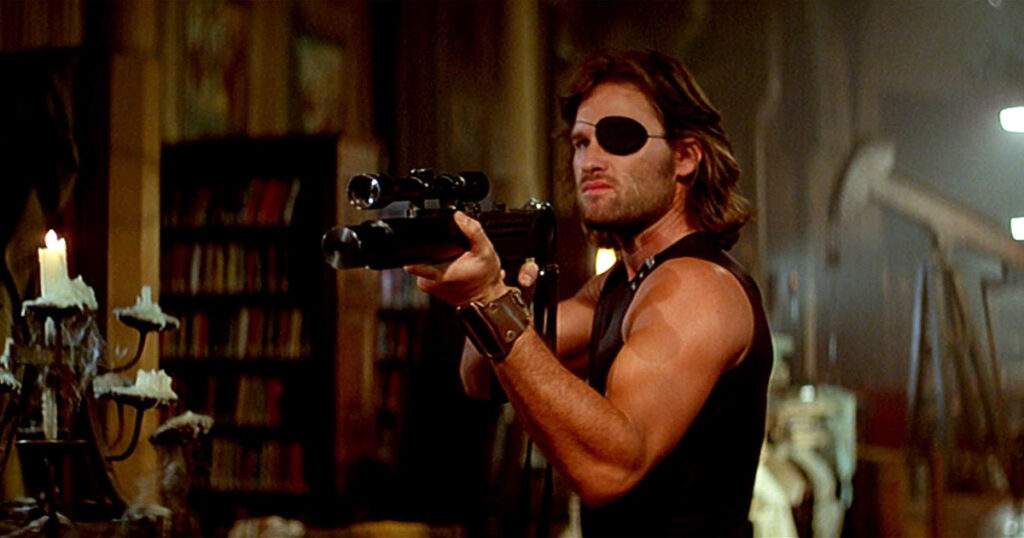
Then you have the cast. Kurt Russell, Donald Pleasence, Isaac Hayes, Harry Dean Stanton, Ernest Borgnine, Adrienne Barbeau, and Lee Van Cleef all play their parts to perfection. Even smaller roles from Tom Atkins and the ever-lovable George Buck Flower add their own zest to the movie.
The music by Carpenter and frequent collaborator Alan Howarth, the cinematography by Dean Cundey, and everything else make the movie about as close to perfect as you can get.
So how do you improve on that? Well, you don’t. But how do you make something this good feel a little new and exciting? That’s where the novelization comes in.
The Escape from New York Novelization
Movie novelizations were a pretty common practice, especially in the 1980s and early ’90s. I remember seeking out these books before I even really understood what they had to offer. I just thought they were cool collector’s items that gave me the opportunity to read the movie whenever I wanted. Little did I know that some of them could add so much more to the story.
Enter author Mike McQuay, who wrote the Escape from New York novelization. The book was originally published in 1981 and became a long-out-of-print collector’s item before Echo On Publications brought it back in 2026. McQuay wrote plenty of other books during his career, including the Matthew Swain and Ramon and Morgan series, as well as books under other names. His career and life were sadly cut short when he died of a heart attack at only 45 years old. He will always be a legend for this novelization, though.
So what’s different? Well, for starters, it’s darker. I know the movie itself is dark, both thematically and visually, but the novel takes it to another level. It has more humor in places, but it is also meaner, more nihilistic, and genuinely more depressing. And that’s saying something for Escape from New York.
The Novelization Makes the World Much Darker
One of the most interesting things about movie novelizations is that they were often written from a screenplay sent over by the studio. That means the author could be working from material that never made it into the finished film. That’s exactly what happens here. The novel expands on the Escape from New York screenplay while incorporating material from earlier versions of the story and scenes that were ultimately cut from the movie. That makes it feel like a slightly different version of the same story rather than simply the movie in book form.
The biggest addition is the state of the world. When Carpenter originally wrote the screenplay, he was reacting to the political and social climate of the 1970s, particularly the Watergate era. The movie already gives us a pretty bleak future. In 1988, crime has become so out of control that Manhattan is converted into a maximum-security prison. The island becomes a no-man’s-land with no guards inside and enormous walls surrounding it.
Then we jump to 1997. The movie gives us just enough information to understand how terrible things have become, but the novel has room to really dig into it. World War III happened. The United States and its enemies agreed not to use nuclear weapons, so they used nerve gas instead. That turned out to be a pretty terrible compromise. Millions died, and the survivors were left dealing with insanity, delusions, and increasingly violent behavior. The West Coast has become almost uninhabitable, eventually setting the stage for the events of Escape from L.A..
Even the movie’s main MacGuffin gets a darker explanation. The tape the President is carrying isn’t simply about a new energy source, as the movie suggests. In the novel, it contains information about a fallout-free nuclear weapon that could give the United States a massive advantage in the global conflict.
So while you can sometimes forget about how bad the rest of the world is when watching the movie, the book keeps reminding you that things are absolutely screwed.

Hauk Gets a Much Bigger Story
The book also expands the characters, especially Hauk and Snake. Movie Hauk is a hardass, but there’s clearly a reason why he was put in charge of the prison. He holds himself together under pressure, chooses Snake for the mission, understands the respect between them, and gives Snake every opportunity to finish the job.
The book gives him even more depth. Hauk is incredibly jaded toward the military and the government. The helicopter scene at the beginning of the movie plays very differently in the novel because Hauk is actually riding in that helicopter. It stops to blow up potential escapees, but Hauk makes sure they receive a warning first.
He also hates many of the cops and guards who work for him because they seem far too enthusiastic about killing people. Many of them are veterans like Hauk who simply can’t hold it together anymore.
The nerve gas has affected Hauk too, although not as severely as others, and that only makes him more disgusted with what the country has done to its own people.
Then the book gives him a much more personal reason for wanting to be the warden of New York. His son is one of the prisoners inside. Hauk had previously gone into the prison looking for him, but eventually gave up. When Snake heads into Manhattan, Hauk asks him to keep an eye out for his son. If this were a video game, that would absolutely be Snake’s side mission.
Snake Plissken Finally Gets a Backstory
And speaking of our soft-spoken Clint Eastwood impersonator, Snake gets much more backstory and even more emotion. The movie gives us bits and pieces of his history. We know he was the youngest person ever decorated by the President with two Purple Hearts, and we get hints about his military career and the jobs he pulled with Brain.
The novel goes much further. Snake was chosen for a suicide mission called the Leningrad Ruse. He and his team were sent into a battle they were expected to lose so that a double agent could be captured and feed the Russians false information. There were two problems: Snake and his team didn’t know it was a suicide mission, and the Russians saw through the deception. So basically, the entire operation accomplished nothing except getting people killed.
It was also during this mission that Snake lost his eye. Snake survived the battle along with one other teammate, Taylor, but Russian nerve gas was used during the attack. Snake’s goggles broke, and the gas destroyed his eye, leaving him with permanent pain. That goes a long way toward explaining his attitude.
But McQuay doesn’t stop there. Before Snake joined the military, his parents were killed by the prison guards known as the black bellies during a raid. The authorities then froze his family’s assets, helping push him into the military in the first place. This is the kind of backstory that can easily become unnecessary. We’ve seen plenty of prequels and expanded-universe stories that try to explain every little thing about a character when some things are better left mysterious. The Halloween novelizations I covered last year are a good example of that. Here, though, I think it works.
Snake’s history fits the movie’s larger themes about government, authority, war, and betrayal. I’m curious what Kurt Russell would think of all these additions, especially since he had such a major role in creating Snake’s personality and appearance.
The Crazies, Hauk’s Son, and the Missing Scenes
The book doesn’t just add character development. It also restores several pieces of the story that were left on the cutting-room floor. One of the coolest additions involves the Crazies. The disgusting, terrifying people who chase Snake in the movie are even more disgusting and terrifying in the book. One of them has a very specific connection to Hauk.
During the chase, Snake shoots one of the Crazies’ hands off. In the book, he notices that the hand has the word “HAUK” tattooed on it. That’s Hauk’s son.
Snake later gives Hauk some hope by telling him that his son is doing fine and doesn’t need anything. It’s sad and maybe a little hokey, but it gives Snake and Hauk another small connection. Both men are war veterans who have been screwed over by the government, and they understand each other in a way that the movie only hints at.
The novel also opens with Snake and Taylor robbing the Federal Reserve Depository, a sequence that was cut from the finished film. The robbery helps explain how Snake was captured in the first place, while Taylor’s fate gives Snake another reason to hate the authorities.
There are plenty of other additions scattered throughout the book. Snake takes the stairs down from the World Trade Center after landing on the roof and encounters one of the prison gangs. It feels like the movie might have originally been setting up a much larger gang structure, almost something like The Warriors, but neither the book nor the movie goes very far with that idea.
There is also a sterilization room where prisoners are forcibly castrated, and Snake nearly gets taken there before Hauk intervenes. So, yeah. The New York prison is somehow even worse than you thought.
Some of the Book’s Weirdest Additions
Not every addition changes the story in a major way. Some are simply there to show how cool Snake is. When he tries to enter a musical theater club, he scares off a bouncer by showing him his gun. When a woman underground is being passed around by thugs, Snake doesn’t exactly save her, but he does punch one of the guys in the face.
And then there’s the crystal meth. Hauk gives Snake some crystal meth to help him stay awake when exhaustion starts catching up with him. Unfortunately, Snake loses it. So there is no secret chapter where Snake goes on a crystal meth-fueled rampage through New York. I feel cheated.
The book also expands the final car chase. Instead of the Duke being the only vehicle chasing Snake, several cars are involved, leading to a larger pileup and a bigger explosion.
And then there’s Fresno Bob. The movie gives us the famous line about what happened to Bob, but the novel actually tells us. He was skinned alive by the police after being captured. I’m starting to think McQuay wasn’t the biggest fan of law enforcement either.
The Escape from New York Extended Universe
So there you have it. The novel doesn’t necessarily change the story, but it adds a ton of world-building and character development.
The movie remains an all-time classic and is obviously a much quicker way to experience Snake’s adventure. But the book is absolutely worth your time, especially if you’re the kind of person who loves digging into the weird corners of movie history.
And the Escape from New York universe goes well beyond the novelization. There are board games, a canceled video game, a canceled television series, the long-in-development remake, the never-produced Escape from Earth, Escape from L.A., and several comic book stories.
Marvel published The Adventures of Snake Plissken in 1997. The story takes place between Escape from New York and Escape from L.A. and sends Snake to Chicago after he steals engineered viruses from the Centers for Disease Control. He eventually runs into ATACS, a government robot designed to predict criminal behavior by using Snake’s own personality against him.
Then, in 2003, CrossGen and Hurricane Entertainment published John Carpenter’s Snake Plissken Chronicles, a four-part comic series set shortly after the events of Escape from New York. Snake heads toward Atlantic City and gets involved in another ridiculous criminal adventure involving a very important piece of American history and a character named Captain Ron. Yes, really.
There was even a planned Escape from Earth sequel that would have sent Snake into space. So, yes, the Snake Plissken Extended Universe is real.
Is the Escape from New York Novelization Worth Reading?
Absolutely. If you love Escape from New York, Mike McQuay’s novelization is more than just a prose version of the movie. It expands the dystopian world, gives Snake and Hauk more detailed histories, restores scenes that were cut from the film, and fills in some of the gaps that Carpenter’s lean screenplay intentionally leaves open.
It’s darker than the movie, occasionally stranger, and sometimes goes into more detail than you probably ever expected from a movie tie-in novel. But that’s what makes it fun. The 2026 Echo On reissue also makes the book much easier to find than it has been for decades.
So if you’ve ever wondered how Snake lost his eye, why Hauk really wanted to be warden of New York, what happened to Hauk’s son, or what the hell was going on with the rest of America in 1997, this is where you find out.
Have you read the Escape from New York novelization? If so, what did you think of it? Let us know in the comments, and maybe I’ll see you again when we look at the wildly different The Thing novelization.
A couple of the previous episodes of WTF Happened to This Adaptation? can be seen below. To see the other shows we have to offer, head over to the JoBlo Horror Originals YouTube channel – and subscribe while you’re there!












The comment section exists to allow readers to discuss the article constructively and respectfully, focused on the topic at hand.
What’s Not Allowed