
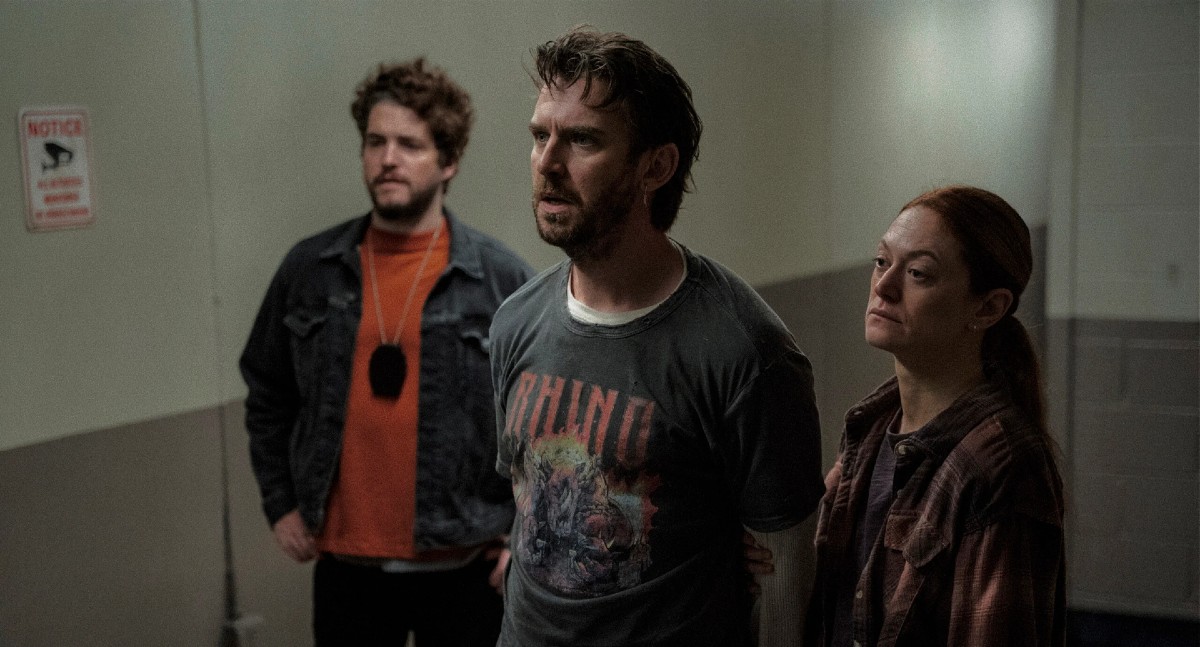
Plot: Pepper – a working-class moving man who, through a combination of bad luck and a bad temper, finds himself wrongfully committed to New Hyde Psychiatric Hospital – an institution filled with those society would rather forget. There, he must contend with patients working against him, doctors harboring grim secrets, and perhaps even the Devil himself.
Review: Eight years ago, AMC debuted The Terror, a historical horror story based on Dan Simmons’ novel. Inspired by the true events of an expedition to the North Pole that ended in cannibalism, it was a masterfully tense drama that worked equally well as a supernatural story and a cautionary tale. Two years later, George Takei executive-produced a standalone second season, subtitled Infamy, that chronicled another terrifying tale set within the very real horrors of Japanese internment camps during World War II. Now, the third entry in The Terror anthology, Devil in Silver, arrives with an adaptation of a work of fiction rooted in the believably realistic nightmare of private healthcare. Based on the novel by Victor LaValle, Devil in Silver stars Dan Stevens and blends demonic monstrosities with psychological scares within the confines of a psychiatric hospital that may or may not be scarier than a stay in a real medical facility.
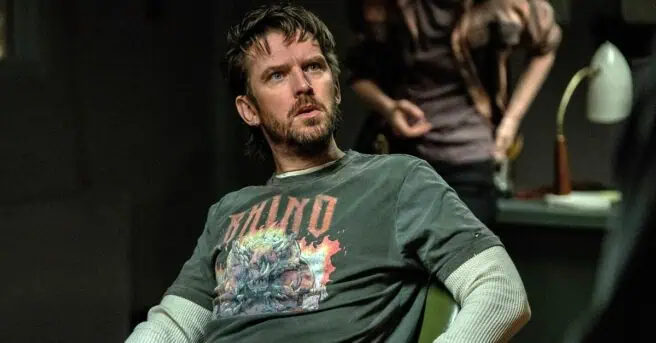
Dan Stevens stars as Pepper, a guy who works odd jobs emptying homes and taking out garbage as he strives to become a music teacher. When he gets into a fight with his girlfriend’s ex-husband, the scuffle involves some cops who take Pepper into custody. Rather than take him to jail, the cops instead funnel him to a psychiatric hospital where they have been supplying the head of the facility, Dr. Anand (Aasif Mandvi), with new “patients”. As Pepper’s stay continues to be extended, he begins to discover that his fellow patients may all be normal people who are being held against their will. Whether it be Dorry (Judith Light) whose husband committed her years ago for “crying too much” or Pepper’s roommate, Coffee (Chinaza Uche), who is a structural engineer trying to contact someone in the government to get him out of the ward. Each person is there as another tick mark on the list of patients who justify the existence and funding of the hospital in a chilling dehumanization to justify the existence of the hospital in the first place.
If the bureaucratic nightmare were the sole element of horror in Devil in Silver, this would have likely been an effective series already. From Miss Chris (CCH Pounder), who helps Dr. Anand keep the ward under wraps, to nurse Scotch Tape (Hampton Fluker), who uses MacGyver-esque skills to keep the hospital’s limited resources running, there is a chilling undercurrent of reality in how the healthcare system is portrayed. Then, the series adds a demonic entity that kills patients and makes Pepper question his own sanity. Appearing in the form of a buttoned-up doctor, the potential Devil (played by John Benjamin Hickey) thrives on the souls of the poor, unfortunates who are trapped at New Hyde, and as the six-episode series unfolds, everyone must band together to face off with the very real monster lurking in the halls. As the series progresses, the horror shifts from jump scares and blood to an endless labyrinth of hallways that evoke Severance’s aesthetic, along with demonic imagery that recalls The Exorcist III and the Hellraiser films.
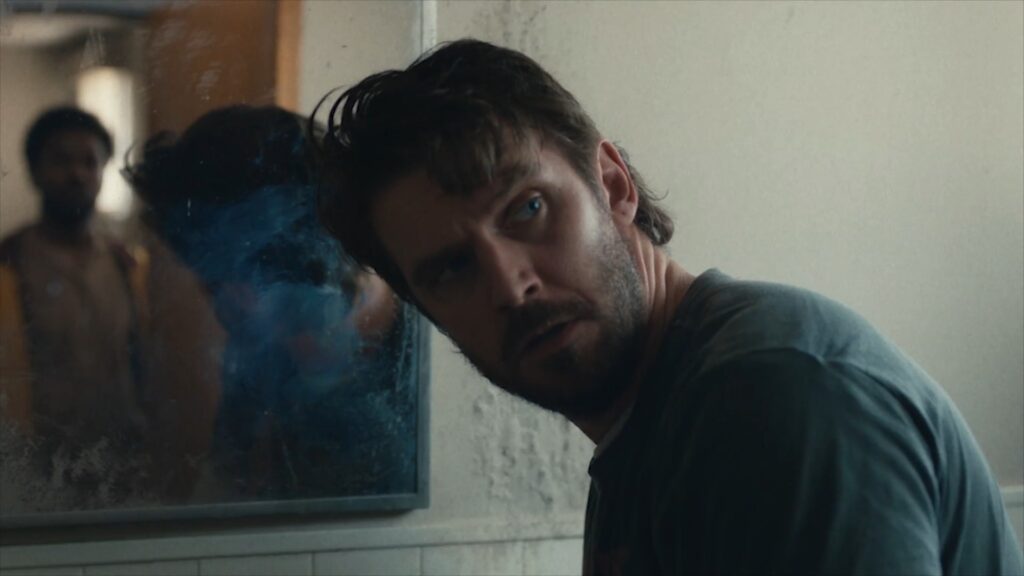
Dan Stevens’ performance, wrapped in heavy-metal t-shirts and a thick New England accent, often reminded me of his excellent work in the Marvel series Legion. Both that show and this series follow a man who questions his own sanity and must face off with supernatural entities, but in Devil in Silver, Stevens spends more time trying to figure out what is going on alongside his fellow patients, the staff, the cops, and other outsiders who eventually get stuck inside the grip of the evil entity. The cast also includes Stephen Root (this guy is everywhere these days!), Robert Sean Leonard, and Marin Ireland, whose involvement in the increasingly disturbing hospital is more interesting when it deals with the tangible horrors rooted in reality rather than the supernatural ones. Yes, this is The Terror, and it has scary moments, but it often feels like this series could have worked without adding Satan to the mix.
Created by Christopher Cantwell (Halt and Catch Fire) alongside Devil in Silver novelist Victor LaValle, the third season of The Terror benefits from having the visual table set by acclaimed director Karyn Kusama, who helms the first two episodes. Kusama has worked extensively with humanistic horror in shows like Dead Ringers, Yellowjackets, The Outsider, and The Man in the High Castle, as well as amazing work on the big screen in Destroyer and The Invitation. She sets the palette of muted grays and dark shadows through the byzantine levels of New Hyde, which adds to a sense of anxiety around every hidden corner. Devil in Silver is not quite as powerful as the previous seasons of The Terror, but it does a damn good job of building the tension from the outset and never lets go through the entire six-episode run.
While not as strong as the previous two seasons of The Terror, Devil in Silver is still a solid drama that fits nicely into a short run of episodes and delivers some pretty gnarly, horrific imagery that will keep many viewers up at night. While Dan Stevens does a great job in the lead role, his performance sometimes overshadows the ensemble, who don’t have quite as much heavy lifting to do. I hope the wait for a fourth season does not go on nearly as long as it took for Devil in Silver to debut. The Terror remains one of the more interesting anthologies on the air, with this new season proving it is a solid showcase for turning real-world situations into stories that are just as frightening as they can be. At the very least, Devil in Silver will make you question what will happen the next time you need to visit the hospital for more than just a routine check-up.
The Terror: Devil in Silver premieres on May 7th on AMC.




















The comment section exists to allow readers to discuss the article constructively and respectfully, focused on the topic at hand.
What’s Not Allowed