

Plot: A storm is coming for happily married attorneys Anna and Tom Bowden when Max Cady the notorious killer they are responsible for putting behind bars, is let out of prison — and he wants vengeance.
Review: A remake of a remake often feels like it is unnecessary, especially when you are taking a crack at a modern cult classic. Martin Scorsese’s 1991 psychological thriller, Cape Fear, was a remake of the 1962 adaptation of the novel The Executioners. Both films revised the source material and added new layers to the fraught dynamic between ex-convict Max Cady and the attorney he holds responsible for sending him to prison. This new version of Cape Fear changes almost everything about the story while selecting key elements from both prior versions to create a modern take on justice, revenge, and more. Led by Amy Adams and Javier Bardem, the new Cape Fear carries both Martin Scorsese and Steven Spielberg as executive producers and more than earns a spot alongside the feature film iterations of the story. By expanding beyond a simple tale of vengeance, the new Cape Fear is a chilling limited series with standout performances from Bardem and Adams.
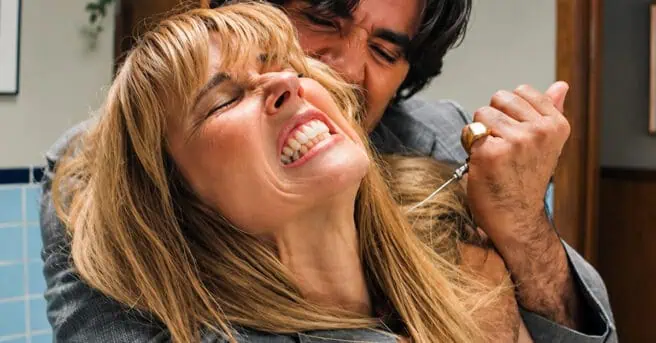
In the previous versions of Cape Fear, attorney Sam Bowden (Gregory Peck in 1962 and Nick Nolte in 1991) is directly responsible for the imprisonment of Max Cady (Robert Mitchum and Robert De Niro) for rape. In the first film, Bowden was a witness, and in the remake, he hid evidence to get Cady convicted. In this new version, Sam is now Anna Bowden (Amy Adams), Max Cady’s (Javier Bardem) defense attorney, who convinced him to plead guilty to the murder of his pregnant wife. While the deal with prosecutor Tom Bowden (Patrick Wilson) was for twenty years, the judge gave Cady a life sentence. Seventeen years later, the Bowdens are now married, while Anna works for a legal non-profit that exonerates the wrongly convicted. When new evidence exonerates Max Cady, the man is freed, and the Bowdens begin to fear that an unspoken act they committed will prompt Cady to seek justice against them. The cat-and-mouse game begins in the first episode and becomes increasingly complex as the series progresses.
The biggest shift in this Cape Fear is that Max Cady is not a mere psychopath bent on destroying the lawyer he holds responsible for sending him to prison. Javier Bardem, covered in prison tattoos and sporting a disturbingly empty gaze, is far more nuanced than De Niro or Mitchum’s versions. This Cady is a former chef whose time in prison resulted in a head injury that causes flashes of pain and gives the audience pause to wonder if he is in his right mind or ready to snap. What Anna and Tom allude to having done to Max is not clear at first, but the series adds much more to the mix, complicating matters. The Bowdens’ teenage son, Zack (Joe Anders), is still traumatized from an incident the prior year involving his girlfriend, and Anna’s older daughter from a prior relationship, Natalie (Lily Collias), is struggling with being in the shadow of the rest of the family. Add to the mix that Anna is working on multiple cases, helping prisoners, while Tom works in private practice. There is a lot for any family to deal with, and now Max Cady reenters the fray.
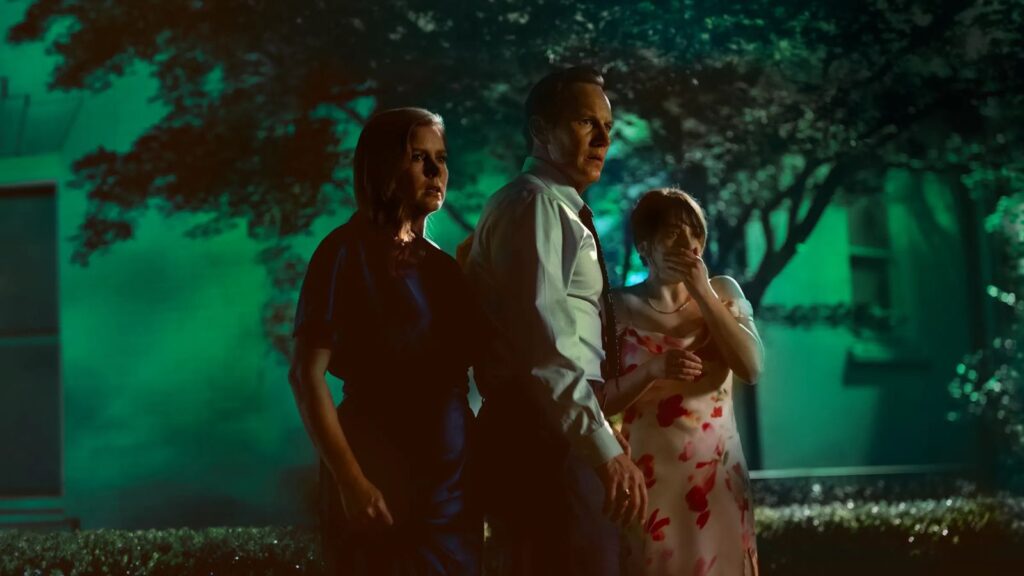
There are subtle and not-so-subtle stylistic choices at play in Cape Fear, including the use of the memorable Bernard Hermann theme from the 1991 film. The series shifts from overly saturated colors to black-and-white for the prison flashbacks and negative footage, all of which feel very on the nose for a story already heavily soaked in the heat of the Savannah, Georgia, setting. The fact that Max’s motivations shift from clear to murky throughout the eight episodes available for this review (the final two were held back to preserve the likely twists in store) makes Cape Fear much more of a mystery than the film versions. Across the series, we see people die and get hurt, but we also have several additional suspects beyond Max. This Cape Fear has some fun twists in store, including a bit of casting that I did not see coming. Even without these pulpy twists, Cape Fear works thanks to the exceptional performances from Javier Bardem and Amy Adams. Adams was excellent in the Southern gothic thriller series Sharp Objects, and her turn here as Anna echoes the strength and reserve of that performance. I was concerned that Javier Bardem would lean too heavily on De Niro’s iconic performance or echo his own Oscar-winning turn in No Country for Old Men, but the actor digs into what prison can do to a man who was duplicitous at first and is now beyond broken.
Created by Nick Antosca, the creator of Channel Zero and the true crime series The Act and A Friend of the Family, expands on the John D. MacDonald novel The Executioners and both screenplays by Wesley Strick and James R. Webb. You can feel the oppressive heat coming through the screen, and the weight of not only the characters’ paranoia and fear but also the perception of the media and society as a whole towards convicts, whether guilty or not. Antosca wrote the first episode, directed byThe Imitation Game helmer Morten Tyldum, who uses many Dutch angles and extreme visual techniques to pay homage to Scorsese’s version. Subsequent directors S.J. Clarkson, Amanda Marsalis, Reed Morano, Steven Piet, Trey Edward Shults, Jon S. Baird, and Stephen Williams keep the visuals consistent while adding moments throughout that refer back to the Cape Fear movies. Antosca and his writing team include several callbacks to the movies, including memorable moments from the 1991 version, as well as more subtle costumes and production elements that are nods to the 1962 movie. This Cape Fear takes much more time to connect to the title than the movies did, but the long-form story builds much more, giving the characters and their motivations time to simmer before coming to a boil.
Cape Fear is a remake I never expected to be this good, and Javier Bardem and Amy Adams give some of their strongest performances in recent years, with Patrick Wilson not far behind. This is a brilliantly complex psychological thriller that delves deeper into every character than the movie versions did, giving audiences more pause about who is telling the truth and who the real monsters are. Nick Antosca’s version does not get preachy about wrongful convictions, and the series takes a few too many detours into additional cases under investigation, but they are all in service of the main story of Max Cady and the Bowdens. Cape Fear is the summer mystery everyone should be talking about, and Apple TV’s weekly release schedule will have audiences theorizing and on the edge of their seats through the end of July. I don’t always advocate for the remaking of great movies, especially when they’re expanded into a series, but Cape Fear may be the best remake in any format to date.
Cape Fear premieres with two episodes on June 5th on Apple TV.






The comment section exists to allow readers to discuss the article constructively and respectfully, focused on the topic at hand.
What’s Not Allowed