


When considering Brian De Palma’s biggest cinematic misfires, most are quick to point out the tone-deaf and woefully miscast adaptation of Tom Wolfe’s The Bonfire of the Vanities in 1990. However, a close second has to be 2006’s The Black Dahlia, the handsome yet utterly vapid and convoluted adaptation of James Ellroy’s novel that traces the real-life murder of Elizabeth Short and the investigation that followed in 1947 Los Angeles.
Despite its moody noir visuals and impeccable period detail, The Black Dahlia suffers from uninspired casting, especially Josh Hartnett and Aaron Eckhart as LAPD detectives Bucky Bleichert and Lee Blanchard. In many ways, that was only the first in a long list of problems that plagued the production from start to finish.
Looking back at the film’s development, production, and release reveals a fascinating story. Several high-profile actors nearly starred in the movie, a major director originally planned it as a five-hour television miniseries, and De Palma’s first cut reportedly ran more than three hours before producers forced extensive trims. Those decisions dramatically altered the final product.
With that and several other intriguing behind-the-scenes details ahead, let’s find out what happened to The Black Dahlia.
Development
Based on James Ellroy’s 1987 novel, The Black Dahlia entered development almost immediately after publication. The film rights were acquired by producer James B. Harris, Stanley Kubrick’s longtime collaborator on classics such as The Killing, Paths of Glory, and Lolita. Harris wrote a screenplay and intended to direct the adaptation himself, but he ultimately spent nearly two decades trying to get the project made. The Black Dahlia would become his final producing credit.
From the late 1980s through much of the 1990s, the project languished in development. Everything changed following the critical and commercial success of L.A. Confidential, another adaptation from Ellroy’s acclaimed L.A. Quartet.
With renewed interest in Ellroy’s work, Universal Pictures acquired the rights and hired Josh Friedman to write the screenplay. Friedman later claimed he spent nearly eight years developing various drafts between 1997 and 2005. One version even included cameo appearances by Bud White and Ed Exley, the characters memorably portrayed by Russell Crowe and Guy Pearce in L.A. Confidential.
David Fincher’s Lost Version
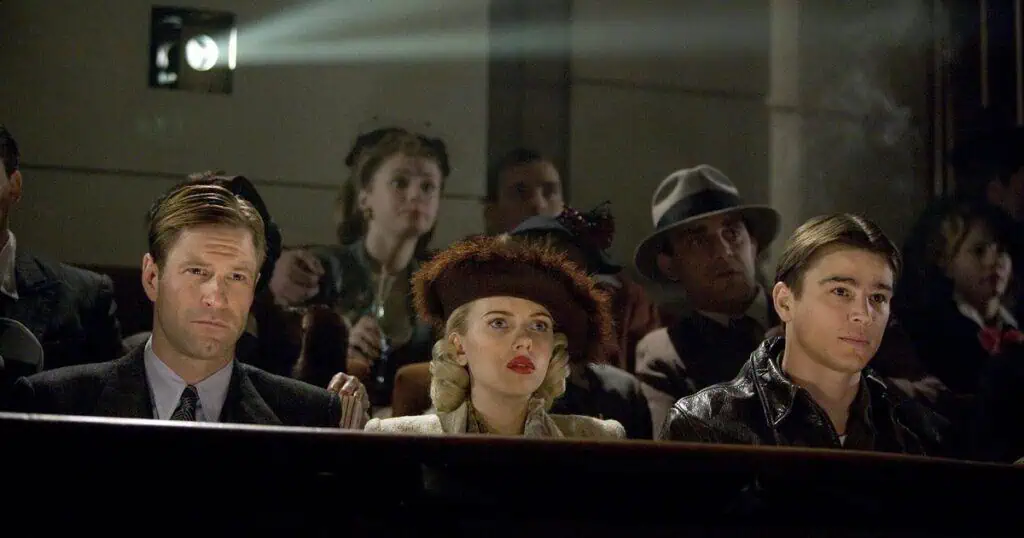
By 1998, Universal wanted David Fincher to direct. Fresh off the success of Se7en, Fincher was James Ellroy’s preferred choice and initially embraced the project. However, he quickly concluded that the novel was too dense for a standard feature film.
Rather than making a two-hour movie, Fincher envisioned The Black Dahlia as a five-hour television miniseries. Universal reportedly lost enthusiasm when Fincher requested an $80 million budget and major movie stars for a television production.
Before departing, Fincher had selected Josh Hartnett to play Bucky Bleichert and Mark Wahlberg to portray Lee Blanchard. Wahlberg was interested but scheduling conflicts with The Italian Job prevented him from committing. By the time he became available, he chose Martin Scorsese’s The Departed instead, a decision that earned him his first Academy Award nomination.
Alternate Casting Possibilities
Other actors considered for Lee Blanchard included Johnny Depp, Michael Douglas, Billy Crudup, and Gabriel Byrne.
As harsh as it may sound, it’s often said that casting is the most important aspect of directing. In our estimation, the miscasting of The Black Dahlia remains one of the film’s most enduring problems.
During Fincher’s tenure, Julianna Margulies was considered for Madeleine Linscott, while Jennifer Connelly was eyed for Elizabeth Short.
When Fincher exited, he moved on to make the far superior and far more enduring true-crime drama Zodiac. Interestingly, he later revisited the case through his involvement with The Black Dahlia: A Crime Graphic Novel.
Brian De Palma Takes Over
Following Fincher’s departure, Universal turned to Brian De Palma.
Hartnett remained attached as Bucky Bleichert, although Stephen Dorff, Paul Walker, and Chris O’Donnell were also considered. Aaron Eckhart inherited the role originally intended for Wahlberg.
On the female side, Eva Green was first offered Madeleine Linscott before Kate Beckinsale, Rachel Bilson, and Fairuza Balk entered consideration. Green reportedly declined because she feared being typecast as a femme fatale following Casino Royale. The role eventually went to two-time Oscar winner Hilary Swank, despite the fact that her character does not appear until roughly 25 minutes into the film.
Elsewhere, Gwen Stefani was considered for Kay Lake before Scarlett Johansson was cast.
For Elizabeth Short, candidates included Sherilyn Fenn, Tiffani Thiessen, Fairuza Balk, and Maggie Gyllenhaal, who ultimately declined. Rose McGowan auditioned for Short but instead landed the role of Sheryl Saddon.
Mia Kirshner Becomes Elizabeth Short
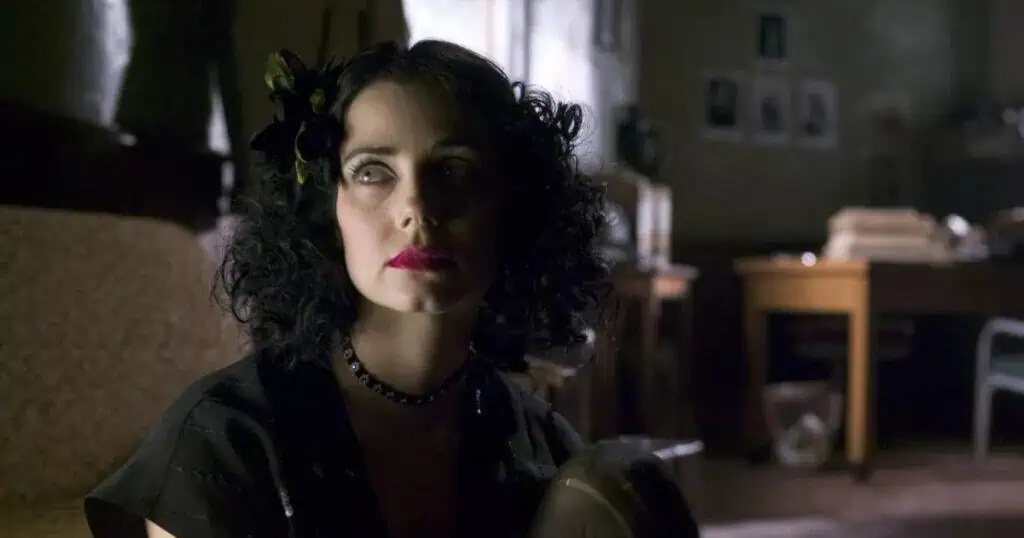
Mia Kirshner earned the role through an unusual route.Initially hired simply to read dialogue opposite auditioning actors, Kirshner impressed De Palma so much that he cast her on the spot.
The actress not only shared a striking resemblance to the real Elizabeth Short but had long been fascinated by both the case and Ellroy’s novel. Deeply committed to portraying Short respectfully, Kirshner ultimately delivers what many consider the film’s strongest performance.
Her casting also led to major script changes. Short’s role was expanded significantly, with the fictional screen-test footage becoming a key storytelling device that charts her gradual decline. These sequences do not appear in Ellroy’s novel but became central to De Palma’s version.
With casting finalized, De Palma planned to shoot in France alongside legendary cinematographer Vilmos Zsigmond and acclaimed production designer Dante Ferretti. Stan Winston Studio was also hired to create practical effects, including the life-sized Elizabeth Short corpse replica.
Principal Photography
Armed with a $50 million budget, The Black Dahlia entered production on April 1, 2005.
Although De Palma initially hoped to shoot in France, most filming took place in Sofia, Bulgaria, making it the most expensive production ever shot there at the time. Much of the film was produced at New Boyana Film Studios, where sets recreated sections of 1940s Los Angeles, including Leimert Park.
Only select exterior footage was captured in Los Angeles itself, including shots of Echo Park, MacArthur Park, the Pantages Theatre, and numerous other recognizable landmarks.
Unlike many troubled productions, principal photography proceeded relatively smoothly. The real problems emerged in post-production.
Post-Production
According to reports, De Palma’s first cut exceeded three hours. Producers from Nu Image, Millennium Films, and Signature Pictures reportedly demanded extensive cuts, removing more than an hour of footage to arrive at a theatrical runtime of 121 minutes.
The original version reportedly remained much closer to Ellroy’s novel, allowing more room for character development and Bucky Bleichert’s psychological deterioration as he obsessively pursued Short’s killer.
Major Storylines Removed
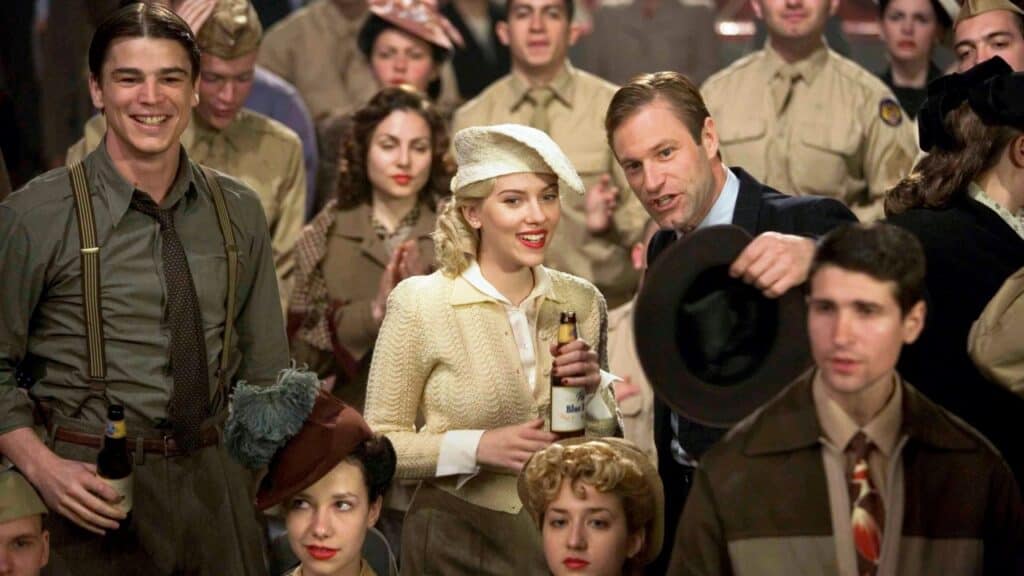
Among the most significant cuts was Robert “Red” Manley, a major suspect in the novel portrayed by Joey Slotnick. Although Manley appeared in filmed scenes, nearly all traces of the character were removed from the finished movie.
Another deleted subplot involved Marjorie Graham, one of Elizabeth Short’s former roommates. Her scenes explored additional aspects of Short’s personal relationships and background.
Longtime De Palma collaborator Amy Irving was also cast in the larger version of the story. Once major portions of the narrative were excised, her role disappeared as well.
James Ellroy’s Reaction
What makes these edits particularly frustrating is that James Ellroy reportedly admired De Palma’s original cut. According to Ellroy, the studio-mandated revisions undermined the filmmaker’s vision and significantly weakened the adaptation.
Nevertheless, Universal Pictures reportedly paid $20 million to acquire distribution rights, signaling confidence in the revised version. Unfortunately, that confidence did not translate into success.
Release and Reception
The Black Dahlia opened in theaters on September 15, 2006. The film debuted with roughly $10 million and finished second at the domestic box office during its opening weekend. Ultimately, it grossed $49.3 million worldwide against a $50 million production budget.
The reviews were brutal. Critics largely criticized the confusing narrative, underdeveloped characters, and flat performances, while Mia Kirshner emerged as one of the few widely praised elements.
As of 2026, the film holds a 32% critic score and a 27% audience score on Rotten Tomatoes, suggesting it failed to connect with either critics or moviegoers.
De Palma’s View on the Failure
According to De Palma, Universal’s marketing campaign played a major role in the film’s commercial disappointment. The director believed the studio promoted The Black Dahlia as a true story rather than emphasizing its status as an adaptation of Ellroy’s novel.
In De Palma’s view, audiences felt misled when they discovered the film took significant dramatic liberties with the historical case, resulting in negative word of mouth that further damaged the movie’s prospects.
The film also spends nearly 25 minutes establishing its characters before Elizabeth Short’s murder becomes central to the narrative, a pacing choice that may have tested audience patience.
Meanwhile, countless other films and television programs had already explored the infamous case, making it difficult for The Black Dahlia to distinguish itself.
The Aftermath for Brian De Palma
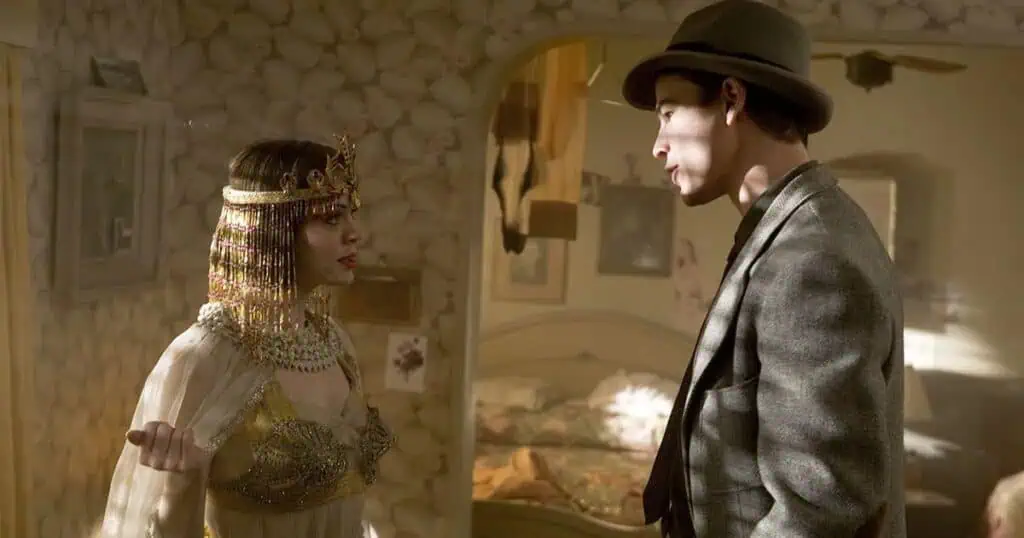
The fallout extended beyond a single box-office disappointment. Since The Black Dahlia, De Palma has not directed another film for a major Hollywood studio. His subsequent features—Redacted, Passion, and Domino—were all independently financed productions.
That represents a remarkable decline for the filmmaker responsible for classics such as Carrie, Dressed to Kill, Blow Out, Scarface, Body Double, The Untouchables, Carlito’s Way, and Mission: Impossible.
Unlike his recovery from The Bonfire of the Vanities, De Palma has never fully rebounded from the commercial and critical failure of The Black Dahlia. He remains attached to several long-gestating projects, including Catch and Kill, Sweet Vengeance, and Lights Out, although progress on those films has been slow.
As disappointing as that may be for longtime fans, that’s ultimately what happened to The Black Dahlia and, in many ways, what happened to Brian De Palma’s Hollywood career afterward.
A couple of previous episodes of this show can be seen below. For more, check out the JoBlo Horror Originals YouTube channel—and don’t forget to subscribe!



The comment section exists to allow readers to discuss the article constructively and respectfully, focused on the topic at hand.
What’s Not Allowed