
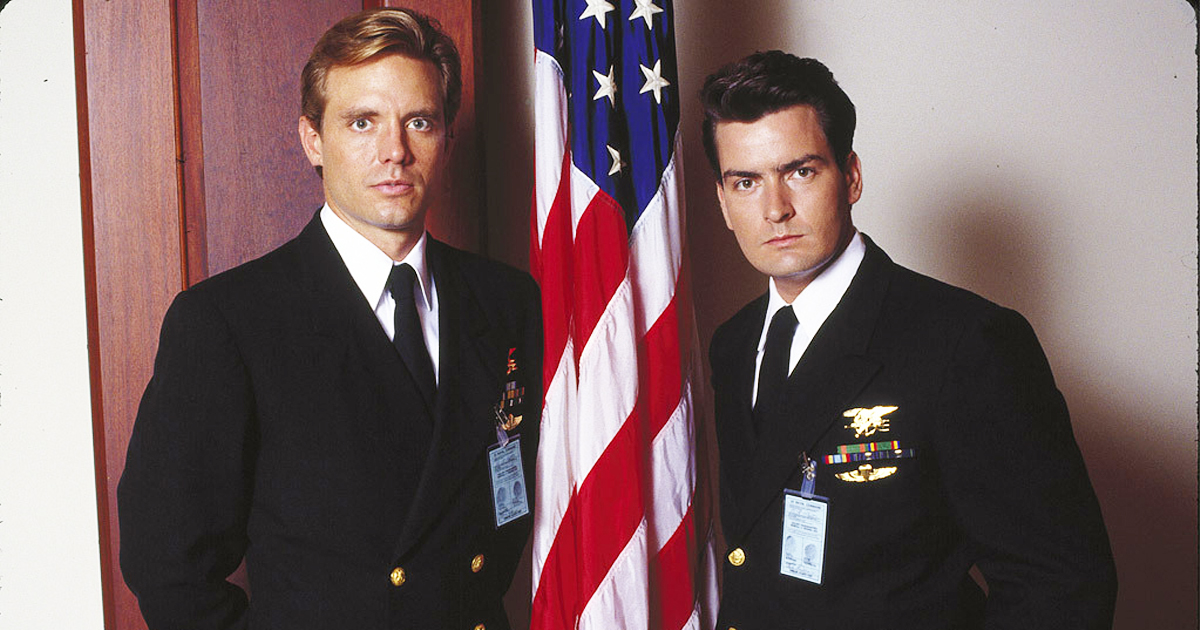

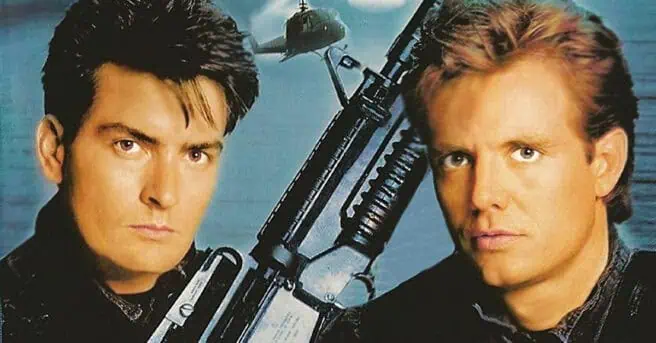
As a movie, Navy SEALs is probably most famous for a pretty nasty dig made at its expense in Kevin Smith’s Clerks. Everyone involved came to think of it as a disaster, with Michael Biehn and Charlie Sheen, when they reunited on the former’s podcast, admitting they hated the finished product—only to be surprised years later when it became a cult classic, not only for action fans but also for a generation of Navy SEALs themselves.
Indeed, shooting Navy SEALs was a fraught experience both men look back on with regret, with Biehn in particular expressing tremendous disappointment with the craft exhibited by director Lewis Teague, whom he tried to have replaced. And oh yeah—both guys were partying HARD during production.
Navy SEALs was Rambo meets Top Gun
So how does a movie like Navy SEALs happen? Well, in a lot of ways, Navy SEALs, despite coming out in 1990, is very much a product of the eighties—or at least the two biggest action movies of the decade, Rambo: First Blood Part II and Top Gun. The Rambo film featured a larger-than-life hero single-handedly returning to Vietnam to basically refight the war as a one-man army, and audiences went wild. Then, the next year, Top Gun came out and reinvented the classic service drama—a genre that petered out around the time of the Vietnam War but had been a staple of the fifties and sixties, when movies about serving in the armed forces were regularly made and highly glamorized.
None of them had a thing on Top Gun, which was sexy and directed like a music video, with its MTV-ready soundtrack, high-velocity action, and hot cast led by none other than Tom Cruise. Cruise became another type of eighties hero—not brawny like Sly, but just as capable and more vulnerable.
Put those two movies together and you have Navy SEALs. Of course, Navy SEALs are real, although this would be the first movie made about them. The U.S. Navy SEALs are an elite special operations force within the U.S. Navy trained to conduct some of the military’s most difficult and dangerous missions. The name SEAL stands for Sea, Air, and Land, reflecting their ability to operate in all three domains.
In terms of movies being made about them, the best is usually considered to be Peter Berg’s Lone Survivor, which is based on the true story of Marcus Luttrell. Compared to that movie, Navy SEALs is fantasy—very much a comic book, Hollywood creation. The intent wasn’t to be realistic at all, but rather to be a piece of escapist entertainment.
Initially, it was set up at none other than our beloved Cannon Pictures, with the film titled S.E.A.L.S., and it was set to star Kevin Bacon, which is pretty high-caliber casting for them, as it could have just as easily ended up being made for a pittance and starring someone like Michael Dudikoff. However, as we already covered in our American Ninja 2 video, the studio had a disastrous run, and they lost the rights to the project. Instead, Menahem Golan made his own, very cheap SEALs movie, The Finest Hour, which starred Rob Lowe and went direct-to-video.
The real-deal Navy SEALs was set up at Orion Pictures, a fledgling studio that, in the late eighties and early nineties, was always teetering on the edge of bankruptcy. They had a few hits, but they didn’t have any franchises—although the same summer Navy SEALs came out, they tried to turn RoboCop into one with a sequel.
How Navy SEALs came together
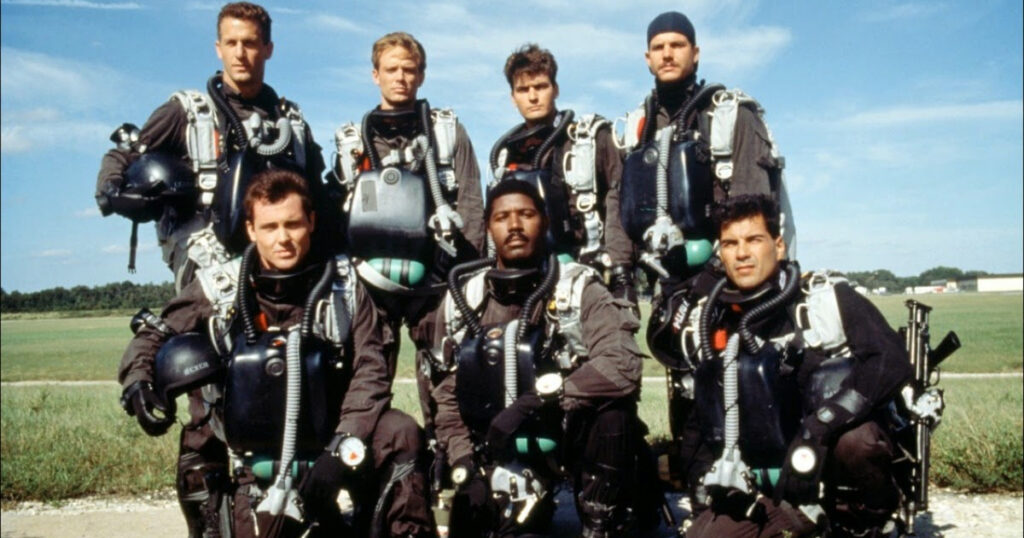
Initially, Navy SEALs came about when a William Morris agent, Brenda Feigen, was introduced to Chuck Pfarrer, a former Navy SEAL turned screenwriter, and convinced him to turn his experience into a script. She was able to get it set up at Orion, although what one assumes was a harder-edged script was soon turned into more of an adventure film by a succession of writers. The finished film ended up giving writing credit to Pfarrer and Gary Goldman, a writer known for Big Trouble in Little China and Total Recall.
Initially, the film was set to team Michael Biehn and Mark Harmon, with Biehn playing Hawkins, the team’s second-in-command and the rebellious, Maverick-style lead, while Harmon would play the more experienced commander, Curran. Both men were rising stars at the time, but not exactly surefire box office draws.
Biehn had broken out playing Kyle Reese in The Terminator, but then played two highly regarded military roles, playing Hicks in Aliens and then a more villainous character in The Abyss, all for James Cameron. As a leading man, he’d never really gotten a fair shot, with movies like Rampage and The Seventh Sign not amounting to much. Yet, it was thought that he had potential in the right role.
Harmon, as well, had broken out following his turn on St. Elsewhere, but his leading roles in films hadn’t performed at the box office; movies like The Presidio underperformed, while Stealing Heaven and Worth Winning barely got released.
Charlie Sheen replaces Mark Harmon
I suppose at this point Orion started to get cold feet about whether these men could lead the film, and some juggling was done. By the time he was approached to do the movie a second time, Biehn was now offered the Curran role, while Charlie Sheen was sought to play Hawkins.
Sheen’s casting as this Maverick-like character made sense. Sheen had a huge hit with Platoon in 1986, and he was more than convincing playing a soldier. He also had Wall Street under his belt, and for a time, it looked like he really could be the next Tom Cruise.
Both men agreed to star in the film because it offered them big paychecks, and for Biehn, it was seen as the movie that—potentially—could help him break out.
Michael Biehn goes to war with the director
To hear the two discuss the movie later on Biehn’s podcast, Just Foolin’ About With Michael Biehn, what sank the film was the choice of director, Lewis Teague—a sentiment echoed by producer Feigen in her book.
Initially, they wanted Ridley Scott, who passed, and they actually hired Richard Marquand, the director of Return of the Jedi and Jagged Edge, but he passed away suddenly in early pre-production.
Lewis Teague was a journeyman director who, having cut his teeth working with Roger Corman, had a solid hit with Alligator in 1980. He became a director of mid-level studio fare, making the vigilante movie Fighting Back for Paramount in 1982, and then two Stephen King adaptations, Cujo and Cat’s Eye. His big break came when he was hired by Michael Douglas to helm The Jewel of the Nile, a sequel to Romancing the Stone.
While a hit, Teague had a disaster with his follow-up, a buddy-cop comedy called Collision Course, which paired Pat Morita and Jay Leno. It likely would have killed any thought of him making Navy SEALs had it ever gotten released, but it only surfaced in the U.S. in 1992 when it went direct-to-video.
Teague was hired on the strength of The Jewel of the Nile, but Feigen revealed in her memoir that what she didn’t know at the time was that Teague’s input on that film was limited to doing whatever Michael Douglas said.
Biehn had an amusing story about his own introduction to Teague, where he was told Teague directed The Lady in Red. Biehn got that movie confused with the Gene Wilder movie The Woman in Red, which he remembered enjoying. When he realized The Lady in Red was a cheap Roger Corman movie, his enthusiasm waned, and the two went to war as the shoot went on.
It got so bad that at one point Biehn was nearly fired by studio head Mike Medavoy, who actually had to get Sheen to get things under control. Apparently, Biehn and his co-stars, particularly Bill Paxton, who played the sniper nicknamed “God,” did their best to improve the script—but met a lot of resistance from the director, which enraged Biehn to no end.
I mean, when Sheen, at the height of his hard-partying eighties phase, is the guy you have to call in order to get things under control, you have problems.
A wild shoot — and a haunted hotel?
There were a lot of other crazy things that went on during the shoot that were unrelated to drugs—or, well, maybe not, depending on whether or not you think ghosts are real. Both Sheen and Biehn believe a hotel they stayed at in Spain, where the movie was shot, was haunted.
To give the makers of Navy SEALs their due, there was some attempt to make this more than just a Top Gun ripoff. The actors playing the SEALs actually went through two weeks of training where they learned how to handle weapons, urban combat, and took part in field maneuvers.
What is Navy SEALs about?
The premise of Navy SEALs is pretty basic. Early in the movie, the SEALs rescue Navy helicopter pilots who have been captured by terrorists, but are forced to leave behind a shipment of Stinger missiles the group had already captured.
Needing to track down the terrorist mastermind, they team with a civilian journalist, played by Joanne Whalley-Kilmer, to track down the missiles. But along the way, a soon-to-be-married team member, Graham (played by Dennis Haysbert), is killed due to Hawkins’ recklessness after he disobeys Curran’s orders—leading to a feud between them.
In the end, they are deployed to Beirut to destroy the missiles, only to encounter massive resistance, during which Curran is badly incapacitated, leading to Hawkins rising to the occasion, finishing the mission, and saving his commander’s life. Roll credits.
Navy SEALs really is a Top Gun clone
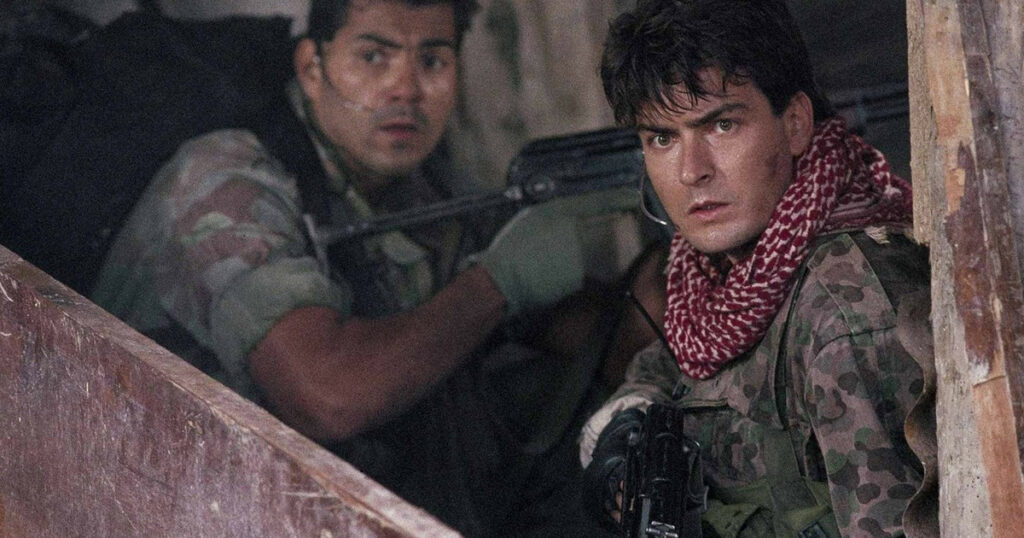
If you watch the film, you’ll see that Orion clearly put significant resources into it, but Biehn and Sheen’s criticism of Teague is valid, as the film is lifelessly shot, with action sequences that come off as stale.
The script, for all the people who worked on it, really is a Top Gun clone, but it’s not helped by the fact that Navy SEALsfurthers that comparison by giving it a Top Gun-style score as well as a soundtrack full of pop songs. They even use one of the Top Gun stars, Rick Rossovich, as one of the SEALs. Plus, the injection of a romantic subplot where the military vet falls for a civilian with ties to their mission is right out of that movie’s playbook too.
As far as the romantic subplot goes, there’s a reason it feels undercooked. A love scene was planned, which actually made its way into the novelization, but ended up being canceled when Biehn broke out in a cold sore on the day of shooting—which, of course, put the kibosh on the shoot, as Whalley could have gotten infected with HSV-1. Biehn hoped it would be rescheduled, but to his chagrin, it was dropped.
Navy SEALs bombs at the box office
Perhaps the reason is that at some point Orion Pictures likely decided they had a dog on their hands, with neither Sheen nor Biehn remembering ever having a premiere for it.
It did, however, get a prime summer 1990 release, but it opened in the middle of a phenomenal box office run for Ghostand landed with a thud. It only grossed $25 million domestically—which, if you account for home video and cable, likely meant it eventually turned a profit, considering it cost $21 million.
It didn’t help Biehn’s career, with him openly calling it the worst experience of his life. It didn’t push him to stardom, serving as one of several movies he led that didn’t make much of an impact at the box office, including K2 and Timebomb. However, he did have a classic role a few years later in Tombstone, where he played the iconic Johnny Ringo, and he has worked consistently since.
For Sheen, the back-to-back failure of Navy SEALs and his follow-up action movie, The Rookie (which was directed by and co-starred Clint Eastwood), seemed to push him into comedy. He reinvented himself the following year with Hot Shots!, which was a spoof of Top Gun, once again casting him in a Maverick-style role—but the laughs were intentional this time.
How Navy SEALs became a cult classic
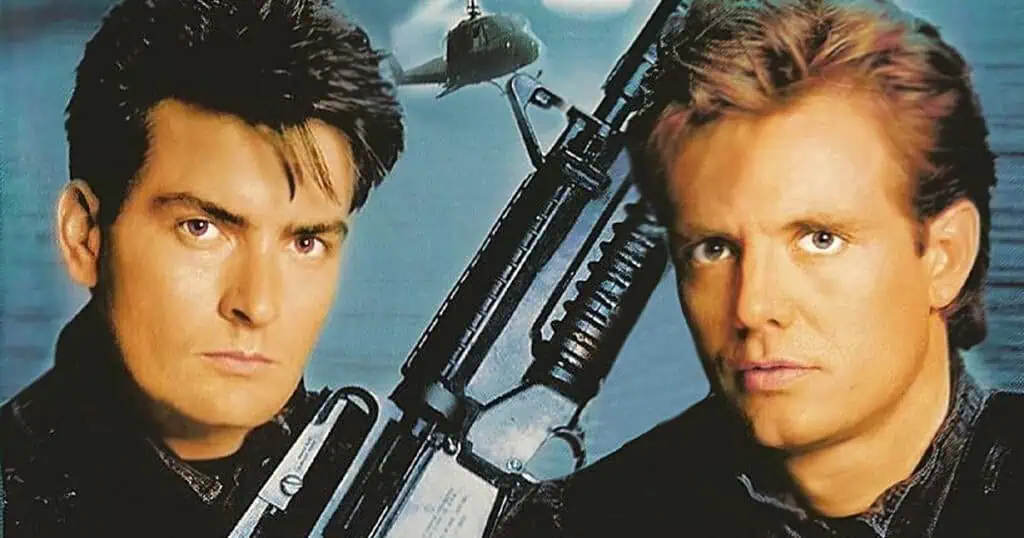
Yet, as much as its stars despise it, Navy SEALs did indeed pick up a cult following once it hit VHS. If you go back and watch it, the movie is easy to mock, especially in how closely it apes Top Gun.
There is a golf scene so blatantly a ripoff of the volleyball scene in Top Gun that it boggles the mind. Ironically, the golf scene was supposed to be a football sequence that Bill Paxton objected to, as it was too close to what they did in Top Gun. He actually ended up directing the golf scene himself, which is perhaps why one of the characters wears a Martini Ranch shirt, which was the band Paxton fronted at the time.
The film is also notable for how blatantly racist the Hawkins character is, although this is tempered by the fact that he’s called out on it by Whalley’s character, who turns out to be of partial Middle Eastern descent.
If you watch it as a piece of pure eighties cheese—even if it was made in 1990—it’s not a bad ride. Sheen is always a compelling screen presence, even if his character is so reckless there’s no way he’d be tolerated on a SEAL team, much less become second-in-command.
Biehn is quite believable in the role, playing a similar part years later in The Rock, and he is always convincing as a soldier. Joanne Whalley-Kilmer is gorgeous as the classic love interest, while Dennis Haysbert, who would go on to bigger and better things, is sympathetic in the “he’s for sure gonna die” role—which is, again, clearly right out of the Top Gun playbook, making him a Goose-type figure.
Plus, there’s Bill Paxton having fun as the sniper, God, and a score by Sylvester Levay that’s remarkably similar to the one he wrote for Hot Shots! the next year.
The surprising legacy of Navy SEALs
If you’re a fan of Navy SEALs, the movie is pretty easy to find everywhere, but for a real treat, check out Biehn’s interview with Sheen. The two hadn’t seen each other in years, with Sheen even admitting he failed to recognize Biehn at an autograph signing they participated in, but the two have a nice little on-camera reunion.
Both men have gotten sober in recent years and look back at their wilder days with amusement. While I doubt either man would come out and say they are legitimately proud of the film, as they both believe it could have been a really good movie had the script and director been better, they do acknowledge a lot of folks seem to have been inspired by it.
A real-life SEAL Team Six member, Adam Brown, who was killed in action in 2010, was said to have been inspired to become a SEAL thanks to one of the movie’s classic stunts, where Hawkins jumps from a moving truck off a bridge into the water.
I imagine that when the movie came out and bombed, neither man ever thought it would have that kind of staying power—and they at least seem proud of that aspect.











The comment section exists to allow readers to discuss the article constructively and respectfully, focused on the topic at hand.
What’s Not Allowed