
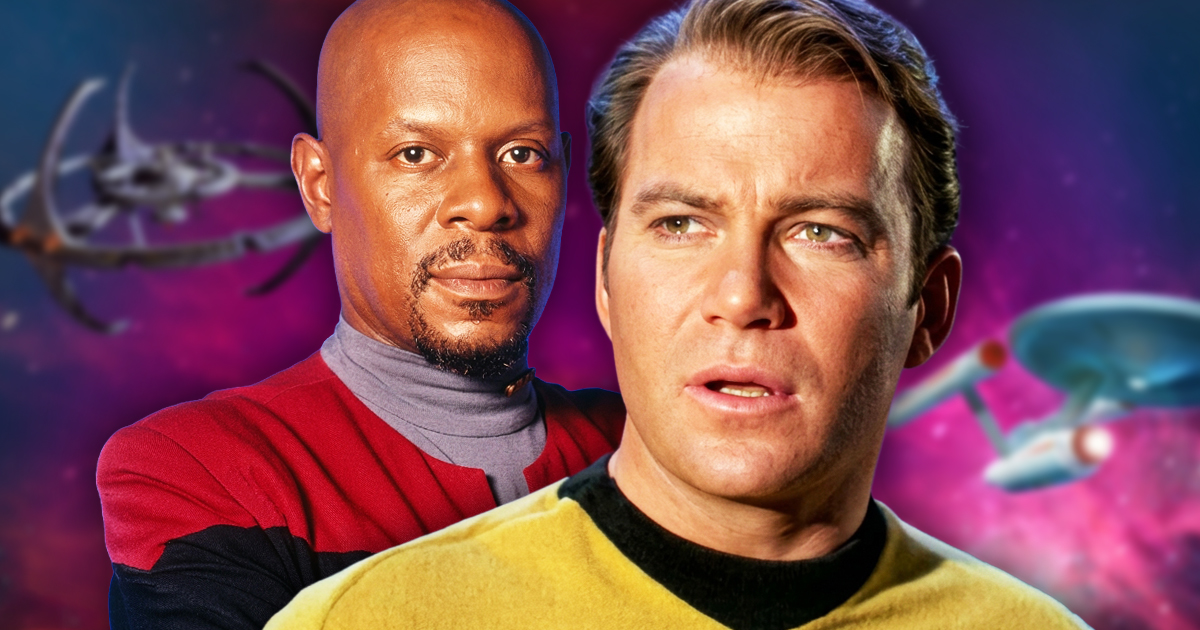

With more than 960 television episodes spread across nine live-action series, three animated series, and one short-form anthology series, along with 13 theatrical movies and one streaming feature, there’s an incredible amount of Star Trek to go around. Now, as Gene Roddenberry’s iconic sci-fi franchise celebrates its 60th anniversary, the time feels right to boldly go where plenty of fans have gone before and attempt the nearly impossible: picking the ten greatest installments in Star Trek history, spanning both the movies and television series.
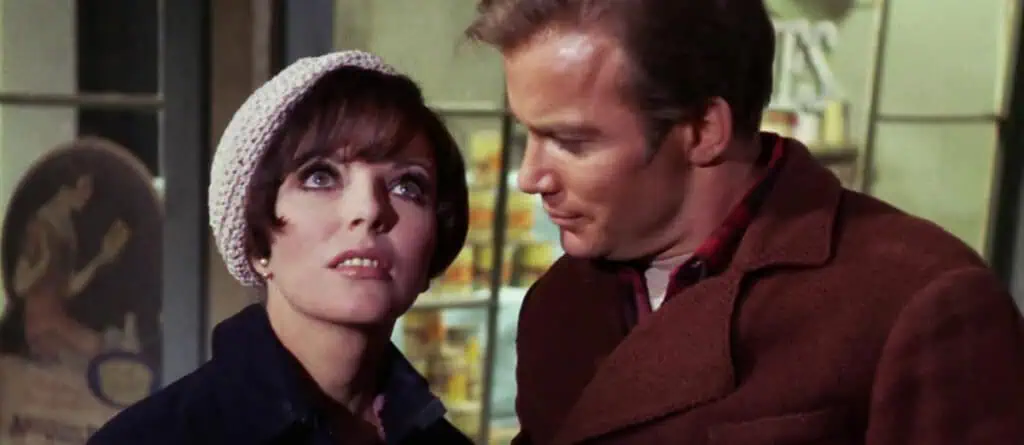
The City on the Edge of Forever
- Series: Star Trek
- Season/Episode: Season 1, Episode 28
My Star Trek collection began back in the VHS days, with just one episode per tape. They were also pretty pricey, at least for a kid who had to save for months in order to buy one episode. I ultimately saved enough to buy three episodes: The Man Trap, Journey to Babel, and The City on the Edge of Forever. I wore those tapes out.
Although The City on the Edge of Forever doesn’t have any of the strange aliens or action of the other two episodes, it was the one which immediately caught my attention.
After an accidentally drugged McCoy leaps through a mysterious time portal and alters history, Kirk and Spock follow him back to Depression-era New York, where Kirk falls in love with social worker Edith Keeler. The problem is that Edith’s survival will eventually alter the course of World War II, meaning Kirk must let the woman he loves die to restore history.
William Shatner gives one of his best performances as Kirk, particularly in the devastating final moments, and sixty years later, it remains heartbreaking, thoughtful, and remarkably timeless.
The Best of Both Worlds
- Series: The Next Generation
- Season/Episode: Season 3, Episode 26 & Season 4, Episode 1
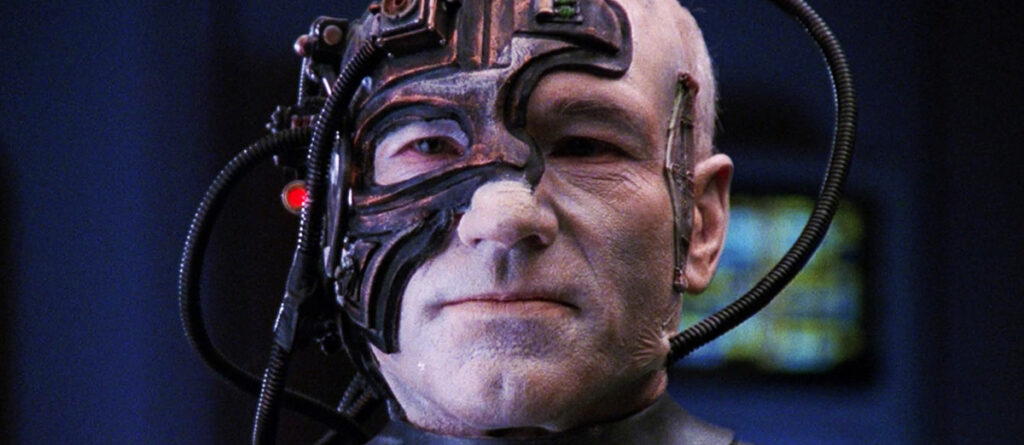
Although the Borg had already been introduced, it was The Best of Both Worlds that transformed them into one of the franchise’s most frightening enemies. When a Borg cube begins advancing toward Earth, Captain Picard is captured and assimilated, emerging as Locutus of Borg. It was truly shocking.
The Borg feel genuinely unstoppable, and Picard’s assimilation gives their invasion an emotional weight that a faceless enemy could never have achieved. Jonathan Frakes also gets some of Riker’s strongest material as the first officer is forced to confront his own career stagnation while stepping into command of the Enterprise. The cliffhanger ending to the first part — with Riker giving the order to fire on the Borg ship with Picard aboard — remains one of television’s greatest. At the time, there were even rumours that Patrick Stewart might not return for the next season due to a contract dispute, which helped make the cliffhanger even more impactful.
The episode also didn’t simply wipe the slate clean at the end. The effects of Picard’s assimilation were explored in the very next episode, and his relationship with the Borg was forever changed. First Contact continued that story on the big screen, while Star Trek: Picard would revisit the trauma of his assimilation decades later.
Duet
- Series: Deep Space Nine
- Season/Episode: Season 1, Episode 19
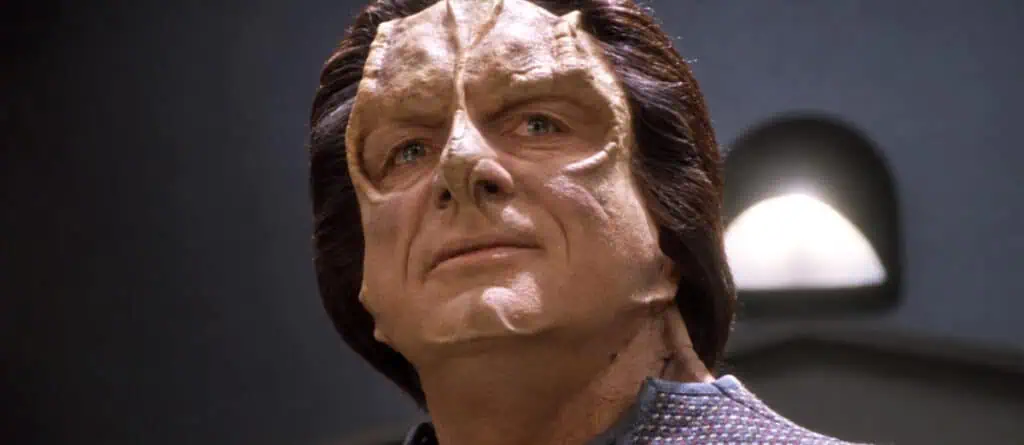
Duet was one of the earliest signs that Deep Space Nine was capable of something truly special. When a Cardassian named Aamin Marritza arrives on the station suffering from a condition associated with a notorious Bajoran labour camp, Kira becomes convinced that he is actually Gul Darhe’el, the Cardassian officer responsible for atrocities committed there.
What follows is essentially a chamber drama built around Kira’s interrogations of Marritza, played brilliantly by the late Harris Yulin. At first, he appears proud of the crimes committed during the occupation, but the truth is far more complicated. Marritza is actually a low-level filing clerk who was horrified by what happened and has taken on Darhe’el’s identity in the hope that his execution will force Cardassia to confront its crimes. The revelation shatters Kira’s certainty and forces her to recognize the difference between justice and revenge. It was the episode that showed Deep Space Nine was willing to engage seriously with the scars left behind by occupation and war.
Star Trek: First Contact
- Release: November 22, 1996
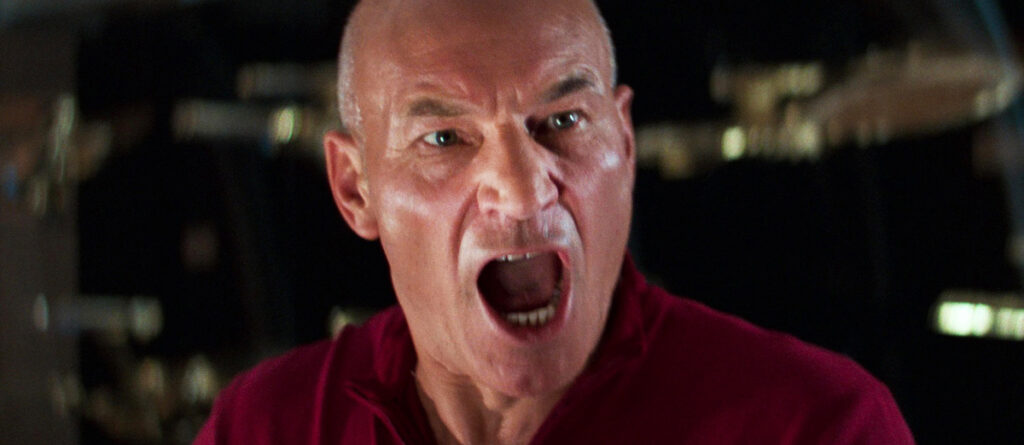
Just as Wrath of Khan continued a story from The Original Series, First Contact picked up threads from The Best of Both Worlds. When the Borg travel back in time to prevent humanity’s first contact with the Vulcans, Picard and the Enterprise crew follow them to 2063, where they must ensure that Zefram Cochrane completes humanity’s first warp flight.
With Picard still facing lingering trauma from his assimilation, First Contact pushes the captain in a darker direction as he becomes increasingly consumed by his desire to destroy the Borg. Patrick Stewart delivers one of his most memorable performances, including the famous “The line must be drawn here” speech, which forces Picard to acknowledge that his pursuit of revenge has compromised the very principles he claims to defend.
At the same time, the Cochrane storyline captures Star Trek’s fundamental optimism: humanity may be messy, selfish, and deeply flawed, but it can still become something better. By the end, First Contact managed to balance action, horror, humour, and idealism better than any other Next Generation movie.
The Visitor
- Series: Deep Space Nine
- Season/Episode: Season 4, Episode 3
The bond between Benjamin Sisko and his son Jake was one of Deep Space Nine’s most important relationships, and watching the two grow and change over the course of seven seasons was done so well. But their best story was The Visitor.
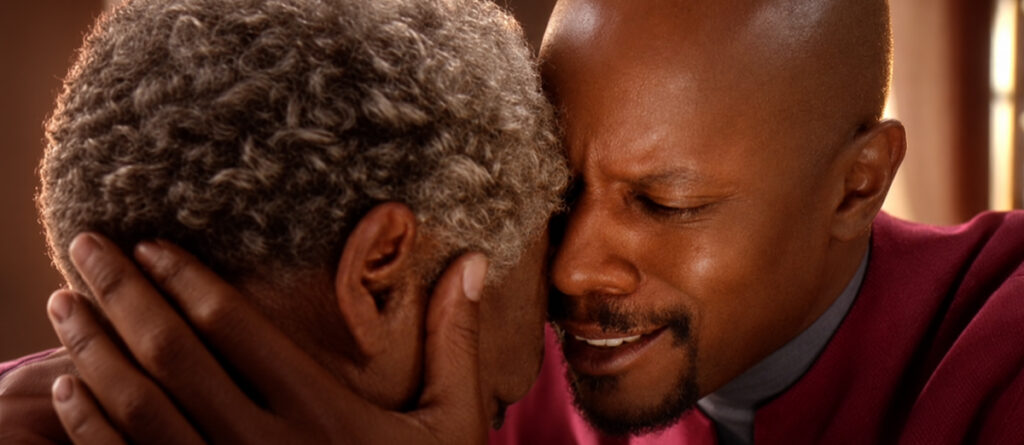
After Sisko is apparently killed in an accident aboard the Defiant, Jake eventually discovers that his father isn’t actually dead but trapped in a strange subspace phenomenon, briefly reappearing every few years.
The episode follows Jake across most of his life as he sacrifices his ambitions, relationships, and happiness in an increasingly desperate effort to bring his father home. Tony Todd gives an extraordinary performance as the elderly Jake, capturing decades of pain and regret without ever losing the character we know. What makes the episode especially effective is that its sci-fi mechanics are almost irrelevant; the heart of the story is a son who simply cannot accept the loss of his father. Benjamin eventually realizes that Jake has spent his entire life trying to save him and begs him to let go. Few Star Trek episodes are as openly emotional, and even fewer earn those emotions as completely as The Visitor.
Star Trek II: The Wrath of Khan
- Release: June 4, 1982.
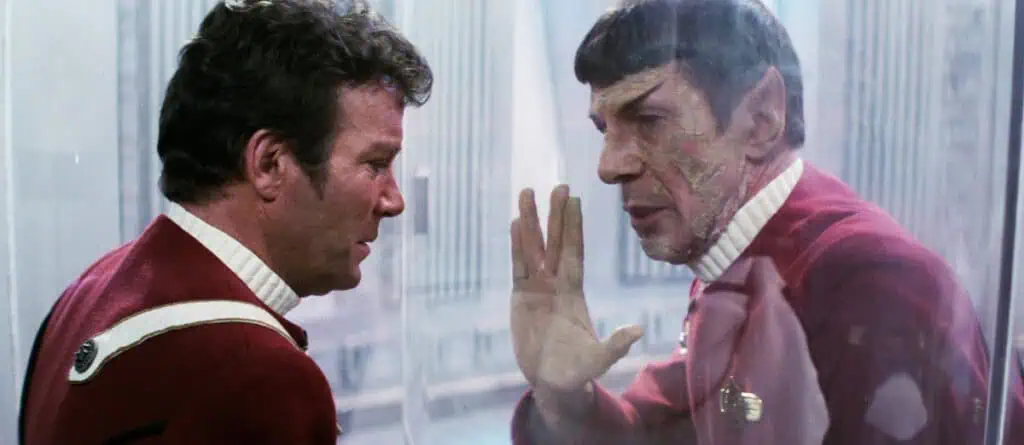
During the 60th anniversary celebrations, I found the time to go to the theaters with my dad to watch the re-release of The Wrath of Khan. It was amazing to see the film on the big screen, and it really cemented why it remains the gold standard for Star Trek movies.
Fantastic performances, especially from Ricardo Montalbán as Khan, but what has made the film endure isn’t simply its fantastic villain. Director Nicholas Meyer turned the movie into a story about aging, friendship, and the consequences of past decisions. Kirk begins the film restless and uncomfortable with growing older, only to be confronted quite literally by a mistake from his past. It’s exciting, funny, and incredibly tragic, with the death of Spock still hitting hard, even knowing he’ll be brought back in the next film.
Year of Hell
- Series: Voyager
- Season/Episode: Season 4, Episodes 8 & 9
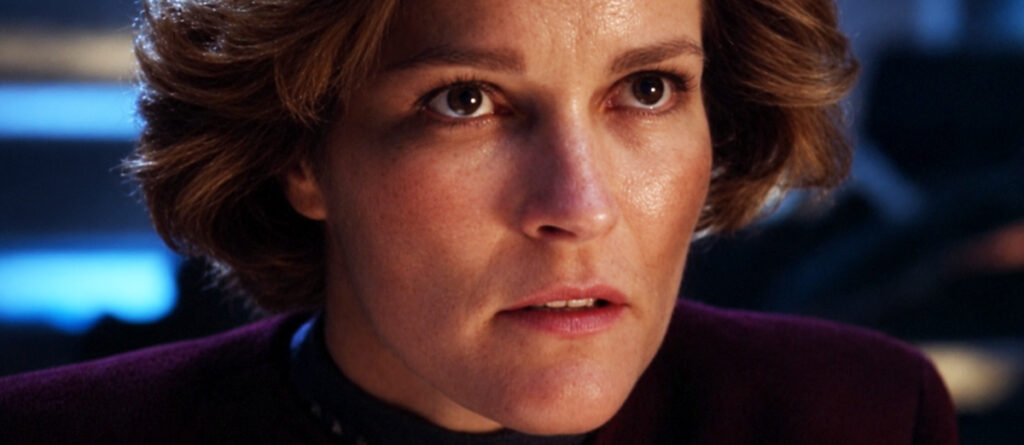
The Year of Hell two-parter was what Voyager should have been all along. A lone Starfleet ship stranded far from home, with limited resources, no allies, and the vast stretch of the unknown between the crew and their home. For much of the series, the crew rarely had to deal with dwindling supplies or the ship taking massive damage; no matter what happened, it was always in pristine condition by the next episode. But Year of Hell changed that.
The story involves Voyager encountering the Krenim, a species using temporal technology to rewrite history in an effort to restore its lost empire. When the crew can shield themselves from changes in the timeline, the Krenim pursue Voyager to remove it from the timeline entirely. With a story that stretches across nearly an entire year, Voyager is gradually battered almost beyond recognition as the remaining crew is pushed to their limit and Captain Janeway becomes increasingly determined not to abandon their mission despite mounting losses.
Kurtwood Smith is also excellent as Annorax, a villain whose motivation is surprisingly tragic: he has spent centuries rewriting history in the hope of restoring the wife he accidentally erased from existence. That gives the conflict a moral complexity beyond simple good versus evil. Many fans have long argued that Voyager could have benefited from more stories with lasting consequences, and Year of Hell shows exactly why. For two episodes, the series fully embraced the danger and isolation inherent in its premise, producing one of its most ambitious and memorable stories.
Far Beyond the Stars
- Series: Deep Space Nine
- Season/Episode: Season 6, Episode 13
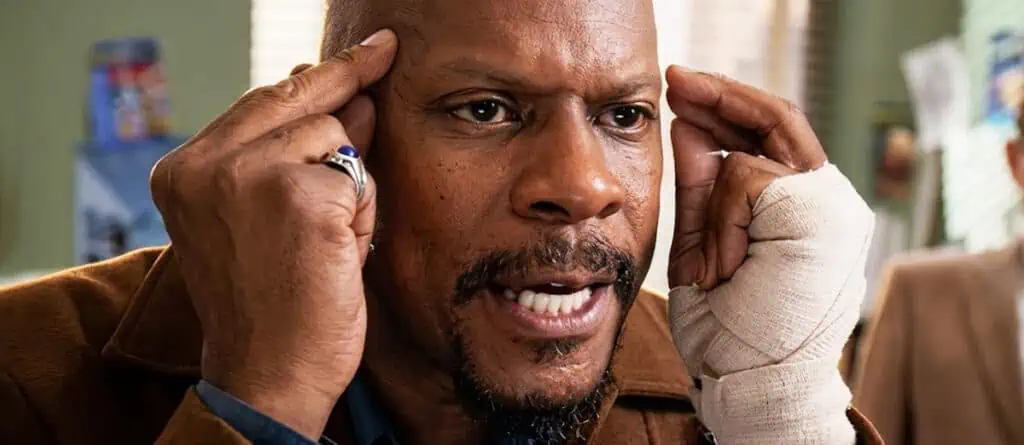
Far Beyond the Stars is one of the boldest episodes Star Trek has ever produced. During one of the darkest periods of the Dominion War, Sisko begins experiencing visions of 1950s New York in which he is Benny Russell, a Black science-fiction writer working for a pulp magazine. Benny writes a story about a futuristic space station commanded by a Black captain, only to face resistance from publishers who refuse to print it because of the race of its protagonist.
Avery Brooks, who also directed the episode, gives perhaps the greatest performance of his Star Trek career. Benny’s breakdown after his story is rejected is raw and painful. It’s also a wonderful opportunity to see the cast take on different roles, with Rene Auberjonois, Armin Shimerman, Michael Dorn, Marc Alaimo, J.G. Hertzler, and more getting the chance to ditch their usual prosthetics and appear as human characters. The episode uses science fiction to examine racism, representation, and the importance of imagining a better future, all themes that have been embedded in Star Trek since its earliest days.
The Inner Light
- Series: The Next Generation
- Season/Episode: Season 5, Episode 25
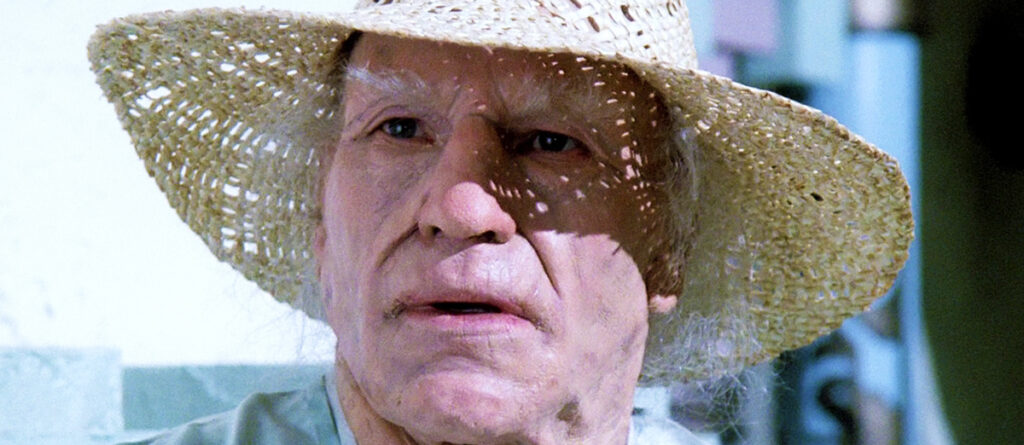
The concept of a character living out an entire lifetime of memories while only seconds or minutes pass in the “real world” has been done many times, but for my money, The Inner Light is the best example of it.
When the Enterprise encounters a mysterious probe, Captain Picard is struck unconscious and suddenly awakens on the planet Kataan, where everyone insists he is a man named Kamin. Although only minutes pass aboard the Enterprise, Picard experiences decades of life on Kataan, building a family, growing old, and gradually discovering the truth behind the world he has been placed into.
There are no space battles, villains, or grand conflicts. Instead, Patrick Stewart carries almost the entire story, allowing Picard to evolve from a confused Starfleet captain into a man with a wife, children, grandchildren, and an entire lifetime of memories. The final reveal — that the probe was created so someone would remember a civilization that had vanished long ago — is beautifully understated. Picard’s flute, and the life it represents, became one of the character’s defining symbols. Star Trek doesn’t need spectacle to be profound, and few episodes prove that more clearly than this one.
In the Pale Moonlight
- Series: Deep Space Nine
- Season/Episode: Season 6, Episode 19
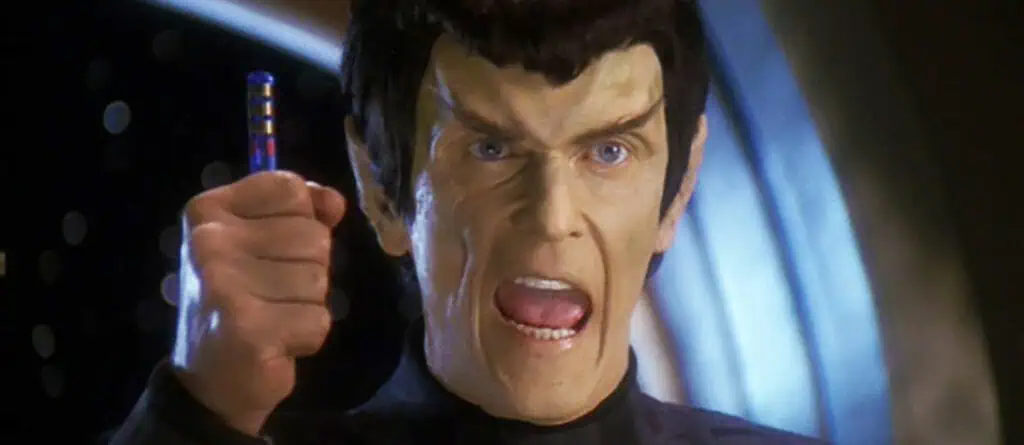
No episode better demonstrates how far Deep Space Nine was willing to push the moral boundaries of Star Trek than In the Pale Moonlight. With the Federation losing the Dominion War, Captain Sisko becomes desperate to bring the Romulans into the conflict. Working with Garak, he develops a plan to fabricate evidence (It’s a faaake!) which suggests that the Dominion intends to attack the Romulan Empire.
The brilliance of the episode is that it takes one of Star Trek’s most principled captains and forces him to compromise those principles one step at a time. Sisko lies, bribes, conspires, and ultimately becomes complicit in murder, all because he believes the alternative could mean the destruction of the Federation. Avery Brooks is phenomenal, framing the episode through Sisko’s personal log as he attempts to convince himself that what he did was necessary. It’s not something that would have flown under Gene Roddenberry’s watch, but it’s a truly impactful episode.
Your Turn
This article easily could have been a top 20, 30, or even 60 and still been filled with great Star Trek stories, but we had to narrow it down to just 10. That means leaving plenty of wonderful episodes and movies behind: All Good Things…, Balance of Terror, Yesterday’s Enterprise, The Measure of a Man, Amok Time, Blink of an Eye, The Voyage Home, Cause and Effect, Living Witness, The Way of the Warrior, Timeless, A Quality of Mercy, and so many more.
So I’ll leave it to you: what are the 10 best movies and episodes in the entire Star Trek franchise? Every movie, every series, every era — they’re all fair game.











The comment section exists to allow readers to discuss the article constructively and respectfully, focused on the topic at hand.
What’s Not Allowed