
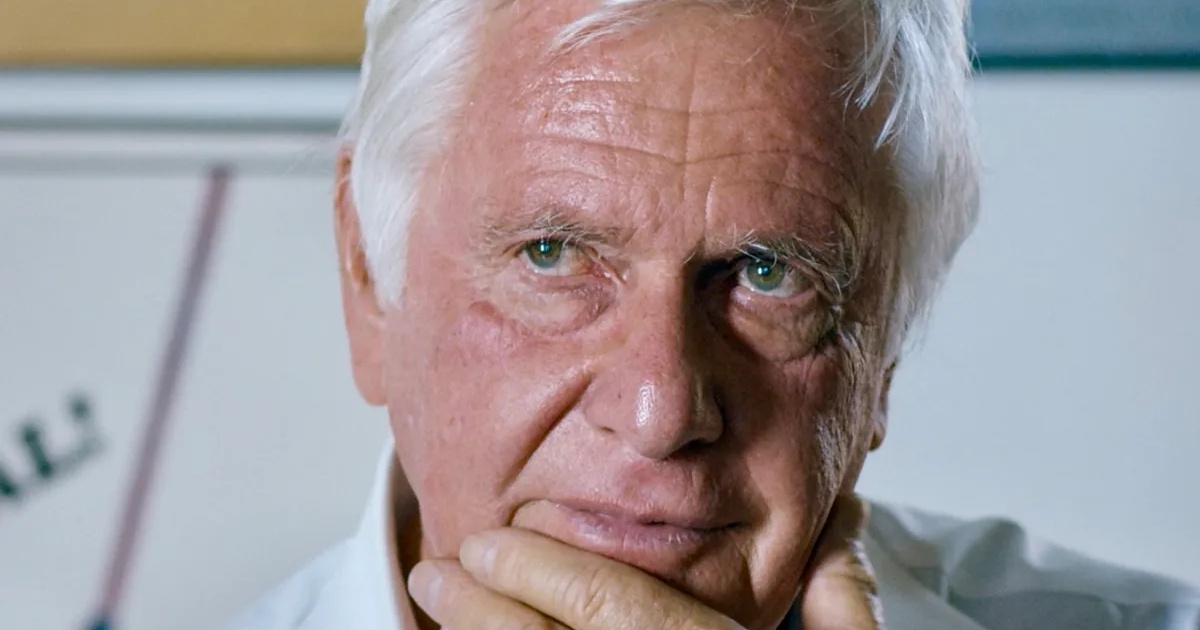
Peter Medak, the director behind the classic supernatural horror film The Changeling and Peter O’Toole’s dark comedy The Ruling Class, has died at the age of 88. His family announced via The Hollywood Reporter that the Hungarian-born filmmaker died Tuesday in Los Angeles.
Medak built a career spanning more than five decades, moving between British and American cinema, television drama, crime thrillers, and horror. His feature film credits included A Day in the Death of Joe Egg, The Krays, Let Him Have It, Romeo Is Bleeding, and Species II. He also directed episodes of such television series as Homicide: Life on the Street, The Wire, and Breaking Bad.
For horror fans, however, Medak’s legacy will always be closely associated with The Changeling, the ghost story starring George C. Scott.
Peter Medak’s The Changeling Became a Horror Classic
Released in 1980, The Changeling remains one of the most highly regarded supernatural horror films of its era. Scott stars as John Russell, a composer who relocates to Seattle after the deaths of his wife and daughter. His new home soon reveals a dark history, drawing him into an investigation that uncovers disturbing secrets.
The film counts some of cinema’s most prominent directors, including Martin Scorsese, Steven Spielberg, Guillermo del Toro, and Alejandro Amenábar, among its fans. Spielberg was particularly impressed by Medak’s work. In a 2018 interview, Medak recalled that Spielberg screened The Changeling for his crew while preparing Poltergeist (1982), using the film to establish the atmosphere he wanted for the Tobe Hooper supernatural horror classic. Spielberg reportedly told the crew, “This is what it should be.”
From The Ruling Class to Romeo Is Bleeding
Medak’s career was never confined to horror. His feature film debut was the drama Negatives (1968), which featured Glenda Jackson. His 1972 film The Ruling Class starred Peter O’Toole as an eccentric British aristocrat who believes he is Jesus Christ and eventually takes on an even more disturbing identity. Based on Peter Barnes’ play, the dark comedy earned O’Toole his fifth Academy Award nomination for Best Actor and competed at the Cannes Film Festival. That same year, Medak directed A Day in the Death of Joe Egg, an adaptation of Peter Nichols’ play starring Alan Bates and Janet Suzman.
In 1990, Medak directed The Krays, a British crime drama starring Gary Kemp and Martin Kemp of Spandau Ballet as real-life gangsters Reggie and Ronnie Kray. He followed it with Let Him Have It (1991), a drama about the execution of Derek Bentley, starring Christopher Eccleston and Tom Courtenay.
Medak later directed Gary Oldman in Romeo Is Bleeding (1993), a crime thriller about a corrupt New York police detective whose involvement with a hitwoman, played by Lena Olin, threatens to destroy his life
His other feature credits included The Men’s Club (1986), Pontiac Moon (1994), and Species II (1998). He also directed the 1997 television adaptation of The Hunchback of Notre Dame, starring Mandy Patinkin as Quasimodo.
Peter Medak’s Career in Television
Alongside his film work, Medak enjoyed an extensive career directing television. His credits included multiple episodes of Homicide: Life on the Street, as well as work on The Wire, Breaking Bad, St. Elsewhere, House, Law & Order: Special Victims Unit, Magnum, P.I., Hart to Hart, Tales from the Crypt, and The Twilight Zone. He also directed episodes of Space: 1999, Masters of Horror, and Shelley Duvall’s Faerie Tale Theatre, demonstrating the range of projects he took on throughout his career.
Medak’s creative work extended into music videos, including projects with Peter Gabriel and Pink Floyd.
The Peter Sellers Film That Nearly Derailed His Career
One of the most difficult chapters in Medak’s career involved Ghost in the Noonday Sun (1974), a pirate comedy starring Peter Sellers and Spike Milligan. The troubled production became infamous for its behind-the-scenes chaos. Medak later described Sellers’ behavior as destructive, recalling a shoot plagued by production problems, conflict, and delays. The film was withheld from its intended theatrical release by Columbia Pictures and did not reach home video until years later.
Medak regarded the experience as one of the worst of his professional life. He believed it had damaged his career so severely that he did not direct another feature until The Odd Job (1978), starring Monty Python’s Graham Chapman.
Decades later, Medak revisited the experience in the documentary The Ghost of Peter Sellers (2018), examining the disastrous production’s lasting effect on him.
Peter Medak’s Journey From Hungary to Hollywood
Born in Budapest, Hungary, on December 23, 1937, Medak fled his homeland for England in 1956 during the Hungarian uprising against Soviet rule. He began his film career at Associated British Picture Corporation, working as an editor, cameraman, and assistant director. His earliest experiences included work on Fred Zinnemann’s The Sundowners (1960) and The V.I.P.s (1963), starring Elizabeth Taylor and Richard Burton.
After signing a contract with Universal Studios in 1963, Medak began directing television in Britain and the United States. His television directing debut came with an episode of Court Martial in 1965, before he moved into feature filmmaking.
Medak was married three times, to Catherine Marie La Kermance, actress Carolyn Seymour, and opera singer Julia Migenes. His survivors include his children, Christopher, Joshua, Karen, and Cornelia, and his grandchildren. Our condolences go out to his family, friends, and fans.











The comment section exists to allow readers to discuss the article constructively and respectfully, focused on the topic at hand.
What’s Not Allowed