
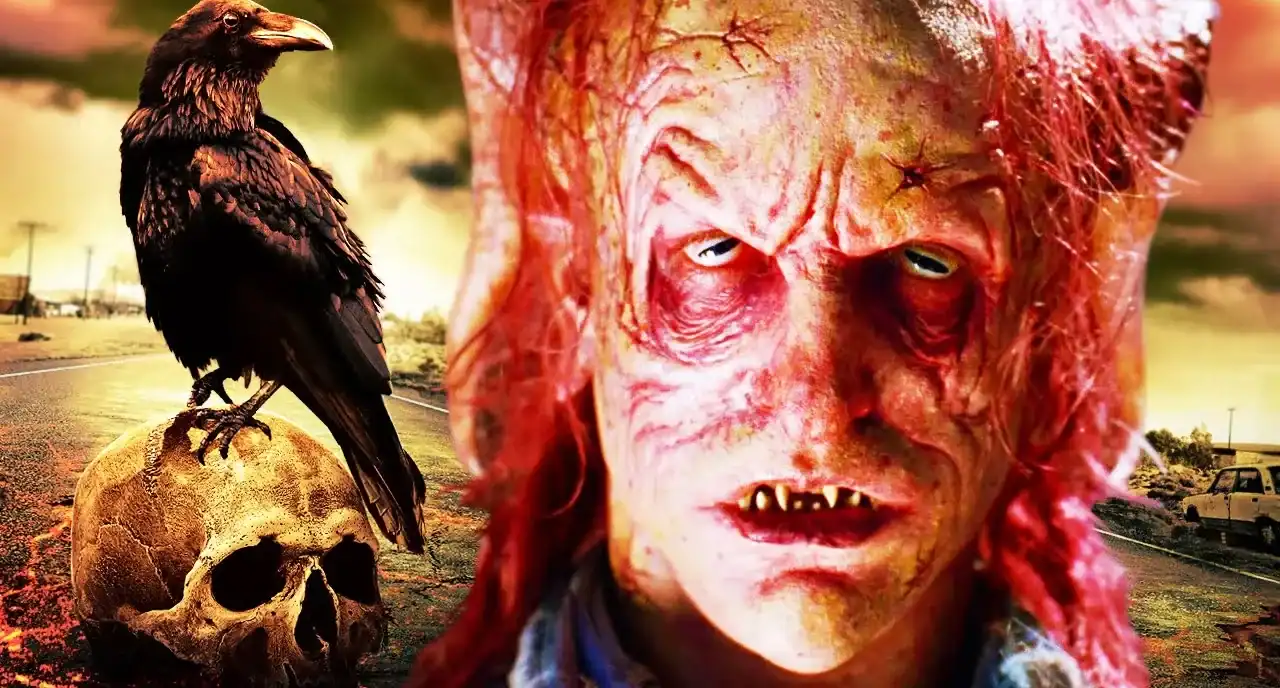
Some adaptations aim for accuracy, while others lean into spectacle. The Stand plants its flag firmly in that sweet spot occupied by many beloved 1990s miniseries: occasionally clunky, undeniably ambitious, and elevated by a strong cast and Stephen King‘s signature weirdness.
Today, we’re revisiting Stephen King’s The Stand, the four-part 1994 miniseries that attempted to bring one of his largest and most ambitious novels to television. Was the lengthy runtime worth it, or is it simply a relic of satin sheets, religious allegory, and delightfully dated special effects?
For many King fans, The Stand remains one of the most beloved adaptations of his work. It’s a nostalgic artifact that still stands taller than most Stephen King television productions. Even when it stumbles, it’s difficult not to admire what it accomplishes.
While The Stand earns much of the praise it receives, there are still a few rough edges worth discussing.
Background
By the time The Stand arrived on television in 1994, Stephen King adaptations had become a staple of network programming. Throughout the decade, studios seemed eager to adapt nearly everything he wrote. Unlike many other adaptations, however, this project was particularly personal for King. He wrote the screenplay himself and even appeared in the miniseries.

Adapting a novel of more than 1,000 pages into a television event was no small task. King personally selected director Mick Garris after working with him on Sleepwalkers. Garris would later become one of King’s most frequent collaborators, directing the television adaptation of The Shining and later Bag of Bones.
The production carried a substantial budget for its era: approximately $26 million, making it one of the most expensive Stephen King adaptations produced at the time. While the miniseries tones down some of the novel’s darker material, it occasionally compensates by embracing a little extra cheese. Honestly, that’s part of its charm.
The miniseries also fits comfortably alongside King’s other memorable 1990s adaptations, including It, The Langoliers, and The Tommyknockers. Like those productions, The Stand shows its age in places, but its ambition sets it apart.
Parts 1 & 2: The Plague and the Dreams
Everything begins with Captain Trips, the weaponized superflu that wipes out most of humanity. The catastrophe starts when a military facility worker abandons his post and unknowingly unleashes the virus. The infection spreads rapidly, transforming a local outbreak into a global extinction event. Entire towns fall silent, governments collapse, and society disintegrates almost overnight.
Among the few immune survivors is Stu Redman, played by Gary Sinise. Detained and studied by government scientists, Stu eventually finds himself alone when nearly everyone around him succumbs to the virus.
The story then introduces the miniseries’ central cast:
- Gary Sinise as Stu Redman, the reluctant hero and steady moral center.
- Molly Ringwald as Frannie Goldsmith.
- Corin Nemec as Harold Lauder, whose insecurity and resentment steadily consume him.
- Adam Storke as Larry Underwood, a musician struggling to become a better person.
- Rob Lowe as Nick Andros, the deaf-mute drifter who quickly becomes one of the story’s most beloved characters.
At the same time, survivors across America begin experiencing dreams that guide them toward two opposing forces: Mother Abigail and Randall Flagg.
Mother Abigail represents hope, faith, and community. Flagg gathers followers in Las Vegas, building a dark kingdom from the ruins of civilization.

As the survivors journey toward Boulder, Colorado, old resentments and personal weaknesses emerge. Harold’s descent accelerates, transforming him from an awkward outsider into a dangerous threat. Meanwhile, Nadine Cross drifts steadily toward Flagg’s influence, making increasingly troubling choices along the way.
What Works Best
The Ensemble Cast
The cast delivers across the board.
Gary Sinise anchors the entire production with a grounded and believable performance as Stu Redman. He makes the character feel authentic even when the material around him becomes increasingly supernatural.
Miguel Ferrer is equally memorable as Lloyd Henreid. He brings an entertaining mix of sleaze, charm, and desperation to the role, making Lloyd one of Flagg’s most compelling followers.
The Plague Sequences
The early episodes remain some of the strongest material in the entire miniseries.
Watching civilization collapse through empty streets, abandoned buildings, and increasingly desperate survivors creates a genuinely unsettling atmosphere. Even decades later, these scenes retain much of their power.
The infamous church sequence remains especially effective.
Character Development
Considering the limited runtime, the miniseries does a surprisingly good job establishing its core characters.
Not every supporting character receives equal attention, but viewers learn enough about Stu, Frannie, Larry, Harold, and Nick to become invested in their journeys.
Rob Lowe as Nick Andros
Nick Andros serves as the emotional heart of the story, and Rob Lowe delivers one of the strongest performances in the miniseries.
His friendship with Tom Cullen, played by Bill Fagerbakke, provides many of the show’s most heartfelt moments.

Stu’s Escape
One scene stands above almost everything else.
When Stu escapes the CDC facility and stumbles past the sign reading “All Dead Here,” the moment perfectly captures the scale of humanity’s extinction. It’s haunting, memorable, and among the best scenes in any Stephen King television adaptation.
Parts 3 & 4: The Betrayal and the Stand
This is where the miniseries becomes more uneven. Relationships and character developments occasionally feel rushed. Fran and Stu’s relationship advances quickly, while Harold’s resentment finally reaches its breaking point.
Trashcan Man, played brilliantly by Matt Frewer, finally joins Flagg’s growing empire. Nadine moves closer to her destiny, while the Boulder survivors organize themselves into a functioning community.
Mother Abigail eventually disappears before returning with a final mission. Harold’s betrayal results in devastating losses, including the death of Nick Andros and several other key characters.
Following Mother Abigail’s final instructions, Stu, Larry, Glen, and Ralph embark on the journey to Las Vegas for the climactic confrontation with Flagg.
As the group approaches Vegas, Flagg’s control begins to weaken. His followers lose faith, his authority crumbles, and events spiral toward an apocalyptic conclusion.
After Stu suffers a severe injury and is left behind, Larry and Ralph continue forward. Their sacrifice ultimately coincides with the arrival of the Trashcan Man and the infamous Hand of God sequence that destroys Flagg’s empire.
Tom Cullen later finds Stu and helps him survive the journey home. The story concludes with Stu and Fran starting a new chapter with their family.
Does the Ending Work?
The final episode is probably the miniseries’ weakest section. Several major deaths happen so quickly that they lose some of their emotional impact. Larry and Ralph’s sacrifice is powerful in concept but could have benefited from more screen time. Likewise, Flagg’s downfall feels somewhat abrupt given how much buildup precedes it.
Ironically, the emotional character moments work better than the supernatural spectacle.

Best Moments from the Final Episodes
Dayna’s Mission
Dayna’s infiltration of Flagg’s inner circle remains one of the strongest moments in the entire miniseries. Her determination and courage make her one of the story’s standout characters.
Nadine’s Final Act
After enduring Flagg’s manipulation throughout the series, Nadine ultimately delivers one of the most significant blows against him.
Laura San Giacomo’s performance is particularly memorable during these scenes.
Miguel Ferrer as Lloyd
Even in the final episodes, Ferrer continues stealing scenes. Lloyd’s combination of fear, loyalty, and self-preservation makes him endlessly entertaining to watch.
Jamey Sheridan as Randall Flagg
Stephen King reportedly envisioned other actors for the role, but Jamey Sheridan feels like the perfect choice.
His version of Randall Flagg is charismatic, unsettling, and strangely amusing all at once.
Mother Abigail’s Humor
Not every memorable moment involves doom and destruction. Mother Abigail’s delight in something as simple as a remote-control lawn mower remains one of the miniseries’ most charming scenes.
Where to Watch
The Stand remains widely available through physical media releases and various streaming platforms, depending on region and availability.

Final Verdict
There’s no denying that The Stand is ultimately the Cliff Notes version of Stephen King’s novel.
Still, the cast is remarkably strong, featuring appearances from genre legends and memorable cameos throughout. While Parts 2 and 3 occasionally drag, the miniseries generally maintains its momentum and successfully captures the epic scope of King’s story.
I was disappointed that the story never fully delivers on the long-teased confrontation between Stu and Flagg. A more direct showdown would have provided a stronger payoff.
Even so, the ending feels unmistakably Stephen King, and that’s part of why it works.
The 2020 adaptation may boast a more modern cast and bigger production values, but there’s something uniquely comforting about the atmosphere of King’s 1980s and 1990s television adaptations. They may be imperfect, but they possess a personality that many modern productions struggle to replicate.
While certain story beats arrive with less context than they need, those issues never seriously damage the overall experience. Like many Stephen King miniseries, The Stand has flaws. It also has heart, ambition, memorable performances, and some genuinely haunting moments.
That’s why, more than three decades later, it’s still easy to see why The Stand remains one of the most highly regarded Stephen King adaptations ever produced.
Rating
4 out of 5 stars
Ambitious, occasionally uneven, but still one of the strongest Stephen King miniseries ever made.
A couple previous episodes of Horror TV Shows We Miss can be seen below. If you’d like to see more, and check out the other shows we have to offer, head over to the JoBlo Horror Originals YouTube channel – and subscribe while you’re there!














The comment section exists to allow readers to discuss the article constructively and respectfully, focused on the topic at hand.
What’s Not Allowed