


The What Happened to This Horror Movie episode on Hellraiser: Judgment was written by Jaime Vasquez:
By the time Hellraiser: Revelations arrived, the Hellraiser franchise wasn’t just in trouble, it barely resembled the series Clive Barker had unleashed decades earlier. Pinhead had been recast, the budgets had cratered, and Dimension Films seemed more interested in keeping the rights than keeping fans happy. But somehow, Hellraiser wasn’t dead yet. Enter Gary J. Tunnicliffe and Hellraiser: Judgment, a grimy, grotesque attempt to drag the series somewhere new. And while the movie certainly wasn’t afraid to get weird, some familiar faces wanted nothing to do with it.
Why did Doug Bradley refuse to return as Pinhead? How did horror icon Heather Langenkamp become involved in a bizarre behind-the-scenes controversy? And did the downfall of one of Hollywood’s most powerful men ultimately help get the movie released?
Grab the Lament Configuration and choose your suffering. It’s time to find out what happened to Hellraiser: Judgment.
Gary J. Tunnicliffe and the Hellraiser Franchise
Gary J. Tunnicliffe had been heavily involved with the Hellraiser franchise since constructing the Lament Configuration for Hellraiser III: Hell on Earth. He went on to handle the special effects makeup for Bloodline, Inferno, Hellseeker, Deader, and Hellworld before eventually writing and directing Hellraiser: Judgment. Tunnicliffe even made his own Hellraiser short film, starring as Pinhead himself. But more on that later.
Before Judgment got the green light, however, there had been several failed attempts to remake Clive Barker’s 1987 classic. In 2009, Martyrs director Pascal Laugier developed a remake with a more serious tone that explored themes of gay S&M culture. The studio wanted a more straightforward film aimed at teenagers, however, leading Laugier to leave the project. Patrick Lussier and Todd Farmer, the team behind the 2009 My Bloody Valentine, were later brought in for another attempt, but those plans also stalled.
With the franchise rights once again at risk, Dimension pivoted to something that could be produced quickly and cheaply: Hellraiser: Revelations. The ninth installment was also the first Hellraiser film made without Tunnicliffe’s involvement since he joined the franchise with Hellraiser III. At the time, Tunnicliffe was working on the much larger production of Scream 4, and Dimension needed him to remain focused on the slasher sequel.
Meanwhile, people working on Revelations would call Tunnicliffe from the set and warn him that things weren’t looking promising. Although he had written the screenplay, his commitment to Scream 4 left him with no control over the rewrites, and according to him, there were plenty.
Revelations was released to negative reviews, with fans particularly critical of Doug Bradley’s absence as Pinhead. When the franchise rights once again became a concern at Dimension, the studio approached Tunnicliffe about writing and directing the next installment.
What Is Hellraiser: Judgment About?
Hellraiser: Judgment follows brothers Sean and David Carter, two detectives investigating a series of gruesome murders committed by a killer known as the Preceptor. The murders are based on the Ten Commandments, with each crime designed as a twisted punishment for a particular sin. Sean becomes increasingly obsessed with the case, especially after discovering evidence that suggests the killings may be connected to something far more sinister than an ordinary serial killer. His increasingly erratic behavior also causes his superiors to question whether the investigation is taking a toll on his mental state.
The investigation eventually leads Sean and his partner, Detective Christine Egerton, into the horrifying world of the Cenobites. Rather than simply serving as supernatural torturers, Judgment expands the mythology by introducing an elaborate bureaucracy in Hell, where the dead are subjected to an “Audit” that determines their ultimate fate.
At the center of this bizarre system are the Auditor, a meticulous bureaucrat who processes the sins of the damned; the Assessor, a grotesque figure who determines the nature of their crimes; the Butcher, who carries out their punishments; and the Cleaners, who prepare the victims for what comes next.
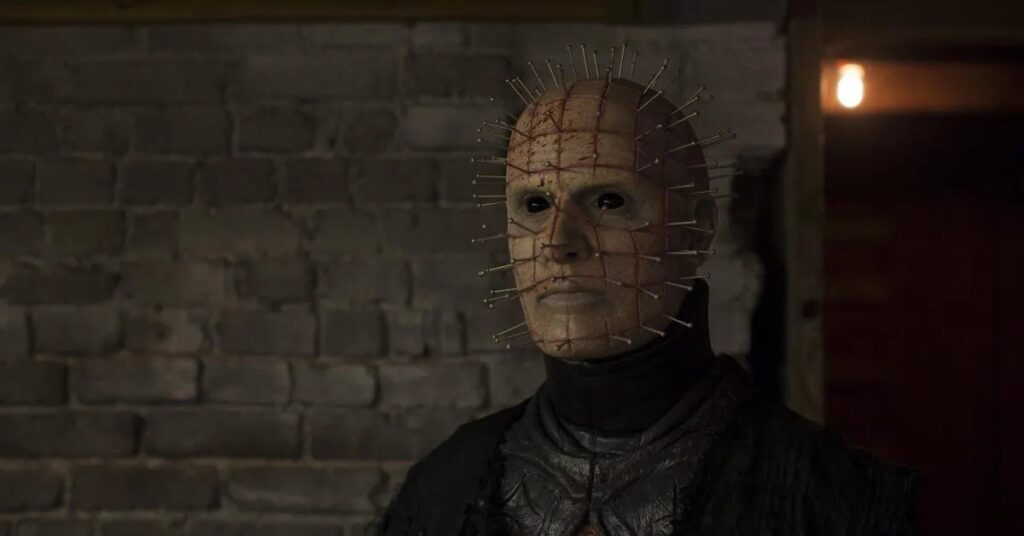
And then there’s Pinhead. In Judgment, the iconic Cenobite is no longer played by Doug Bradley. Paul T. Taylor takes over the role, portraying Pinhead as a weary, arrogant figure who has grown increasingly disillusioned with his existence in Hell.
As Sean gets closer to the truth behind the Preceptor’s murders, the investigation begins to blur the line between the world of the living and the supernatural machinery of Hell. What initially appears to be a conventional serial-killer investigation ultimately becomes a descent into a bizarre new corner of the Hellraiser mythology.
That unusual combination of police procedural, serial-killer thriller, and grotesque supernatural horror is what makes Hellraiser: Judgment such an unusual entry in the franchise, and much of the story behind how it came together is just as strange.
From Hellraiser: Revelations to Hellraiser: Judgment
Gary had already written a sequel to Revelations on his own, never expecting it to actually get made. He dusted off the script and presented it to Dimension, only for the studio to reject it for being too bizarre and grotesque. After revising the screenplay, Tunnicliffe submitted it again and received essentially the same response.
For his third attempt, Gary pitched a new idea titled Hellraiser: Enter Darkness. The story centered on a psychiatric hospital where several patients had previous experiences with the Lament Configuration. After discovering the connection between them, a group of interns would inadvertently summon the Cenobites. It would eventually be revealed that the head of the institute was obsessed with the Lament Configuration and had deliberately kept the patients hospitalized in hopes of experiencing what they had.
The studio loved the idea, but Tunnicliffe refused to turn it into a script.
When asked why he pitched Enter Darkness in the first place, he explained that he wanted to show Dimension he was a team player. His argument was that he had already given them a more straightforward sequel with Revelations, complete with nods to the original, and the film was still slammed by critics and fans.
The executives then made him an offer: he could rewrite Judgment one more time, and if they liked it, they would make the film. If they didn’t, he would have to write Enter Darkness for free.
Fortunately, the studio liked the new draft, although they still requested a few changes.
The executives responded well to the idea of two brothers working together as police officers, but wanted a female character added to the mix. This led to the creation of Officer Christine Egerton. Dimension also wanted to remove the new mythology surrounding angels and demons in favor of focusing on the police investigation. Tunnicliffe fought to keep it, believing the revelation that Heaven effectively oversees Hell made the story even more unsettling.
The Hellraiser: Judgment Mythology That Never Made It to the Screen
With a bigger budget, the Audits would have occurred on a much grander scale, with the Houses of Judgment filled with towering stacks of paperwork and countless jurors. After the Butcher finished his work, victims would be taken to another room inspired by Dante’s Inferno, where half-bodied creatures emerging from holes in the walls stripped away their remaining flesh. The bones would then be delivered to a five-year-old girl known as the Bone Collector, because of course they would.
The Cleaners were originally conceived as women in their 80s who resembled the infamous woman from Room 237 in The Shining. They would have cleaned those undergoing the Audit by licking them, with the sequence intended to be even more grotesque. The studio objected to their age, prompting Tunnicliffe to rewrite them as younger women. He kept them nude, however, relying on elaborate facial makeup instead of expensive costumes he feared would look cheap. While that change pushed the film in a more explicit direction, some of Dimension’s notes actually toned down the sexual content.
In an early draft, Officer Sean Carter dreamed of a mysterious man leading him into an alley, where he discovered his wife, Alison, engaged in sexual acts with two men wearing pig masks. Removing the sequence was one of the studio’s first requests. Another deleted scene had Alison performing a sexual act on Sean, only for him to look down and see his brother David’s face smiling back at him.
Gary J. Tunnicliffe’s Hellraiser Short Film
The desire to push Hellraiser into darker territory went back even further. After filming Hellworld in the mid-2000s, Gary wanted to create something that better captured what he believed a Hellraiser film should be, even if it was only a short. The result was No More Souls, a passion project he wrote, directed, lit, and starred in with the help of Dimension personnel who volunteered their time. The short was so well received that Dimension included it as a bonus feature on the Hellraiser: Deader DVD.
However, it also planted the seeds of Tunnicliffe’s eventual tension with Doug Bradley. After learning of the short’s success, Bradley asked why he hadn’t been cast as Pinhead. Tunnicliffe insisted it wasn’t personal. He never expected Bradley to fly from England for a single weekend to appear in an unofficial short film.
Despite the misunderstanding, Tunnicliffe later wrote Pinhead’s role in Judgment with Bradley in mind, even though the actor hadn’t returned for Revelations.
Why Doug Bradley Didn’t Return as Pinhead
Tunnicliffe’s inspiration for the character went back to the filming of Sleepy Hollow. He once asked Christopher Walken about his favorite scene he’d ever performed, and Walken pointed to his exchange with Dennis Hopper in True Romance, saying the two actors knew they’d created something special. Inspired by that story, Tunnicliffe wrote Pinhead’s dialogue hoping he and Doug Bradley might share a similar moment on set.
He was also disappointed that Doug’s final line as Pinhead had been, “How’s that for a wakeup call?” Because of that, he wrote the character’s final line in Judgment as, “I have nothing to fear,” giving his version of Pinhead a more dignified sendoff.
Tunnicliffe later suggested he was the driving force behind Bradley’s potential return. Although Bradley’s public criticism of Miramax meant the studio wasn’t especially disappointed when negotiations ultimately fell through, Miramax was reportedly prepared to pay him reasonably well. Better yet, Bradley would only have been needed on set for three days.
Gary enthusiastically called him, but later recalled that the actor, in his words, “popped my balloon” by not sharing the same excitement. Bradley agreed to read the script but made it clear he wasn’t making any promises. The response left Tunnicliffe discouraged because he worried that if Bradley disliked the script, he might publicly criticize it.
Producer Mike Leahy suggested having Bradley sign a nondisclosure agreement before reading it. While some reports claimed Bradley was offended by the NDA itself, he later clarified that signing one wasn’t the issue. Instead, he felt the three-page document, along with its lengthy list of requirements, came across as unusually ominous.
Tunnicliffe, however, said it was nothing more than a standard template from another production, with the original title crossed out and Hellraiser: Judgment written in its place.
Heather Langenkamp’s Hellraiser Controversy
Casting director Chris Freihofer was friends with Heather Langenkamp and suggested she play a role in the film since she had family in Oklahoma, where Judgment was being filmed. When Freihofer described the script as bizarre and edgy, Langenkamp asked to read it for herself. After finishing it, she was eager to join the project, saying it was unlike the horror scripts she’d been receiving.
Before production, Langenkamp mentioned in an interview that she’d be appearing in the next Hellraiser film. Once the news spread online, Tunnicliffe said his phone immediately began ringing. The question on fans’ minds was simple: Why was Langenkamp being cast while Doug Bradley was no longer playing Pinhead? Hoping to clarify the situation, Tunnicliffe posted a screenshot of the email stating that Bradley wouldn’t sign the NDA.
Bradley later contacted him, asking why he had shared what he considered a private email. Tunnicliffe defended the decision, saying that after years of friendship and deeply personal conversations, he didn’t view the message as especially private. His intention, he said, was simply to show fans that he had genuinely tried to bring Bradley back.
Paul T. Taylor Becomes the New Pinhead
When Paul T. Taylor was first contacted, it was to audition for the role of the Auditor. At the time, the production was operating under the working title Judgment, with no mention of Hellraiser. But as a lifelong fan of the franchise, Taylor immediately suspected what it really was after seeing the opening line: “We have such sights to show you.” He even arrived carrying NECA figures of Pinhead and the Lament Configuration, which Tunnicliffe had actually served as a creative consultant on.
Paul later received an email asking him to audition for the role of Pinhead himself. Overwhelmingly excited, he decided it was going to be the best audition of his life. Pinhead was his favorite horror icon to come from the ’80s, and Taylor wanted to do everything possible to get the part. In Taylor’s own words, Pinhead was “the most intelligent and the most wicked.”
To prepare for the role, he watched every film in the franchise, practiced his dialogue in the dark, and even took up smoking in an effort to deepen his voice, unaware that it would later be digitally lowered anyway. He also rehearsed with a British accent to preserve the character’s identity despite the change in actors. Taylor even took long walks through high-crime neighborhoods while thinking he was invincible because he was Pinhead. That sounds like something Pinhead would casually do.
Taylor was so excited to land the role that Tunnicliffe later joked the biggest challenge was getting him to stop smiling long enough to play him.
The Inspiration Behind Paul T. Taylor’s Pinhead
Tunnicliffe’s version of Pinhead was inspired in part by Ralph Fiennes’ portrayal of Amon Goeth in Schindler’s List. Like Goeth, this version of Pinhead was intended to be arrogant, jaded, miserable, and weary of his role as a Cenobite. Rather than treating the position as a glorious calling, he views it as something beneath him.
That gave Taylor a very different take on the character from the one audiences had become accustomed to seeing from Doug Bradley.
The Cast of Hellraiser: Judgment
Damon Carney stars as Officer Sean Carter, a detective investigating the serial killer known as the Preceptor, whose murders are inspired by the Ten Commandments. As Sean becomes increasingly consumed by the case, his superiors begin questioning his mental state.
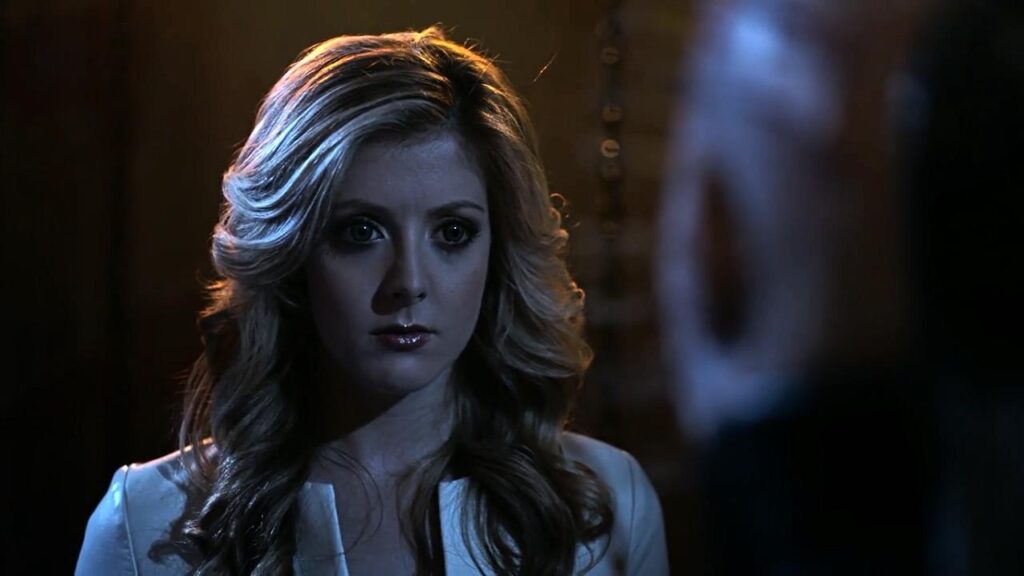
Randy Wayne plays Sean’s brother and partner, David Carter, while Alexandra Harris portrays Christine Egerton, a detective assigned to assist with the investigation and keep an eye on him. Egerton also serves a role reminiscent of Kirsty Cotton, though without simply recreating the character.
According to Gary, Randy Wayne was the only cast member to express reservations about the project. Having already built a substantial acting résumé, he wanted to be confident he was joining a film that lived up to its potential. Once production began and he felt he was in good hands, however, Tunnicliffe said Wayne became one of the most jovial and enjoyable actors on set.
As previously mentioned, Heather Langenkamp makes a brief cameo as the Landlady. Tunnicliffe deliberately avoided obvious A Nightmare on Elm Street references. Rather than giving her a name tag reading “Nancy” or dressing her in a red-and-green striped apron, he wanted the cameo to feel natural and preserve the film’s darker tone. He also opposed giving Langenkamp an opening credit, fearing audiences would expect a much larger role than her one-minute appearance. She ultimately received one anyway. As Tunnicliffe predicted, many viewers assumed she was one of the film’s stars, especially since sites such as IMDb and Amazon prominently listed her in the cast. Her prominent placement in the opening credits only reinforced that impression.
Tunnicliffe also addressed comments about Langenkamp’s appearance, explaining that the makeup was intentionally designed to make her look older and fit the character of the Landlady.
John Gulager Becomes the Assessor
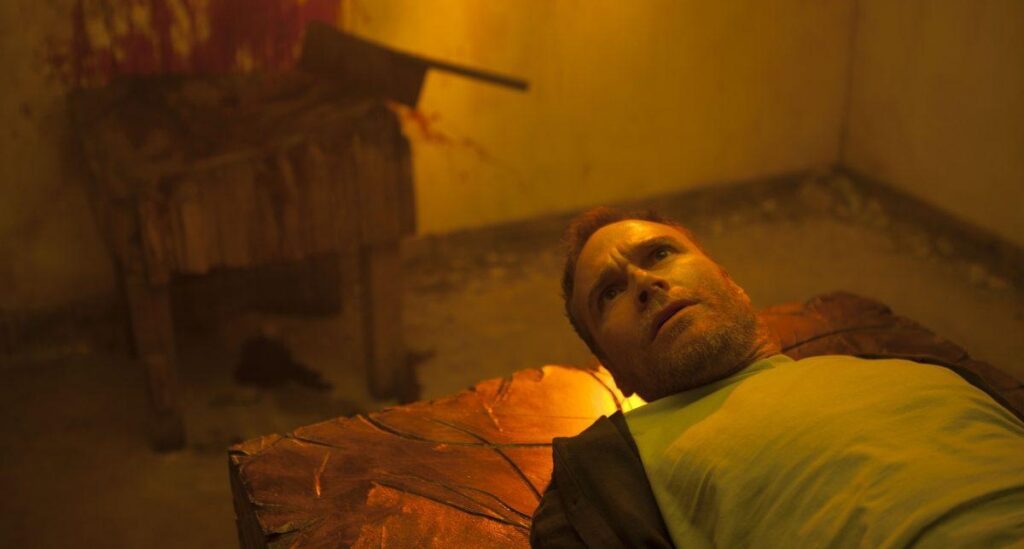
Tunnicliffe first met director John Gulager during the third season of Project Greenlight. After Gulager won the competition and the opportunity to direct Feast, the two worked together on the film and became friends. Although Tunnicliffe had never actually seen Gulager perform as an actor, he wrote the role of the Assessor specifically with him in mind, believing no one else could bring the same manic energy to the character.
The gamble paid off. Gulager’s grotesque performance, in which the Assessor devours written records of sins before violently vomiting them back up, became one of the film’s most memorable (and certainly one of its grossest) moments.
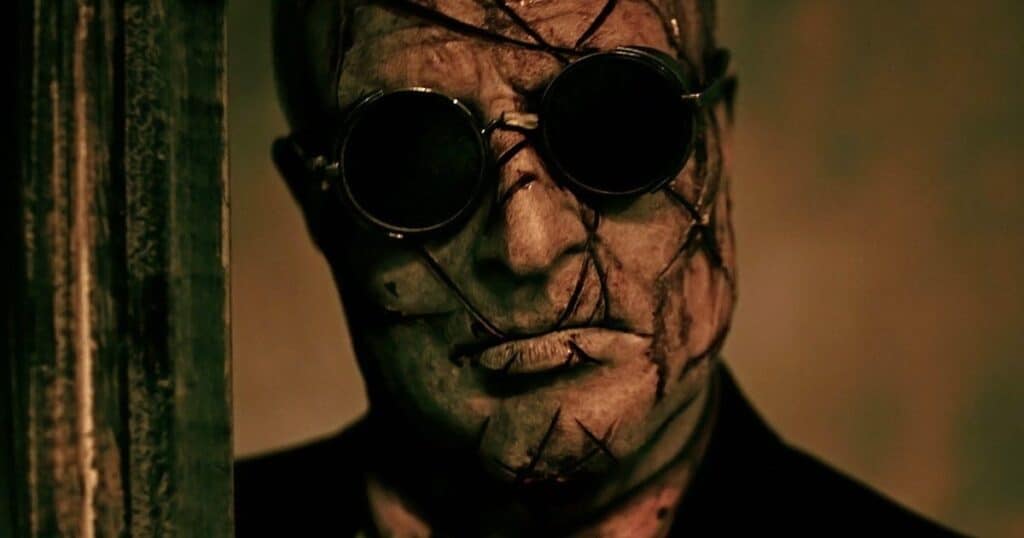
Why Gary J. Tunnicliffe Played the Auditor
Gary was encouraged to play Pinhead himself but declined. He felt writing and directing the film already invited enough scrutiny, and portraying the franchise’s most iconic character would only add to it. Instead, he cast himself as the Auditor. Having already developed a clear vision for the character, Tunnicliffe felt it would be easier to play the role himself than search for another actor.
The character drew inspiration from Itzhak Stern in Schindler’s List and Sam Lowry in Terry Gilliam’s Brazil. Tunnicliffe also wanted the Auditor to handle much of the exposition instead of handing it off to Pinhead. That allowed the Cenobite to remain a figure of fear rather than becoming the character who simply explains the mythology to the audience.
The Auditor’s scarred appearance and sunglasses originated as Tunnicliffe’s unused redesign for Pinhead in Pascal Laugier’s abandoned Hellraiser reboot. After that project fell through, he repurposed the design for the Auditor.
The self-inflicted scars were inspired by A Nightmare on Elm Street, specifically Freddy Krueger’s willingness to mutilate himself. Tunnicliffe’s reasoning was simple: if audiences see a character capable of doing that to himself, they’ll naturally wonder and fear what he might do to someone else.
Making Hellraiser: Judgment on a Tiny Budget
The Judgment screenplay was written over the Christmas holiday, and by January, production was already moving rapidly into pre-production for a February shoot. Filming took place in Oklahoma over just 15 days. Under the impression the crew had a $400,000 budget, Gary was unaware that $50,000 would automatically go to Clive Barker. To help stretch what remained, he even used his directing and writing fees to help pay for the film’s special effects makeup.
The limited budget also encouraged the production to get creative with its practical effects. Early in the film, a dog appears trapped inside a young woman’s stomach. The effect was achieved with a toy dog from Walmart, pushed upward beneath a prosthetic stomach. When Detective Egerton pulls the dog free, only Alexandra Harris’s bloodied hands are visible, while a live dog lightly splashed with water completes the illusion.
It’s exactly the kind of low-budget ingenuity that helped Hellraiser: Judgment create some of its nastiest imagery without having the money normally associated with elaborate creature effects.
Finding the Right Locations
The stomach-and-dog sequence was filmed in the same building seen in the exterior shot immediately before the murder. Gary wanted the view from the apartment window to match the establishing shot as closely as possible. With limited time, money, and locations, the location manager went door to door until he found an apartment with the exact view the director wanted. As luck would have it, the apartment belonged to one of the manager’s old college friends.
For the opening credits, Tunnicliffe spent a few hours filming on a Saturday alongside cinematographer Samuel Calvin and several other crew members, all of whom volunteered their time. Their generosity actually brought the director to tears.
The typewriter featured in the sequence was a fully functional model that Tunnicliffe had purchased on eBay.
He also emphasized the importance of appreciating the people behind the camera. Tunnicliffe said he always made a point of thanking the crew at the end of each day, having disliked seeing directors simply leave the set without acknowledging everyone’s hard work. In his view, a simple “thank you” could make a tremendous difference.
That isn’t to say he was always calm on set. On one occasion, unhappy with how a set had been arranged, Gary tore it apart, tossing furniture across the room before rebuilding it the way he envisioned.
Accidents on the Hellraiser: Judgment Set
The production also made efficient use of its locations. The house where the Audits take place was actually a disused flour-processing factory. While shooting there, several other sites within the general area were spotted that could double as filming locations, allowing the crew to work without the time-consuming process of packing up and moving equipment elsewhere.
There was also an accident during the pistol-whipping scene. Alexandra Harris was accidentally struck when Damon Carney lowered the prop gun instead of merely raising his hand as instructed. The gun’s magazine ejected and hit Harris just below the cheekbone, cutting the area around her eye. Harris’s genuine reaction was ultimately used in the finished film. Carney was devastated by the accident, though Harris repeatedly assured him she was fine.
For later scenes in the office, the wound was digitally removed. In the car sequence with David, Harris wore Randy Wayne’s sunglasses to conceal it. After trying several pairs on set, Gary felt Wayne’s glasses framed her face the best.
Sean Carter’s Hellraiser: Judgment Audit Was Based on a Real Story
To make Sean’s Audit feel as personal as possible, producer Michael Leahy secretly contacted Damon Carney’s wife for details about his childhood. As a result, the Auditor’s story about Sean stealing a book at age 11, being sent to the headmaster’s office, and being beaten by Father O’Brien was drawn directly from Carney’s own life.
When filming ended, a stunned Carney reportedly asked, “Have you been talking to my father?” The emotion visible on screen was entirely genuine.
The Grotesque Hellraiser: Judgment Makeup Effects
Tunnicliffe also recalled that filming the scenes with the Cleaners was so gruesome that one actress nearly passed out from the makeup effects. Three crew members, including grips he described as “6-foot, 250-pound guys,” had to leave the set because they felt like they could actually throw up.
During his first scene as Pinhead, Paul T. Taylor inhaled so much smoke that he became ill and had to be taken off set. Filming was cut short for the day while he recovered. But the Cenobite himself would have endured a much rougher fate if the production had been given a larger budget.
What Was Cut From Pinhead’s Story?
Pinhead was originally written to have his robe stripped from him, his pins removed, and to undergo a reversal of his rebirth scene from Hellraiser II. Rather than the daytime sequence seen in the finished film, the newly mortal character would have been discovered in a gutter by a police officer on a rainy night.
The facial markings were ultimately added in post-production. The overhead shot was achieved with Gary holding the camera as he moved backward beneath a drone.
Despite all the production’s challenges, Hellraiser: Judgment was ready for release in 2017. It wouldn’t actually reach audiences until the following year.
Why Was Hellraiser: Judgment Delayed?
The sequel was ultimately held until 2018, allegedly because Harvey Weinstein was embarrassed by the finished product. Promotion was also kept to a minimum because of the backlash surrounding the released material. The film was eventually released amid Weinstein’s financial troubles following his infamous 2018 downfall, although whether the two events were directly connected remains uncertain.
Another likely factor was the Hellraiser franchise’s looming rights deadline. While Dimension wasn’t under the same immediate pressure it had faced with Revelations, another sequel was still needed to retain the rights.
According to Tunnicliffe, Bob Weinstein later called him personally to say he liked the film. The director said it was the first time Weinstein had ever contacted him directly. When Gary asked what he thought of the Auditor, Weinstein responded enthusiastically and was surprised to learn that Tunnicliffe himself had played the character.
Hellraiser: Judgment‘s Release and Reception
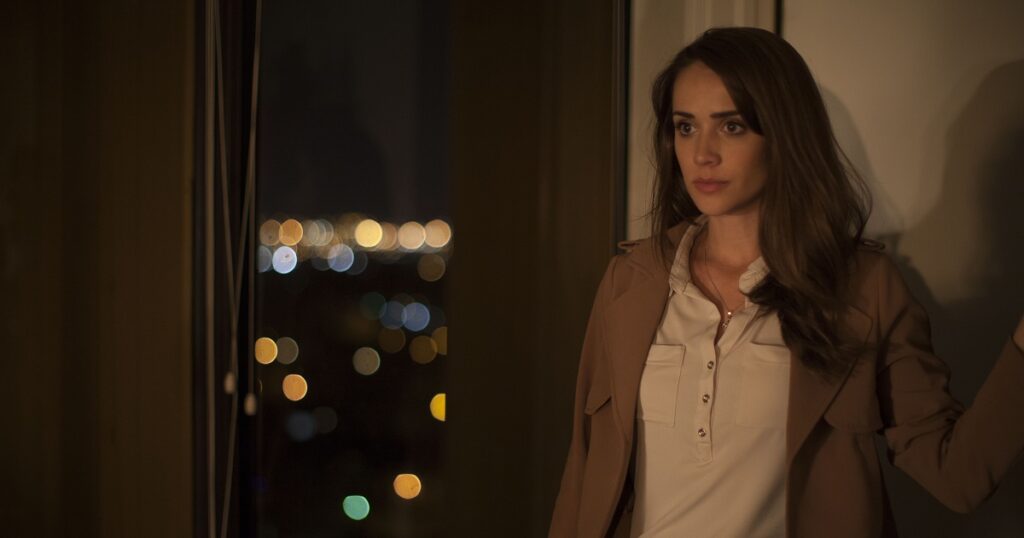
Hellraiser: Judgment premiered in the United States on February 13, 2018. Released by Lionsgate on digital platforms, Video on Demand, DVD, and Blu-ray, the film skipped theaters altogether.
Critics and audiences weren’t particularly kind. The film holds a 31% critics’ score and a 27% audience score on Rotten Tomatoes. While some reviewers appreciated its ambitious ideas and expansion of the Hellraiser mythology, many felt the relentless gore overshadowed the story. Others argued that the movie tried to cram too many ideas into its 81-minute runtime.
Still, the film’s reputation hasn’t remained completely frozen in time.
Will Paul T. Taylor Return as Pinhead?
Paul T. Taylor has expressed interest in returning as Pinhead, noting that Judgment‘s ending leaves the franchise open to several different directions. He has also said he would love to see Doug Bradley return to the role, and Tunnicliffe has echoed those sentiments.
But Tunnicliffe has admitted that his biggest regret about Judgment is that the film led to a falling out with one of his closest friends. The filmmaker has since said he has been willing to reconcile with Bradley. Tunnicliffe has also said that, because of studio interference, the film represents about 65% of what he originally envisioned.
How Hellraiser: Judgment Has Aged
Time has been kinder to Hellraiser: Judgment. Opinions remain divided. Some fans rank it among the franchise’s best sequels, while others place it near the bottom. But it’s a far cry from the ice-cold reception it received upon release.
Yes, the premise invites comparisons to Se7en, and Doug Bradley’s absence is certainly felt. But Judgment has merits of its own, from its ambitious expansion of the Hell mythology to Paul T. Taylor’s underrated performance as Pinhead. As Taylor himself once put it, while the film may be low budget by Hollywood standards, it’s “a very expensive fan film.”
In many ways, that’s exactly what it is: a labor of love that isn’t afraid to take the Hellraiser franchise in a different direction rather than simply repeating the same formula.
And that, my friends, is what happened to Hellraiser: Judgment.
A couple of previous episodes of this show can be seen below. For more, check out the JoBlo Horror Originals YouTube channel—and don’t forget to subscribe!












The comment section exists to allow readers to discuss the article constructively and respectfully, focused on the topic at hand.
What’s Not Allowed