
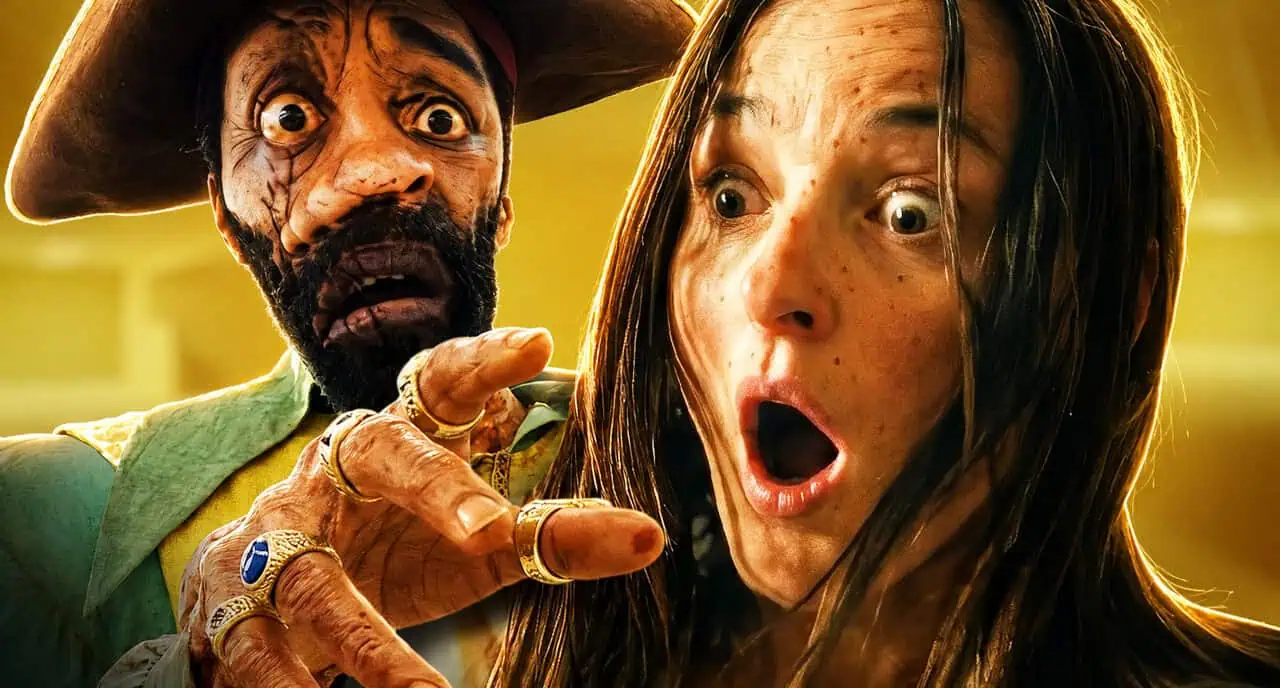
Backrooms has become one of the defining entertainment stories of 2026. More than just a massive box office success, it proved that YouTube creators can transition into mainstream filmmaking without sacrificing their creative identity. Directed by 20-year-old Kane Parsons, the film has become a cultural phenomenon, generating memes, online discussion, and critical acclaim while establishing itself as one of the year’s biggest horror hits.
But how did Backrooms evolve from an obscure internet horror concept into one of the most talked-about movies of the decade?
Today we’re exploring the complete story behind the phenomenon. We’ll look at the origins of the Backrooms myth, how Kane Parsons transformed an internet legend into a cinematic universe, how his viral YouTube series caught Hollywood’s attention, who almost starred in the film, how the groundbreaking visuals were created, and what happened after the movie’s enormous success led to unexpected tensions between Parsons and A24. Let’s noclip into the Backrooms.
The Backrooms Didn’t Begin with Kane Parsons
Before diving into Kane Parsons’ story, it’s worth making an interesting comparison. In 1951, Distant Drums featured a brief scene where an alligator drags a soldier underwater. During the attack, the character lets out an unforgettable scream. At the time, almost nobody noticed it. Two years later, the exact same sound effect appeared again in The Charge at Feather River. This time it accompanied a character named Private Wilhelm, giving birth to what we now know as the Wilhelm Scream.
The scream itself was recorded by musician Sheb Wooley, best known for singing Purple People Eater, and archived by Warner Bros. under the wonderfully descriptive label: “Man getting bit by an alligator and screams.” Over the following decades, it became one of Hollywood’s most recognizable sound effects, appearing in hundreds of films before eventually becoming a joke in its own right.
Kane Parsons occupies a similar place in internet horror history. He didn’t invent the Backrooms. He made them famous.
That distinction is important because it doesn’t diminish his accomplishment. If anything, it highlights it. Like the Wilhelm Scream, the Backrooms existed before they exploded into popular culture. Parsons simply became the creator who transformed a niche internet concept into a worldwide phenomenon.
The Origins of the Backrooms
Long before Backrooms dominated theaters, it was part of another internet phenomenon: creepypasta. The term “creepypasta” emerged during the mid-2000s as an evolution of “copypasta,” blocks of text copied and pasted repeatedly across message boards and forums. As horror stories became increasingly popular online, the term naturally evolved into “creepypasta.”
Even if you don’t recognize the name, you’ve almost certainly encountered the genre. Slender Man is one of the best-known examples, growing from an internet post into a multimedia horror franchise. Another famous example is Candle Cove, which eventually inspired the outstanding first season of Channel Zero.
The Backrooms followed a similar path. Like many internet legends, its exact origin remains surprisingly difficult to pin down.
The Original Backrooms Image
One mystery has finally been solved. In 2024, internet researchers discovered that the famous yellow Backrooms photograph was taken in 2002, during the transition of a furniture store in Oshkosh, Wisconsin. That discovery even inspired an Easter egg in the film through Captain Clark’s furniture store. The identity of the original uploader, however, remains unknown.
Many articles, including Wikipedia, credit an anonymous 4chan post from 2019 as the image’s debut. But archived versions suggest the photograph was circulating online at least as early as 2018, while many internet users insist they encountered it years before that. That uncertainty has only strengthened the Backrooms myth. Like many legendary creepypastas, its mysterious origins have become part of its appeal.
What is firmly documented is the text that accompanied the image on May 13, 2019: “If you’re not careful and you noclip out of reality in the wrong areas, you’ll end up in the Backrooms, where it’s nothing but the stink of old moist carpet, the madness of mono-yellow, the endless background noise of fluorescent lights at maximum hum-buzz, and approximately six hundred million square miles of randomly segmented empty rooms to be trapped in. God save you if you hear something wandering around nearby, because it sure as hell has heard you.”
Those two paragraphs transformed an unsettling photograph into one of the internet’s greatest collaborative horror stories.
What Is a Liminal Space?
To understand why the Backrooms resonated so strongly, you first have to understand liminal spaces. A liminal space is an environment designed for transition rather than permanence. Think about places like:
- hotel hallways
- office buildings
- empty schools
- airports
- shopping malls
- subway stations
These are places meant to be filled with people and constant movement. Now imagine them completely empty. Stretch them into infinity. Remove every exit. That’s where the horror begins.
The Backrooms amplify this idea by trapping people inside an endless maze of identical yellow rooms illuminated by buzzing fluorescent lights. The familiar becomes deeply unsettling simply because it exists without the people who normally give it purpose.
The concept itself comes from the anthropological idea of liminality, referring to periods of transition, uncertainty, or disorientation. Internet horror embraced the idea and expanded it into an entire subgenre, with the Backrooms becoming its most famous example.
By the time Kane Parsons entered the picture, the Backrooms already had a devoted online following. He was about to change everything.
Kane Parsons Before Backrooms
Before becoming one of Hollywood’s youngest blockbuster directors, Kane Parsons was simply a teenager uploading videos to YouTube under the name Kane Pixels. His earliest available upload, Sandwich, appeared on October 22, 2017. It was only 27 seconds long. Today, that humble beginning has been viewed more than 1.5 million times, while Parsons’ channel has grown to over 3.5 million subscribers. In those early years, he experimented with visual effects and created several popular Attack on Titan videos, gradually teaching himself increasingly sophisticated digital filmmaking techniques.
Everything changed on January 7, 2022. That’s when he uploaded The Backrooms (Found Footage).
Using Blender, Parsons created a short film unlike anything viewers had seen before. Its realistic environments, convincing camera work, and overwhelming sense of dread immediately captivated audiences. As of this writing, the video has surpassed 91 million views, launching one of YouTube’s greatest horror success stories.
I still remember watching it on my apartment couch shortly after it went viral. It genuinely unnerved me in a way very few online horror projects ever had. Hollywood noticed too.
Unlike many viral creators eager to leave YouTube behind, Parsons remained focused on making the content he loved. Even as studios began calling, he continued expanding his channel with ambitious projects, including the outstanding analog horror series The Oldest View.
The Backrooms may have made him famous, but it wasn’t the end of his creative journey. It was only the beginning.

Kane Parsons Built an Entire Universe
The original The Backrooms (Found Footage) is remarkably simple, and that’s exactly why it works. The short opens with a group of young people making a home movie; a fitting choice considering YouTube has effectively become this generation’s home video camera. During filming, one of them suddenly noclips out of reality and falls into the endless maze known as the Backrooms.
What follows is almost entirely visual storytelling.
The unnamed protagonist wanders through an impossible labyrinth of yellow hallways, buzzing fluorescent lights, and empty rooms before encountering one of the series’ most terrifying creations: The Bacteria. The grotesque creature stalks the victim through the maze, leading to a frantic escape attempt that ends in one of the video’s most memorable moments. While the camera appears to make it back into our world, the person carrying it does not, with the footage falling hundreds of feet to the ground.
It’s a brilliant ending because it answers almost nothing. Instead, it leaves viewers with more questions than answers. Exactly the kind of mystery that fueled the Backrooms myth in the first place.
Over the next four years, Parsons expanded that initial short into an interconnected saga spanning more than 23 videos and over three hours of content. Rather than simply repeating the same formula, he introduced new locations, expanded the mythology surrounding Async, and transformed a simple creepypasta into a sprawling science fiction horror narrative.
The series also became one of the defining examples of analog horror, a subgenre that presents fictional events through degraded videotapes, security footage, educational films, and found recordings. If traditional found-footage horror evolved from handheld cameras, analog horror evolved from the internet itself.
From YouTube to Hollywood
Interestingly, Parsons’ first instinct wasn’t to turn the Backrooms into a movie. He originally imagined the story as a comic book before Hollywood came calling.
As studios competed for the rights, A24 ultimately won the bidding war, giving Parsons the opportunity to direct the adaptation himself at just 20 years old. That decision proved to be one of the studio’s smartest moves.
Parsons could have simply stretched his YouTube videos into a feature-length remake, but instead he made a far more ambitious choice. He told a completely new story.
Rather than adapting the existing web series scene for scene, the film exists alongside it. Both stories share the same universe and take place during the 1990s, but the connections are intentionally minimal. Familiar elements like Async and the iconic yellow rooms remain, yet the characters, narrative, and emotional focus are entirely new.
It’s an approach that rewards longtime fans without alienating newcomers who had never watched a single Kane Pixels video.
Writing the Feature Film
Although the Backrooms universe originated with Kane Parsons, the feature screenplay was written by Will Soodik, with producer Robert Patino playing a major creative role behind the scenes. Patino brought years of experience from acclaimed television series such as Sons of Anarchy and Westworld, while Soodik had previously worked on Westworld and contributed to ten episodes of the surprisingly excellent Ash vs. Evil Dead.
That combination of fresh ideas and veteran storytelling experience shows throughout the finished film.
The screenplay runs nearly two hours, and even longer in the later extended theatrical edition, but it rarely feels bloated. Every sequence either develops the characters or deepens the unsettling mythology surrounding the Backrooms.
Perhaps most importantly, the writers understood what made Parsons’ original videos so effective. They resisted the temptation to explain everything. The Backrooms remain mysterious because the audience experiences them exactly as the characters do: confused, frightened, and desperate to understand a world that refuses to provide clear answers.
Building the Creative Team
Parsons wasn’t making YouTube videos anymore. He was directing a major studio feature, and that required an experienced crew capable of translating his digital imagination into physical reality.
He still remained heavily involved creatively, serving as an executive producer and composing roughly half of the film’s score, but he also surrounded himself with collaborators who understood his vision. Among the most important were editor Greg Ng and cinematographer Jeremy Cox.
Cox had already built an impressive résumé, shooting more than fifty productions over the previous decade and contributing to films including Osgood Perkins’ Keeper, Longlegs, and The Monkey. His cinematography perfectly balances realism with surrealism, making impossible spaces feel strangely believable. Ng was equally well suited to the material. Having edited several projects connected to Perkins (who also served as a producer on Backrooms), he understood the deliberate pacing and creeping atmosphere the film required. Together, the team expanded Parsons’ visual language without losing the unsettling authenticity that made his YouTube work so effective.

Casting the Backrooms
The film’s relatively small cast helps keep the story grounded, even as reality begins collapsing around the characters.
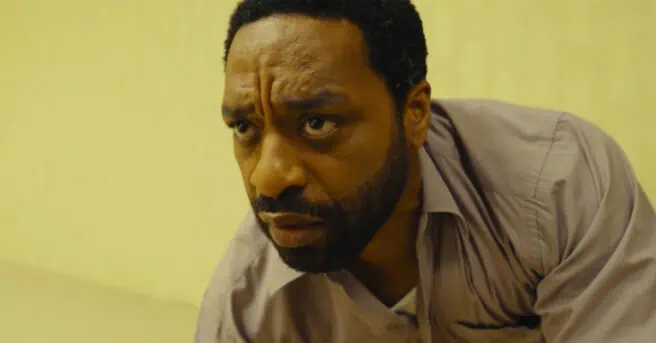
Leading the ensemble is Chiwetel Ejiofor, who plays Clark, a financially struggling architect turned furniture store owner whose personal failures become inseparable from the horrors surrounding him. Opposite him is Renate Reinsve, continuing her remarkable run of emotionally complex performances as a compassionate therapist and aspiring author searching for meaning in an increasingly impossible situation.
Interestingly, Reinsve wasn’t the production’s first choice. Cristin Milioti was originally set to play the female lead before leaving the project. She undoubtedly would have been excellent, but Reinsve ultimately delivers a performance that feels perfectly matched to the film’s melancholy tone.
Clark nearly looked very different as well. Reports suggest Michael B. Jordan was at one point considered for the role. While his star power would have elevated the film’s profile even further, Ejiofor brings an understated vulnerability that better serves the character’s existential journey.
The supporting cast includes Lukita Maxwell as furniture store assistant manager Kat, Finn Bennett as her boyfriend Bobby, and independent film favorite Mark Duplass as a member of Async’s research team. Duplass would later become one of Parsons’ most vocal defenders, repeatedly praising the young filmmaker’s confidence and leadership on set. According to Duplass, Parsons was among the most prepared and involved directors he had ever worked with, a remarkable endorsement considering the veteran actor’s decades of experience.
Horror fans also received a fun surprise in the form of a blink-and-you’ll-miss-it cameo from Katharine Isabelle, who briefly appears during a book launch party sequence.
Bringing the Monsters to Life
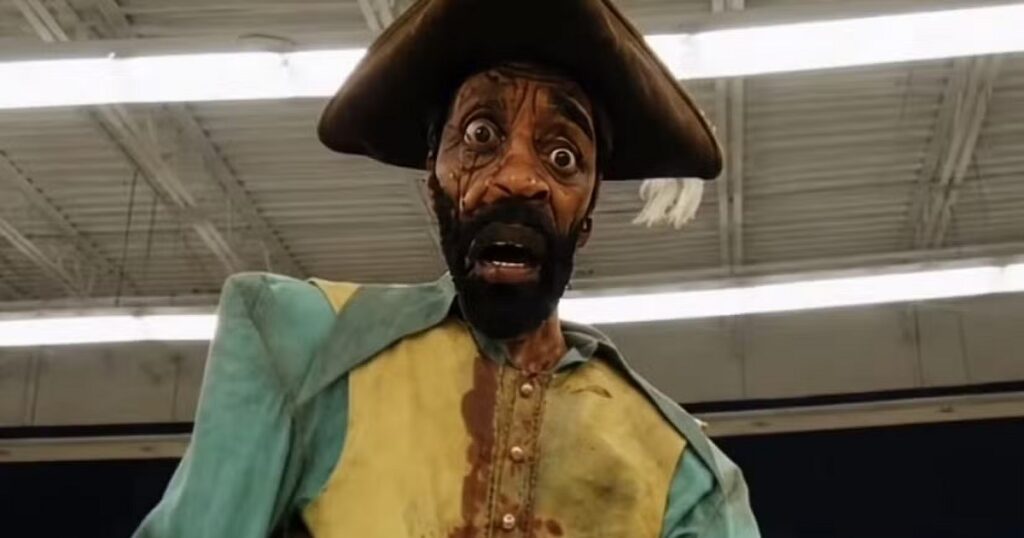
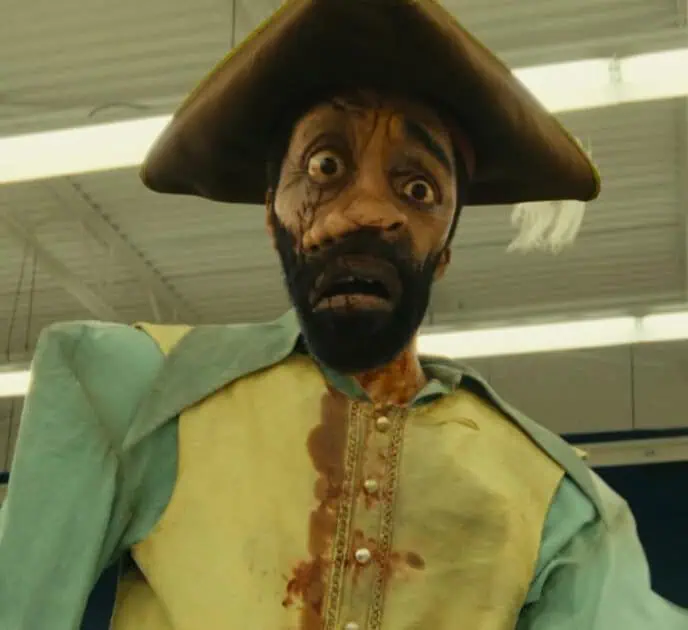
The film’s most unforgettable creature isn’t The Bacteria. It’s Pirate Clark. The terrifying monster is portrayed by former Romanian basketball player Robert Bobroczkyi, whose imposing 7-foot-7 frame gives the creature an immediately disturbing physical presence. Parsons had previously noticed Bobroczkyi’s memorable appearance in Alien: Romulus and personally reached out to offer him the role.
Many fans initially assumed someone of Bobroczkyi’s size would naturally portray The Bacteria from the original YouTube series. Instead, Parsons surprised everyone.
Pirate Clark became one of the film’s most haunting creations, proving once again that he was more interested in subverting audience expectations than simply recreating what fans already knew. That willingness to surprise audiences would become one of the defining strengths of Backrooms, allowing it to honor its internet roots while confidently establishing its own identity.
Expanding the Backrooms for the Big Screen
Although Backrooms isn’t a prequel, sequel, or remake of Kane Parsons’ YouTube series, it firmly exists within the same continuity. Rather than retelling familiar stories, Parsons used the feature film to explore a different corner of the universe he had already created online. The result is a movie that feels connected to the web series without requiring viewers to have seen it first.
When discussing his influences, Parsons has cited an eclectic mix of films, television, anime, and video games. Among them are Mr. Robot, One Hour Photo, the 1971 pseudo-documentary Punishment Park, Satoshi Kon’s Paranoia Agent, and Valve’s Portal series, a property he has expressed significant interest in adapting.
Those inspirations are easy to spot. Backrooms combines the emotional isolation of psychological thrillers with the surreal architecture of science fiction and the creeping dread of analog horror.
Turning Digital Spaces Into Reality
One of the biggest challenges facing the production was translating environments originally created in Blender into physical locations that actors could actually explore. To accomplish that, Parsons teamed with production designer Danny Vermette, and together they essentially built the Backrooms from scratch. Their achievement was staggering. The production constructed approximately:
- 30,000 square feet of interconnected Backrooms sets.
- 37,000 square feet of custom wallpaper.
- 29,000 square feet of carpeting.
Vermette compared the entire process to assembling an enormous game of Tetris, with individual sections constantly rearranged to create the illusion of an endless labyrinth.
Ironically, life soon began imitating art. Crew members reportedly became lost inside the maze-like sets while filming, a fitting experience considering the very nightmare they were attempting to recreate.
The architecture itself was intentionally unsettling. Floors sloped unexpectedly, arches intersected at impossible angles, openings appeared where they shouldn’t, and structural elements clipped through walls and ceilings exactly as they often do in poorly rendered digital environments. The result feels uncanny because nothing is overtly wrong, everything is just slightly off. That subtle discomfort becomes one of the film’s greatest visual strengths.
Production Details
Filming took place in Vancouver under the working title Effigy. Principal photography ran from July 7 through August 14, 2025, with a reported production budget of just under $10 million.
For a film that would eventually become one of the biggest box office stories of the year, that’s an astonishingly modest budget. It also highlights one of the movie’s greatest accomplishments. Rather than relying on massive visual effects expenditures, Backrooms creates fear through production design, practical environments, cinematography, and atmosphere. Every dollar appears on screen.
Marketing the Impossible
As release approached, A24 leaned heavily into immersive marketing that blurred the line between fiction and reality. Instead of traditional advertising, the campaign expanded the mythology into the real world. Actors dressed in hazmat suits portraying Async employees began appearing in public spaces, placing strips of blue tape around urban environments as though documenting strange anomalies. Some of these activations took place at locations already famous within Backrooms lore, including the Holiday Inn near London’s Heathrow Airport.
The campaign became even more elaborate. A24 produced an in-universe commercial for Cap’n Clark’s Ottoman Empire, airing it on Pluto TV complete with a functioning phone number. Calling the number triggered fax transmissions that further expanded the Backrooms mythology.
Rather than simply advertising the movie, the campaign invited audiences to participate in it. It was one of the most creative horror marketing efforts in recent memory.
A Box Office Phenomenon
When Backrooms finally arrived in theaters, it immediately exceeded even the most optimistic expectations. The film debuted at number one at the box office, making Kane Parsons the youngest director ever to open a film in first place, surpassing John Singleton, who was 24 when Boyz n the Hood premiered and 25 when he directed Poetic Justice.
That milestone alone would have been remarkable. Instead, it was only the beginning.
The movie continued attracting audiences week after week, eventually approaching $400 million worldwide, an extraordinary performance for an original horror film produced on a budget of less than $10 million.
Even months after release, the expanded “Everything Must Go Edition” remained in theaters, demonstrating just how deeply the film had embedded itself in popular culture.
Backrooms wasn’t simply successful. It became an event.
Kane Parsons After Backrooms
Despite suddenly becoming one of Hollywood’s hottest young directors, Parsons never abandoned the platform that made him famous. He continued producing content for the Kane Pixels YouTube channel, expanding the Backrooms mythology while also developing ambitious original series like The Oldest View and People Still Live Here.
That commitment to independent creation remained one of the most refreshing aspects of his success. Rather than disappearing into the studio system, Parsons continued making videos for the audience that had supported him from the beginning. His relationship with Hollywood, however, soon became far more complicated.
Success Brings Controversy
With massive success came enormous scrutiny. As Backrooms dominated the box office, some online commentators began questioning just how much creative control Parsons had actually exercised over the feature. Despite widespread praise from cast and crew, conspiracy theories circulated claiming that the young filmmaker hadn’t truly written or directed the movie.
Those claims were consistently contradicted by people who actually worked on the production. Mark Duplass, among others, publicly defended Parsons, describing him as one of the most hands-on directors he had ever collaborated with.
Unfortunately, the controversy didn’t stop there. The New York Post published photographs identifying Parsons’ home, a move that drew immediate backlash from both fans and industry observers. Many criticized the publication for exposing the young filmmaker and his family to unnecessary attention during an already overwhelming period of fame.
For someone who had built his career quietly making videos in his bedroom, the sudden intensity of public attention represented an entirely different kind of pressure. It would only become more complicated as creative disagreements with A24 began emerging in public.
The A24 Copyright Controversy
The biggest controversy surrounding Backrooms wasn’t about the movie itself. It was about ownership.
In mid-July 2026, A24 issued a copyright claim against a piece of Backrooms-inspired fan art created by an artist known online as GnarlyNet. The artwork wasn’t a direct copy of anything from the film, it was simply an homage built around the now-iconic yellow Backrooms aesthetic. That decision immediately sparked backlash.
Unlike most modern franchises, the Backrooms weren’t created by a studio. The concept grew organically from an anonymous internet post before evolving through countless YouTube videos, games, artwork, and independent stories. The mythology has always existed as a collaborative online phenomenon rather than a traditionally owned intellectual property.
Many fans argued that no single company could reasonably claim ownership over the broader Backrooms concept. Kane Parsons appeared to agree. Rather than remaining silent, he publicly defended the artist and pledged to help have the copyright claim removed. His response was widely praised, reinforcing the goodwill he had built with fans throughout his rise from independent YouTuber to Hollywood director.
The incident, however, strained A24’s relationship with the fan community. For many viewers, the studio’s legal approach felt at odds with the open, community-driven spirit that had allowed the Backrooms mythos to flourish in the first place.
A Difference in Philosophy
The copyright dispute wasn’t the only source of tension. Just weeks earlier, Google announced a $75 million investment in A24 focused on artificial intelligence initiatives. The news generated mixed reactions throughout the film industry, and Parsons was among those who expressed discomfort with the direction.
The announcement fueled growing speculation that the filmmaker and the studio no longer shared the same creative philosophy. That divide became even more apparent when Parsons revealed that, despite directing one of the biggest horror films of the decade, A24 retained the rights to the Backrooms feature. Even if he wanted to make a sequel himself, the decision ultimately rested with the studio.
Parsons has also mentioned searching for a new co-writer for future projects, further suggesting that his next chapter may take him in a different creative direction. Whether he ultimately returns to the Backrooms or moves on to entirely new worlds, it seems increasingly likely that his future won’t be defined by a single studio partnership.
The Year YouTubers Changed Hollywood
The success of Backrooms didn’t happen in isolation. It became part of a much larger shift in Hollywood, where online creators increasingly proved they could make successful feature films.
YouTubers had made movies before, of course. James Rolfe brought The Angry Video Game Nerd to the big screen after years of building the character online. The Philippou brothers transitioned from their wildly popular RackaRacka channel to directing the acclaimed horror hits Talk to Me and Bring Her Back.
But 2026 felt different. For the first time, multiple creators who built their audiences entirely on YouTube were competing at the highest level of commercial filmmaking.
Chris Stuckmann released Shelby Oaks, which unfortunately struggled both critically and commercially despite years of anticipation.
Mark Fischbach, better known as Markiplier, adapted the indie horror game Iron Lung, directing, co-writing, and starring in the film himself. While it turned a profit and earned praise in several areas, it never quite reached the cultural impact of either Backrooms or Curry Barker’s breakout hit Obsession.
Barker’s rise was especially remarkable. After Obsession, he quickly filmed another project, signed a major studio deal, and landed one of horror’s most coveted assignments: helping steer the future of The Texas Chainsaw Massacre.
Hollywood is now actively recruiting creatives based on their online work.
Analog Horror Is Going Mainstream
The success of Backrooms may prove to be just the beginning. Hollywood has already begun adapting more internet-born horror properties, and many of the original creators are remaining directly involved.
Steven Spielberg is producing a feature adaptation of The Mandela Catalogue, with series creator Alex Kister co-writing and directing the film himself. Meanwhile, the V/H/S franchise is preparing an installment centered on the SCP Foundation and its ever-expanding library of creepypasta monsters. There’s also growing interest in bringing Siren Head to the big screen, with Zach Cregger attached to write the adaptation with Brian Duffield.
For years, internet horror existed largely outside the mainstream. Now it has become one of Hollywood’s most valuable creative pipelines. The hope is that studios continue recognizing what made these stories successful in the first place: the voices of the creators who built them.
Why Backrooms Works
What ultimately makes Backrooms so powerful isn’t simply its monsters. It’s what those monsters represent.
The Backrooms attempt to imitate our world, but every copy is imperfect. Familiar places become subtly wrong. Ordinary architecture becomes oppressive. Even people are reflected back as distorted versions of themselves.
The greatest horrors aren’t always lurking around the next corner. Sometimes they’re the parts of ourselves we’d rather ignore.
Parsons understands this better than most horror filmmakers. Rather than explaining every mystery, he embraces uncertainty. His characters never receive satisfying answers, and neither does the audience. That ambiguity isn’t a flaw, it’s the point.
The performances elevate the material even further. Chiwetel Ejiofor and Renate Reinsve approach the story with complete sincerity, grounding extraordinary events in recognizable human emotions like grief, regret, financial anxiety, failed relationships, and childhood trauma. The Backrooms may be impossible, but the people trapped inside them feel entirely real.
Clark’s arc perfectly illustrates the film’s central idea. Nearly everyone who comes into contact with him dies. Not always by his own hand, but often because of the choices he makes. Even his own death carries symbolic weight. After suggesting that the soulless creatures inhabiting the Backrooms can be eaten, he is ultimately consumed by a monstrous version of himself, as though his own inner darkness has literally devoured him.
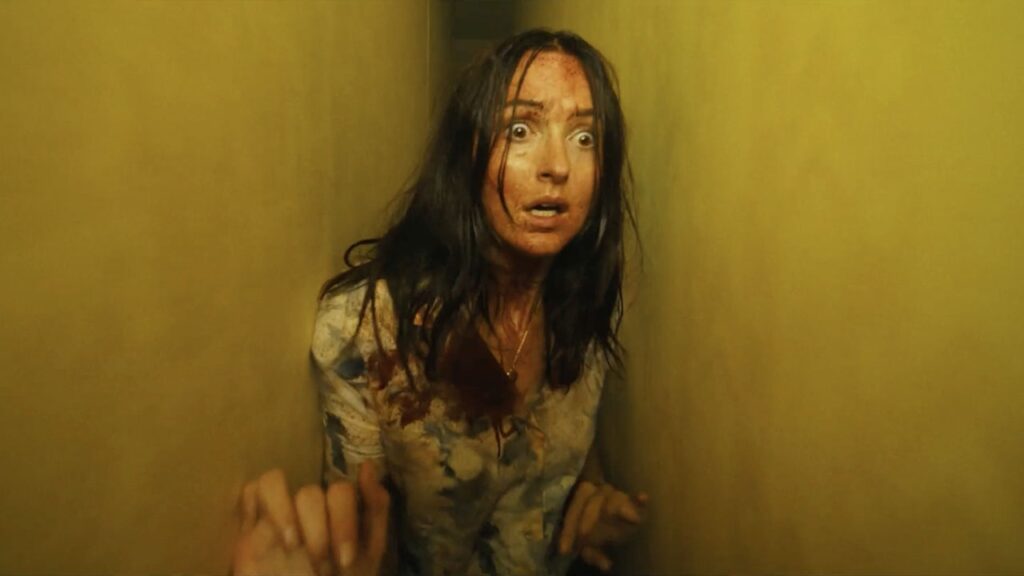
Mary’s story is just as haunting. Even when she appears to escape, the film never truly confirms that she’s free. She simply moves into another layer of emotional isolation, suggesting that escaping the physical maze doesn’t necessarily mean escaping the psychological one.
That’s why Backrooms lingers long after the credits roll. The endless hallways are frightening. The loneliness inside them is devastating.
Final Thoughts
Backrooms deserves every bit of the success it has achieved. Whether you’re fascinated by internet culture, analog horror, or simply great filmmaking, it’s a remarkable case study in how an anonymous online creepypasta evolved into one of the defining horror films of its generation.
If you haven’t seen the movie yet, it’s well worth experiencing, even if you’ve heard every spoiler. The atmosphere, performances, and emotional weight simply can’t be replicated through discussion alone.
If you’ve already watched it, I strongly recommend revisiting Kane Parsons’ original YouTube series. Seeing where the mythology began makes the film even more impressive and highlights just how extraordinary Parsons’ journey has been.
The Backrooms started with an unsettling image and a few paragraphs posted online. Years later, they became a global phenomenon. Just remember the original warning: If you aren’t careful, you might noclip out of reality and end up in the Backrooms. And if you hear something moving nearby… it has already heard you.














The comment section exists to allow readers to discuss the article constructively and respectfully, focused on the topic at hand.
What’s Not Allowed