


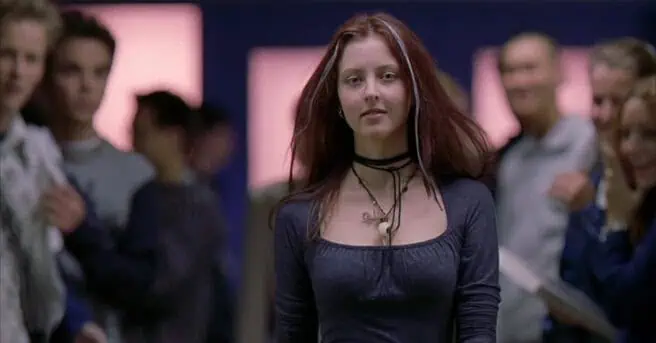
INTRO: Physical transformation. A troubling amount of hair growing in disturbing places. Raging hormones. Intense urges you’ve never felt before. Is this a description of what it’s like to become a werewolf? Or just what it’s like to go through puberty? For Ginger Fitzgerald, it’s both. She’s entering womanhood and has been infected with lycanthropy. That’s the story at the center of the 2000 horror film Ginger Snaps, one of the greatest werewolf movies ever made and the Best Horror Movie You Never Saw.
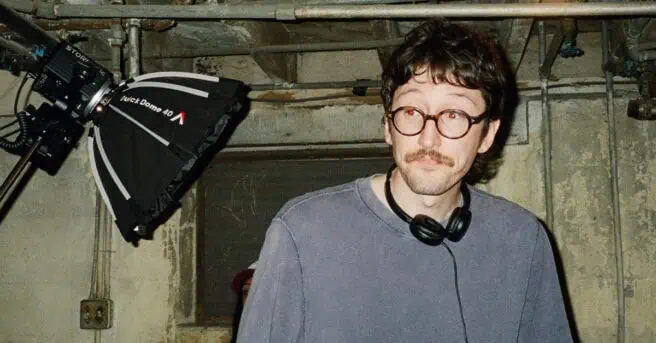
CREATORS / CAST: Director John Fawcett started building the concept of Ginger Snaps in the early ‘90s. He knew he wanted to follow in the footsteps of his fellow Canadian filmmaker David Cronenberg and make a body horror movie. To tell the story of some kind of transformation. But beyond showing the gross visuals of a physical transformation, he also wanted to dig into the changes the character goes through psychologically. And he knew exactly who he wanted to have at the heart of the story. An image had occurred to him of two teenage Goth girls. In his mind, he saw them as the sort of characters you might see in a drawing by Tim Burton or Edward Gorey. Having these girls in mind helped Fawcett pick which horror sub-genre he wanted to work in. He was going to make a werewolf movie. Because werewolf movies hadn’t been done well very often, and there had never been one that centered on teenage girls.
Since his lead characters would be female, he wanted a woman to write the script. He and screenwriter Karen Walton were familiar with each other’s work and had been wanting to do something together. So Fawcett pitched the idea to her. Walton was hesitant to get involved at first because she wasn’t a horror fan. She had found most of the horror movies she had seen to be disappointing on the story level. And frustrating in the way they depicted female characters. Fawcett was able to convince her to join the project by telling her to write a horror movie that she would want to see. One that she would find satisfying. So she proceeded to do just that. Walton also helped Fawcett find a clever title for his movie. For a while, the working title was something generic like Wolf Girls. But then Walton spotted a package of ginger snaps cookies while she was working on the script. That’s when she decided to call the story Ginger Snaps and changed the name of the transforming character to Ginger.
The female leads Fawcett envisioned ended up being named Brigitte and Ginger Fitzgerald. They’re outsiders trapped in the hell of suburbia, living in a place called Bailey Downs, disgusted by the world around them. They don’t have friends at school, they barely talk to their parents. Their father hardly ever talks anyway. All they need is each other. They have even made a blood pact with each other: “Out by sixteen or dead in this scene, but together forever.” At one point, Fawcett and Walton had considered making the girls twins. But Walton felt that it’s already unfair enough that people expect twins to be like each other, and she didn’t want to add to that cliché. So Brigitte and Ginger are just incredibly close in age – close enough that they’re the same age for a while. Ginger is fifteen, almost sixteen. Brigitte has just turned fifteen. These strongly bonded sisters begin to be torn apart when they come face-to-face with the Beast of Bailey Downs. The ravenous creature that has been killing the dogs in their neighborhood. Everyone has thought the Beast was a wild canine, but it’s actually a werewolf. And it attacks Ginger. Brigitte manages to help Ginger get away from the Beast before it can kill her. As the girls are running for their lives, the creature gets smashed by a van. And by the time the girls make it home, Ginger’s wounds are already healing. So she convinces Brigitte not to call 911 or tell their parents what happened. Life goes on, but it gets very different for the Fitzgerald sisters after that. Ginger is changing.
Fawcett and Walton knew they were going to make a werewolf movie, but they didn’t want to make a typical entry in the sub-genre. They threw out the Hollywood rules. The transformation isn’t brought about by the full moon. You don’t need silver bullets to kill werewolves. They are animals that can be killed the same way as any other creature. Movies often say lycanthropy is brought about by a curse. In Ginger Snaps, it’s treated like an infection. By being bitten and clawed by the werewolf, Ginger has been infected. But she also passes it on to another character through unprotected sex. Since this is an infection rather than a curse, the characters are able to search for a natural cure. There has to be a cure, right? Otherwise there would be werewolves all over the place. Going over the usual rules, thinking of how these things would or wouldn’t apply to their story and characters, Fawcett and Walton discussed the lunar cycle. That got them thinking about menstrual cycles. And that’s when the most clever aspect of Ginger Snaps started being worked into the script.
The gradual werewolf transformation in the movie is a metaphor for puberty. The changes females go through in adolescence. Walton laid the foundation for this in an early draft of the script, and story editor Ken Chubb helped her push the metaphor even further in revisions. A late bloomer, Ginger begins her first period moments before the werewolf attacks her. An element that brings to mind some interpretations of the Little Red Riding Hood story. Ginger is entering womanhood – and leaving Brigitte behind. Now she has to deal with all the trouble and discomfort that comes with periods. Cramps, bleeding. A cheerful nurse tells her all about it. She also has to deal with the mortifying aspects of going through puberty. Like hair growing in places you wish it wouldn’t. She just happens to be growing hair on the claw marks the werewolf left on her chest. And she’s growing a tail. And dewclaws. Her fingernails are changing. She starts having urges she never had before. She enjoys the attention she gets from boys. And becomes interested in sex. She’s also interested in tearing living creatures to pieces.
While Ginger is embarrassed by the hair and the tail at first, she comes to accept it. She doesn’t mind becoming a werewolf. It’s making her stronger. But Brigitte spends the film desperately trying to save her sister. To cure her. To avoid the full werewolf transformation she suspects is coming twenty-eight days after the attack. A transformation that will occur on Halloween night. She seeks the help of the person who accidentally killed the other werewolf with his van: Sam. A slightly older boy who works as a landscaper at their high school. And sells weed to the high school kids. Sam is surprisingly nice and helpful, suggesting potential cures like pure silver or monkshood, also known as wolfsbane. But Ginger isn’t pleased to see Brigitte talking to this guy. She’s supposed to be the only person in her sister’s life. For a while, Walton actually resisted the idea of making the helpful character a male. She didn’t want this to be another movie where a boy comes in and saves the day. When she first started working on the script, the helpful character was a tough, tattooed female school nurse. There was a chance the singer Bif Naked would play the role. Then Walton realized the story could benefit from putting a boy in between Brigitte and Ginger. Because nothing can break the bond between two teen girls like a fight over a boy. Especially when one of the girls is a bloodthirsty werewolf.
Brigitte and Ginger are very unique characters, which made their roles quite difficult to cast. Auditions were held in Los Angeles, New York, Montreal, Vancouver, and Toronto over the course of six months. Online trivia claims that Sarah Polley and Natasha Lyonne were offered roles in the film. Fawcett made inquiries about Laura Harris after seeing her in The Faculty. But the lead roles ended up going to two actresses who auditioned in Vancouver on the same day: Emily Perkins was cast as Brigitte and Katharine Isabelle as Ginger. It’s ironic that Perkins was cast as the younger sister, because she’s four years older than Isabelle. She does look younger than she is, though. Fawcett really thought she wasn’t even sixteen yet, but she was actually already in her twenties. Perkins and Isabelle came to Ginger Snaps with a pre-existing bond, as they had known each other for years. The filmmakers realized they were perfect for the roles as soon as they saw them, but there was a problem to deal with: Perkins had cut her hair between the audition and the start of production. So she had to wear a noticeable wig in the movie.
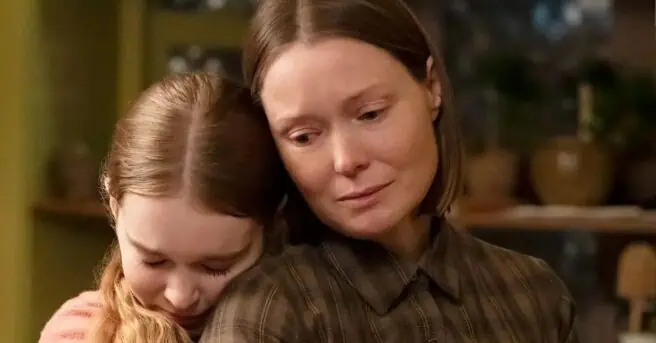
A strong supporting cast was assembled around Perkins and Isabelle, each actor equally perfect for their roles. Kris Lemche plays Sam. Jesse Moss is Jason, the guy Ginger carelessly infects with lycanthropy. Danielle Hampton is Brigitte and Ginger’s field hockey rival Trina, who is infatuated with Sam and doesn’t like that he’s showing the Fitzgerald sisters attention. John Bourgeois is Brigitte and Ginger’s mostly silent father Henry. Peter Keleghan, Lindsay Leese, and Pak-Kwong Ho make memorable appearances as the school guidance counselor, the cheerful nurse, and the janitor. Mimi Rogers plays Brigitte and Ginger’s mom Pamela, who desperately wants to bond with her daughters.
Some were surprised that Rogers would do a low budget Canadian horror movie, but she had a great read on the material. She knew exactly what they were making. She told Fangoria magazine, “On the surface, it’s a genre movie. It’s a werewolf movie, but it’s much smarter than that. For people who are more intellectually oriented, it will work, and for more traditional horror fans it will also work. There are so many metaphors. … There’s a certain perception about women that when they reach puberty and begin menstruating, they become monsters. This is very much hormonal and visceral – the idea that adolescence is a time of confusion and rage, and hormones do make you kind of crazy. So tying in this idea of transformation and metamorphosis and making it about women makes sense.”
BACKGROUND: Years of work went into getting the Ginger Snaps ready for production – but not everyone saw the potential in the project that Rogers did. It actually faced strong opposition when it was heading into production. Opposition that wouldn’t have been there if it had started filming in the fall of 1998, as originally intended. Canadian distribution was secured in early ‘98, and Trimark was interested in handling distribution in the rest of the world. But the negotiations with Trimark took so long, Ginger Snaps missed the deadline to receive funding from Telefilm Canada. They could either start filming with only sixty percent of the budget in place, or they could wait until the next fiscal year. They chose to wait. And while they were waiting, Trimark dropped out. Thankfully, Unapix Entertainment and Lionsgate quickly stepped into their place. And in 1999, Ginger Snaps got its Telefilm Canada funding. Sadly, the school shootings in Columbine, Colorado and Taber, Alberta had happened by the time casting began. Casting directors turned down the project because they found it to be in poor taste. A news report that Telefilm was funding what was described as a teen slasher movie outraged vocal members of the Canadian public. The debate got so intense in the press, Telefilm had to release a statement defending the project. It moved ahead with a budget of four-point-two million – but Fawcett did have trouble finding a school that would allow them to film there.
Filming took place in the suburbs of Toronto over six weeks, lasting from October 25th to December 6th of 1999. The cast and crew had to work a lot of long days to get things wrapped up on schedule. Sixteen hour days became the norm, pushing the start time further back each day. Eighteen days into the shoot, the crew found themselves blasting high wattage lights on set to film a daylight greenhouse scene in the middle of the night. Working so much in the cold nights of winter also caused illnesses to spread through the production. Cast and crew were stricken with the flu at one point, with laryngitis at another. At the time, Katharine Isabelle described working on Ginger Snaps as the most difficult thing she had done in her life. She had it the worst of anyone, because she’s the one who had to wear the werewolf prosthetics when the transformation gets to an advanced stage.
Speaking with Ginger-Snaps.com, Isabelle said the makeup took “five hours to apply and two hours to remove. … Because my whole face was covered my skin couldn’t breathe, so my nose would run constantly. As a result I had to have Q-tips stuck up my nose the whole time! I dread to think what people thought when they saw this wolf walking around with 2 Q-tips up her nose! It was fun, though.” In the press materials, Isabelle was also quoted as saying, “All day long I’m covered in blood. I can’t sit down, I can’t move, I can’t walk. With the contacts I can’t see, with the teeth I can’t talk without a lisp, with the hair I have to scrub it out with Borax and dishwashing liquid. There’s glue on my face and blood in my ears and my legs and my face are stained pink. It’s tedious. It looks pretty cool in the end, though, so that makes it all worthwhile.”
Fawcett insisted on using practical effects on Ginger Snaps. While Cube director Vincenzo Natali was involved with the project, working on storyboards and designs, it was prosthetic effects supervisor and creature designer Paul Jones who brought the werewolf action to the screen. And Jones definitely brought his own vision to the concept of a werewolf, choosing to show skin and muscle rather than covering the beast in fur. The werewolf isn’t always entirely convincing, but there is some impressive design and animatronic work on display in the film. And the scenes involving the Ginger werewolf are so deeply emotional, Perkins’ performance as Brigitte makes you believe in it even if the wolf’s head does look rubbery.
Ginger Snaps had its premiere at the Munich Fantasy Filmfest in August of 2000, then started making its way out into the world. Although it generated positive word-of-mouth through festival screenings, the theatrical release wasn’t handled in the most effective way. The movie was the fifth highest grossing Canadian film of 2001 – but it only had to make about five hundred thousand dollars to achieve that. It did well in Australia and the UK, despite being banned from some UK cinemas due to its mixture of teens and violence. But it came and went in the United States. Ginger Snaps’ biggest success came when it reached the home video market. On VHS and DVD, it was one of the fastest selling horror films of the time. It did so well, it even earned a sequel – Ginger Snaps 2: Unleashed – and, very unexpectedly, a prequel set in the 1800s, Ginger Snaps Back: The Beginning. There’s sort of a Bailey Downs Cinematic Universe now, because the anthology film A Christmas Horror Story and the TV show Orphan Black also partially take place in that suburb.
Ginger Snaps quickly found an appreciative audience, and its cult following has been growing over the last twenty years. Now the horror fans who first saw the movie when they were around the same age as Brigitte and Ginger are creating a new generation of fans by showing the movie to their teenage children. Ginger Snaps has gained the reputation of being one of the best werewolf movies ever made… but still needs to be seen by more genre fans.
WHAT MAKES IT GREAT: Making a good werewolf movie is not easy to do, as is clearly evident from how lackluster so many entries in the sub-genre are. Ginger Snaps works because of Fawcett and Walton’s dedication to character. Walton wrote a great script and made sure that Brigitte and Ginger come across as real people with depth. We come to care about them and Sam, we get invested in seeing how the story is going to play out. And the cast did an incredible job of bringing the characters to life.
The performances given by Perkins and Isabelle in this movie rank up there with the all-time great horror movie performances. Isabelle as the out-of-control monster girl and Perkins as the sensible heroine. Any scene that involves Brigitte and Ginger interacting with each other or one of the other characters is fun to watch – and thankfully, at least one of the sisters is in nearly every scene. It’s a joy to see these actors inhabit their characters and bounce smart, often amusing dialogue off of each other. Ginger is the title character, but Brigitte really carries the story on her shoulders. She has a transformation of her own, going from a meek girl who prefers to stay in her sister’s shadow to finding her inner strength. Becoming her own person. It’s fascinating to watch the changes both of the Fitzgerald sisters go through. And the movie’s use of a werewolf transformation as a metaphor for adolescence is very smart and handled perfectly.
There is a dark and melancholy tone to the film at times, enhanced by the excellent score that was composed by Michael Shields. But in the midst of the horror and drama, it also has a terrific sense of humor. And it earns more points through the fact that it’s set during the Halloween season, with the climax happening on Halloween night. The fall feeling is very strong throughout the film, and is even helped out by the orange glow that comes from the streetlights in Bailey Downs. Making Ginger Snaps a good horror movie to watch every October.
BEST SCENE(S): There are intense scenes throughout the movie. Starting with the scene where Ginger is attacked by the werewolf in front of Brigitte. There’s a very twisted sequence where Brigitte finds that Ginger – who is on the edge of the full transformation – has killed someone at their school. And proceeds to kill another person while Brigitte is forced to watch. There’s also a lengthy climactic sequence where Brigitte and Sam face off with the Ginger-wolf in the Fitzgerald house. They want to try to inject the wolf with a monkshood solution in hopes of curing the infection and turning Ginger back to normal. But it’s not easy to do. Especially since Brigitte has gotten infected herself at this point. Which is why the climax looks a bit different from the rest of the movie: since Brigitte is infected, Fawcett wanted to show these scenes through her perspective. So the last reel of the film has the bleach bypass appearance, with increased contrast and graininess.
Ginger is only slightly wolfy in one of the best scenes, where the sisters’ field hockey enemy Trina Sinclair comes over to their house to confront them. This doesn’t go well for Trina, who ends up dead and stuck in the chest freezer. A freezer that Pamela needs to put items in when she arrives home just moments later. In an effort to keep her mom from noticing the corpse in her freezer, Brigitte asks the one question she knows Pamela would be most delighted to answer: “What do guys want?”
PARTING SHOT: Ginger Snaps is a brilliant film that is at turns unnerving, gross, heartbreaking, and hilarious. It may not have the best werewolf you’ve ever seen, but it still manages to be one of the best werewolf movies. Because Fawcett, Walton, the cast and the crew did an excellent job of bringing a clever story and great characters to the screen. It’s a Halloween classic that deserves a spot in any horror fan’s October viewing rotation. So if you haven’t seen it yet, seek it out. Take a trip to Bailey Downs. Meet the Fitzgerald sisters. And watch their lives get ripped apart.
A couple previous episodes of the Best Horror Movie You Never Saw series can be seen below. To see more, and to check out some of our other shows, head over to the JoBlo Horror Originals YouTube channel – and subscribe while you’re there!











The comment section exists to allow readers to discuss the article constructively and respectfully, focused on the topic at hand.
What’s Not Allowed