


With how meta and movie-oriented the Scream franchise already was, it made sense to eventually take the story to Hollywood. But what followed became one of the most divisive entries in the series. How did that happen when the first two films were so beloved? What was the original ending that would have brought Stu Macher back as the mastermind? And why did the finale need major reshoots just one month before release? Let’s break it all down as we look at what happened to Scream 3.
Kevin Williamson’s Original Plan for Scream 3
Before Scream, writer Kevin Williamson had already sold his first script, but it spent years stuck in development hell. Following the massive success of Scream, Scream 2, Dawson’s Creek, and I Know What You Did Last Summer, Williamson finally had enough influence to get Teaching Mrs. Tingle made, and even direct it himself.
Still, he didn’t want to abandon the franchise he created. Williamson wrote a 30-page outline for Scream 3 that would have brought Ghostface back to Woodsboro. The story featured a Stab fan club and revealed that Stu Macher, played by Matthew Lillard, was secretly orchestrating the murders from behind the scenes.
The concept was serious enough that Lillard was reportedly paid for the film. Very little of that outline survived into the finished movie.
Ehren Kruger Takes Over the Script
Instead, the Weinstein brothers brought in writer Ehren Kruger, who was eager to work with director Wes Craven. Kruger had only six weeks to write the screenplay, a difficult task under any circumstances.
One major idea carried over from Williamson’s outline: the movie would take place during the production of Stab 3. However, the writing process became complicated after the Columbine High School massacre. Media scrutiny around horror films intensified, and the producers wanted the story moved away from a small-town setting with significantly less violence.
The studio also pushed for more comedy and less horror, which is one reason Scream 3 often feels tonally closer to Scary Movie than the earlier Scream films.
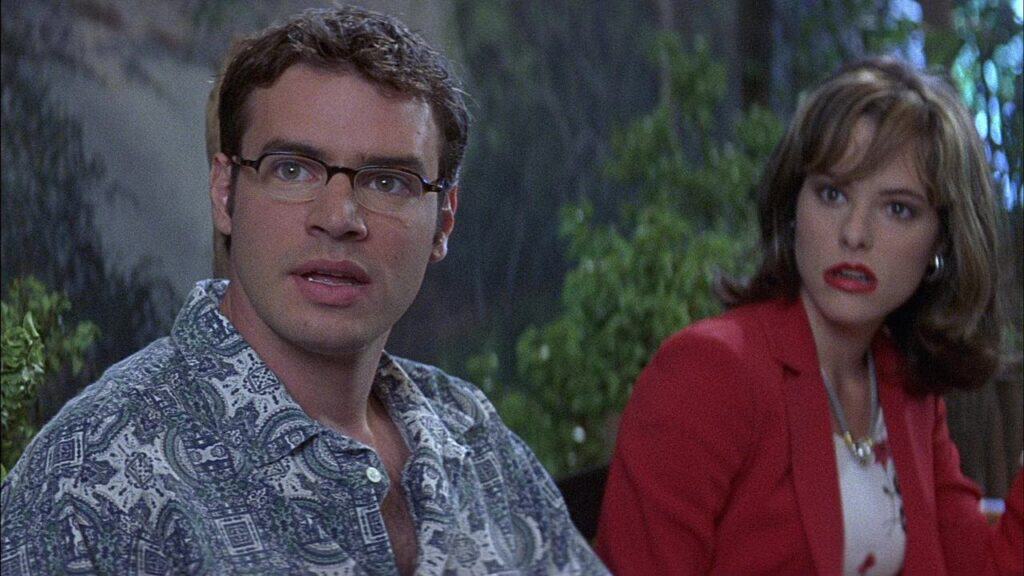
Kruger later admitted he struggled with the screenplay because he didn’t fully understand the established characters and their motivations. At one point, Craven had to intervene after Sidney Prescott was written more like Sarah Connor from Terminator 2: Judgment Day than the vulnerable but resilient character audiences knew from the earlier films.
According to Kruger, Craven reshaped scenes constantly and deserved a screenwriting credit because of how much work he contributed during production.
Constant Rewrites During Filming
Like Scream 2, the third film suffered from an unstable production schedule. New script pages often arrived the same day scenes were filmed. At one point, Kruger was even temporarily pulled off the movie by the Weinsteins to work on another project, leading writer Laeta Kalogridis to handle additional rewrites during shooting.
Unlike the previous films, the main cast members were not contractually obligated to return, though most were eager to come back. Neve Campbell faced major scheduling conflicts while filming Drowning Mona and the TV series Party of Five. Because of that, she was only available for three weeks of filming. As a result, Sidney Prescott’s role had to be significantly reduced, with many scenes reassigned to Gale Weathers and Dewey Riley.
David Arquette, Courteney Cox, and Liev Schreiber all returned for the sequel. Arquette and Cox had even cut their honeymoon short to join production.
Meanwhile, Jamie Kennedy returned briefly as Randy Meeks through a videotaped message explaining the “rules” of a horror trilogy. The filmmakers even considered revealing that Randy had somehow survived Scream 2.
The Massive Cast of Scream 3
The film featured an unusually stacked supporting cast, including:
- Scott Foley
- Jenny McCarthy
- Emily Mortimer
- Patrick Dempsey
- Parker Posey
- Lance Henriksen
Craven himself briefly considered playing producer John Milton before ultimately casting Henriksen.
The movie also continued the franchise tradition of celebrity cameos, with appearances by:
- Carrie Fisher
- Kevin Smith
- Jason Mewes
- Roger Corman
Oddly enough, Kate Hudson was originally cast in the film before being replaced for unknown reasons. Considering Hudson also starred in Almost Famous that same year, things probably worked out fine for her.
The Story of Scream 3
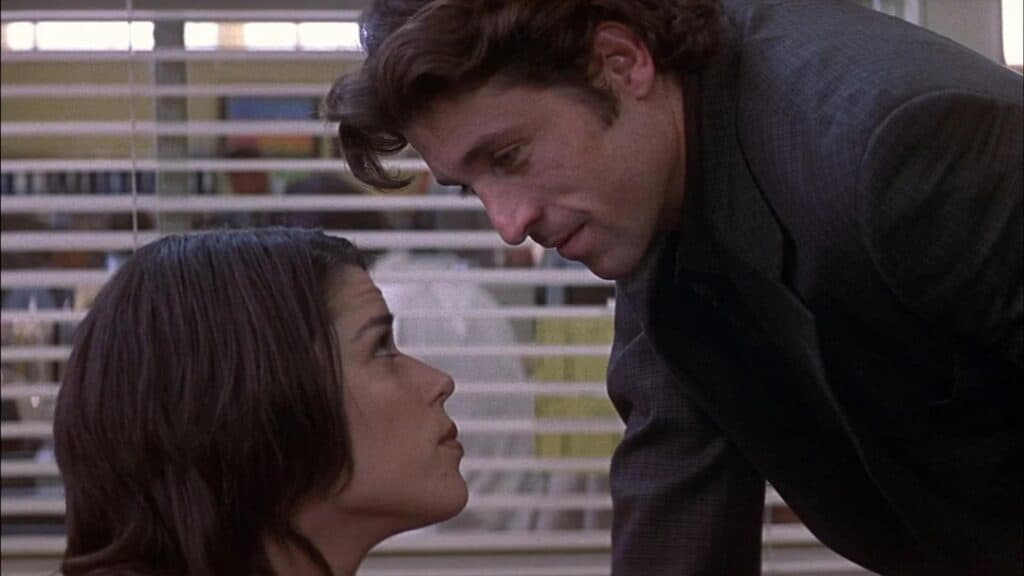
The plot follows the production of Stab 3, where actors begin dying in the same order as their characters in the screenplay.
Sidney Prescott has isolated herself from the public, but Ghostface attempts to lure her back into the chaos by tying the murders to the death of her mother, Maureen Prescott.
The film’s budget jumped significantly again, increasing from $24 million on Scream 2 to roughly $40 million for Scream 3. Filming took place from July through September 1999 around Los Angeles.
Production Problems and Last-Minute Changes
The production of Scream 3 was notoriously chaotic. Scenes changed constantly, sometimes after filming had already started.
During the opening sequence, Cotton Weary’s girlfriend originally appeared only as a corpse. Later rewrites changed the scene so she interacted directly with Cotton, forcing the crew to quickly cast actress Kelly Rutherford after production had already begun. That same scene was later reshot again because studio executives thought Ghostface looked too weak after Cotton physically overpowered him.
Another unusual example involved the recreation of the Prescott house set despite no scene originally requiring it. Once the set existed, a new sequence was written where Sidney encounters Ghostface on the Stab 3 soundstage.
The mansion seen during the finale may also look familiar to horror fans: it was the same location used as Hillcrest Academy in Halloween H20: 20 Years Later.
The Infamous Gale Weathers Bangs
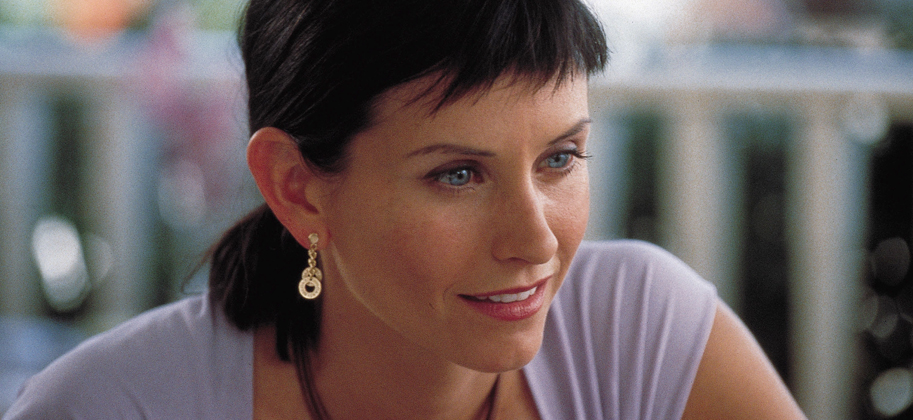
If there’s one thing people still remember about Scream 3, it might honestly be Gale Weathers’ bangs. Yes, they were fake. Even Courteney Cox reportedly thought they looked too short, though her co-stars reassured her at the time. History has judged otherwise.
The Original Second Killer Twist
One of the biggest changes involved Emily Mortimer’s character, Angelina Tyler. Originally, Angelina was intended to be the second Ghostface killer and Roman Bridger’s accomplice. She was also meant to be another former classmate of Sidney Prescott, with Roman projecting his obsession with Sidney and Maureen Prescott onto Angelina.
Why was the storyline removed? According to reports, producers were uncomfortable with the incest undertones implied by Roman’s relationship with Angelina. They also worried that having multiple killers again would create stronger comparisons to Columbine-era fears surrounding horror movies and violence.
As a result, Angelina’s killer reveal was removed entirely, leaving Roman as the sole Ghostface killer, the only solo killer in the franchise.
The downside is that the movie now has several moments where Roman seemingly teleports across locations to make the plot function.
The January 2000 Reshoots
Major reshoots took place in January 2000, just one month before the film’s release. Originally, Sidney defeated Roman fairly quickly during the climax.
The reshoots added:
- Sidney being shot
- A longer final confrontation
- Roman’s exaggerated “Terminator-style” survival thanks to a bulletproof vest
- Additional scenes involving Patrick Dempsey’s detective character, who previously disappeared from the story too abruptly
The ending became more action-heavy in an attempt to make the finale feel larger and more cinematic.
The Music of Scream 3
Composer Marco Beltrami returned once again to score the film. Like Scream 2, portions of Hans Zimmer’s Broken Arrow score were reused throughout the soundtrack.
Beltrami’s music remains one of the franchise’s most recognizable elements and plays a huge role in making the films feel cohesive despite their tonal differences.
MPAA Problems and Release
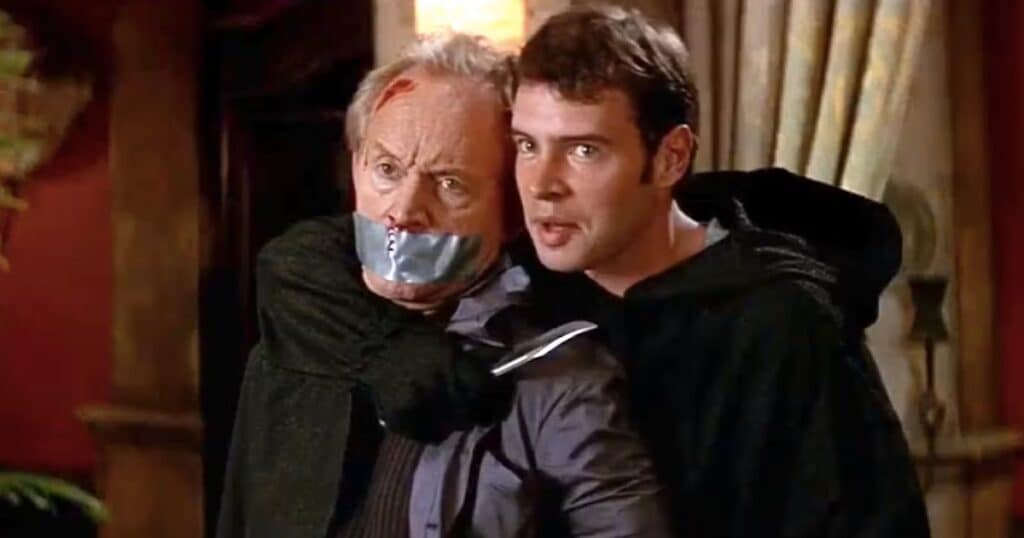
Despite toning down the violence, Craven still struggled heavily with the MPAA during post-production. The climate around horror movies had shifted dramatically after Columbine, and the director later admitted the experience frustrated him so much that he considered leaving horror filmmaking altogether.
Scream 3 released in the United States on February 4, 2000. The movie earned $34.7 million during its opening weekend and eventually grossed $161.8 million worldwide, slightly below its predecessors but still a financial success.
Critically, however, the response was much colder. The film currently holds a 45% rating on Rotten Tomatoes, with many critics arguing that the franchise had fallen back on the very horror clichés it once brilliantly deconstructed.
Why Scream 3 Remains So Divisive
Even though the movie succeeded financially, the mixed reaction effectively put the franchise on pause for more than a decade. The next installment, Scream 4, wouldn’t arrive until 2011, reuniting Williamson and Craven once again — though Ehren Kruger would still contribute rewrites.
There’s definitely an alternate version of Scream 3 that could have turned out very differently. Maybe Williamson’s full screenplay would have worked better. Maybe the movie would feel more complete if Neve Campbell had been available for the entire shoot.
Instead, what remains is arguably the black sheep of the franchise: a movie that sometimes feels like a parody of itself while still containing flashes of what made Scream great in the first place. It’s messy, strange, heavily compromised, and undeniably fascinating. And that, my friends, is what happened to Scream 3.
A couple of previous episodes of this show can be seen below. For more, check out the JoBlo Horror Originals YouTube channel—and don’t forget to subscribe!













The comment section exists to allow readers to discuss the article constructively and respectfully, focused on the topic at hand.
What’s Not Allowed