
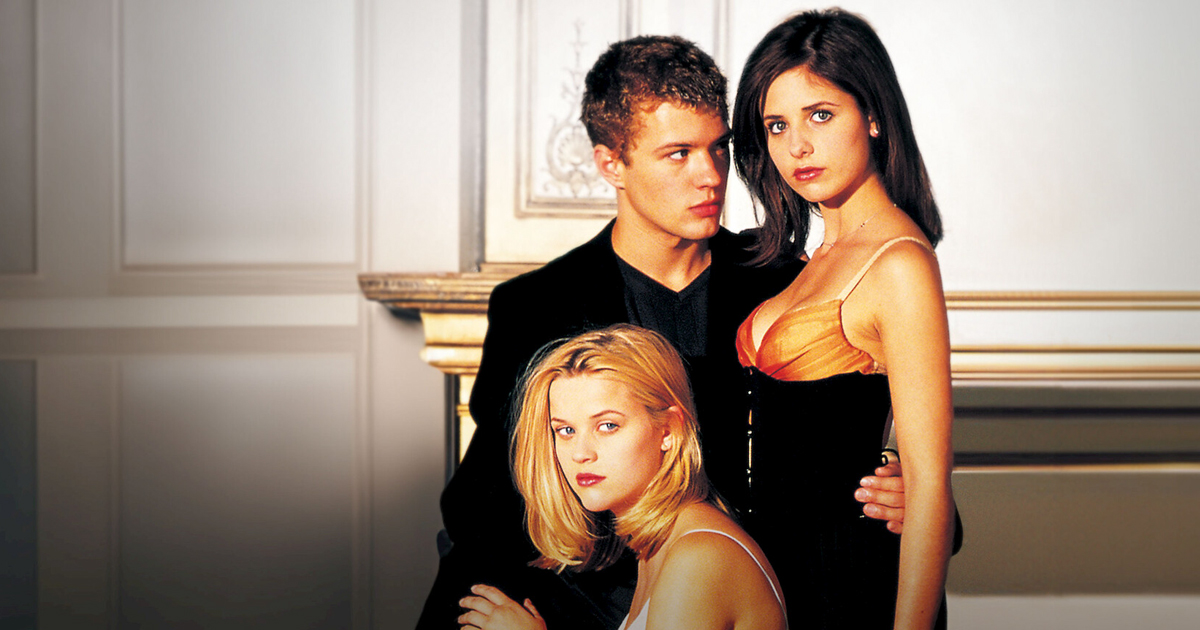

You can make a pretty strong case that 1999 was the absolute peak of 90s cinema. I mean, hell, let’s go down the list. We had The Matrix, Fight Club, American Beauty, The Sixth Sense, The Mummy…I could go on and on.
But if you were a teenager walking into a theater that year, your choices usually felt a lot more predictable. It was either some slasher riding the coattails of Scream where everyone wore too much hair gel, or a squeaky-clean rom-com starring the exact type of Abercrombie-draped douchebags you actively avoided in high school…looking at you, She’s All That.
Then in the spring of 1999, a film came along that felt like something you definitely didn’t want to watch with your folks.
This wasn’t a movie about making yourself pretty by removing your glasses or trying to hook up after the prom. Oh, no. This flick took a scandalous 1782 French novel, stripped off the corsets, wrapped it in head-to-toe Prada, and gave us a front-row seat to the toxic psychological warfare of elite Manhattan prep schools.
It completely blindsided suburban mothers who thought they were taking their kids to some harmless drama starring that nice girl from Buffy the Vampire Slayer. Instead, audiences were treated to a pitch-black web of targeted sexual conquests, ruthless blackmail, cold-blooded emotional manipulation, and a step-sibling story I’m sure many of you have seen on a website that requires age verification. It was a movie that walked right up to the line of a studio R-rating and confidently leaped right over it.
Today, we’re looking at how a first-time film director somehow turned a tiny budget, a risky script, a very attractive cast, into one of the most memorable teen movies of the 90s. There’s begging, bad behavior, Prada, puke, and one hell of an expensive song that somehow cost more than indie flicks.
So, grab the Valmont journal, unscrew that cross necklace, and let’s get into the twisted making of Cruel Intentions.
From Dangerous Liaisons to Dangerously Low Budget
The road to Cruel Intentions, oddly enough, runs through David Schwimmer, but not because he had anything to do with the movie itself. Before all this, Roger Kumble had been kicking around the idea of doing Dangerous Liaisons in high school after seeing Welcome to the Dollhouse.
But the thing that gave him enough heat to actually get a move on was his dark Hollywood play D Girl, which starred Schwimmer right at the height of Friends mania.
That suddenly made Kumble a guy people were paying attention to. Not “here’s a blank check” attention, but enough for Hollywood to start taking his calls. So, when D Girl closed, Kumble went to Mexico, locked himself in a hotel room, and wrote Cruel Intentions in twelve days.
At that point, the movie was still going by the working title Cruel Inventions, which isn’t terrible, but it does sound like the title of a straight-to-video erotic thriller you’d catch late at night on Cinemax after an episode of Hot Line with Shannon Tweed. You know what I’m talking about, 90s kids.
The script eventually made its way to producer Neal Moritz, who had just done I Know What You Did Last Summer. Moritz told Kumble he should meet two actors from that movie: Ryan Phillippe and Sarah Michelle Gellar. Once Sarah and Ryan were attached, the project had heat, Columbia came aboard, and suddenly Kumble had a movie.
There was just one little issue. Roger Kumble had never directed a movie before. He was just a theater guy being handed a major studio release.
On the first day of shooting, that reality hit Moritz hard. He looked around the set and realized they had a first-time film director, an R-rated teen movie about awful rich kids, and very little money to make any of it look expensive.
Then Moritz drove out of the studio lot, hit a divider, and blew out all four tires on his car. According to him, he took it as an omen for how the rest of the shoot was going to go.
Faking Manhattan on a Dime
The budget was only $10.5 million, which sounds like a decent amount until you remember this movie had to look like old-money Manhattan. Private schools. Townhouses. Country estates. Expensive clothes. All that jazz.
The production could only afford to shoot in New York for three days. So, they grabbed the essential exteriors, hit Central Park, got the Upper East Side flavor, and then ran back to California. Almost everything else was faked in Los Angeles and Pasadena, using mansions, historic homes, and smart production design to sell the illusion.
That same fake-it-until-you-make-it approach carried over to the wardrobe. Costume designer Denise Wingate had to make these kids look like they casually stepped out of a designer catalog, but she didn’t have designer catalog money.
- The Manchester Prep Style: She raided thrift stores, bought piles of navy blazers, and sewed gold buttons onto them by hand to create the look. Nothing says elite private school quite like Goodwill, am I right?
- The Prada Save: The one major stroke of luck was Ryan Phillippe. Right around production, he landed a Prada modeling campaign. Prada saw the promotional value and sent the production a lot of high-end clothes for him to wear. The rest of the movie was stretching every dollar.
Casting, Chemistry, and a Set That Got Way Too Real
When it came to casting, the studio wanted Katie Holmes for Annette Hargrove. It made sense on paper. Dawson’s Creek was huge, Holmes was everywhere, and casting her would have given the movie a safe TV-star glow. But Kumble didn’t want safe. He wanted Reese Witherspoon.
The problem was Witherspoon didn’t want the movie. She read the early script and saw Annette as too passive, too easily manipulated, and basically a walking purity symbol waiting to be ruined by a guy in nice pants. I mean, have you guys seen her in Freeway? This woman proves she doesn’t take any shit. So, she turned it down.
Kumble knew the movie needed her, so he and Neal Moritz set up a dinner meeting. When he realized he was losing her, Kumble went into full theater kid mode. In the middle of a fancy restaurant, he got down on his knees and begged her to take the part. It’s ridiculous, embarrassing, and honestly, kind of exactly what you want from the director of Cruel Intentions.
Witherspoon agreed, but only if she could help fix Annette. She worked with Kumble to sharpen the character, giving her more bite, more intelligence, and a stronger spine.
That choice matters because Annette can’t just be the good girl. She has to be smart enough to see through Sebastian and strong enough to make his usual tricks stop working. Without that, the whole movie collapses into creepiness without the emotional counterweight.
Real-Life Romance and On-Set Tension
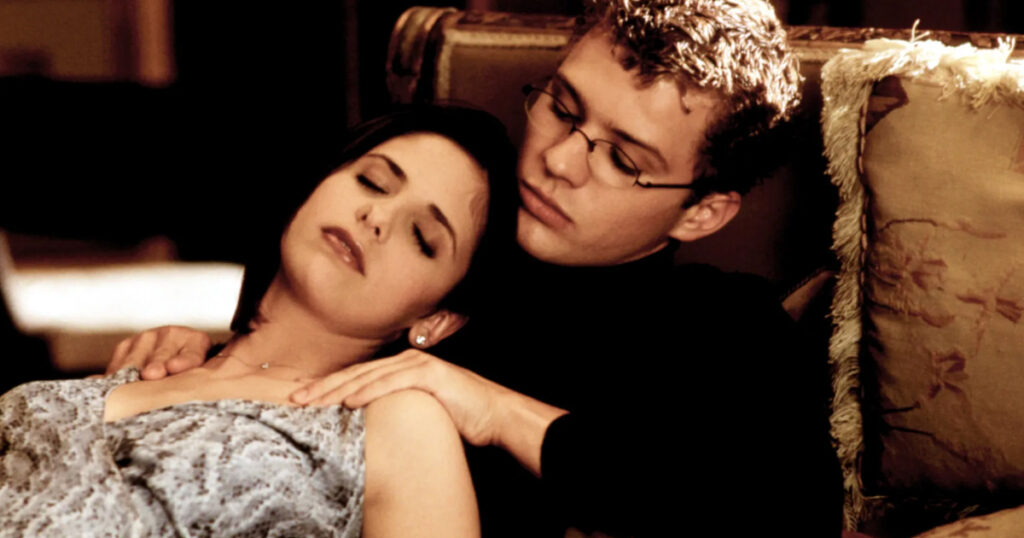
Witherspoon and Phillippe weren’t just playing love interests. They were together in real life and engaged at the time, which gives the movie a weird extra charge. You can feel it in the lighter scenes, but you really feel it when everything falls apart.
During the breakup scene, things got uncomfortably real. Witherspoon went off script and slapped him for real. It escalated things, and afterward, he actually threw up on set.
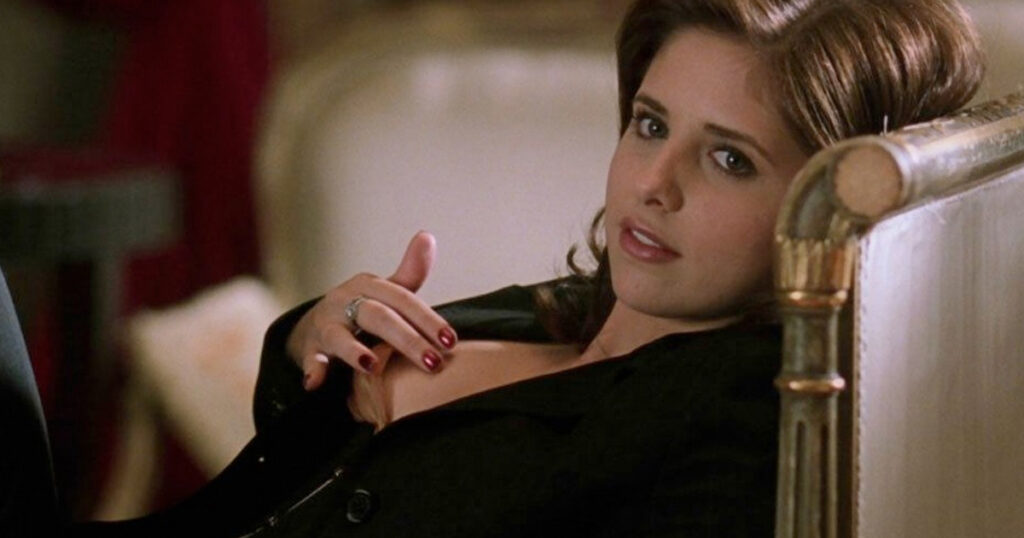
Sarah Michelle Gellar had a different battle. At the time, she was still known worldwide as Buffy Summers, plus a couple roles in Scream 2 and I Know What You Did Last Summer. Kathryn was the exact opposite. She was cruel, calculating, sexual, manipulative, and turns to Jesus when she needs a little pick-me-up.
Then there’s Selma Blair as Cecile, the sheltered fifteen-year-old pawn who gets pulled into Kathryn and Sebastian’s games. Blair was in her mid-twenties when she auditioned, which isn’t exactly unusual for Hollywood.
I mean, Gabrielle Union was around 26 when filming 10 Things I Hate About You, and you’ve got an almost 30-year-old unconvincingly playing a teenager in Outer Banks for crying out loud. So instead of doing a normal audition, Blair came in acting like an obnoxious brat and basically threw a fake tantrum. Kumble loved the bizarre comic energy and hired her on the spot.
Cecile could’ve been unbearable. Blair makes her funny, sad, clueless, and oddly sweet. She gives the movie some of its biggest laughs without breaking the darker tone.
The Sloppy Kiss and the Scandal
Cruel Intentions was released in March of 1999 and opened in second place with $13 million, right behind Analyze This. The marketing sold it as a sleek, sexy teen drama. A lot of parents probably thought it was a slightly edgier romance.
Then the movie started, and within minutes, everyone was dealing with incestuous step-sibling energy, sexual manipulation, blackmail, and a little dash of booger sugar thrown in the mix.
The R rating made it tricky to sell to the exact audience that wanted to see it. Yet, teen audiences still found it. That’s usually how you know a 90s movie has found its lane.
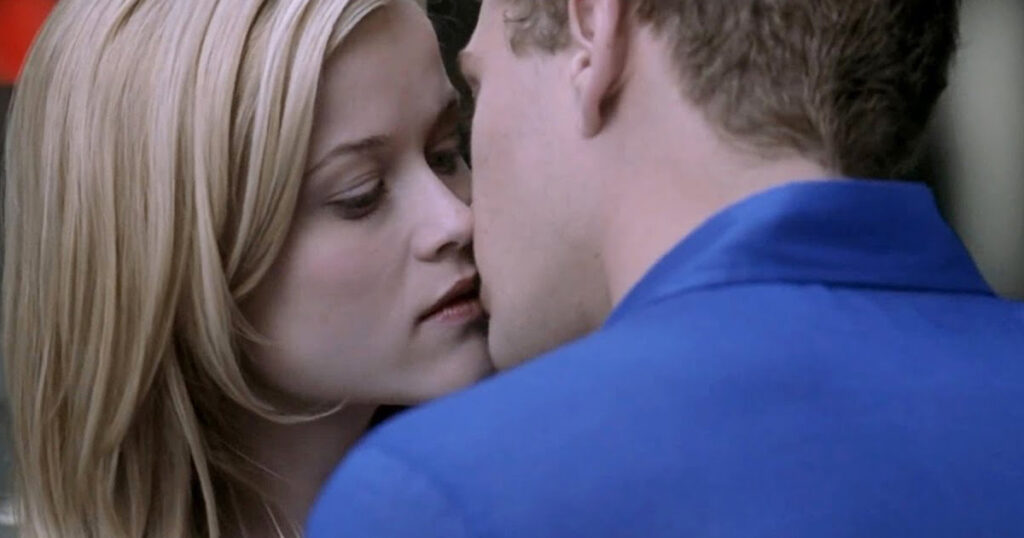
The most famous moment, of course, is the Central Park kiss between Kathryn and Cecile. Kathryn gives Cecile a lesson in how to kiss, and the scene instantly became the image everyone remembered. But the detail that turned it into an iconic moment was an accident.
When Gellar and Blair pulled away from each other, a visible string of saliva stayed between their lips. Kumble’s instinct was to cut and reset. He thought the take was too messy. Cinematographer Theo van de Sande stopped him, arguing that the sunlight hitting the moment made it look real, raw, and impossible to recreate.
He was right. That tiny accidental detail became an MTV staple, won Best Kiss at the MTV Movie Awards, and basically guaranteed thousands of teens rewinding their VHS tape. It was also hilariously spoofed in Not Another Teen Movie.
The Deleted Cheerleader Scene
To show just how shameless Sebastian was early on, Kumble shot a deleted scene where he talks to Annette on the phone while two naked cheerleaders oil themselves up in the background. Kumble wanted the joke, but he didn’t want to pressure a regular actress into nudity, so he hired 90s adult film star Alisha Klass.
According to Kumble, Klass was sweet and totally game, but the plan backfired when her comfort level on set became its own problem. His costume designer told him women on the crew were uncomfortable because Klass was hanging around catering in a see-through fishnet outfit and flashing people.
The scene was eventually cut after testing because it was too much for a quick gag, though Klass apparently left enough of an impression to hand out some of her DVDs to the grips. That’s how you network, folks.
But underneath the scandal, Kumble and his team were also making smart visual choices. One of the best examples is Cecile’s red hoodie when she goes to Sebastian’s apartment. It isn’t just a random wardrobe choice. It’s Little Red Riding Hood walking into the wolf’s den, except this version has a luxury apartment, mood lighting, and an alarming number of emotional problems.
That’s where Cruel Intentions gets a little more interesting. It looks like glossy teen trash, but it’s sharper than that. Yes, the movie is selling sex, scandal, and beautiful people doing awful things in expensive rooms. But it also understands why these people are awful, which keeps it from feeling empty. It’s not just shock for the sake of it. Not entirely, anyway. Let’s not pretend this movie isn’t having a great time being bad.
The Badass Soundtrack That Ate the Budget
You can’t talk about Cruel Intentions without talking about the soundtrack. It’s wall-to-wall late 90s, in the best possible way. Placebo kicks things off with “Every You Every Me,” Fatboy Slim shows up with “Praise You,” Blur’s “Coffee & TV” plays over the Central Park kiss, and the soundtrack also finds room for Marcy Playground, Aimee Mann, Faithless, Abra Moore, and Bare Jr. It’s one of those soundtracks where you hear the first few seconds of a song and you’re immediately back in the movie.
The big one, of course, is The Verve’s “Bittersweet Symphony.” That ending would not be the same without it. Kathryn’s image is destroyed, Sebastian’s journal is out, Annette drives away in his car, and the movie suddenly feels much bigger than the glossy teen drama it was sold as.
| Track Title | Cinematic Moment |
|---|---|
| “Every You Every Me” (Placebo) | The Opening Title Sequence |
| “Coffee & TV” (Blur) | The Central Park Kiss Lesson |
| “Colorblind” (Counting Crows) | Sebastian & Annette’s Intimate Scene |
| “Bittersweet Symphony” (The Verve) | The Iconic Final Escalator Reveal |
However, getting the song was not easy. Because of the Rolling Stones sample dispute involving Allen Klein, the rights were a mess, and clearing it reportedly cost close to $1 million. On a movie that cost around $10.5 million, that is a huge chunk of the budget for one song.
But Kumble and the team knew they needed it. They reportedly tried around 200 other tracks over the ending, but nothing landed the same way.
They had another music scramble with Sebastian and Annette’s big romantic moment. Kumble originally wanted “To Sheila” by The Smashing Pumpkins, but that didn’t work out, so the team landed on “Colorblind” by Counting Crows instead. And honestly, it’s hard to imagine anything else there now. That opening piano is tied to that scene forever.
Why the Movie Still Works
After all these years later, how did this movie become so iconic? The famous kiss helped. The soundtrack helped. The cast being ridiculously good-looking definitely helped. But Cruel Intentions stuck around because it isn’t just a parade of horny rich kids being awful. Under all the sex, money, and bad behavior, it’s about people who know how to use each other and get away with it because they know how to play the room.
Sebastian Valmont thinks he understands people because he knows how to manipulate them. He watches them, figures out what they want, then uses it against them. His journal is basically a trophy case. Ryan Phillippe plays him charming enough that you understand why people fall for him, but there’s always something empty underneath it.
Kathryn is worse because she’s smarter. She knows Sebastian can sleep around and still be treated like a legend, while she’d be ruined for doing the same thing. So, she builds this perfect image for herself. She’s the polished student leader, the good girl, the one everybody trusts. Meanwhile, she’s hiding coke in a crucifix and wrecking people’s lives without breaking a sweat.
That crucifix is one of the movie’s best details. It’s not just there to be shocking. It says everything about Kathryn. She literally wears her good-girl act around her neck while using it to hide the truth. That’s her whole game. She knows the image matters more than the person underneath it.
That’s also why her speech about double standards still lands. Kathryn isn’t wrong about the hypocrisy. She’s just awful in what she does with it. Instead of trying to beat the system, she learns how to use it better than everyone else. The journal fits right into that. It’s not really a diary. It’s proof, blackmail, scorekeeping, and bragging all in one place. Sebastian turns people into entries, which tells you everything you need to know about him.
Annette is the one person who throws him off because she won’t play the role he picked for her. Once Reese Witherspoon helped strengthen the part, Annette stopped being just the innocent girl Sebastian is supposed to corrupt. She became the person who forces him to look at himself.
That’s why his downfall works. The dude doesn’t suddenly become a saint. He just realizes too late that treating people like a notch on a bedpost still has consequences.
A Melodramatic, Unforgiving Third Act
The third act is where Cruel Intentions separates itself from a lot of late-90s teen movies. It doesn’t give Sebastian an easy way out. He tries to change, but the movie still makes him pay for what he’s done.
Kathryn’s lies lead to the fight between Sebastian and Ronald. Annette gets caught in the middle, falls into the street, and Sebastian finally does something that isn’t about himself. He pushes her out of the way of an oncoming car and takes the hit.
It’s pure melodrama, but it works. This was never building toward a neat happy ending. Sebastian dies on the street with all that rich fuckboy confidence stripped away, and his last move is giving Annette the key to his desk.
Then Kathryn gets hers, and it’s still the most satisfying part of the movie. She’s standing in the chapel, dressed for mourning, ready to play the grieving sister and take back control of the room. But Annette walks in and starts handing out copies of Sebastian’s journal.
No screaming. No big fight. No dramatic public meltdown. Just pages being passed from person to person. Kathryn built her whole life around controlling what people saw, and in a few seconds, she loses the thing she cared about most.
Failure as a Franchise
The ending sure as hell isn’t happy. Sebastian is dead. Annette is grieving. Cecile and Ronald were humiliated and used. But Kathryn loses, and in Cruel Intentions, that counts for a lot.
Naturally, because the movie made over $76 million worldwide on a $10.5 million budget, Hollywood kept trying to make more Cruel Intentions. Fox ordered a prequel series called Manchester Prep, but the show was canceled before it aired, and the footage was later reworked into Cruel Intentions 2, which went direct-to-video in 2001. It’s not good, but it does have Amy Adams before she became Amy Adams, playing a younger version of Kathryn Merteuil.
Cruel Intentions 3 followed in 2004, moving the games to college and mostly proving how hard this formula is to repeat. They even tried TV again in 2016, with NBC shooting a sequel pilot that brought Sarah Michelle Gellar back as Kathryn and followed Sebastian and Annette’s son after he finds his father’s journal. NBC passed. Prime Video finally got a Cruel Intentions series on the air in 2024, set at Manchester College, but that was canceled after one season, too.
At a certain point, the lesson is pretty obvious: you can copy the sex, the scheming, and the rich kids behaving badly, but you can’t fake the cast, the soundtrack, or the timing of the original.
Conclusion
More than twenty-five years later, Cruel Intentions remains iconic because it caught the right people at the right time. Roger Kumble was a first-time director with something to prove. The cast was hungry to shake off what people expected from them. The script turned Dangerous Liaisons into a late-90s teen movie without sanding off the cruelty. And the soundtrack makes the big moments land harder than they probably should.
It’s trashy, funny, mean, and smarter than it probably had to be. It knows what it is: Dangerous Liaisons for the MTV crowd, dressed in expensive clothes and enjoying every bad decision.
It doesn’t ask you to root for these people. It lets you watch them lie, scheme, flirt, destroy each other, and look fucking great doing it. It’s mean in a way teen movies usually aren’t allowed to be anymore, and that’s part of the fun. For all the bad behavior, expensive clothes, and late-90s needle drops, it still feels a little wrong to enjoy it this much. But, come on. That was always part of the fun.












The comment section exists to allow readers to discuss the article constructively and respectfully, focused on the topic at hand.
What’s Not Allowed