


In 1996, alien invasion and disaster movies were all the rage. Today’s film fits into at least one of those subgenres, but it never reaped the financial benefits of its peers. In fact, it fell flat at the box office. Maybe that’s because it took a quieter, more paranoia-fueled route to extraterrestrial life. Or maybe it’s because a massive alien invasion tentpole hit theaters just a month later and completely overshadowed it.
For years, it’s been reduced to “that weird, sweaty Charlie Sheen movie with the backward-legged aliens.” But there’s much more going on here if you revisit it with fresh eyes: scorpion murder, bathtub murder, and Charlie Sheen trying to escape an alien terraforming plant while wearing another human’s skin suit. Do you want to see the ruins, my friend?
This is what happened to The Arrival.
The Origins of The Arrival
The story began with The Fugitive and Waterworld writer David Twohy asking big questions about extraterrestrial life. Are they out there? If they are, how would we contact them? What if they’re already here?
Twohy immersed himself in radio astronomy and the SETI (Search for Extraterrestrial Intelligence) program, learning just how advanced real-world efforts had become. This inspired him to center the story around an astrophysicist, but not the stereotypical version.
He wanted someone relatable. Enter Charlie Sheen.
Charlie Sheen as an Astrophysicist?
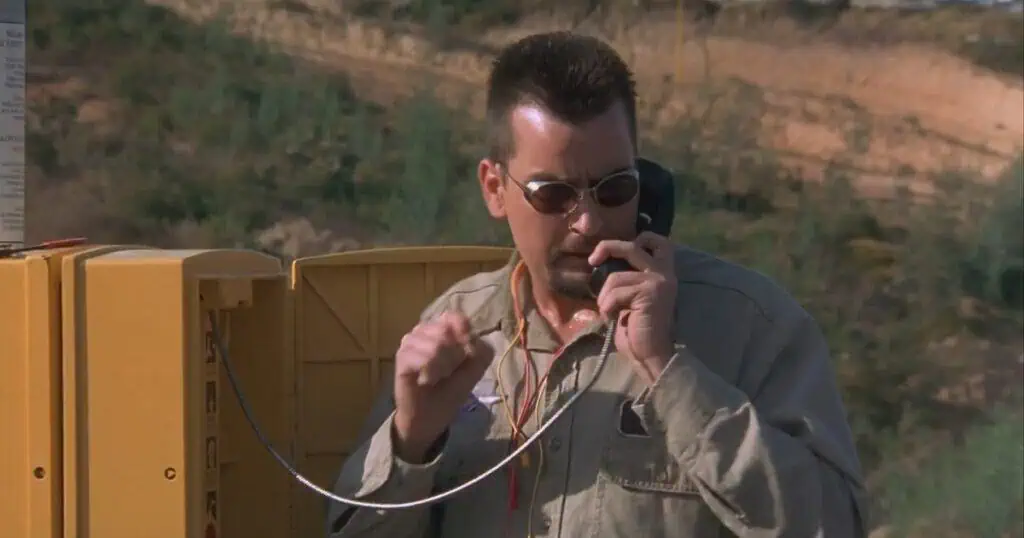
Sheen took on the role of Zane during a transitional period in his career. It was unconventional casting for a science-driven thriller, especially given his reputation at the time. He had previously worked with Twohy on Terminal Velocity, and despite initial doubts about whether Sheen could convincingly play an astrophysicist, the collaboration moved forward.
Twohy later praised Sheen as a hardworking actor who showed up ready to perform, even amid constant media attention and just weeks after his wedding. He wasn’t looking for an elitist scientist type, but someone grounded, someone who could be pushed into extraordinary circumstances.
Sheen, for his part, was drawn to the role because of the unpredictability. When dealing with something humanity has never encountered, there’s no “wrong” way to react. He also described Twohy as a “fascinating maniac,” appreciating his bold creative instincts.
Building a Relatable Sci-Fi Thriller
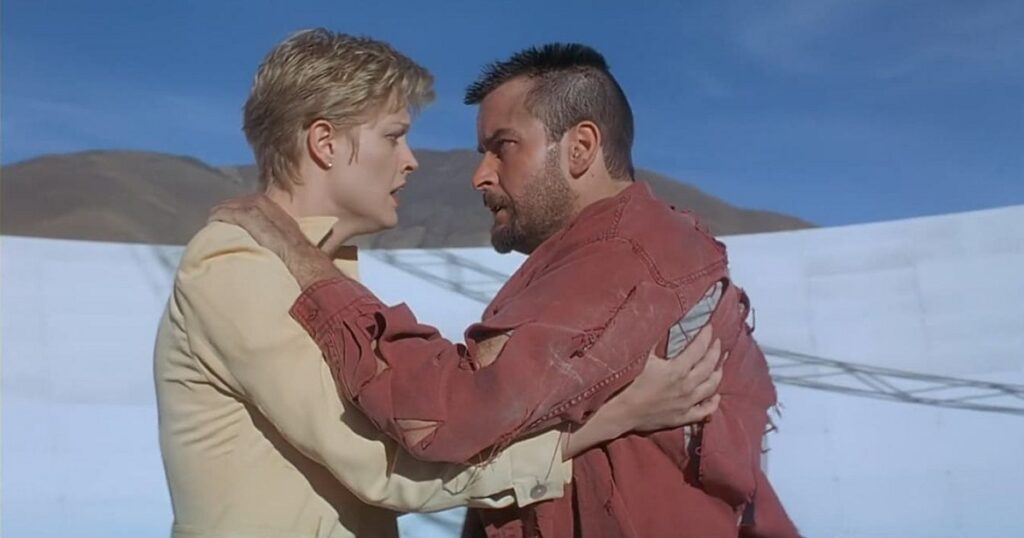
Concerned that audiences might struggle to connect with an isolated scientist, the filmmakers added a personal element: a complicated romantic relationship.
Teri Polo plays Char, a character designed to keep both Zane and the audience guessing. Her ability to remain emotionally neutral made her presence intriguing and unpredictable.
The supporting cast adds even more texture:
- Ron Silver as the suspicious businessman Gordian
- Richard Schiff as Zane’s uneasy colleague
- Lindsay Crouse as fellow scientist Ilana Green
- Tony T. Johnson as an overly trusting kid caught in the chaos
Visual Style and Locations
Cinematographer Hiro Narita brought a strong visual identity to the film, drawing from his work on Star Trek VI: The Undiscovered Country and The Rocketeer.
The film contrasts two distinct environments:
- Industrial blues and grays in California
- Vibrant, colorful settings in Mexico
This includes a classic chase sequence set during the Day of the Dead celebration, adding visual energy and cultural texture.
Practical Effects, Sci-Fi Concepts, and Pure Nightmare Fuel
The Arrival blends conspiracy thriller elements with ambitious sci-fi ideas, including an alien terraforming operation that echoes the unsettling tone of Fire in the Sky.
The production created a physical model of the alien factory, then enhanced it with computer-generated imagery. Other sequences, like Zane’s office being sucked into a mysterious device, combined practical effects, wind machines, and early CGI.
One of the film’s standout sequences is the bathtub assassination attempt. A multi-story set was constructed to simulate water crashing through floors, creating one of the most inventive and terrifying murder setups of the era.
The aliens themselves don’t rely on brute force. Their plan is slow and calculated: accelerate global warming until Earth becomes uninhabitable for humans. Subtle. Patient. Terrifying.
The Backward Legs That Haunted Everyone
If there’s one thing people remember, it’s the aliens’ backward-bending knees. It’s a simple visual trick, but deeply unsettling. The movement feels unnatural in a way that sticks with you.
Twohy explained that the design came from a need to keep the aliens humanoid while still making them feel wrong. Mission accomplished.
The creatures also feature a disturbing anatomical detail: a skull flap that opens to vent heat from their brains. Uncomfortable doesn’t even begin to cover it.
Creating the Aliens with Early CGI
Rather than relying on prosthetics, the filmmakers went all-in on CGI, which was still relatively new at the time. The process involved:
- Concept art development
- Sculpting an 18-inch physical model
- Scanning it into a computer
- Rendering and animating the digital version
While the results aren’t perfect, the effects hold up better than expected for 1996 and don’t detract from the film’s impact.
The Problem: Independence Day
Hovering over the entire production was one massive obstacle: Independence Day. While The Arrival offered a quieter, paranoia-driven take on alien invasion, Independence Day delivered explosive, crowd-pleasing spectacle.
One was thoughtful and strange. The other was a global event. And the timing couldn’t have been worse.
Box Office Disappointment
Released on May 31, 1996, with a $25 million budget, The Arrival struggled out of the gate:
- Opening weekend: under $5 million
- Worldwide total: around $14 million
Meanwhile, Independence Day went on to earn over $800 million globally.
Despite this, The Arrival still received a direct-to-video sequel, Arrival II, in 1998, which abruptly killed off Zane between films.
Critical Reception and Legacy
Critically, the film fared better than its box office suggests. It holds a 66% rating on Rotten Tomatoes, with many praising its inventive, paranoid take on the alien genre. Today, it’s remembered as a strange but compelling sci-fi thriller, one filled with bold ideas, eerie imagery, and moments that stick with you long after the credits roll.
And those backward legs? Still unforgettable.
Final Thoughts
The Arrival may not have reached the heights of its blockbuster contemporaries, but it remains a fascinating piece of ‘90s sci-fi. It’s weird. It’s ambitious. It’s unsettling. And it’s absolutely worth revisiting.
That, my friends, is what happened to The Arrival.







The comment section exists to allow readers to discuss the article constructively and respectfully, focused on the topic at hand.
What’s Not Allowed