
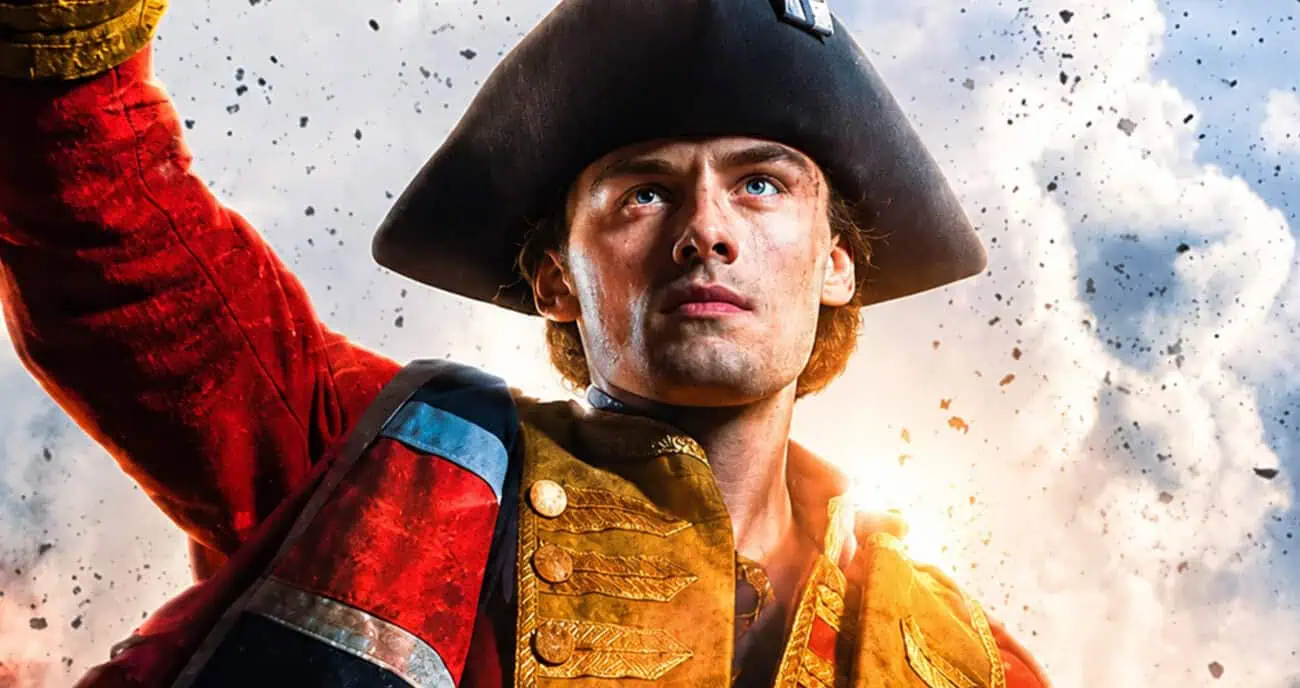
PLOT: A young George Washington faces war, betrayal, and impossible choices that will forge a leader.
REVIEW: It’s a little surprising George Washington hasn’t had more movies built around his younger years. Young Washington tries to fix that by looking past the legend and focusing on the guy before we turned his head into a mushroom on a dollar bill. Director and co-writer Jon Erwin skips the old cherry-tree myth and centers the story on Washington in his 20s, years before the Revolution. At this point, he still wants status, military respect, and approval from people who don’t fully see him as one of their own.
That should be fascinating. Before the powdered wigs, statues, and founding father mythology, Washington was a young man with ambition, insecurity, romantic longing, military dreams, and a habit of stepping into situations much bigger than himself. Instead, Young Washington sands down the edges to play it safe. What’s left is about as dull as the 1995 quarter I use for the carts at Aldi.
The movie follows Washington (William Franklyn-Miller) from childhood into young adulthood, beginning with the death of his father and the pressure placed on him by his mother (Mary-Louise Parker). George wants more than farm life. He wants status, education, military glory, and acceptance from the people he sees as important. His older half-brother helps shape that view, and before long the film moves him into colonial politics, land surveying, courtship, and war.
Much of the story involves Washington trying to impress powerful men. He wants to win over Lord Fairfax (Kelsey Grammer), while developing feelings for Sally Cary (Mia Rodgers). He wants Virginia’s governor Robert Dinwiddie (Ben Kingsley) to take him seriously. And he also wants to prove himself within the British military system, even though his colonial background keeps him from full acceptance. That’s the most interesting idea in the movie: before Washington became a symbol of American independence, he desperately wanted validation from the empire he would later help defeat.
Unfortunately, Young Washington rarely digs deep enough into that irony. The movie tells us George is ambitious and flawed, but it doesn’t always let us feel it. It hits the expected beats, including the Battle of Fort Necessity and the later conflict at Fort Duquesne. But it often feels more like an illustrated history lesson than a dramatic story.
The performances aren’t bad, which is part of what makes the movie hard to fully dismiss. Nobody is embarrassing themselves here. Parker brings some steel to Washington’s mother, even if the role doesn’t give her enough to work with. Kingsley and Andy Serkis show up and do what you’d expect veteran actors to do in a movie like this. However, they just deserve better. Grammer is also very much Kelsey Grammer, which depending on the scene, either works fine or makes you very aware that Kelsey Grammer has entered the building.
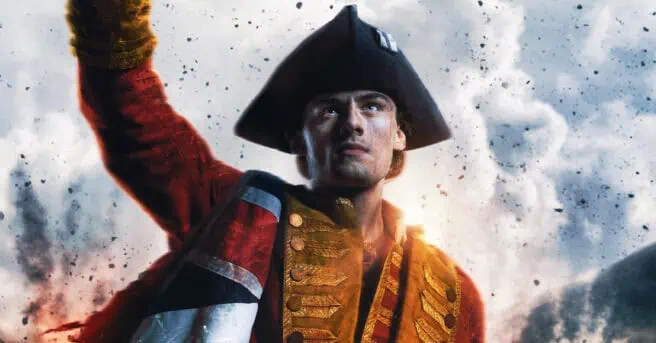
Franklyn-Miller is fine in the lead, but he’s wildly miscast. He has presence, sure, but not quite the right presence for George Washington. He struts through the movie looking less like a future general and more like he’s on his way to a Twilight reboot. There’s a runway-model gloss to him that the film never really overcomes. Washington may be an enduring model for our country, but not a model for Burberry.
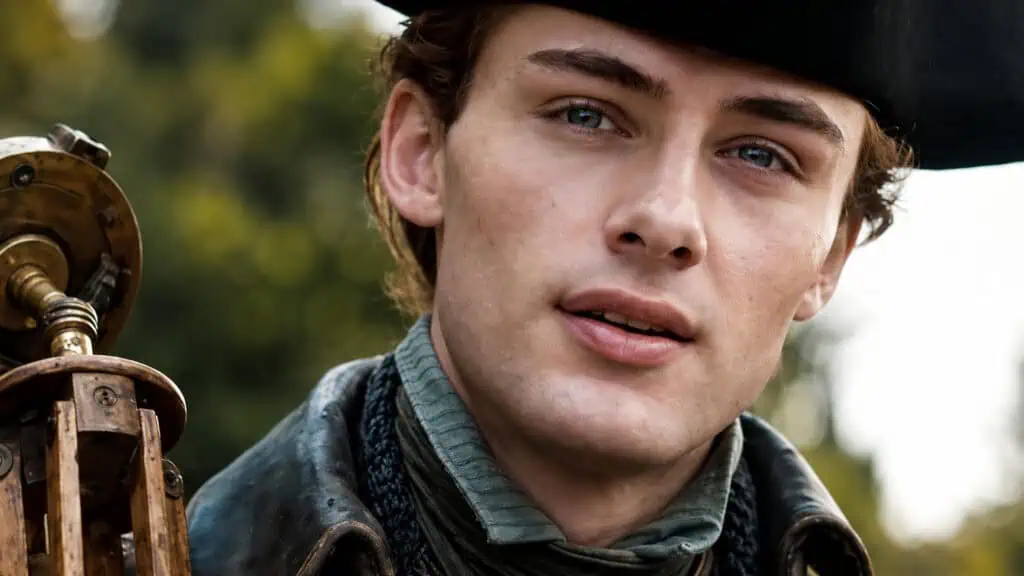
On a technical level, Young Washington is a mixed bag. The costumes are easily one of the film’s strongest elements. They give the movie texture, period detail, and a real sense of place. The coats, uniforms, dresses, and military wear all look carefully considered without becoming distracting. It’s one of the few areas where the movie really does feel rich and alive.
The score also stands out, though maybe not always in the way intended. There’s a whimsical, sweeping quality to the music that makes the whole thing feel like a movie from the 90s. Not in a bad way, exactly. It has that earnest, old-fashioned, family historical drama tone. Sometimes that charm helps. Other times, it makes the movie feel even more naive. Like it’s nudging you to feel inspired by scenes that haven’t done enough work to earn it.
The battle sequences are also fine. They have enough clarity and energy to keep the movie from completely flatlining. They also give the story a much-needed sense of danger. But then the generative AI shows up, and it sticks out like a sore thumb. It doesn’t just look bad in the usual visual effects way. It feels lazy. In a movie already fighting to feel human and alive, those moments pull you right out.
And that’s really the problem with Young Washington. It’s not incompetent or some laughable disaster. The film isn’t even painful to watch. It’s just bland. While it clearly wants to be The Patriot, Young Washington has the energy of one of those classroom TV-cart movies that felt like a treat until you realized the actual movie was so dry that even getting out of schoolwork couldn’t save it.
There’s a better movie buried inside this one, a sharper version about a young man chasing status, making mistakes, falling short, and slowly becoming something more complicated than a national symbol. But this version plays it too safe to be compelling and too dull to be memorable.
As a piece of historical storytelling, it gets the job done with some exaggerations. As a movie, it mostly just sits there looking nice. It’s the kind of thing you put on during a quiet Sunday afternoon when you want to feel mildly productive before accidentally taking a nap.
















The comment section exists to allow readers to discuss the article constructively and respectfully, focused on the topic at hand.
What’s Not Allowed