

The modern film director is often treated as a primary author of a film, with cultural status that can rival or exceed that of actors. This reflects the influence of auteur theory in modern film criticism. However, critical reputation does not always align with consistent artistic output, and sometimes a filmmaker is nowhere near as good as they are credited to be. Some directors are widely praised while still facing recurring criticism regarding their consistency, narrative depth, or stylistic repetition.
Now, I am not saying any of the filmmakers on this list are bad directors, but they are far more overrated than they deserve. In this context, “overrated” means: a filmmaker whose reputation is perceived by some critics or audiences as exceeding their consistent creative output.
Editor’s Note: This comes from the (beloved) writer of our UnPopular Opinion column, so some of his takes a a little spicy, even among our staff!

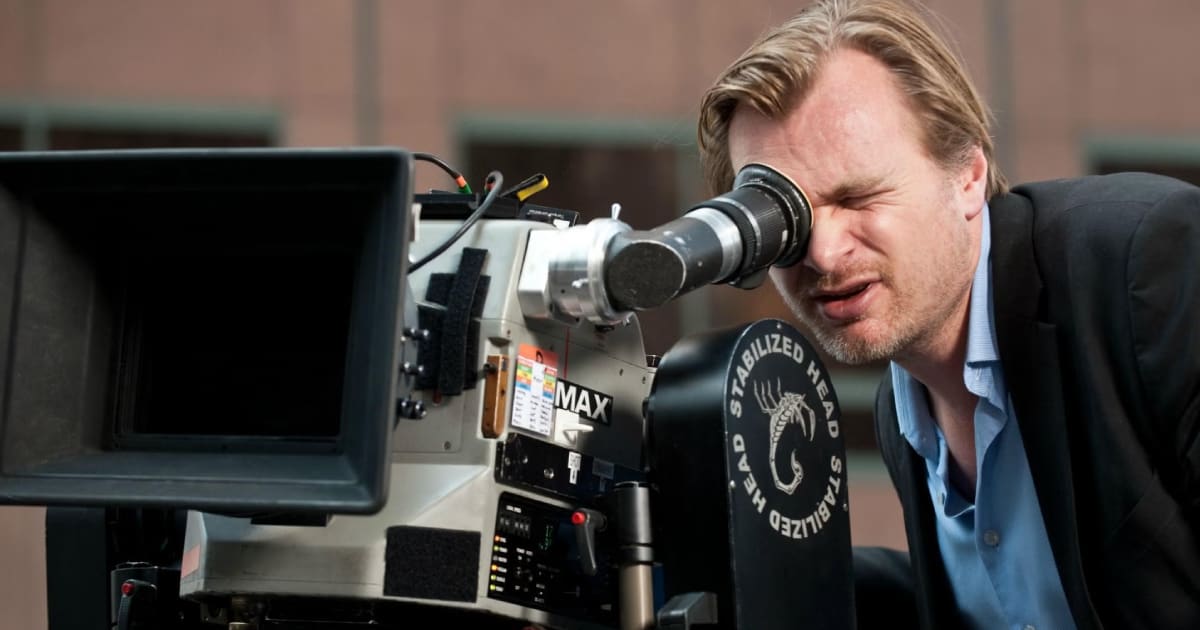
1. Christopher Nolan
Christopher Nolan is widely regarded as one of the most influential mainstream filmmakers of the 21st century. He is best known for high-concept films like Inception, The Dark Knight, and Interstellar.
Why Christopher Nolan is considered overrated
Christopher Nolan is often described as overrated due to recurring criticism of exposition-heavy dialogue and emotional distance in character writing. Films like Interstellar and Tenet are frequently cited examples of narratives where conceptual complexity is prioritized over emotional clarity. Critics often argue that Nolan’s reputation as a “genius filmmaker” is amplified by fan discourse and critical branding rather than consistent emotional storytelling.
Counterpoint
Supporters argue that Nolan is one of the most structurally innovative filmmakers in mainstream cinema. He is credited with combining blockbuster filmmaking and non-linear narrative structures in films like Memento and The Dark Knight.
Why He’s Ranked Here: The Dark Knight is a masterpiece. I really love Inception. The Prestige is underrated and Memento is awesome. But Tenet didn’t make a lick of sense. Interstellar and Dunkirk are exercises in tedium from a filmmaker who thinks he is the greatest gift to the medium since Stanley Kubrick. I have no doubt that Christopher Nolan will turn out at least another masterpiece or two in his career, but right now we are treating him as if he walks on water because he made two okay Batman movies and one brilliant one. Even his Best Picture winner, Oppenheimer, was too cold, too distant, and just not nearly as good as everyone makes it out to be.

2. Ridley Scott
Ridley Scott is known for influential films like Alien and Blade Runner, which helped define modern science fiction cinema.
Why Ridley Scott is considered overrated
Ridley Scott is often criticized for inconsistent storytelling quality in his later filmography. While films like Gladiator are well received, critics frequently argue that many later projects emphasize visual design over narrative cohesion. The contrast between theatrical cuts and director’s cuts (notably Kingdom of Heaven) is often cited as evidence of uneven editorial execution.
Counterpoint
Supporters argue that Scott remains one of cinema’s most influential visual world-builders. His films are frequently praised for production design, scale, and immersive environments.
Why He’s Ranked Here: Ridley Scott’s last great movie was Kingdom of Heaven, but only the director’s cut. After a career that started out with classic after classic, Scott’s output has never quite lived up to Blade Runner or Alien. Sure, Gladiator is good and I like Prometheus, but most of Scott’s films carry more acclaim than they deserve. While you have to give Scott credit for being able to re-film All the Money in the World in a short window to maintain a release date, that speaks more to the director’s ability to meet deadlines rather than make a film the way it should be made. I can make a sandwich in half the time as someone else, but that doesn’t mean it will taste as good.

3. Steven Spielberg
Steven Spielberg is one of the most commercially successful and influential directors in film history. He defined modern blockbuster cinema with films such as Jaws, E.T., and Schindler’s List.
Why Steven Spielberg is considered overrated
Critics argue that Spielberg’s post-2000 filmography is less consistent than his earlier work. Films like Ready Player One and War of the Worlds are sometimes described as visually strong but emotionally less impactful than his earlier classics. Some critics argue that Spielberg’s reputation is disproportionately anchored in his 1970s–1990s output.
Counterpoint
Supporters argue that Spielberg continues to demonstrate strong technical craftsmanship and emotional storytelling. Films like Munich, Minority Report, and A.I. Artificial Intelligence are frequently cited as evidence of sustained artistic relevance.
Why He’s Ranked Here: Steven Spielberg used to be a great director. For almost three decades, there was no one better. But, for the last thirty years, Spielberg has fallen into mediocrity and released film after film that are shells of his former brilliance. Since 2000, Spielberg has directed 15 films and only Munich, A.I., The Fabelmans, and Minority Report deserve to be remembered. Every time Spielberg makes a new movie, I hope against hope that it will be a return to form, but I am starting to think that age is catching up to him and he may not have much left to give. That said, Disclosure Day may well prove us wrong.

4. Clint Eastwood
Clint Eastwood is known for a long career as both actor and director, with films like Unforgiven and Mystic River.
Why Clint Eastwood is considered overrated
Critics often argue that Eastwood’s directing style is minimalistic to the point of being indistinct. While he has directed acclaimed films, a significant portion of his filmography is considered stylistically uniform and lacking in formal directorial signature.
Counterpoint
Supporters argue that Eastwood’s strength lies in efficiency and restraint. He is widely respected for producing consistent, character-driven dramas over multiple decades.
Why He Ranks Here: Clint Eastwood has never been a great director. Over the last fifty-five years, Eastwood has helmed over forty movies. Of those, maybe one or two actually stand out as worthy of being called masterpieces. Aside from Unforgiven and Mystic River, the majority of Eastwood’s films are workmanlike and feel like they could have been directed by virtually anybody. Without that distinctiveness, there really is nothing special about Clint Eastwood as a filmmaker. There was talk that Juror #2 could be his last movie, but for right now I still consider him to be a working director.

5. Tim Burton
Tim Burton is known for a distinctive gothic visual style seen in Beetlejuice, Edward Scissorhands, and Batman.
Why Tim Burton is considered overrated
Critics argue that Burton’s visual style has become repetitive over time. Films like Alice in Wonderland and Planet of the Apes are frequently cited as examples where aesthetic style outweighs narrative originality.
Counterpoint
Supporters argue that Burton’s visual identity remains one of the most recognizable in modern cinema. Films like Big Fish and Ed Wood are often cited as evidence of emotional and tonal range beyond his gothic aesthetic.
Why He Ranks Here: Tim Burton was once a fringe filmmaker who made bizarre movies like Beetlejuice and Edward Scissorhands. Once he made Batman, Burton reached a new echelon in his career but he has never quite matched that height. Sure, Big Fish and Ed Wood show he still has the chops to make a great movie, but too often are we saddled with the mediocrity of Alice in Wonderland and Planet of the Apes. Not even the director himself is a fan of Dumbo, which was like a cookie cutter studio film trying to look like a Tim Burton movie rather than something the filmmaker deeply cared about making. However, it can’t be denied that Beetlejuice, Beetlejuice was a major return to form.

6. Michael Bay
Michael Bay is known for action-heavy filmmaking, including The Rock, Armageddon, and the Transformers franchise.
Why Michael Bay is considered overrated
Critics argue that Bay’s later films prioritize spectacle over narrative coherence. The Transformers series is frequently cited as an example of visual overload and inconsistent storytelling clarity.
Counterpoint
Supporters argue that Bay is highly effective at staging large-scale action sequences and kinetic set pieces. Films like Pain & Gain demonstrate his ability to work in more controlled, character-focused storytelling.
Why He Ranks Here: If you take a good look at the career of Michael Bay, you’ll find that he has really only directed a couple of truly great movies. Most of his work has been good or serviceable, but with his Transformers movies he turned destruction and explosions into something kind of boring. The Rock is great and I enjoy Armageddon, but since Bad Boys II, Bay has not made a movie that has not looked like everything he already made. A case can be made for Pain & Gain and even 13 Hours, but they just don’t have the energy or visceral nature of Bay’s early movies.

7. James Cameron
James Cameron is known for technically innovative films like The Terminator, Aliens, and Titanic.
Why James Cameron is considered overrated
Critics argue that Cameron’s films prioritize technical innovation and spectacle over narrative complexity. Avatar and Titanic are frequently cited as visually groundbreaking films with relatively simple story structures.
Counterpoint
Supporters argue that Cameron uniquely combines technological innovation with mass-market storytelling success. He is widely regarded as one of the most commercially successful directors in film history.
Why He Ranks Here: James Cameron is a legendary director thanks to his brilliant work on the first two Terminator films and True Lies. But with Titanic, he suddenly was being hailed as the greatest filmmaker of the modern era. Titanic is vastly overrated, as is Avatar. Both films are technically proficient and revolutionized filmmaking, but they are hollow emotionally. The Avatar sequels continued to raise the bar for cinematic achievements, but a great director must balance the technical with storytelling and acting. Cameron has not done that effectively in decades.

8. Ben Affleck
Ben Affleck is known for directing Argo, The Town, and Gone Baby Gone.
Why Ben Affleck is considered overrated
Critics argue that Affleck’s directorial reputation peaked quickly and may be disproportionately influenced by awards recognition. Some view Argo as a film that benefited from timing, accessibility, and industry consensus rather than long-term auteur distinction.
Counterpoint
Supporters argue that Affleck is highly effective in crime and procedural storytelling. His work is often praised for strong pacing and grounded realism.
Why He Ranks Here: Ben Affleck is not a bad director, he just isn’t a great director. With Argo winning all sorts of awards, it was easy to bestow laurels of brilliance on Affleck. Argo is a case of a film hitting all the right notes at the right time. Gone Baby Gone was a fine example of a filmmaker on the rise and The Town showed definite promise, but Live by Night shows what can happen when you no longer live by checks and balances and don’t self edit. At least Air was a strong rebound. Affleck may have gotten too much acclaim too soon and now I am afraid he thinks more of his burgeoning skills than he should.

9. Zack Snyder
Zack Snyder is known for highly stylized films such as 300, Watchmen, and his DC Extended Universe entries.
Why Zack Snyder is considered overrated
Critics argue that Snyder’s visual style can overwhelm narrative clarity. His DC films are frequently cited as examples of tonal heaviness and uneven character development.
Counterpoint
Supporters argue that Snyder has a strong and recognizable visual auteur style. His films are often noted for mythic storytelling, stylized cinematography, and symbolic imagery.
Why He Ranks Here: Zack Snyder has a distinctive style to his films that make them uniquely his own. Snyder, however, does not work well in moderation. When going balls to the wall, like with Watchmen and Sucker Punch, he comes out to play. But with his work in the DCEU, he delved too deeply into a dark tone and grim universe. There was not enough of the fun that can be seen in his earlier work, something I hope he focuses on more as the DCEU recedes further in his rearview. And give us something better than Army of the Dead and Rebel Moon, please.
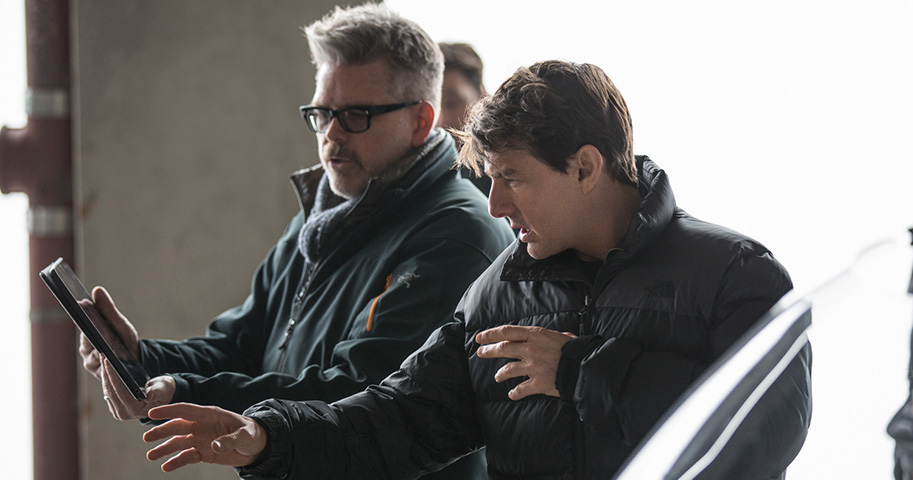
10. Christopher McQuarrie
Christopher McQuarrie is best known for directing Mission: Impossible – Rogue Nation and Fallout.
Why Christopher McQuarrie is considered overrated
Critics argue that McQuarrie’s directorial identity is less distinctive than his reputation suggests. Some suggest the success of the Mission: Impossible films is heavily influenced by franchise structure and Tom Cruise’s stunt-driven production approach.
Counterpoint
Supporters argue that McQuarrie excels at narrative clarity and action choreography integration. His films are frequently praised for pacing and coherence in large-scale action storytelling.
Why He Ranks Here: As a director, Christopher McQuarrie is one of the best screenwriters in Hollywood. No, that was not a typo. McQuarrie has a writer’s eye for storytelling that does not quite put him in the same company as some of the most iconic and legendary filmmakers of all time. For as good as his first two Mission: Impossible movies were, that was more due to Tom Cruise’s unyielding dedication to stuntwork. Any filmmaker could have stepped in to direct those movies and they would have still been good. McQuarrie doesn’t do much to distinguish himself as a director, and he managed to drive the M:I franchise into the ground with his second two movies, especially the bloated, dull, and dreary The Final Reckoning.
Frequently Asked Questions
Who is the most overrated director according to this ranking?
Christopher Nolan ranks first on this list. While I have praise for The Dark Knight, Inception, Memento, and The Prestige, I argue that Nolan’s reputation has outpaced the emotional effectiveness and consistency of some of his later work.
Why is Steven Spielberg included on a list of overrated directors?
The ranking argues that Steven Spielberg’s reputation is heavily rooted in the extraordinary run of films he directed between the 1970s and 1990s. While I still admire films like Munich, A.I. Artificial Intelligence, Minority Report, and The Fabelmans, I believe Spielberg’s recent output has not consistently matched the quality of his earlier classics.
Why is James Cameron considered overrated by some critics?
Some critics argue that James Cameron’s greatest strengths are technical innovation and large-scale spectacle rather than character-driven storytelling. Films like Titanic and Avatar are often praised for their visual achievements while also drawing criticism from viewers who find their narratives comparatively simple.
Does overrated mean bad?
No. Every filmmaker on this list has directed successful, influential, or critically acclaimed films. In this article, “overrated” refers to a perceived gap between a director’s reputation and the consistency of their overall body of work.
What criteria were used for this ranking?
The ranking is based on the author’s personal assessment of each filmmaker’s reputation, critical standing, cultural influence, and long-term filmography. The focus is not on commercial success but on whether the acclaim surrounding a director exceeds what I believe their work merits.
Which director on the list has the strongest visual style?
The article identifies Zack Snyder, Tim Burton, and Ridley Scott as filmmakers with especially distinctive visual approaches. Even where I criticize their work, I acknowledge that each has a recognizable artistic identity.
Are any of these directors still capable of making great movies?
Absolutely. The ranking does not suggest that any of these filmmakers are finished creatively. Several entries specifically acknowledge that directors such as Christopher Nolan, Ridley Scott, Steven Spielberg, and James Cameron could still produce future masterpieces despite the criticisms discussed in the article.
Why do film fans disagree so strongly about “overrated” directors?
The term “overrated” is inherently subjective. Some viewers prioritize technical skill, visual style, or commercial success, while others value storytelling, character development, or consistency. As a result, a director considered overrated by one movie fan may be viewed as a cinematic genius by another.













The comment section exists to allow readers to discuss the article constructively and respectfully, focused on the topic at hand.
What’s Not Allowed