



Let’s face it – Alien movies are not created equal. There have really only ever been two flawless films in the franchise, with the rest all having moments of genius (well – most of them) but none measuring up to the first two movies in the saga. All of this makes Alien movie rankings quite controversial, as it’s a divisive topic.
So, how does our Alien movies ranked list shape up? Let’s dive right in, shall we?
| Rank | Film | Horror Style | Suspense Level | Action Level |
|---|---|---|---|---|
| #1 | Aliens (1986) | Military sci-fi action | 8/10 | 10/10 |
| #2 | Alien (1979) | Claustrophobic horror | 10/10 | 5/10 |
| #3 | Alien: Romulus (2024) | Survival horror | 9/10 | 8/10 |
| #4 | Alien 3 (1992) | Bleak prison horror | 8.5/10 | 5/10 |
| #5 | Prometheus (2012) | Cosmic mystery horror | 7/10 | 6/10 |
| #6 | Alien: Covenant (2017) | Philosophical horror | 7.5/10 | 7/10 |
| #7 | Alien: Resurrection (1997) | Grotesque sci-fi horror | 6.5/10 | 7/10 |
| #8 | Alien vs. Predator (2004) | PG-13 crossover action | 5/10 | 7/10 |
| #9 | AVP: Requiem (2007) | Urban creature horror | 5.5/10 | 6/10 |
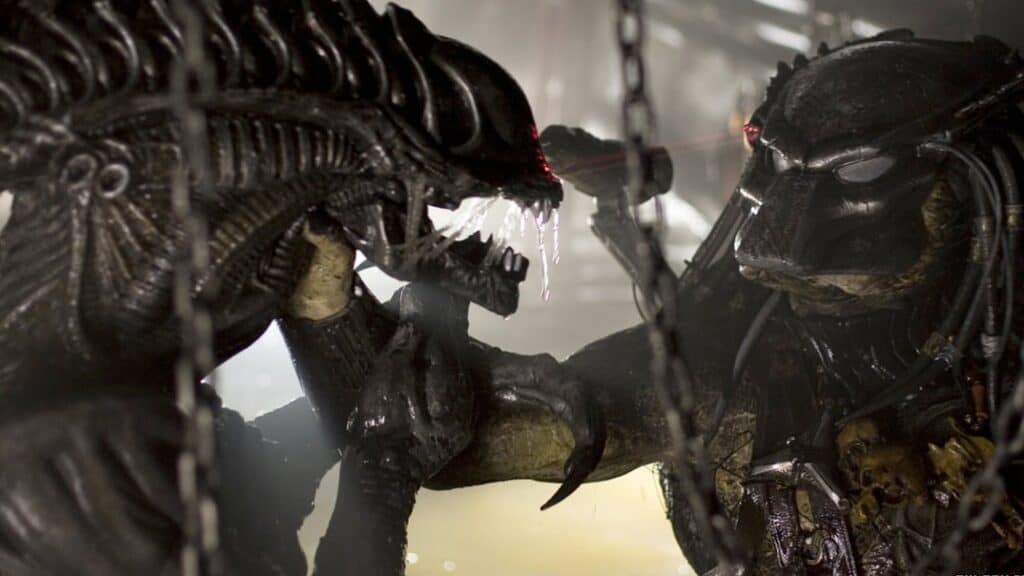
Alien Vs Predator: Requiem (2007)
- Ranking Position: #9
- Subgenre: Urban creature horror
- Primary Strength: Expanding the xenomorph threat into a small-town setting
- Biggest Weakness: Dark cinematography and underdeveloped characters
- Standout Element: The idea of a xenomorph outbreak on Earth
- Why It Works: The movie occasionally captures grim, chaotic survival horror energy
- Why It Doesn’t: Weak visual clarity and disposable protagonists undermine tension
- Franchise Impact: Widely considered the low point of both franchises
I honestly couldn’t believe Fox had the gall to release this as a legit entry into the franchise in 2007. At the time, the studio had a bad reputation for putting out half-baked and cheap genre fare (made even more frustrating by how many were based on top-notch properties). This was the nadir of both the Alien and Predator franchises. It had a terrible cast of characters and ruined the long-awaited prospect of letting a xenomorph loose in an urban setting. Adding insult to injury was the terrible cinematography and shaky-cam aesthetic (which was all the rage back then).

Alien Vs Predator (2004)
- Ranking Position: #8
- Subgenre: PG-13 crossover action horror
- Primary Strength: The novelty of finally bringing Alien and Predator together on-screen
- Biggest Weakness: Sanitized violence and simplistic mythology
- Standout Element: Sanaa Lathan’s lead performance
- Why It Works: The pyramid setting creates occasional atmosphere and franchise fan service
- Why It Doesn’t: The PG-13 approach strips away the brutality and dread associated with both series
- Franchise Impact: A major missed opportunity despite strong brand recognition
But at least Requiem was rated R. In 2004, Fox enlisted writer-director Paul W.S. Anderson to do the same thing for the Alien & Predator franchises he did for Resident Evil. The result was a dull, PG-13 bore-fest that did little to prove to fans that these famous 20th Century Fox characters belonged with each other on the big screen. Even an appearance by Lance Henriksen and the beautiful Sanaa Lathan in the lead couldn’t save this one, which also made the moronic choice of making the Predators good guys!
Alien: Resurrection (1997)
- Ranking Position: #7
- Subgenre: Sci-fi action horror
- Primary Strength: Memorable practical creature effects and bizarre imagery
- Biggest Weakness: Tonal inconsistency and exaggerated characterization
- Standout Element: Ripley discovering the failed clone experiments
- Why It Works: Jean-Pierre Jeunet leans into grotesque body horror and dark humor
- Why It Doesn’t: The film drifts too far from the grounded suspense of the earlier entries
- Franchise Impact: Became one of the franchise’s most divisive sequels
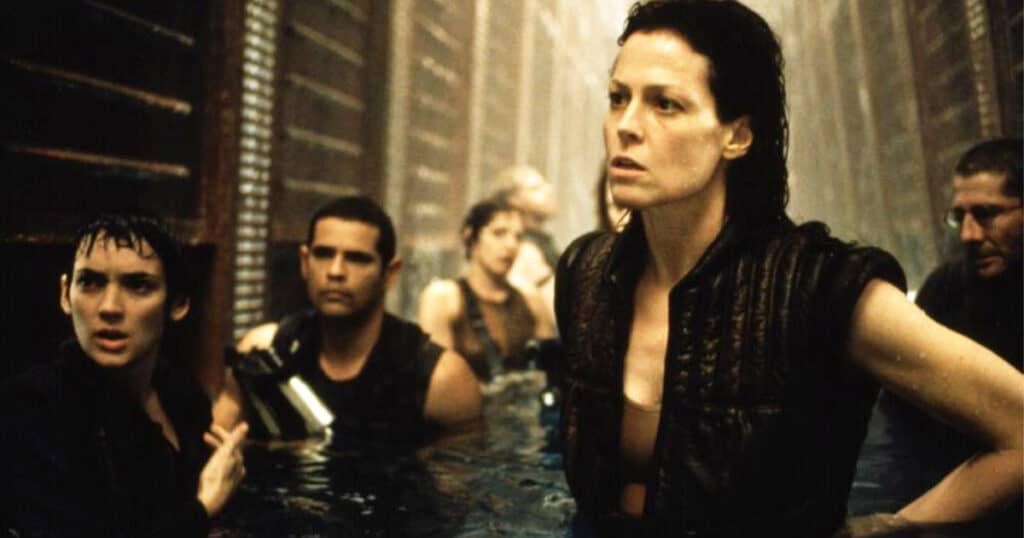
When I saw this movie in theatres back in 1997, for some reason, I liked it. It may be that director Jean-Pierre Jeunet embraced a more action-driven Aliens aesthetic that pleased me (or the fact that I was fifteen), but I find it nearly unwatchable now, save for a few good bits. Jeunet is a solid director but was out of his element making a sci-fi horror movie. At least he had a great cast, with Sigourney Weaver playing a clone of Ripley (crossed with a xenomorph) and Ron Perlman, a kick-ass anti-hero, as one of a gang of mercenaries she teams up with. However, Winona Ryder’s Call is a strange character, as she’s supposed to be a synthetic but doesn’t act remotely like one at any point in the movie. It also has a genuinely chilling moment where Ripley discovers horrifying, failed clones of herself that beg for death, which ranks among the most unnerving scenes in the franchise.

Alien: Covenant (2017)
- Ranking Position: #6
- Subgenre: Philosophical sci-fi horror
- Primary Strength: Michael Fassbender’s dual android performances
- Biggest Weakness: Uneven balance between existential themes and creature horror
- Standout Element: David’s evolution into a cold, manipulative creator figure
- Why It Works: Ridley Scott creates moments of unsettling atmosphere and graphic horror
- Why It Doesn’t: The movie feels torn between being a Prometheus sequel and a traditional Alien film
- Franchise Impact: Deepened the mythology surrounding synthetic life and xenomorph origins
I had high hopes for this one, as I mostly enjoyed Ridley Scott’s Prometheus and was more than psyched to see one of my favourite directors make a full-on Alien movie again. Yet, you can tell that Scott, at this point, had gotten bored with xenomorphs and seemed more interested in continuing the story of Michael Fassbender’s synthetic, David, as he reveals a chillingly evil side that was only hinted at in the last film. It’s not terrible, and Fassbender is excellent in dual roles (he also plays another, more sympathetic android), but despite some good gore moments, the movie is frustratingly inconsistent.

Prometheus (2012)
- Ranking Position: #5
- Subgenre: Cosmic sci-fi mystery
- Primary Strength: Ambitious world-building and visual scale
- Biggest Weakness: Overexplaining mythology that once felt mysterious
- Standout Element: Fassbender’s quietly sinister performance as David
- Why It Works: Ridley Scott combines philosophical science fiction with eerie exploration horror
- Why It Doesn’t: Some characters behave irrationally, weakening the tension and realism
- Franchise Impact: Expanded the mythology of the Engineers and synthetic evolution
This was Ridley Scott’s return to the Alien franchise after decades away… and his decision to make a prequel to Alien depicting the history of the so-called space engineers always struck me as misguided. Do we need to know where the xenomorphs came from? The mythology he built here (which was also partially added to Alien: Romulus) never really needed to be explored. Even still, the movie is visually arresting, with Fassbender excellent as the android David, Charlize Theron unusually unsympathetic as a Weyland-Yutani stood, and Idris Elba effortlessly charming. However, I found the usually excellent Naomi Rapace slightly miscast in a dull role.

Alien 3 (1992)
- Ranking Position: #4
- Subgenre: Bleak prison horror
- Primary Strength: David Fincher’s oppressive atmosphere and nihilistic tone
- Biggest Weakness: Killing Hicks and Newt off-screen alienated audiences
- Standout Element: The Fury 161 prison setting
- Why It Works: The stripped-down environment restores a sense of vulnerability and hopelessness
- Why It Doesn’t: Studio interference and narrative decisions damaged its emotional momentum
- Franchise Impact: Re-evaluated over time as an ambitious, flawed sequel
When this movie came out in 1992, I hated it. I was only ten, but Aliens was already one of my all-time favourite movies. I couldn’t believe that they had the cheek to kill one of the franchise’s coolest characters ever unceremoniously, Michael Biehn’s Hicks, off-screen (to say nothing about poor Newt). Nowadays, I do respect David Fincher’s dark approach, with the movie having some brilliant moments, a terrific score by Elliot Goldenthal, and an excellent supporting turn by Charles S. Dutton. It still makes me mad, but I appreciate the ambition and guts behind it, especially if you watch the alternate cut (known as the assembly cut) they put out on home media.

Alien: Romulus (2024)
- Ranking Position: #3
- Subgenre: Survival horror sci-fi
- Primary Strength: Fede Álvarez’s return to claustrophobic, practical-feeling horror
- Biggest Weakness: Heavy reliance on Prometheus and Covenant mythology in the final act
- Standout Element: The film’s brutal, stripped-down survival sequences aboard the space station
- Why It Works: Combines the slow-burn dread of Alien with the momentum and action intensity of Aliens
- Why It Doesn’t: The connections to the prequel mythology occasionally interrupt the movie’s otherwise streamlined survival-horror momentum
- Franchise Impact: Widely viewed as the strongest Alien sequel in decades and a successful course correction for the franchise
Alien: Romulus is the first Alien sequel in decades that genuinely feels like it understands why the original films worked in the first place. Drawing heavily from both Ridley Scott’s claustrophobic horror and James Cameron’s action-driven intensity, director Fede Álvarez crafts a brutal survival story that restores a sense of physical danger and desperation to the franchise. Álvarez also stages some of the franchise’s most painful and visceral horror sequences in years, particularly involving the chestburster and facehugger attacks. However, the movie loses momentum whenever it shifts away from stripped-down survival horror and back into the mythology-heavy territory established by Prometheus and Alien: Covenant. The result is a film that feels 75% kick-ass Alien movie and 25% space bio-engineering nonsense.

Alien (1979)
- Ranking Position: #2
- Subgenre: Sci-fi horror
- Primary Strength: Near-perfect suspense construction
- Biggest Weakness: Deliberately slow pacing may not appeal to action-oriented viewers
- Standout Element: H.R. Giger’s biomechanical creature and production design
- Why It Works: Ridley Scott transforms a confined spaceship into a nightmare environment through atmosphere, silence, and mounting paranoia
- Why It Doesn’t: The minimalist pacing can feel restrained compared to later sequels
- Franchise Impact: Redefined science fiction horror and launched one of cinema’s most influential franchises
I often flip-flop back and forth between what I consider to be the best Alien movie. Ultimately, it comes down to your preferred genre: horror or action. I’ve always been more of an action guy, but it doesn’t change that this is still one of the best-conceived and edited horror movies of all time and a stone-cold masterpiece. From Jerry Goldsmith’s score to the cast to H.R. Giger’s designs, this is one for the Pantheon for sure.
Aliens (1986)
- Ranking Position: #1
- Subgenre: Sci-fi action
- Primary Strength: Exceptional ensemble cast and relentless pacing
- Biggest Weakness: Sacrifices some of the original film’s mystery and isolation
- Standout Element: Ripley’s transformation into one of cinema’s definitive action heroes
- Why It Works: James Cameron escalates the franchise into full-scale war movie territory while maintaining emotional stakes and creature-driven suspense
- Why It Doesn’t: The action-heavy approach shifts the tone away from pure horror
- Franchise Impact: Established the template for modern sci-fi action cinema
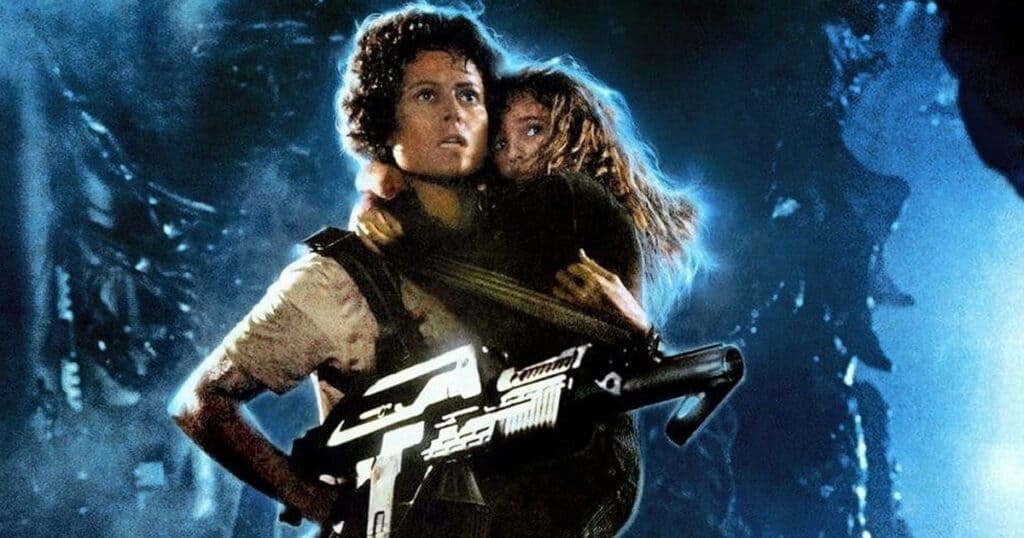
However, James Cameron’s Aliens is still my choice for the best sci-fi action movie ever. The film is a rollercoaster ride, with one of the best ensemble casts of all time, including Lance Henriksen as the android Bishop, Bill Paxton as Hudson, Jenette Goldstein as Vasquez, and Michael Biehn as Hicks. But, of everyone, the most iconic is Sigourney Weaver, whose Ripley evolved from being something of a company stooge in the first movie to one of the two or three greatest action heroes (male or female) of all time. And, I mean, “Get away from her, you bitch” gives me chills every time, as does that score by James Horner.
FAQ
What is the best Alien movie?
For many fans, the debate comes down to Alien (1979) versus Aliens (1986). Ridley Scott’s original is widely regarded as one of the greatest horror films ever made, while James Cameron’s sequel is often considered the definitive sci-fi action movie.
Why is Aliens considered different from Alien?
Alien is primarily a slow-burn horror movie built around isolation and suspense, while Aliens shifts toward military action, larger-scale combat, and ensemble-driven storytelling.
Is Alien: Romulus a sequel or a standalone movie?
Alien: Romulus functions as a standalone survival-horror story, but it also connects to the mythology established in Prometheus and Alien: Covenant.
Why is Alien 3 so divisive?
Many fans disliked the decision to kill Hicks and Newt off-screen after Aliens, but the film has gained appreciation over time for David Fincher’s bleak atmosphere and ambitious tone.
Are the Alien vs. Predator movies canon?
The Alien vs. Predator films exist somewhat separately from the core Alien timeline and are generally viewed as crossover spin-offs rather than essential franchise entries.
What makes the Alien franchise unique?
The series blends multiple genres — horror, action, science fiction, and psychological thriller elements — while using the xenomorph as a symbol of survival, bodily violation, and corporate exploitation.
What would your Alien movies ranked order be? Let us know in the comments!






















The comment section exists to allow readers to discuss the article constructively and respectfully, focused on the topic at hand.
What’s Not Allowed