
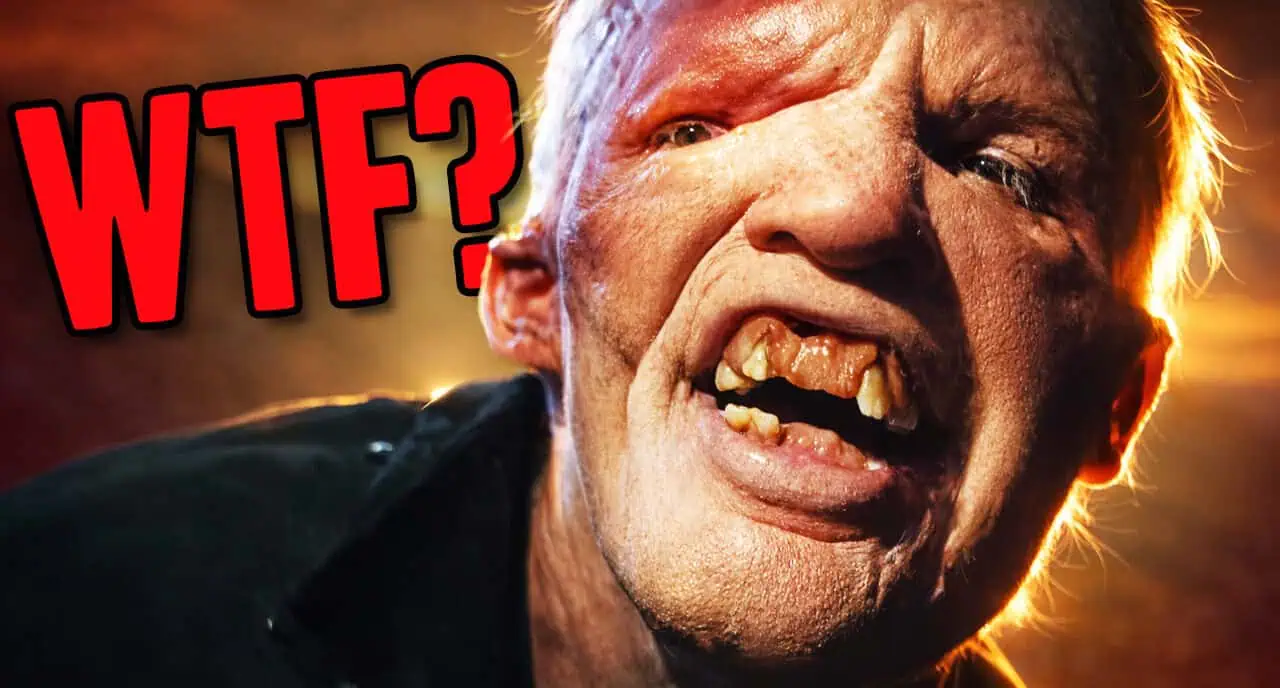
Sometimes the hills are alive with the sound of music. Other times, though, the hills have eyes. 2006’s The Hills Have Eyes arrived during a period when horror remakes were dominating Hollywood and even Wes Craven’s often-overlooked 1977 cannibal classic was considered ripe for a gruesome reimagining.
The film became a major commercial success, spawned an unlikely sequel, and left critics divided. It also battled censorship issues, nearly received an NC-17 rating, and featured a deleted scene so disturbing that Wes Craven himself shut it down out of fear someone might imitate it in real life.
Most importantly, The Hills Have Eyes remains one of the rare remakes widely considered better than the original nearly 20 years later. By reimagining the villains through the lens of nuclear testing and radiation, the film transformed Craven’s raw exploitation concept into something uniquely American and deeply unsettling.
Be careful on those family road trips through the desert as we look at what happened to The Hills Have Eyes remake.
Horror Remakes Were Everywhere in the Early 2000s
The early 2000s became a breeding ground for horror remakes. Hollywood embraced J-horror adaptations like The Ring and The Grudge while also reviving domestic classics such as The Texas Chainsaw Massacre and The Amityville Horror. Those latter two films especially caught the attention of legendary horror director Wes Craven. Following the massive success of the original Scream trilogy between 1996 and 2000, Craven experienced a career resurgence. Although 2005’s Cursed struggled behind the scenes, that same year’s Red Eye earned strong reviews and solid box office success.
Craven wasn’t interested in directing a remake himself, but after seeing the financial success of The Texas Chainsaw Massacre (2003) and The Amityville Horror (2005), both of which earned over $100 million worldwide on modest budgets, he began considering revisiting films from his own catalog. While The Last House on the Left would eventually receive its own remake in 2009, The Hills Have Eyes was the project Craven was most eager to revisit.
Alexandre Aja and Gregory Levasseur Reinvent the Story
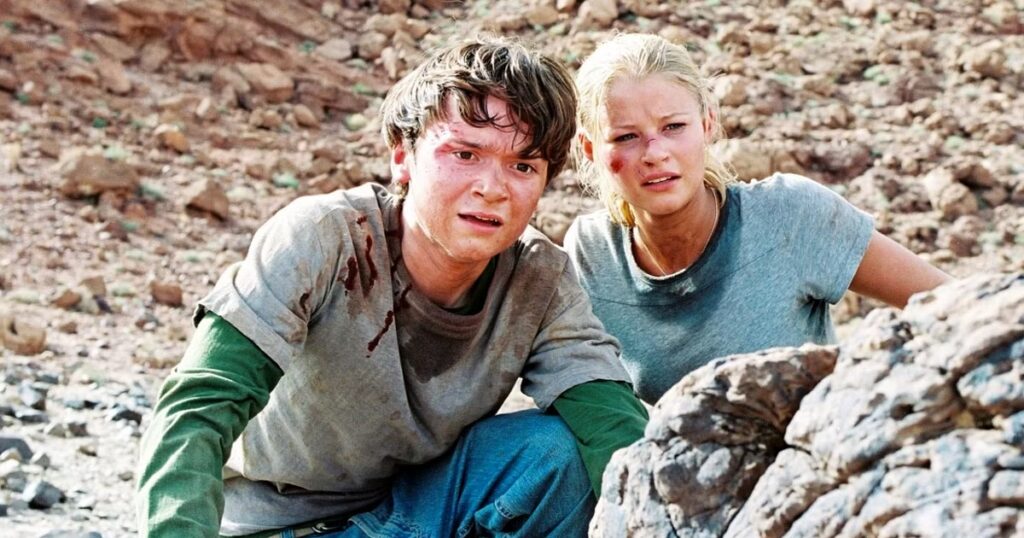
The search for the right creative team eventually led Craven and producer Marianne Maddalena to French filmmakers Alexandre Aja and Gregory Levasseur. Maddalena had recently seen the French horror film High Tension and was blown away by its intensity. After screening the movie for Craven, he agreed that Aja and Levasseur possessed “a multifaceted understanding of what is profoundly terrifying.” After meeting with the duo, Craven immediately knew they were the right filmmakers to bring a new version of The Hills Have Eyes to life.
Excited to tackle their first major American production, Aja and Levasseur began rewriting Craven’s original story while maintaining its core premise: a stranded family fighting for survival against violent cannibals in the desert. However, the remake introduced a major change to the villains’ origins.
Craven’s original film was loosely inspired by the Scottish legend of Sawney Bean, the alleged leader of a cannibalistic clan in the 16th century. The 1977 version never fully explained why the family had chosen to live in the desert and turn to cannibalism. The remake changed that entirely by tying the mutants to nuclear testing in New Mexico.
The Real-World Inspiration Behind the Mutants
Long before filming began, Aja and Levasseur had a very specific vision for the mutant family’s appearance. The filmmakers based much of their concept art on real photographs and footage of radiation victims from Hiroshima and Chernobyl. Their goal was to make the mutants feel disturbingly grounded in reality rather than fantastical movie monsters.
Although the only real nuclear test conducted in New Mexico was the Trinity test overseen by J. Robert Oppenheimer, the film expanded the concept into a fictional government testing area where generations of radiation exposure created horrific mutations.
The movie’s opening credits reinforced this disturbing realism by featuring real images connected to the effects of Agent Orange exposure during the Vietnam War.
The Cast Combined Horror Veterans and Rising Stars
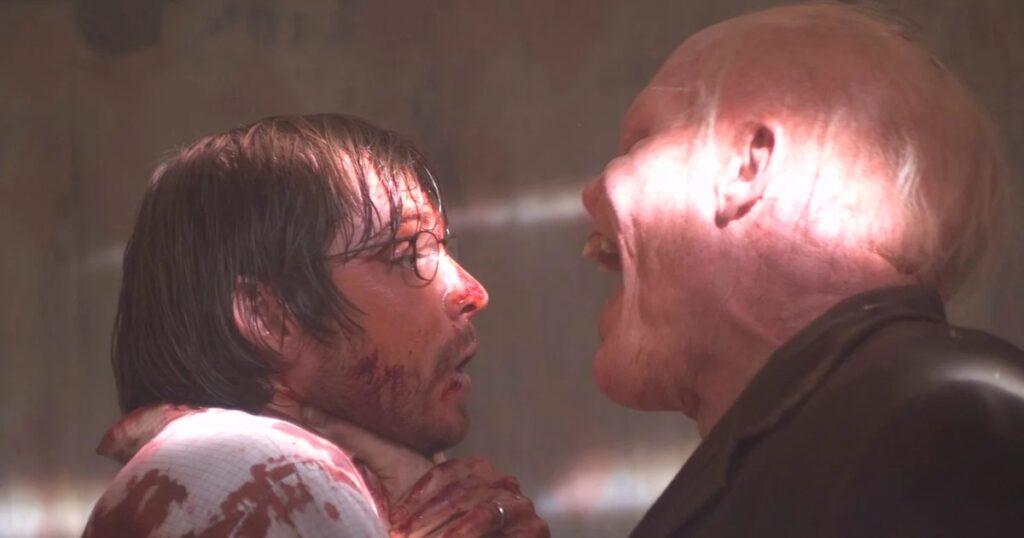
To portray the Carter family, the filmmakers assembled a mix of veteran character actors and younger rising stars. Ted Levine played Big Bob Carter, the stubborn family patriarch whose exaggerated version of American masculinity often puts the family in danger. Levine was already iconic to horror fans thanks to his unforgettable role as Buffalo Bill in The Silence of the Lambs.
The supporting cast included:
- Kathleen Quinlan as family matriarch Ethel
- Vinessa Shaw as protective mother Lynn
- Aaron Stanford as outsider son-in-law Doug
- Emilie de Ravin as younger sister Brenda
- Dan Byrd as the youngest son Bobby
Vinessa Shaw was initially hesitant to join the project, but after watching High Tension and meeting with Aja and Levasseur, she signed on to play Lynn.
Creating the Mutant Family
Casting the mutants required actors capable of enduring extensive makeup while also performing physically demanding stunt work. Industrial musician Nivek Ogre from the band Skinny Puppy reportedly auditioned for the role of Lizard but was considered too frightening by producers. The role eventually went to veteran actor Robert Joy, while Ezra Buzzington portrayed Goggle after researching historical accounts of cannibalistic cultures.
Michael Bailey Smith, previously seen as Super Freddy in A Nightmare on Elm Street 5: The Dream Child, played the massive Pluto. His performance impressed the filmmakers so much that he later returned to play a different character in the sequel.
Billy Drago portrayed the terrifying Papa Jupiter, while Laura Ortiz played Ruby, the youngest mutant and one of the film’s few sympathetic characters.
KNB FX and the Film’s Extreme Gore
Unlike the comparatively restrained 1977 original, this remake fully embraced the brutal style associated with the French New Extreme movement. Legendary effects house KNB FX handled the film’s makeup and gore effects, spending over six months designing the mutant family. The team used early three-dimensional modeling technology to create prosthetics customized for each actor. Some transformations, especially Robert Joy’s Lizard makeup, required up to three hours in the chair.
Special effects legend Greg Nicotero even appeared onscreen as the mutant Cyst during later scenes inside the abandoned town.
One particularly bizarre unused idea involved Papa Jupiter originally having a parasitic twin attached to his body, similar to Kuato from Total Recall.
The Deleted Scene Wes Craven Refused to Allow
Visual effects artist Jamison Goei and his team contributed over 130 digital effects shots to the film, enhancing mutant deformities and expanding the abandoned nuclear test town far beyond the physical set that was built. But one planned sequence never made it into the movie.
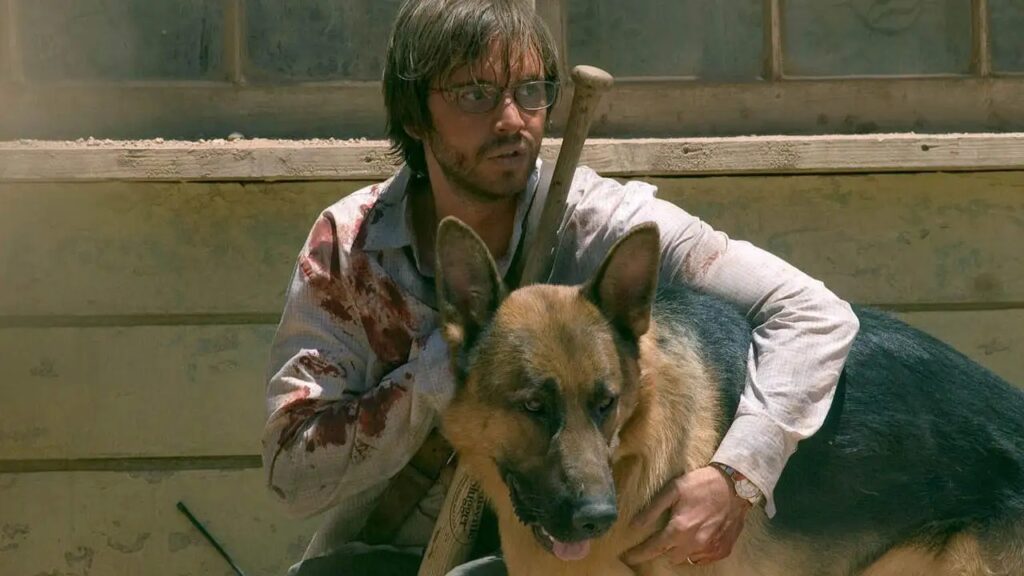
Originally, Alexandre Aja wanted the Carter family to bring kittens along on their road trip in addition to birds. During the mutant attack on the RV, the kittens would have been killed in an extremely graphic blender sequence. When Aja pitched the idea to Wes Craven, the horror master immediately rejected it out of concern that viewers might imitate the scene in real life.
Even without the deleted sequence, The Hills Have Eyes still faced heavy scrutiny from the MPAA and required cuts to avoid receiving an NC-17 rating.
Filming in the Brutal Moroccan Desert
The movie’s production conditions proved almost as punishing as the film itself. Temperatures during filming regularly exceeded 120 degrees.
The producers originally hoped to shoot in Victorville, California, where Craven filmed the 1977 original. However, decades of development had transformed the once-isolated desert landscape into suburban housing developments. After considering locations including New Mexico, Nevada, and South Africa, the production ultimately chose Morocco, often referred to as “The Gateway to the Sahara.”
Fox Searchlight initially worried about filming there due to concerns over terrorist activity, but the location ultimately worked perfectly for the movie’s harsh desert atmosphere. The production design became so convincing that people occasionally stopped at the fully constructed gas station set believing it was real.
Box Office Success and Horror Legacy
The Hills Have Eyes was released on March 10, 2006, with a production budget of roughly $15 million. The movie opened in third place at the box office and eventually earned more than $70 million worldwide during its theatrical run. It later found even greater popularity on home video, especially through its unrated edition, which became extremely popular during the DVD boom of the mid-2000s.
Although the film currently holds a mixed critical score on Rotten Tomatoes, horror fans continue to regard it as one of the strongest horror remakes ever made. Many viewers even consider it superior to Wes Craven’s original film.
Like the 1977 version, the remake eventually received a sequel. While The Hills Have Eyes 2 (2007) remains divisive, many fans still prefer it over the original franchise’s first sequel. That sequel became a family affair, with Wes Craven co-writing and producing alongside his son Jonathan Craven.
For now, though, the 2006 remake still has teeth, still shocks audiences, and remains one of the standout horror remakes of the 21st century. And that’s what happened to The Hills Have Eyes remake.
A couple of previous episodes of this show can be seen below. For more, check out the JoBlo Horror Originals YouTube channel—and don’t forget to subscribe!




The comment section exists to allow readers to discuss the article constructively and respectfully, focused on the topic at hand.
What’s Not Allowed