

Every master of horror has some missteps somewhere on their filmography, and director Wes Craven had his fair share. For example, the man who gave us A Nightmare on Elm Street and Scream also brought us The Hills Have Eyes Part 2. A film made out of desperation, and with ambition greater than its budget, the sequel to The Hills Have Eyes is a clunky Friday the 13th knock-off. It even has Friday the 13th music! And it’s so padded out with flashbacks to the first movie that even the dog has a flashback. At least there’s some good slasher kills to be seen along the way. The Hills Have Eyes Part 2 was definitely one of the low points in Craven’s career, so we’re going to try to figure out What the F*ck Happened to This Horror Movie.
Wes Craven made his feature directorial debut with the 1972 revenge film The Last House on the Left. A movie that was so shocking to critics and audience members, many questioned Craven’s morals and sanity. So while he wanted to continue his filmmaking career, he wasn’t enthusiastic about the idea of making more horror movies. His producer friend Peter Locke thought he should capitalize on the success of The Last House on the Left as quickly as possible. But Craven spent years trying and failing to get non-horror projects off the ground. Once he ran out of money, he finally agreed to make a horror movie with Locke. The idea was to make a low budget film that could be shot in one location. And since Locke’s wife was working in Las Vegas at the time, they figured the Nevada desert should be the location. As Locke and some other investors put together a budget of three hundred and twenty-five thousand dollars, Craven wrote the script for what would become The Hills Have Eyes. Although, the title on the first draft of the script was Blood Relations.
Craven drew inspiration from the sixteenth century story of Sawney Bean, which may or may not be true. But legend has it that Bean lived in a coastal cave in Scotland with his wife, multiple children, and grandchildren. This family survived by ambushing people, killing and eating them, and keeping their belongings. When the Bean family was caught by members of civilized society, their executions were said to be brutal and torturous. So Craven crafted a script that would center on mirror families. One would be a take on the Bean family; a group of cannibals living in a cave in the Nevada desert. The other would be the Carter family from Ohio, inspired by Craven’s own family, who venture too far into the desert while on a road trip. As the cannibal family attacks and torments the other family, the more civilized people are driven to a point where they become savage themselves. And they get their revenge.
Released in 1977, The Hills Have Eyes wasn’t as successful as The Last House on the Left, partly because it kept being chased out of theatres by Smokey and the Bandit. But it did well enough that it got Craven’s career rolling again, and it ended up making more money as the home video era began. Craven went on to make the horror movies Summer of Fear, also known as Stranger in Our House, and Deadly Blessing. Then he got an opportunity that could have been a major breakthrough for him. He wrote and directed an adaptation of the DC Comics property Swamp Thing. Unfortunately, Swamp Thing was a box office failure and left Craven scrambling to find a job. It was difficult, because Hollywood was looking down on filmmakers who were considered horror directors at that time. He had written A Nightmare on Elm Street, and it was being rejected by every studio in town. He was able to get some script doctoring gigs, but his own projects weren’t going anywhere. While A Nightmare on Elm Street was eventually picked up by New Line Cinema, it still took a couple years for it to go into production. In the meantime, Craven ran out of money again. So it was time to re-team with Peter Locke.
Distributor New Realm had success releasing The Hills Have Eyes in England in 1978. When the movie reached VHS, it was a huge hit for the British video company VTC. So for a year and a half, New Realm and VTC had been reaching out to Craven and Locke, asking for a sequel. Even offering to finance the project. Now that Craven had reached the end of his resources and was desperate, he and Locke agreed to make The Hills Have Eyes Part 2 for them. Craven knocked out the first draft of the script in about two weeks, and based on that draft a budget of one million dollars was secured. The producers were pleased with the script, but thought it should be expanded. So Craven wrote a revision that he felt would make the film bigger and better. And the producers got even more excited for the project when they saw the revisions. But they never added money to the budget. Now Craven was stuck trying to make the bigger and better version of the script for the budget that had been put together for the first draft. That’s when things started to go wrong. Craven would go on to say that The Hills Have Eyes Part 2 was a real nightmare to shoot.
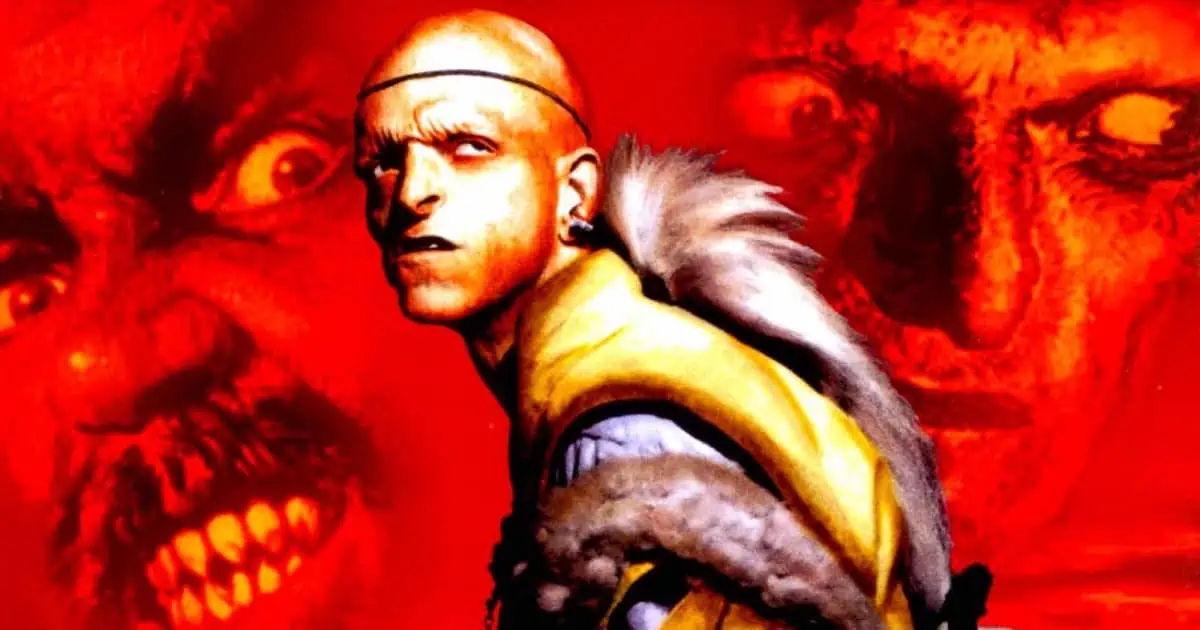
Craven already had a major hurdle to overcome when he was writing the script: almost all of the cannibals had been killed off in the first movie. The leader of the group, Papa Jupiter, was dead. Oddly, despite that fact, the title on the first draft of the sequel was The Night of Jupiter. Papa Jupiter’s sons Mercury and Mars were dead. His wife had survived, but she hadn’t been involved in the action. His daughter Ruby was alive, but she had turned against her family at the end of the film. Jupiter’s son Pluto had also appeared to be killed. But actor Michael Berryman had such strikingly unique features, a close-up of his face had been the main image on the poster for The Hills Have Eyes. The movie was sold on his look. So Craven decided to bring Pluto back. He was badly wounded, it had looked like his throat was torn out by a German Shepherd called Beast, but he was patched up and lived. And The Hills Have Eyes Part 2 probably would have been better off if Pluto was the only cannibalistic killer in the movie. Living in the desert on his own, still using his decimated family’s tactics of murder and theft to survive. But that’s not the case. Pluto is not alone. Craven decided to add another cannibal into the mix. Someone who is talked up like he’s the worst of the bunch. He’s called Reaper, and it’s said that he’s Papa Jupiter’s big brother. This causes a major continuity error, because the history of the cannibal family was all laid out for us in The Hills Have Eyes, and there was no room for Jupiter to have a big brother. If Craven had said Reaper was Pluto’s brother, another one of Jupiter’s kids, and we just didn’t see him in the first movie for someone reason, it would have been fine. But he decided to break our brains instead.
With the cannibals in place, Craven needed a new batch of civilized characters to put them up against. Although several of the protagonists from the first movie survived, he decided to bring back only two of them, and one just gets a cameo. In this sequel, we find out that Bobby Carter, played by Robert Houston, now owns a Yamaha dealership in Burbank, California. He also sponsors a motocross team, and at an upcoming race they will be showing off the benefits of a new formula of gasoline Bobby has created. Problem is, this race is going to be held out in the desert, close to where the cannibals attacked Bobby and his family years earlier. Bobby is too stressed and afraid to go back out into the desert, so his wife and business partner Rachel tells him she’ll accompany the team to the race while he stays home. By the way, Rachel happens to be Ruby, that former member of the cannibal tribe who turned against her own family to help Bobby’s. Janus Blythe reprises the role, but wasn’t happy with the script. She liked the idea of Ruby returning to the desert with the German Shepherd Beast and crossing paths with Pluto again. But she felt there was too much going on around that. She wasn’t a fan of involving a motocross team with special gasoline. Robert Houston wasn’t happy with The Hills Have Eyes Part 2, either. But a lot of that has to do with his own appearance. He was so appalled by the way he looks in this movie, he never acted again.
Nice guy Roy, played by Kevin Spirtas, known as Kevin Blair at the time, and prankster Harry, played by Peter Frechette, are the racers of the motocross team. On the bus ride out to the race in the desert, they’re joined by mechanic Foster, played by Willard Pugh. The role of Foster was written specifically for Pugh after Craven met him while he was doing uncredited rewrites on the 1984 action movie Toy Soldiers. John Laughlin’s character Hulk is probably either a racer or a mechanic, but it’s never quite clear. Either way, he’s on the bus. Also along for the ride are Harry’s girlfriend Jane, played by Colleen Riley, Foster’s girlfriend Sue, played by Penny Johnson, and Roy’s blind girlfriend Cass, played by Tamara Stafford. It’s clear from early on that Cass is our heroine this time around. Craven named the character after the Cassandra of Greek mythology, who could see the future, but no one believed her dire prophecies. That’s because Cass has some mild psychic abilities. Which don’t really end up helping in this situation. Craven would pay tribute to the legend of Cassandra again years later, in Scream 2.
During their bus ride, the motocross team realizes that Daylight Savings Time has ended. Clocks have moved forward one hour, so they’re going to be late for the race. Unless they take a shortcut through the desert. Of course, that shortcut takes them right into the territory Pluto and Reaper have taken control of. And the bus’s gas tank springs a leak on the way. The group ends up stranded on an old ranch that sits above an abandoned mine shaft, surrounded by traps that have been set by the cannibals. And Pluto and Reaper proceed to pick them off one-by-one.
There are elements of The Hills Have Eyes that feel inspired by The Texas Chainsaw Massacre, and the two films even had the same art director, Robert A. Burns. While The Hills Have Eyes Part 2 begins with a text crawl and narration, like the early Chainsaw movies did, this one feels like Craven’s take on Friday the 13th. The music that accompanies scenes of youths getting slashed up even sounds like Friday the 13th music. Which makes sense, because it was provided by Friday franchise composer Harry Manfredini, who previously worked with Craven on Swamp Thing. This isn’t necessarily a bad thing. Manfredini’s music is great and there’s fun to be had when characters are being slashed. The motocross element even allows for a chase sequence across the sand and around the rocks of the desert. Some of the best scenes involve the Cass character being stalked and chased around the ranch by Reaper. Finding ways to outsmart her attacker and fight back. Even though she can’t see him. These scenes, matched with Manfredini’s music, are so intriguing, it’s enough to make the viewer wish there had been a Friday the 13th movie with a blind heroine. It’d be a lot better if that was Jason Voorhees chasing Cass instead of Reaper.
There are good things in this movie, but there’s also something lacking here. The script comes off as being half-baked, the dialogue is clunky. And how can you have a big guy called Hulk and give him a death where he doesn’t come in physical contact with the killers? He never has a chance to defend himself.
Many have pointed fingers at Reaper as one of the big issues with the film, and not just because his existence is a continuity error. The character was played by seven-foot-four actor John Bloom, with Craven’s Swamp Thing cast member Nicholas Worth dubbing over his voice in post-production. It wasn’t until they were on set that Craven realized that putting Bloom on a motocross bike looked silly. He said Bloom made the bike “look like a tricycle. It was the most ridiculous sight in the world when he actually got on this thing and his feet were hanging off.” Michael Berryman was also underwhelmed by the appearance of Reaper – specifically the makeup effect that was put on his face. Makeup artist Ken Horn, returning from the first film, tried to find a look for the character that was simple and believable, yet durable enough to move around aggressively on the set and ride a motorcycle. Bloom had to spend two hours in the makeup chair for his transformation into Reaper. Berryman wasn’t impressed with the result, or with Bloom’s performance. And, like many fans, he questioned why Reaper was there in the first place. Speaking with Fangoria magazine, Berryman said, “A lot of the story concepts in Hills 2 needed to be clarified. They never explained what happened to Pluto between the two movies, and we never learn where the character of Reaper came from. What the hell was Reaper anyway? The guy looked like he had a big chunk of a basketball stuck to his head. It looked terrible!”
Craven was aware on set that things weren’t working with this movie, but he didn’t have time to address the issues. There was a completion bond in place, filming had to be finished by a certain date. They could only blast their way through the script and hope to come back for reshoots later. So working on this movie was not an easy or pleasant experience. They were in a hurry, shooting scenes that weren’t satisfactory. They were filming way out in the California desert, a forty-five minute commute from the hotel the cast and crew stayed in. Production took place in the spring of 1983, when it would get miserably cold at night. Crew members were working hard in horrible conditions. Everyone was cranky. Berryman had serious issues with an executive producer. The project started to fall behind schedule. Peter Locke was worried, as he couldn’t see how Craven was going to be able to finish filming in time. There was so much tension on set, a food fight even broke out during one lunch break. An effort to lighten the mood.
Janus Blythe made the mistake of going to a salon and getting her hair cut when she had a day off in the middle of the shoot. But that wasn’t the biggest problem she had on this movie. She was very concerned about a scene Craven had written for her character. A death scene. Rachel, better known as Ruby, was originally supposed to fall into a pit and be impaled on an arrow. The scene was simplified so that she only had to be filmed falling down and hitting her head on a rock. Blythe felt that either option was a bad idea. She didn’t think Ruby should be killed off, as fans of the first movie would be upset if they did this. But they had to stick to the script to get the movie finished on schedule. Craven told Blythe he would rewrite Ruby’s fate and this would be something they would fix in reshoots. For now, though, she had to hit her head on a rock and appear to die. Blythe found her own compromise: she doesn’t play the scene as a death scene. When Ruby hits her head on the rock, she played it like she was just knocked unconscious. We never see Ruby again after this, but at least Blythe’s performance left her fate ambiguous.
Craven and his crew managed to get The Hills Have Eyes Part 2 shot on time, but the director didn’t consider filming to be finished. Principal photography had been done in such a hurry, he didn’t have the chance to film some shots he wanted in the movie. Scenes needed to be reworked and reshot, including the ones involving Ruby’s fate. As Craven assembled the footage, he was hoping the producers would provide some extra money and schedule some days of additional photography. That extra money never came in. The reshoots Craven and Blythe were looking forward to never happened. The movie was never properly completed. All the scenes Craven wasn’t happy with, all the moments he wanted to fix and do over, they’re in the cut of the movie that was released to the world.
The movie has a running time of exactly ninety minutes, but some padding was required to reach that length. There’s the opening text and narration that was mentioned earlier. A long title sequence. And there’s the element of the film that it’s best known for: the use of flashbacks to the first movie. The Hills Have Eyes Part 2 has a reputation that could lead you to believe it’s the most flashback-filled movie out there. Aside from Silent Night, Deadly Night Part 2. The truth is, there’s only five minutes of flashbacks to the first Hills Have Eyes in this one. A reasonable amount for a 1980s slasher sequel. The problem is how the flashbacks are handled. If the footage from the first movie was just presented as a five minute recap at the beginning of the sequel, no one would question it. Instead, Craven adds the footage into the movie by having survivors flashback to it on four separate occasions. Thirty-three minutes into the movie, we’re still getting flashbacks. Bobby has two flashbacks. Ruby has one. And then, one of the most absurd moments in horror history. We see Beast, the German Shepherd, having a flashback to his previous encounter with Pluto. The Hills Have Eyes Part 2 is best known for being the movie that has a dog flashback in it.
No one was happy with how The Hills Have Eyes Part 2 turned out. But while it was disappointing to Craven and fans alike, it did serve its purpose. Thanks to distribution deals, it was already profitable before filming had even begun. And it got Craven’s career back on track. When word got out that he was making a sequel to The Hills Have Eyes, it helped New Line secure funding for A Nightmare on Elm Street. And while that deal was being negotiated, the network ABC reached out to Craven about directing a TV movie called Invitation to Hell. He took the job and had just two weeks to prepare for the filming. He was gearing up for Invitation to Hell during the day, doing post-production work on The Hills Have Eyes Part 2 at night. And doing a major rewrite of A Nightmare on Elm Street in any moment of spare time. He had gone from not being able to get a movie made to making three back-to-back-to-back.
Invitation to Hell aired on ABC in May of 1984. A Nightmare on Elm Street was released that November. Although The Hills Have Eyes Part 2 was shot before both of them, it didn’t get a small theatrical run until August of 1985. So while it was something Craven made out of desperation when he couldn’t make anything else, it ended up looking like his follow-up to the huge success of Elm Street. That definitely didn’t help the reputation of the movie. It was going to be underwhelming no matter when it was released. Coming out after Elm Street made it look even worse.
Looking back on this doomed sequel years later, Robert Houston said, “It tells you a lot about filmmaking that somebody like Wes, who is capable of very good work under the right conditions, is also capable of doing something like The Hills Have Eyes Part 2 under the wrong conditions. The film really doesn’t reflect on Wes as much as it reflects the difficulties of the film industry.” Peter Locke added, “That was a picture that didn’t have enough money to be completed properly and I’m the producer, so I take the blame for that. Wes wrote it, he had a great idea for it, but we just didn’t have the finances to finish it properly, the way it needed to be finished. I’m sure he would’ve made a very, very successful film had he gotten the money he needed.”
Despite the trouble they had on The Hills Have Eyes Part 2, Craven and Locke remained very aware that this was a property they could continue to benefit from. In 1994, it was announced that they, along with Craven’s son Jonathan, were developing another sequel. Berryman was contacted about playing Pluto again in a film that would be called The Outpost: The Hills Have Eyes 3. The story would take place in a government testing facility in the desert, where members of the cannibal tribe are brought to be examined for their survival skills. Locke said the script they had in place was very good… but things changed during the development process. What started out as The Hills Have Eyes 3 became an original story called Mind Ripper. And Berryman wasn’t in the cast. Mind Ripper was released in 1995 and quickly faded into obscurity. But Craven and Locke returned to The Hills Have Eyes to produce a remake in 2006. The remake, directed by Alexandre Aja from a script he wrote with Grégory Levasseur, was so successful, another The Hills Have Eyes 2 followed in 2007. Directed by Martin Weisz and written by Wes and Jonathan Craven, that The Hills Have Eyes 2 was also considered a disappointment. But not as much as the one released in 1985.
As the decades went by, Craven mostly only talked about The Hills Have Eyes Part 2 to joke about it. Or apologize for it. He was once quoted as saying, “I’m sorry about The Hills Have Eyes Part 2. I was dead broke and needed to do any film. I would have done Godzilla Goes to Paris.” A Craven movie about Godzilla wrecking Paris actually could have been really cool. But we got The Hills Have Eyes Part 2 instead, and it’s kind of fun to watch. Even if, nearly forty years later, we still don’t know where the hell Reaper came from or what happened to Ruby. It’s troubled, it’s unfinished, it doesn’t make a whole lot of sense as a follow-up to The Hills Have Eyes. But it does have a dog flashback in it. Isn’t that enough?
A couple of the previous episodes of the show can be seen below. To see more, head over to our JoBlo Horror Originals YouTube channel – and subscribe while you’re there!






The comment section exists to allow readers to discuss the article constructively and respectfully, focused on the topic at hand.
What’s Not Allowed