
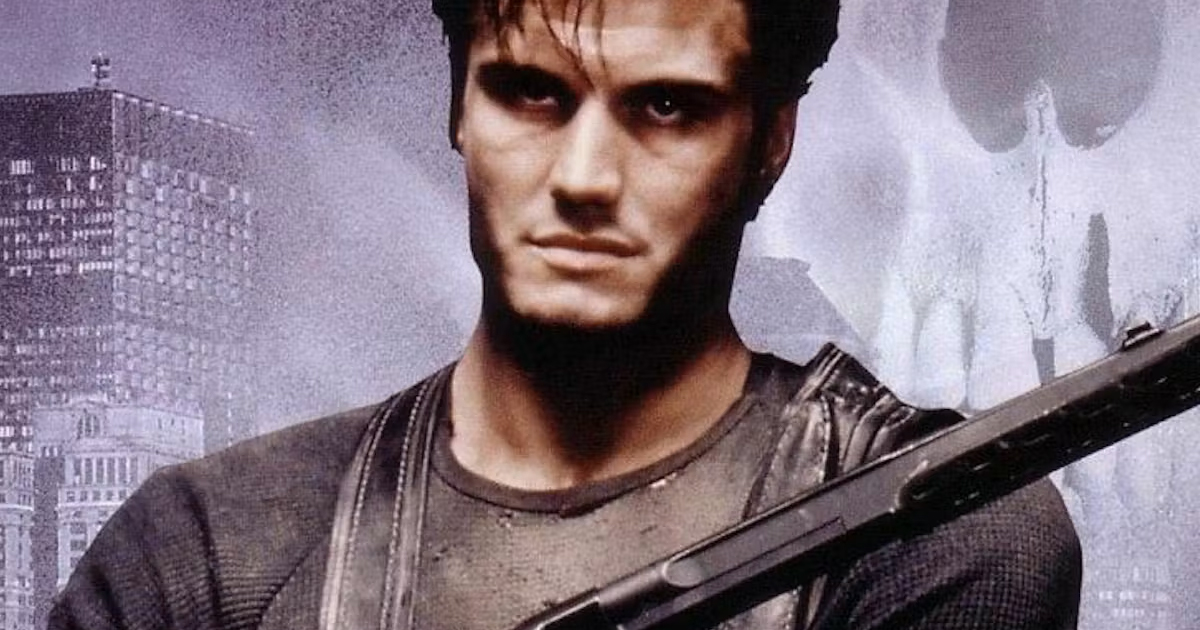

With all the iterations of The Punisher over the years, you’d be forgiven if you forgot this film even existed. But it’s WAY more important to the character than you can possibly imagine. And today we’re going to give this misfit film and that butt naked guy talking to himself in the sewers (if you’ve seen the movie you know what we’re talking about) the credit they deserve. And maybe some pants…
We’re also going to answer the questions of why in the Hell they would ever decide not to use the Punisher skull logo? And why this film isn’t nearly as revered as other groundbreaking Superhero films that were doing it before it was cool. But the biggest revelation in today’s video is what we’re going to uncover about just how much 1989’s Dolph Lundgren Punisher movie, forgotten or not, vastly helped shape the character we see in today’s comic books and movies.
It all starts with realizing how little of the Punisher character actually existed in the comic books when the film was made…..
The Comic Origins: A Half-Baked Vigilante
The Punisher made his first appearance in issue #129 of The Amazing Spider-Man in 1974 with a long frame and Dracula-like hairstyle that matched his outfit in color. In his first appearance he is tricked by The Jackal into thinking Spider-Man is a killer who deserves to be killed. That’s right, he just takes an evil looking green guy named The Jackal at his word that Spider-Man was evil and killed Norman Osborn. He starts stalking Spidey and trying to snipe him from rooftops immediately. The character, says creator Gerry Conway, was originally partly inspired by The Shadow.
When he finally realizes Spider-Man is the good guy, he tells him (and us), that he used to be a Marine who was now waging a lonely war. And that the rest of his story was his business and his business alone until further notice. Spider-Man realizes early on that this guy’s problems make his look like a birthday party…and that’s that.
Until they meet again in The Amazing Spider-Man #135. The character was popular and mysterious enough to bring back immediately and they pick up where they left off with the Punisher once again thinking Spider-Man was a villain because he was on the same ship as a bunch of villains. Never….mind that he was….fighting them? They don’t make Punisher too bright in these early appearances…
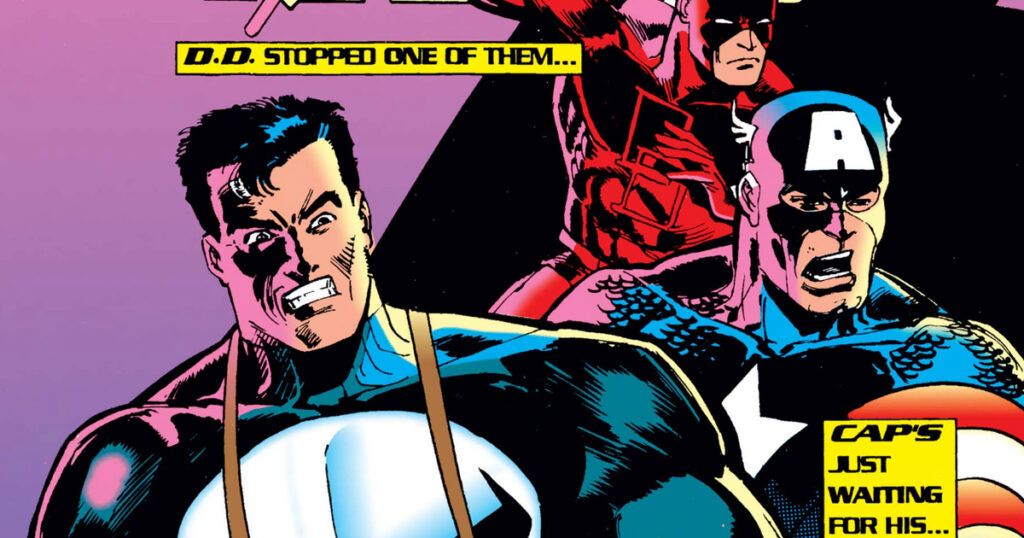
They once again make nice and team up to solve some crime but Spider-Man still wonders what makes this guy tick and at that point….so do we.
Marvel continued to use The Punisher in various popups for a while as a dangerous wildcard character until Marvel Preview #2, where The Punisher was front and center on the cover and shooting bad guys. This storyline really took Punisher out of Spider-Man’s more whimsical tone and into Frank’s darker world that would color our movie. Even the artwork resembled a gritty change in tone in comparison.
More importantly, it was here that his heartbreaking origin story was finally told. Frank Castle was home from the Marines and enjoying a picnic in the park with his wife and two children when they stumbled across a mob execution. The mobsters then gun down the family right then and there as they were witnesses to their crimes. Frank was the only one who survived the shooting and obviously, went mad.
After run-ins with Spider-Man and Daredevil in their respective comics series, The Punisher finally got his own series (albeit a limited run) with The Punisher: Circle of Blood. The story was wildly successful and by 1987 The Punisher finally had his own comic book series with the words “#1 First Issue of an UNLIMITED Series” at the top. Which in some form or fashion was very true. Throughout the years various forms of the Punisher comic have released and many of them, specifically, the Garth Ennis produced Punisher MAX have taken inspiration from our weird little 1989 film we’re speaking of today. More on that later.
What’s funny about this is that based on the timeline of the movie, this initial run of comics couldn’t have had much time to have provided an inspiration for the film.
So, it’s very likely much of the inspiration for the film we’re talking about today came specifically from less than a handful of specific one-off Punisher storylines. Such as the previously mentioned Punisher: Circle of Blood and Marvel Preview. And yet, so much of what we see from the Punisher in this film carried into the future comics and movies. This makes this film shockingly important to the character’s future and likely altered the perception of him forever.
Developing the 1989 Film: No Skull, New World
It’s important to remember at the time that almost NO-ONE was making any Marvel movies. Today, if a company like New World Pictures asked Marvel for the rights to the Punisher, they’d probably have had security called on them. But at this point all it took was a twenty-two year old and a good idea, and New World Pictures was able to acquire the rights to use the character. Writer Boaz Yakin (who would go on to have a successful writing career and even directed Remember The Titans of all things) made his pitch to New World Pictures and was given the green light to write the script. He did so and did it with the skeleton logo on the uniform included. Smart man.
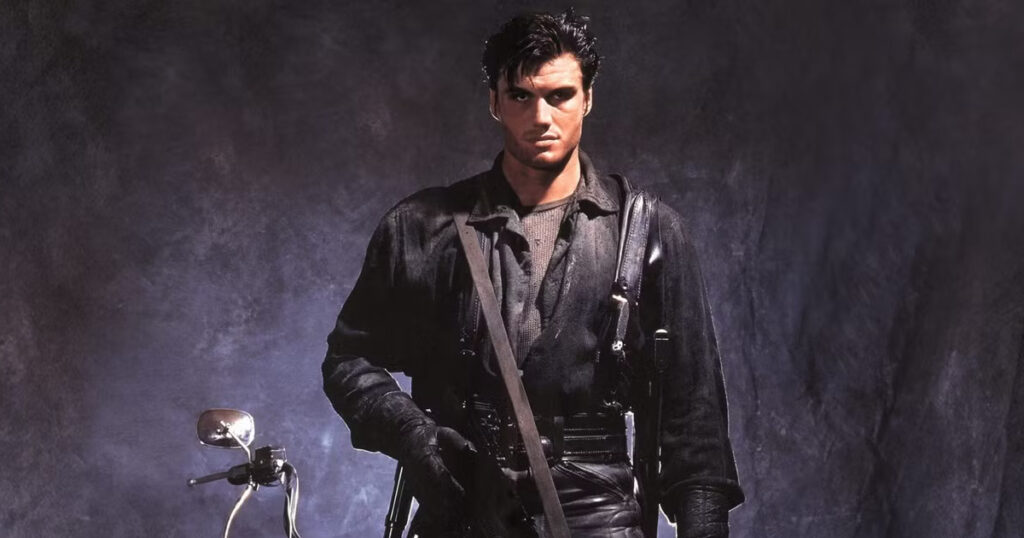
But when the studio reached out to their hopeful director, eventual Terminator 2: Judgment Day editor Mark Goldblatt read his work and rejected it. He called it “an instant turn off” and said that “it was as if Jason (Voorhees) had a cape”. That the “character was totally dark” and “a complete psychopath”. To be fair everything that man just said sounds fucking awesome and Yakin agrees. He confidently maintains that his original script, deemed “too comic-bookey” by the studio, was much better before it was rewritten by Producer Robert Mark Kamen and turned into the version we’re discussing today. However, Kamen’s changes were enough to convince Goldblatt to come on board and then he, in turn, decided that the Punisher’s costume was too “silly” and that he wanted to institute a “Road Warrior-chic” outfit instead. Yakin’s original script had him spray painting the skull on his shirt before the final battle sequence. But alas, we never got to see it.
Listen, I hate that he doesn’t have the skull. You hate that he doesn’t have the skull. With today’s technology someone should make a cut of the movie where he’s wearing the skull. But just to play Devil’s Advocate when you look at some of that early artwork, the skull wasn’t nearly as subtle. His original outfit was LOUD. There were white gloves and boots and the skull sometimes took up the entirety of the shirt. I can honestly see what Goldblatt meant. However, in hindsight it seems dead ass obvious to just make the logo smaller and more practical and it would have been fine. And again….spray paint was right there! But here we are.
The long list of hopefuls for who would step into those now black boots is eye popping and it starts with Arnold Schwarzenegger, who was deemed too expensive for the budget for obvious reasons. Grow up Count Chocula, Peter Pan. Then it’s down the list we go with Chuck Norris and Steven Seagal both being names that were thrown out as well. Honest to God, I could see Steven Seagal in the role. He had the perfect hairline and that burnt in scowl. It’s kinda crazy when a millionaire actor has the same personality as a guy who is mourning the savage death of his family and spends all day murdering crackheads. But that’s Steven Seagal. Mickey Rourke and even Rayden himself Christopher Lambert were also considered for the role. Which is ironic considering how much Christopher Lambert looks like Thomas Jane, who would later play the character.
Finally, they set their sights on the man who had played a Bond villain, He-Man, and Ivan Drago only five films into his burgeoning career. A man who holds two degrees in chemical engineering and a PhD in whipping ass: Dolph Lundgren. Now, after Masters of the Universe you could understand how the production was worried that Dolph would be unable to shake his Swedish accent, but they were quickly encouraged upon meeting him. And it’s true. The difference in talent and experience between the two films is palpable for Lundgren and you could see his hard work paying off. Lundgren was at first pessimistic himself because of the title, but after reading the script was convinced to join and even threw himself into the role, dropping twenty-five pounds of weight. And it pays off, as the character’s size and look perfectly embody someone who is sad but could also rip your arms and legs off.
They would film The Punisher in Sydney, Australia for just over fifty days with Dolph doing most of his own stunts. The result was this strange little movie that is often forgotten, but for many of us is shockingly pleasant to watch all these years later for its stripped down action high body count.
Analyzing the Movie: Ninjas, Sewers, and High Body Counts
As soon as opening credits begin with an almost James Bond vibe albeit darker, you are welcomed to the reality that this is going to be a weird movie. But to be fair it’s not like viewers had a ton of things to compare it to. Much like the filmmakers who created it. Back in 1989 most of the only Superhero fare to have been released were the Donner/Reeves Superman franchise, Howard the Duck, and the Hulk TV Series. The only thing even in the realm of the same tone of The Punisher would have been 1982’s Swamp Thing, with Tim Burton’s Batman releasing only four months before The Punisher’s overseas release. For baffling reasons which we’ll discuss, the film wasn’t even released in the U.S. until 1991.
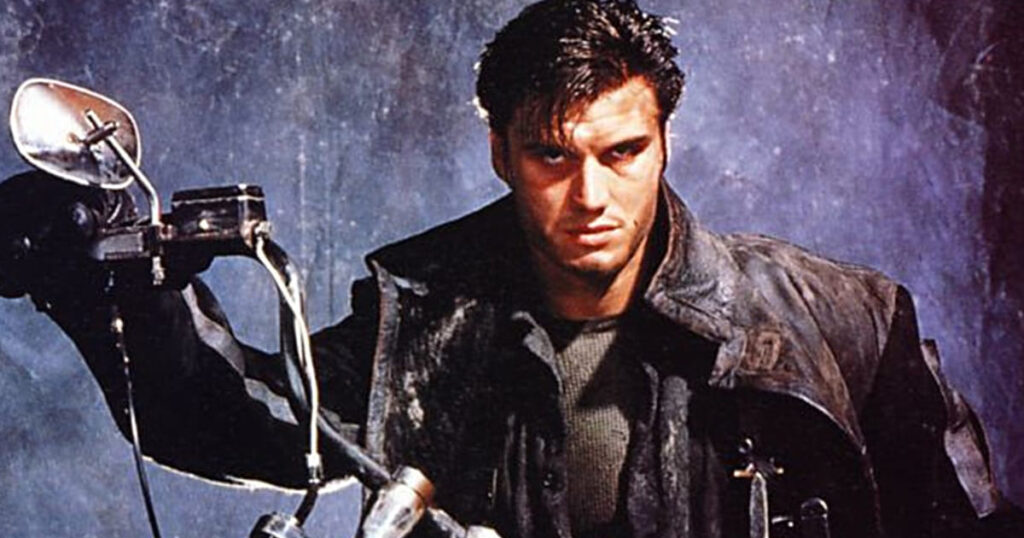
It is here where we’re introduced to a sweaty and inexplicably naked Dolph Lundgren living in the sewers of New York City. Never mind the fact that our antihero is considerably new to the scene, they do not waste time with an origin story. By the time we meet the man who used to be Frank Castle, he is knee deep in dead bad guys.
You feel a sense of RoboCop in the opening as a television news broadcast fills us in that the mysterious Punisher has already killed over 125 bad guys and is well established in the city as a presence that means something.
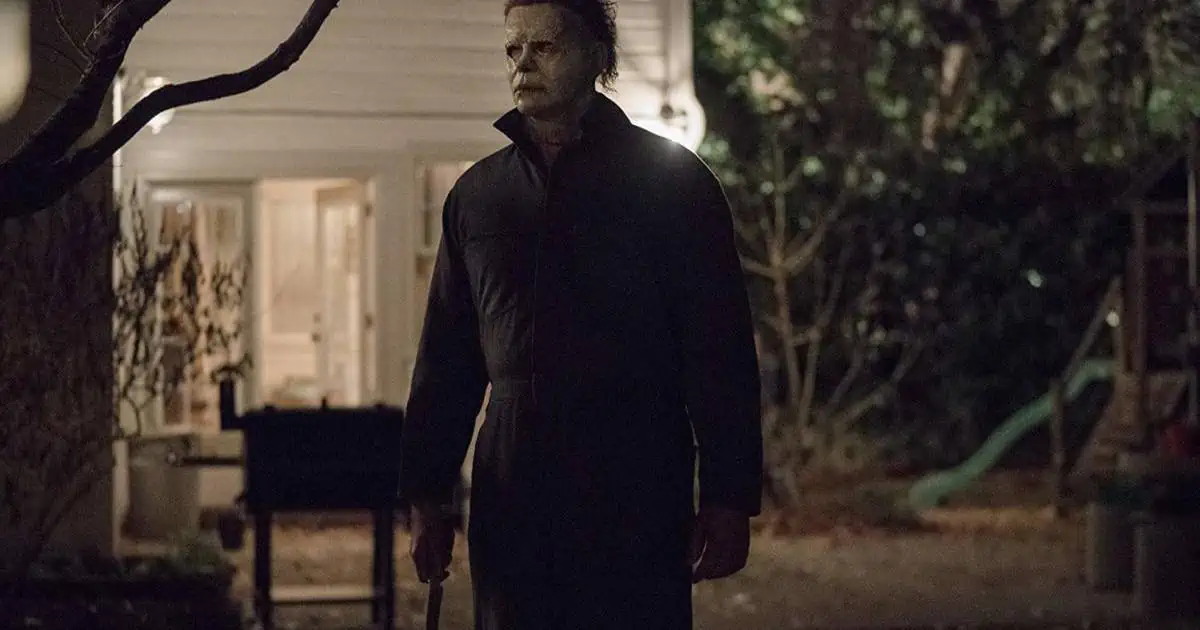
And this is interesting because some of the recent complaints for Bernthal and Marvel’s The Punisher: One Last Kill are that it feels like a step backward in story. It feels like there is a desire from fans to see the character step out of that safety zone and into a fully-fledged and seasoned Punisher in action. This film gives you that in spades and feels like a Punisher well into his career. It’s just that damn skull is missing. Which, we’ll never understand. This might seem insignificant, but it’s like one of the Halloween movies where Michael has a dumbass looking mask. It’s a necessary component and that lone detail would have likely made Dolph’s Punisher more revered in the long run. But we digress.
As we were saying, Punisher is five years into his reign and is so deep in his War Journal against crime that he has crippled nearly all of the mob families before the film even starts. It’s an interesting thought that the film will never get credit for as it asks the question, “what happens to the city when he’s successful in his fight against the mob?” In this case, the Yakuza sees how weak the mafia has become and moves in on their territory presenting an entirely different challenge. To add intrigue to injury, the Yakuza (led by the frightening Lady Tanaka, the first female to ever run the Yakuza) kidnap the children of the remaining mafia leaders and threaten to kill them when they refuse to fall in line. This puts Frank in a strange position because these are the men he’s sworn to kill in the name of his dead family. He could just walk away and let them destroy each other and originally that’s his decision. He plans to go on vacation, perhaps to the sewers in France for a change of scenery, when he decides that even he can’t let the innocent children pay for the crimes of their fathers.
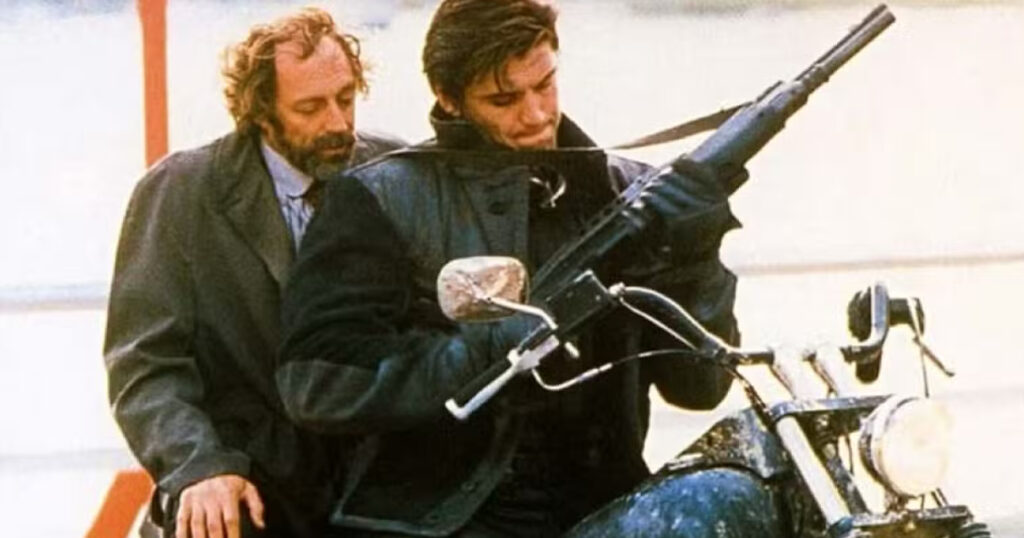
Before we get into that intriguing storyline, however, we’re introduced to the Punisher as he takes down one more head mafioso honcho. As Mr. Moretti talks shit to the cameras Iron Man 3 style about not being afraid of the Punisher, we see Frank head straight to his mansion via motorcycle.
An important note here about the style of this film. While we don’t get the classic reinforced Punisher van, I really appreciate that our guy doesn’t have an overly comic book-like Punisher-cycle or anything close. It’s just a simple gas powered worn-in motorcycle and there’s something badass in that. Everything here is truly stripped down. Literally. Even Dolph. I mean the final shot of the film is pretty much his butthole.
We get to see the Punisher in action on the big screen for the first time as Frank uses blades in his boots and GoldenEye Pierce Brosnan type maneuvers (albeit more violent) to take down swaths of bad guys before revealing himself to Moretti. But here’s what is so badass about this moment. The news stations are all waiting outside and Frank knows it, sending Moretti into the lawn in pieces with a nice old school practical effects style explosion. As the silhouette of the Punisher stands triumphant in what’s left of the doorway, you can easily imagine Danny McBride’s character in Tropic Thunder just off screen fist pumping.
The skull logo is missing and that sucks, but they at least do have the nice touch of him having tiny skulls at the end of his blades which he leaves in his victims as calling cards. The movie keeps the essence of the skull alive as well as other Punisher comic book and movie tropes. For instance, he has an informant as he so often does in the comics and this particular character is VERY comic book-ey. Barry Otto plays the character of “Shake”, a drunk and down-on-his-luck ex-thespian who looks like a vagrant version of House MD. He’s over the top and so is the Punisher’s means of contacting him as he gets his attention by sending RC trucks carrying bottles of liquor into the streets. We’re talking some high tech shit here folks. Many people consider this character a replacement of Punisher’s guy in a chair Microchip, but that is likely not the case as it’s likely that Microchip wasn’t created before this script had originally even been written.
Another past and future Punisher trope is present as he often finds assistance from members of Law Enforcement, embodied here by the great Louis Gossett Jr. who plays Frank’s ex-partner and best friend Jake Berkowitz. A character who I would argue has the best story and acting of all of the Punisher alliances throughout any of the films.
As Jake tells us through a quick line of exposition, Frank befriended him when he was a drunk and helped save both his career and himself. Frank hasn’t contacted him since his return from the dead and Jake is hellbent on finding him and attempting to save him. This leads to a surprisingly emotional moment later in the film when the Punisher turns himself in while bringing the children to safety and the two meet face to face for the first time. Jake screams that “they were his family too” and attacks Frank for shutting him out. This might be one of the only scenes the two share on camera, but it’s great acting work on the part of Gossett Jr. and one of the many things that get overlooked in this underbudgeted action fest. After all, the beating heart of The Punisher is emotional anguish.
Speaking of which, the film eventually does give us the tragic backstory of Castle in a clever way that you could argue saves us from the rigor of your typical origin story. In quick cut flashbacks we learn that his wife Julie and two little girls were killed not at a picnic gone wrong such as in the comics, but by a mafia-planted car bomb intended for him.
This quick yet effective explanation of Frank’s past gives this film loads of time to rack up a high body count with multiple explosive action sequences. There’s a drug deal gone wrong that features the Punisher using a sniping crossbow, a zipline, and features copious amounts of bad guys in wetsuits. There’s Frank’s one-man attack on the Yakuza at a very comic book-like closed carnival location that features tons of ninjas inexplicably flying down potato sack slides….. but who gives a shit, it looks awesome. There’s badass motorcycle chase sequences, some fist-to-face martial arts, and tons of these practical effects driven old school action scenes.
You’ll see that future iterations of the Punisher also took inspiration from this film, such as the unforgettable upside down bloodbath scene in Ray Stevenson’s underrated Punisher: War Zone movie. Particularly in a scene in which Frank hits up a Yakuza night spot and promises to punish their wallets as well as their bodies when he shoots up the entire building and all their slot machines. The scene feels real enough that you would honestly believe that Dolph Lundgren was legitimately firing live rounds into these props. And hey, it was New World Pictures. He may have been.
The best of which is practically the entire third act of the film as Frank is forced by the last remaining mob boss Franco (played by Jeroen Krabbé, straight off the set of Mad Men), to help rescue the last remaining kid left, his son Tommy. The rest of the mob bosses were killed off by the seriously scary Lady Tanaka in a straight up Scorsese style mob hit in which she poisoned their champagne, had them ambushed with guns by an entire restaurant including an old lady, and then really did some fucked up stuff to the final boss left standing.
The entire final act is Frank and Franco taking on the Yakuza (and we mean the entire Yakuza) at their home base full of awesome samurai-like atmosphere. These scenes have it all. One surreal moment where they mow down an entire room full of samurai sword-wielding bad guys in a dojo without any of them ever standing a chance is some of the most Punisher-like shit that has ever Punishered before.
Other moments involve some great one-on-one martial arts fights that you just don’t see that often in movies anymore as well as countless gun fights and explosions as they go room to room and dojo to dojo to do killing. In the case of one particularly awesome fight scene that plays out between Frank and two Yakuza samurai in a dojo under a creepy red light…. Dolph remembers that these were real fighters and that one of them so badly did not want to dishonor himself by dying in the film that he was actually in tears before the take. Almost refusing to let Dolph kill him in fiction.
The comic book essence hasn’t left the building despite the bloodshed either, as you have this crazy lady here using her earrings as weapons and putting up a damn good fight against Lundgren before having her light put out. Finally, Lady Tanaka, now caked in frightening white makeup, is about to make Franco off himself in front of his own child no less, before Punisher comes in with an Aaron Rodgers level arm talent moment and saves the day.
But Punisher’s job is still not finished as Franco turns back into a slimebag and tries to kill him in front of his own child that Frank just rescued no less. This kid is gonna be so fucked up. Frank is forced to kill his dad, and if you forgot you were watching an antihero at work here, more specifically the Punisher…..he not only doesn’t hug the little kid back but tells him, “you better grow up to be a good man…..or I’ll be back”. It’s just pure unfiltered Punisher.
While the movie again ends with him uncharacteristically and inexplicably hanging out butt naked in the sewer, his inner dialogue in the moment is pretty damn cool and something that remains true to the comics. There’s no official war journaling, but his inner dialogue is a constant through the film and there’s a ton of cool little badass moments like that. There’s the Rambo moment in the sewers where he has to heal his own woundage, the Lethal Weapon recalling moment where he’s strapped in a torture device, makes a few quips, and leaves with the bad guy inexplicably tied to the machine and suddenly wearing women’s shoes…..but perhaps my favorite of all the little moments is the way Dolph Lundgren’s face and makeup provide a ghostly presence throughout the film. Specifically when riding his motorcycle in the light of the tunnels.
The Legacy: How 1989’s Punisher Shaped the Comics
All of this coolness matters not, however, when you don’t even release the damn thing in theaters. Due to some mix of New World Pictures being a financial mess and new money involved not willing to pony up the dough for a US release, The Punisher was inexplicably NOT released in theaters in the United States, Sweden, or South Africa. SWEDEN? We’re not even gonna release the Dolph Lundgren movie in SWEDEN? This is insane. Finally the film’s US rights were sold to Live Home Video which later became Lionsgate and the movie was released in the United States on VHS and Laserdisc in 1991. Somehow throughout all of that The Punisher STILL managed to pull in $30 million dollars on a $9 million dollar budget. Eat that, guy who didn’t want to release it in the US.
Love it or hate it, this version of the Punisher was never going to be critic friendly. And yeah, most of them hated it. I guess there are just some of us who see ninjas sliding down carnival slides with machine guns and see it as a bad thing.
Despite this, The Punisher would quietly become one of the most influential adaptations of Frank Castle ever made. Stripping away nearly all superhero trappings from those earliest of comic book appearances and instead making him a grim urban executioner who will even threaten little kids if need be. This cult classic ended up predicting and in many ways inspiring the direction future Punisher stories would eventually take in the comics. More so than a wisecracking antihero constantly interacting with other superheroes, movie Frank felt closer to Travis Bickle or Charles Bronson. That tone later became the blueprint for future interpretations of the character.
Comic books wise the clearest influence can be seen in Punisher MAX by Garth Ennis, who has openly praised the film for understanding Frank Castle better than most adaptations before or after it. One read-through of Punisher MAX and you’ll very quickly understand that this character is far closer to that Jason Voorhees-esque guy mentioned in Yakin’s original script.
Punisher skull on the shirt or no, 1989’s The Punisher may feel like an oddity when compared with other Superhero movies of the year. But it deserves its flowers for being one of the first films pre-Batman to actually make it happen, the first Punisher film overall, and one that was made so early into the character’s zeitgeist, that there’s irrefutable evidence it didn’t just adapt The Punisher. It helped create the definitive version of the character that fans now know and love.








The comment section exists to allow readers to discuss the article constructively and respectfully, focused on the topic at hand.
What’s Not Allowed