
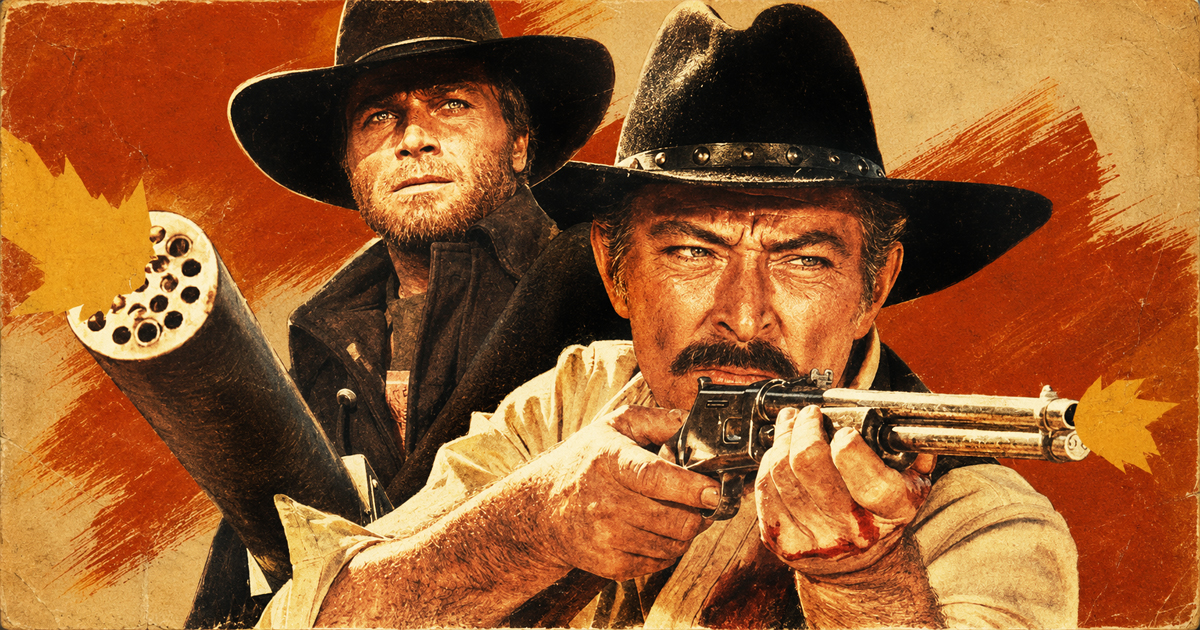
The term spaghetti western was coined to describe the wave of westerns produced largely by Italian filmmakers during the 1960s and 1970s. Where traditional Hollywood westerns tended to draw clearer lines between heroes and villains, their Italian counterparts were grittier and considerably more cynical. The landscapes were harsh, the violence was nastier, and the heroes were often little better than the men they were gunning down.
Of course, the filmmaker most responsible for bringing the spaghetti western to international prominence was Sergio Leone, whose Dollars Trilogy turned Clint Eastwood into one of the world’s biggest movie stars. With their enormous close-ups of fantastic craggy faces, explosive gunfights, morally ambiguous characters, and Ennio Morricone’s incredible music, Leone and Eastwood helped redefine what a western could be. A Fistful of Dollars, For a Few Dollars More, and The Good, the Bad and the Ugly are among the best spaghetti westerns ever made, but the Man with No Name was far from the only gunslinger roaming the genre.
So, for this list, we’re putting Eastwood’s poncho back in the closet and highlighting five great spaghetti westerns that don’t star Clint Eastwood.
The Five Spaghetti Westerns at a Glance
- Django (1966) — Franco Nero stars as the iconic gunslinger in Sergio Corbucci’s muddy, brutally violent western.
- Death Rides a Horse (1967) — Lee Van Cleef and John Phillip Law team up for a revenge story driven by one shared enemy.
- The Big Gundown (1967) — Lee Van Cleef hunts Tomas Milian in a politically charged western that questions the nature of justice.
- The Great Silence (1968) — Jean-Louis Trintignant plays a mute gunslinger in a snow-covered western with one of the genre’s bleakest endings.
- Once Upon a Time in the West (1968) — Sergio Leone’s epic western stars Charles Bronson, Henry Fonda, and Claudia Cardinale and serves as an elegy for the Old West.
Django (1966)
- Director: Sergio Corbucci
Stars: Franco Nero, José Bódalo, Loredana Nusciak
Character: Django
Why Watch: A brutally violent revenge western famous for Django’s coffin-dragging entrance and the massive weapon he pulls from it.
What Makes It Stand Out: Muddy landscapes, extreme violence, morally ambiguous characters, and Franco Nero’s iconic performance.
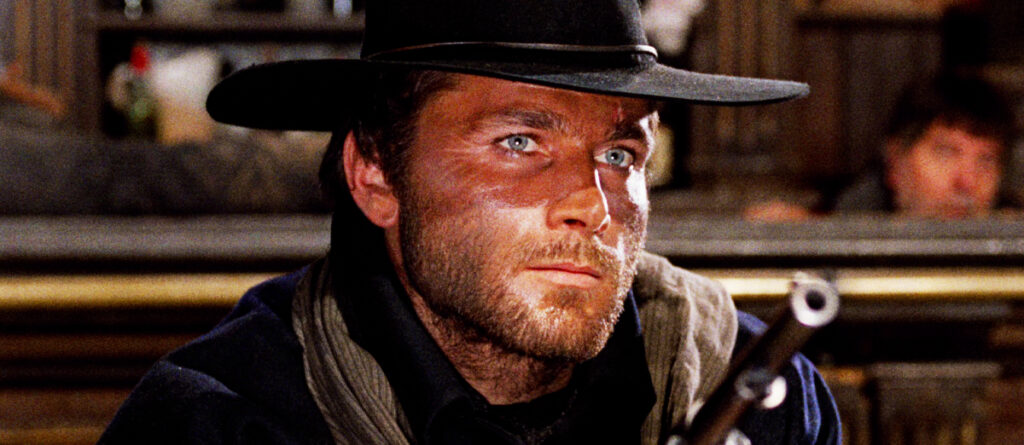
Few western heroes make an entrance quite like Django. As Franco Nero trudges through the mud in Sergio Corbucci’s Django, dragging a coffin behind him while the unforgettable title song plays, you immediately know you’re watching something different. Corbucci has crafted an absolutely filthy world, with the streets thick with slick mud, and the buildings ready to collapse. It’s no wonder the film would later be grouped with The Great Silence and The Specialists as Corbucci’s unofficial “Blood and Mud” trilogy.
Nero became an instant genre icon as the gunfighter caught between two vicious factions: racist former Confederate soldiers and Mexican revolutionaries. And then there’s that coffin. Corbucci wisely keeps its contents a mystery until Django finally opens it, revealing one of the most memorable weapons in spaghetti western history. The resulting shootout helped cement the movie’s reputation for violence, which was extreme enough that Django was banned or heavily censored in several countries.
Driven by revenge, Django is far from the traditional white-hat hero, and Nero makes the character one of the coolest gunslingers in the genre, but with enough vulnerability that he doesn’t seem superhuman. The character proved so popular that countless unofficial sequels followed, many of which simply slapped the name Django in the title, whether the character appeared or not. Some of them aren’t too bad, but the original remains awfully hard to beat.
Death Rides a Horse (1967)
- Director: Giulio Petroni
Stars: Lee Van Cleef, John Phillip Law
Characters: Ryan, Bill Meceita
Why Watch: A classic spaghetti western revenge story pairing an experienced gunslinger with a young man hunting the men who murdered his family.
What Makes It Stand Out: The Van Cleef/Law pairing, Morricone’s score, and the film’s distinctive flashback structure.
I do love Clint Eastwood, but my favourite spaghetti western actor has to be Lee Van Cleef. After becoming an instant genre icon with his appearances in the Dollars Trilogy, Van Cleef went on to become one of Italy’s biggest western stars, and one of his first films afterward was Death Rides a Horse.
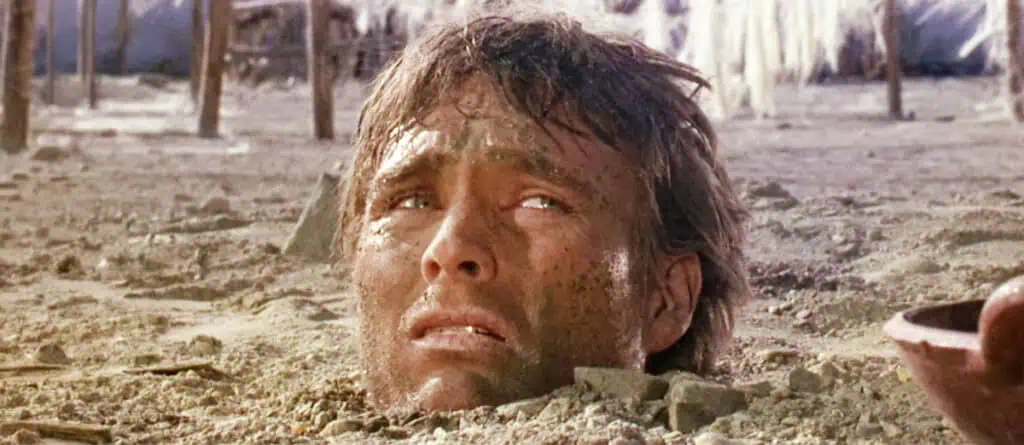
If there’s one thing spaghetti westerns love almost as much as squinting gunfighters and Ennio Morricone music, it’s revenge, and Death Rides a Horse is full of it. As a child, Bill (John Phillip Law) watches a gang murder his family and burn their home to the ground. Fifteen years later, he’s devoted his life to hunting down the men responsible.
Enter Lee Van Cleef as Ryan, a recently released prisoner who has his own unfinished business with the same men. Ryan and Bill form an uneasy mentor-student relationship, with the pair drifting in and out of each other’s paths as they pursue their shared enemies. Director Giulio Petroni gives the revenge story plenty of style, including flashbacks that are triggered whenever Bill recognizes a distinctive clue linked to one of his family’s killers.
Death Rides a Horse may not reinvent the genre, but it executes the formula exceptionally well. Sometimes all a spaghetti western needs is a killer revenge story, two great gunslingers, a tremendous Morricone score, and a whole lot of bad men who have what’s coming to them. Death Rides a Horse delivers all of that beautifully.
The Big Gundown (1967)
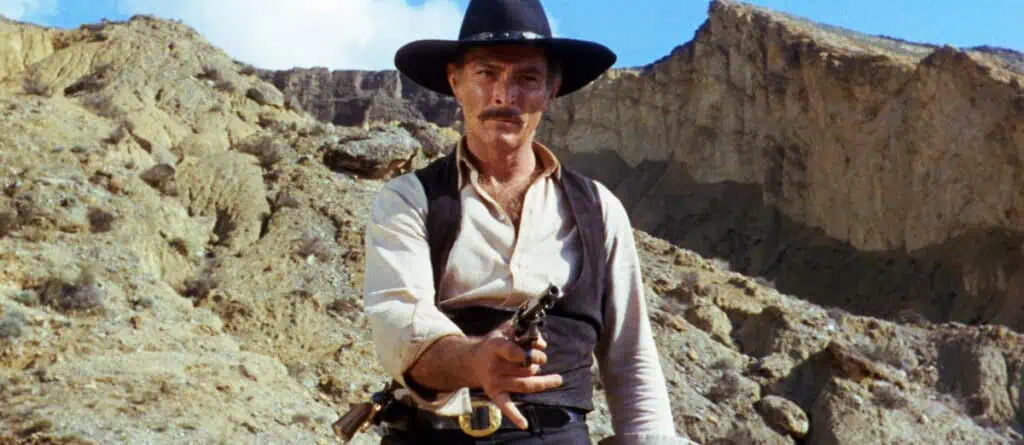
- Director: Sergio Sollima
Stars: Lee Van Cleef, Tomas Milian
Characters: Jonathan Corbett, Cuchillo
Why Watch: A bounty hunter pursues a man accused of murder and gradually discovers that the official story may not be true.
What Makes It Stand Out: Its political themes, shifting relationship between Corbett and Cuchillo, and sharp critique of power and justice.
As I mentioned, Lee Van Cleef is my favourite spaghetti western actor, so it’s only natural that he would feature in another entry on this list.
Van Cleef plays Jonathan Corbett, a respected bounty hunter who is considering retiring and going into politics. Before that can happen, he’s tasked with one final hunt: tracking down Cuchillo (Tomas Milian), a Mexican peasant accused of raping and murdering a young girl.
Not exactly a character you expect to root for, but Milian damn near steals the show, giving Cuchillo enormous charm, humour, and humanity. The film quickly turns into a cat-and-mouse game between the experienced Corbett and the resourceful Cuchillo. But the further Corbett travels, the less convincing the official story becomes, and he begins to question whether Cuchillo is really guilty of the crime he’s been accused of.
The Big Gundown is so much more than a straightforward chase western. Director Sergio Sollima turns the hunt into a story about class, political power, and how easily justice can be manipulated by people with money and influence. As Mrs. Potts would say, it’s a tale as old as time. Corbett begins the film confident in the system he serves, only to gradually realize that he’s just being used by those more powerful than him.
And to cap it all off, the final showdown is fantastic, backed by yet another awesome Ennio Morricone score. The man doesn’t miss. Van Cleef may be the name that gets you through the door, but Milian is every bit his equal, and their constantly shifting relationship makes The Big Gundown one of the most entertaining spaghetti westerns of the era.
The Great Silence (1968)
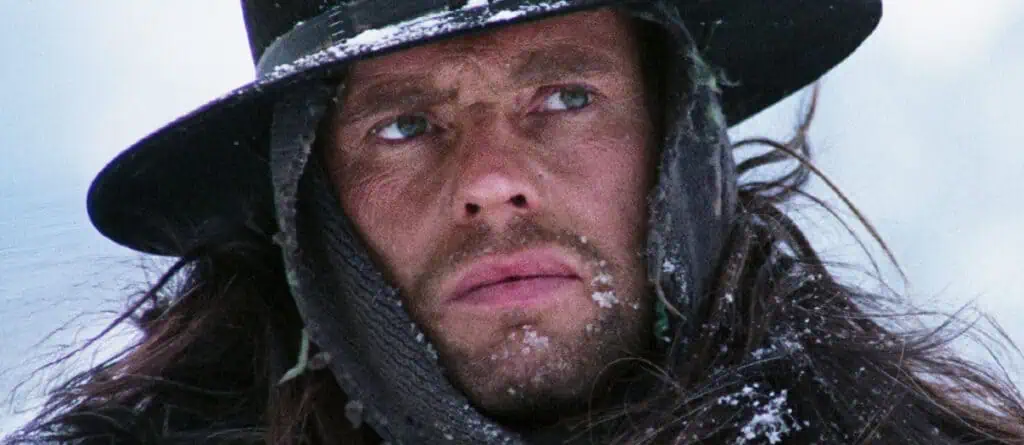
- Director: Sergio Corbucci
Stars: Jean-Louis Trintignant, Klaus Kinski, Vonetta McGee
Characters: Silence, Loco
Why Watch: A mute gunslinger confronts a ruthless bounty hunter in a snow-covered landscape.
What Makes It Stand Out: Its unusual setting, bleak morality, melancholy atmosphere, and famously devastating finale.
So many spaghetti westerns take place in endless deserts and dusty frontier towns, but The Great Silence is a refreshing change, unfolding in a frozen landscape buried beneath the snow.
We’re also used to gunslingers of few words, but this one takes things a step further: its hero is completely mute. Jean-Louis Trintignant stars as Silence, a gunfighter whose vocal cords were cut when he was a child. He makes his living going after bounty killers, deliberately provoking them into drawing first so he can kill them within the boundaries of the law. Eventually, he crosses paths with Loco, a sadistic bounty hunter played to perfection by Klaus Kinski.
The snowy setting gives The Great Silence an eerie, almost otherworldly quality, while Ennio Morricone’s melancholy score adds another layer of sadness to an already bleak story. Director Sergio Corbucci creates a world where good people rarely get what they deserve, and the bad guys understand exactly how to use the system to their advantage.
That cynicism reaches its devastating peak in the finale, which left me stunned the first time around. It’s definitely not the spaghetti western you put on when you want cheering crowds and triumphant gunfights, but it’s part of what makes The Great Silence so unforgettable.
Once Upon a Time in the West (1968)
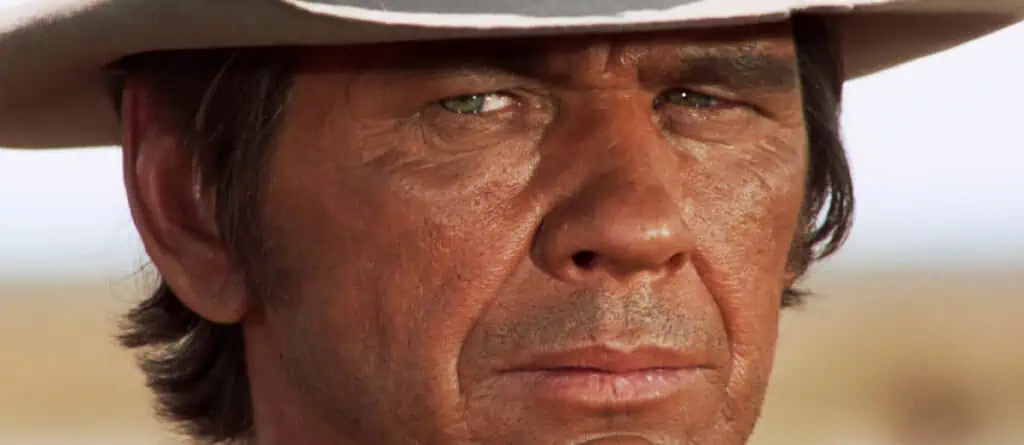
- Director: Sergio Leone
Stars: Charles Bronson, Henry Fonda, Claudia Cardinale, Jason Robards
Characters: Harmonica, Frank, Jill McBain, Cheyenne
Why Watch: Leone’s epic western combines revenge, railroad expansion, unforgettable characters, and one of Ennio Morricone’s greatest scores.
What Makes It Stand Out: Its enormous scale and its elegiac portrayal of the Old West disappearing into history.
Sergio Leone could have called it quits after the Dollars Trilogy, and his place in spaghetti western history would have been secure, but he returned with another masterpiece: Once Upon a Time in the West.
I’ll admit that this one didn’t land for me at first. My dad introduced me to the Dollars Trilogy when I was young, and I loved them, but when I finally got around to Once Upon a Time in the West…I wasn’t nearly as enthralled. Thankfully, I came around and began to recognize the film for the triumph it is. And now, I love it.
Leone takes everything he’d perfected with Clint Eastwood and pushes it into something even grander, with all the extreme close-ups, prolonged silences, and explosive bursts of violence you could ever want. The opening alone, in which three gunmen wait at a dusty train station for Charles Bronson‘s mysterious Harmonica, builds incredible tension out of almost nothing. And then there’s Henry Fonda as the villainous Frank. Casting one of Hollywood’s most famously decent leading men as a cold-blooded killer was inspired.
Claudia Cardinale is equally important as Jill McBain, a former prostitute who arrives in the West expecting to start a new life, only to find herself caught in the middle of a violent struggle over land, money, and the railroad.
And I know I keep mentioning Ennio Morricone, but he delivered one of his all-time greatest scores with this one. “Man with a Harmonica,” in particular, is just haunting. With music this good at his disposal, Leone frequently lets Morricone do the storytelling for him.
Beneath the gunfights and revenge plot, Once Upon a Time in the West is really an elegy for the Old West. The railroad is coming, civilization is spreading, and men like Harmonica and Frank are becoming obsolete. It’s a western about the death of the western.
Other notables you should check out include Day of Anger, Keoma, My Name is Nobody, The Mercenary, The Return of Ringo, and The Grand Duel. What are some of your favourite spaghetti westerns? Let us know in the comments!







The comment section exists to allow readers to discuss the article constructively and respectfully, focused on the topic at hand.
What’s Not Allowed