
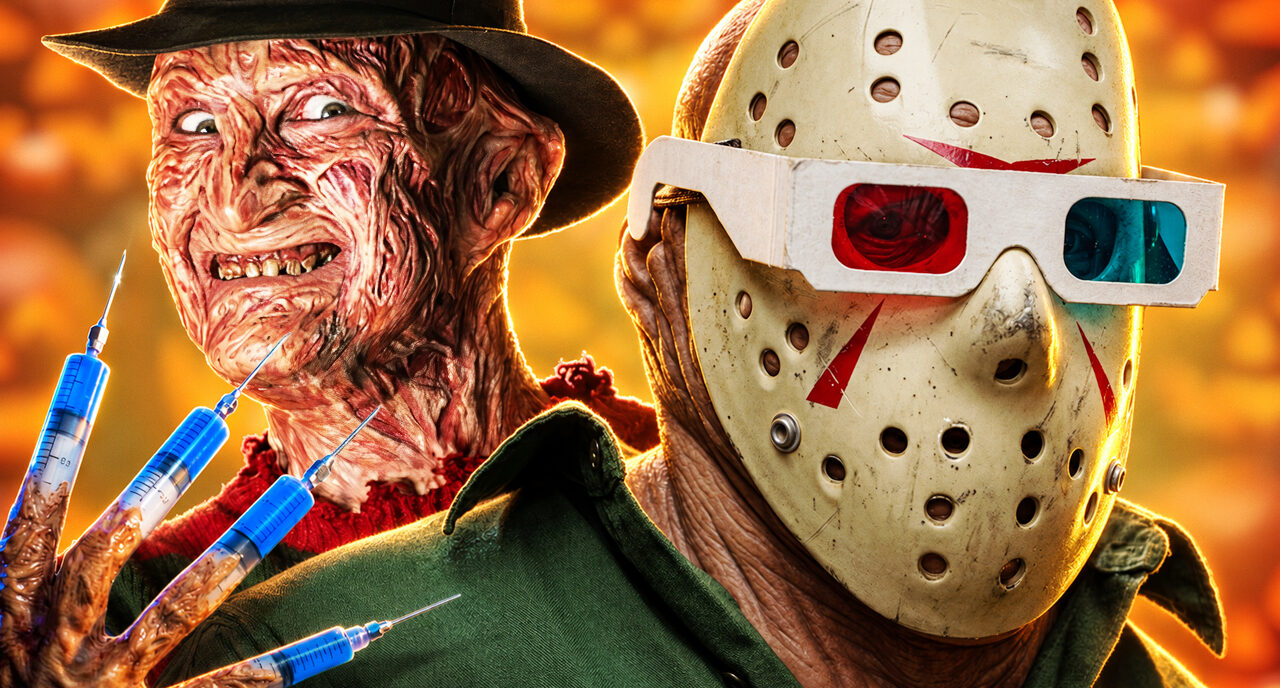
When a horror franchise hits, there’s no telling where it will go. Some of the best make it into double digits. Hell, some of the worst make it to double digits. One thing is for certain, though: every single series is up for comparison. What makes these franchises special, and what makes them stand apart from the rest? Anything that makes it to a third movie deserves a shoutout. But that got me thinking: what is the best third movie in horror franchise history?
Many horror franchises have made it to a third entry, but few can lay claim to being the best part three in horror history. Who had the best talent in front of the camera? Who had the best crew behind it? And, most importantly, who put it all together to make the best part three horror has ever seen? I’m ready to make some folks mad as we sift through the movies to find out once and for all what is the best part three in horror’s long history.
The Rules for the Best Horror Part 3
First, some rules. We won’t be taking into account anything that deals with weird continuity or legacy sequels. So, Halloween Ends (not that it would be the best of anything, really) will not count as a part three. The only Halloween movie that will count as a true part three is Halloween III: Season of the Witch. Spoiler: that movie will come back to stir the pot in a little bit.
Next, anything can be considered, even if it went straight to video. That means Children of the Corn and Puppet Master can bring their votes to the podium.
Finally, this is my opinion and my opinion only. If you have something to add, please put it in the comments about how wrong I am.
To decide which movie is the best horror part three, nearly everything will be considered: cultural impact, box office performance, on-camera talent, behind-the-scenes talent, effects, its place within its respective series, and how horror audiences view it today. And, of course, we have the contractually required Joe Bob-approved Blood, Breasts, and Beasts. These things matter when it comes to watchability and how much fun you can have throwing a movie on at a party.
The Horror Franchise Part 3 Also-Rans
There are an alarming number of horror movies that have made it to part three. Even though I had an idea of what the finalists would be, I did my due diligence and eliminated a ton of others. Let’s begin.
The Eliminated
These are the movies that made it to part three but won’t even sniff the top spot. Some are good, some aren’t very good. Some are barely watchable. Some are just here because they technically exist.
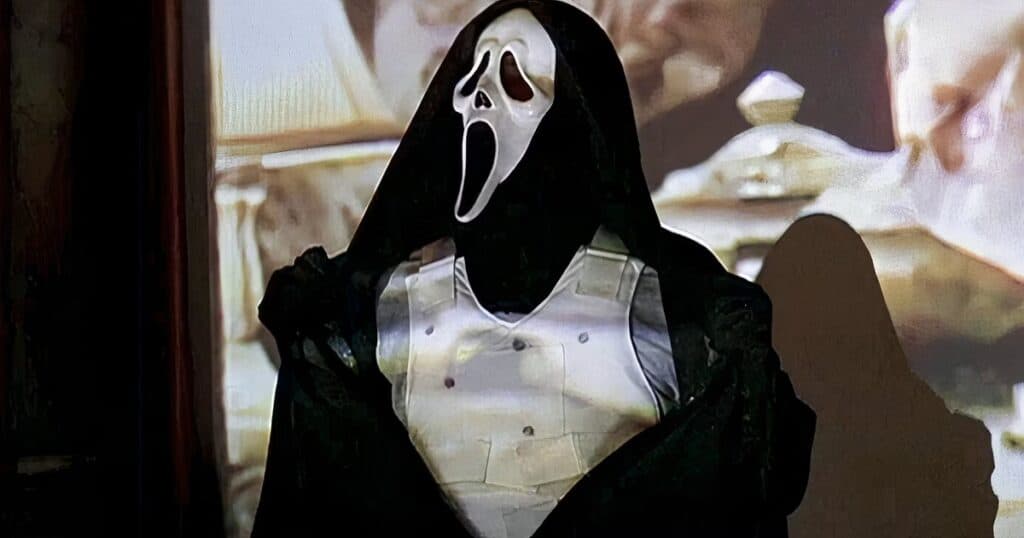
Children of the Corn III: Urban Harvest, Night of the Demons III, Leprechaun 3, Scream 3, and The Howling III: The Marsupials are out.
So are Poltergeist III, Pumpkinhead: Ashes to Ashes, Cube Zero, Amityville 3-D, Return of the Living Dead 3, Beyond Re-Animator, Subspecies III: Bloodlust, Tremors 3: Back to Perfection, Blair Witch, Sharknado 3: Oh Hell No!, Saw III, Anaconda 3: Offspring, Lake Placid 3, Blade: Trinity, Critters 3, 3 from Hell, Wrong Turn 3: Left for Dead, Ghoulies III: Ghoulies Go to College, Jaws 3-D, and The Prophecy 3: The Ascent.
Don’t let the door hit you on the way out, Terrifier 3, Lost Boys: The Thirst, I’ll Always Know What You Did Last Summer, Scanners III: The Takeover, Creepshow 3, and Species III.
Those movies all get to bend the knee to the true contenders.
The Ones That Enter the Conversation
Then you have the movies that at least get to enter the conversation but don’t quite hold the room. That group includes Final Destination 3, Hellraiser III: Hell on Earth, Sleepaway Camp III: Teenage Wasteland, Paranormal Activity 3, Puppet Master 3: Toulon’s Revenge, Omen III: The Final Conflict, [REC] 3: Genesis, Hatchet III, From Dusk Till Dawn 3: The Hangman’s Daughter, Silent Night, Deadly Night 3: Better Watch Out!, and The Purge: Anarchy.
Then there are movies that should be good but don’t quite fit the discussion, like Leatherface: The Texas Chainsaw Massacre III, Phantasm III: Lord of the Dead, and Alien 3.
And finally, there are the movies that almost make the cut: The Exorcist III, Child’s Play 3, Insidious: Chapter 3, Day of the Dead, Army of Darkness, 28 Years Later, A Quiet Place: Day One, and Psycho III.
Look, there’s a lot, okay? I told you this would be exhaustive and I meant it. Please let me know what obvious choice I missed. And I didn’t even include everything from the 1950s and earlier, like the Hammer Dracula and Frankenstein series, the Abbott and Costello movies, or the Universal classics.
No. Today comes down to the heavy hitters. The series that brought back original creators, went full 3-D, or just said, “Eff it,” and decided to change the very DNA of their series.
The three-way battle for the crown of best horror part three comes down to Freddy vs. Michael vs. Jason. Surprised? I know I’m not.
The Three Finalists: Halloween III, A Nightmare on Elm Street 3, and Friday the 13th Part III
These movies couldn’t be more different from each other, but they also couldn’t be closer in terms of trying to change the direction their respective series were going. Two came out during the early 1980s, when it was essentially the Wild West for horror franchises. The other arrived later in the decade, when horror was trying to find its identity and slashers were no longer quite as dominant.
Halloween III: Season of the Witch, A Nightmare on Elm Street 3: Dream Warriors, and Friday the 13th Part III weren’t necessarily competing with each other at the time. They were trying to one-up their predecessors at the box office.
Nearly 40 years later, however, here they are, vying for the title of the best third horror entry of all time. So how did they do it? We’ll break it down by creative talent, effects, gore, nudity, experience, legacy, gimmick, place within the series, and everything in between.
How These Three Horror Franchises Changed Direction
The first Halloween came out in 1978 and was an absolute smash success, becoming one of the most profitable independent movies of all time and changing horror and slashers specifically. Friday the 13th, created by Sean S. Cunningham and Victor Miller, came out in 1980 and stood head and shoulders above many of the slashers flooding theaters that year.
Both franchises released their first sequels in 1981, but from there, they decided to go in very different directions.
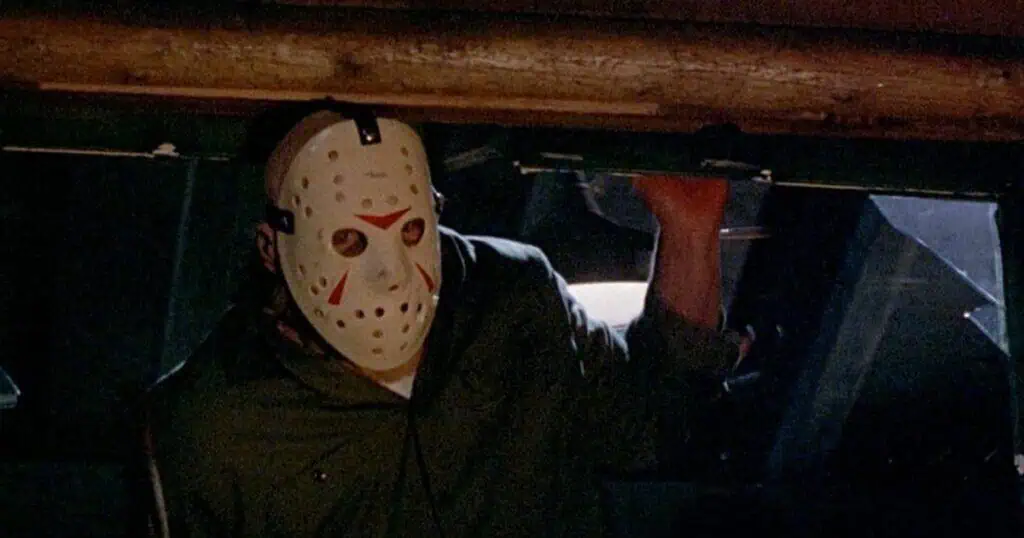
Friday the 13th Part III arrived on August 13, 1982, a Friday the 13th. The filmmakers knew they had their iconic killer and kept Jason as the franchise star. What they changed wasn’t the main character. They changed the dimensions. The third installment was in 3-D.
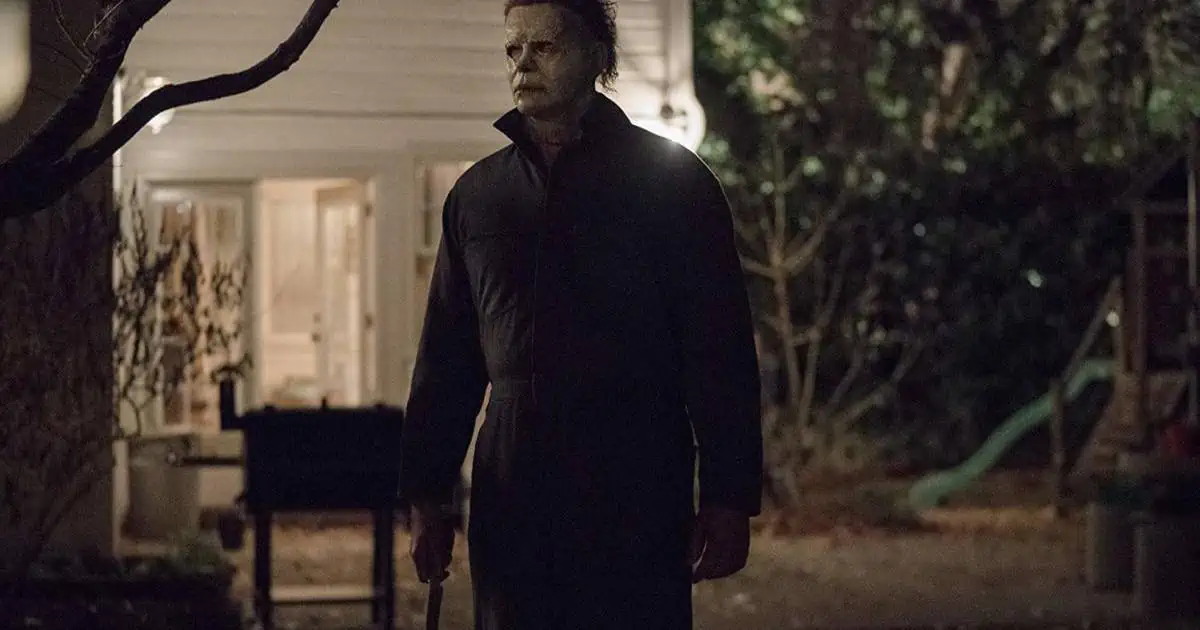
Halloween went in a completely different direction. Instead of leaning into its leading man, the filmmakers killed the franchise’s main character off, at least as far as this movie was concerned. John Carpenter famously didn’t want to keep Michael Myers going forever. Instead, he envisioned Halloween as an anthology series revolving around the holiday rather than one particular masked killer. So Halloween III became Halloween in name only, following an entirely new story.
For A Nightmare on Elm Street, the series didn’t even start until 1984, when Halloween had already been off screens for a couple of years and Friday the 13th had perfected the slasher formula in a way few other franchises could follow. So A Nightmare on Elm Street didn’t follow it. After a first sequel that wasn’t received as well as the original, 1987’s A Nightmare on Elm Street 3: Dream Warriors brought back elements that would sink their teeth (or razor claws, as it were) into audiences and keep the nightmares alive.
Three movies trying to keep their series going. Three movies that went in completely different directions. Three horror sequels that have spent almost 40 years fighting for the crown of best part three.
Creative Talent: Which Horror Part 3 Had the Best Cast and Crew?
First up is the creative team, both in front of and behind the camera.
Friday the 13th Part III
Friday the 13th has never been a series of overly famous writers and directors, apart from Victor Miller and Sean S. Cunningham creating the franchise and, of course, the infamy surrounding some of its later filmmakers. Steve Miner was the only person to direct back-to-back entries, handling both Friday the 13th Part II and Part III. Miner’s credits also include other horror movies such as Halloween H20: 20 Years Later, Warlock, House, and Lake Placid. He wasn’t one of the huge names like Carpenter, Hooper, or Craven, but that’s not a bad collection of credits.
The screenplay came from Martin Kitrosser and Carol Watson. Kitrosser also wrote and directed the absurdly fun Silent Night, Deadly Night Part 5, which features the legendary Mickey Rooney.
In front of the camera, let’s be real: we know and love this group because of this movie. They didn’t go on to do a heck of a lot on screen compared to the casts of the other two finalists. And that’s totally okay.
Halloween III: Season of the Witch
Moving over to Halloween III: Season of the Witch, we get a bit of a step up. Tommy Lee Wallace directed and wrote the screenplay, with John Carpenter and Nigel Kneale contributing to the story. Wallace isn’t a huge name compared with some of the horror legends discussed here, but he has had a very fun and important career. His credits include Fright Night Part 2, Vampires: Los Muertos, the screenplay for Amityville II: The Possession, and, most importantly, the It miniseries starring the beloved Tim Curry.
The cast is also pretty prolific. Tom Atkins leads the movie, paired with Dan O’Herlihy, the Old Man from RoboCop, in one of his best roles. You could even throw Jamie Lee Curtis into the mix, providing a voice-over for the creepy little town. That cast is miles ahead of Friday the 13th Part III.
A Nightmare on Elm Street 3: Dream Warriors
Finally, we get to the third Nightmare movie, and while it’s close-ish, it ultimately wins because of its behind-the-scenes crew.
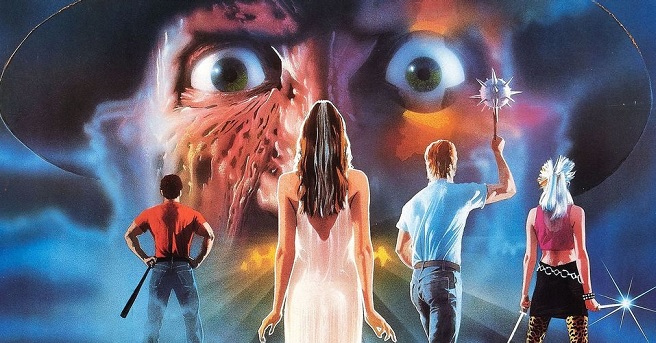
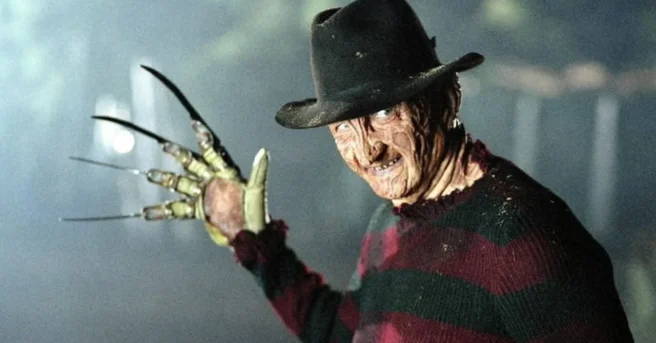
In front of the camera, the Nightmare franchise lives and dies by Robert Englund, and his turn as Freddy here is incredible as always. We also get the return of Heather Langenkamp as Nancy, the Laurie Strode of this universe. Looking beyond that, there’s a young Laurence Fishburne, then credited as Larry Fishburne, Academy Award winner Patricia Arquette in her first movie, and legendary actor John Saxon. Arquette is especially easy to overlook because Johnny Depp had his first role in A Nightmare on Elm Street, but she went on to have a sensational career of her own.
It’s the talent behind the camera that really seals it, though. Usually, when a movie has more than a couple of writers, it spells doom. But when three of the four writers include Chuck Russell, Wes Craven, and Frank Darabont, you’re probably okay. Even the fourth writer, Bruce Wagner, went on to write David Cronenberg’s Maps to the Stars.
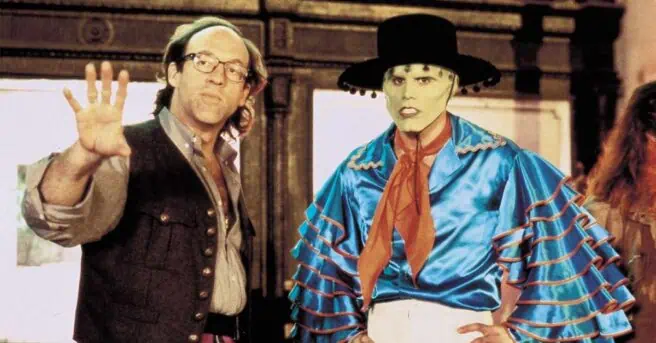
Craven and Darabont need little introduction, but Chuck Russell was an unheralded star in our favorite genre and in many of our childhoods. He wrote Dreamscape before writing and directing A Nightmare on Elm Street 3, then went on to direct The Blob, The Mask, and Eraser. That is one hell of a collection of talent.
Advantage: A Nightmare on Elm Street 3: Dream Warriors.
Blood, Breasts, and Beasts: Which Part 3 Has the Best Kills?
Next up is what horror hounds really look for. We’re looking at the gore and nudity because blood and boobs are important, especially to these types of movies.
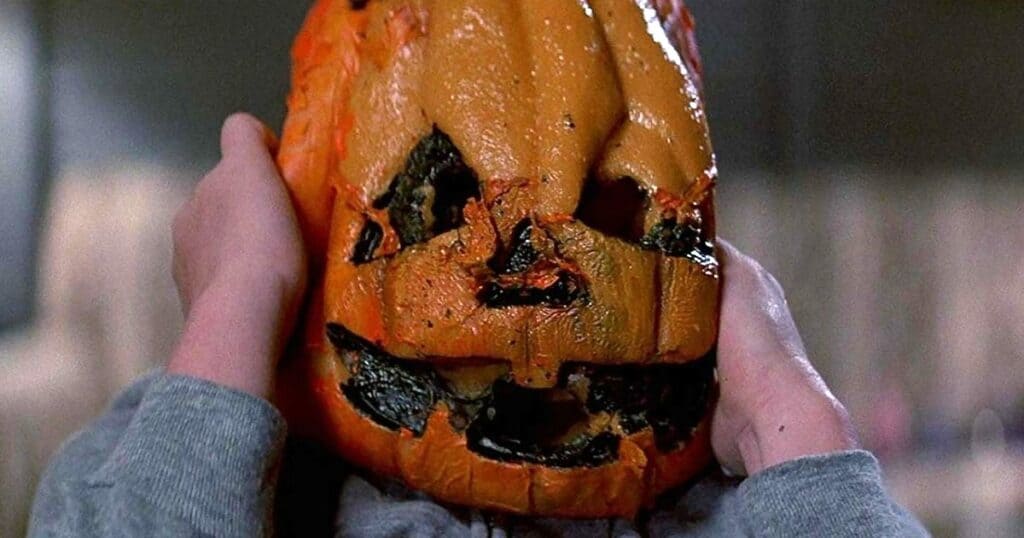
Halloween III: Season of the Witch
Halloween III falls to the bottom here. Look, I love this movie and will discuss that love later, but in terms of excess, it falls short. For titillation, we get some almost-and-very-tastefully-done shots of Stacey Nelkin as she is unable to resist Tom Atkins, as none of us can. We also get some Tom Atkins butt, because we are equal-opportunity when it comes to our sleaze. The man-ho that is Daniel Challis can give as good as he gets. Other than that, it doesn’t have what you would expect from a slasher, certainly one from this era.
For gore and effects, though, Season of the Witch is unfairly maligned. The body count is in the middle of the pack at 13, depending on how you count the deaths. That doesn’t include the possible deaths of countless people at the end of the movie or the Silver Shamrock scientists killed when Dan throws the chips into the Stonehenge light.
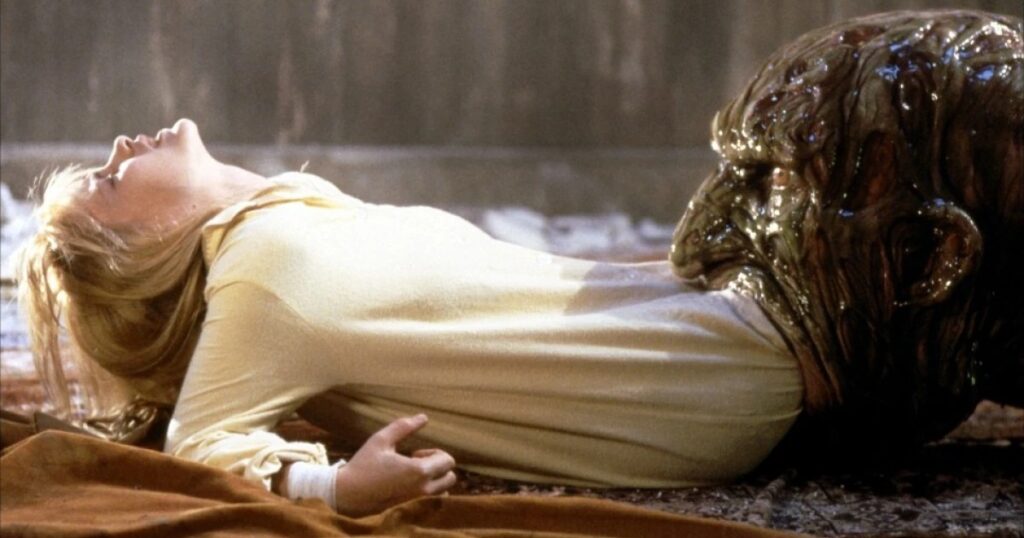
We get a decapitation, a laser to the face, a drill to the head, and Conal Cochran getting unexpectedly taken out. Then there’s the movie’s main set piece, where we see what the masks are going to do to the rest of America as the entire Kupfer family is wiped out.
There are some questionable effects, but many looked great in 1982 and, being mostly practical effects, still look stellar today.
A Nightmare on Elm Street 3: Dream Warriors
A Nightmare on Elm Street 3 is next. The T&A is again pretty limited, but there’s a funny, meta slasher scene where a nurse strips for Joey and starts making out with him. It’s something that would have fit right into a Friday the 13th movie and almost happened in Halloween II.
The body count is smaller here, but each death is an event. Freddy commits each one, even if he’s in skeleton form at one point, and the kills are specific to the characters in the movie. We get a live-action marionette, a drug addict forced into death by drugs, a wannabe TV star getting the primetime treatment, and an impalement on a car. Even the returning heroine is taken out by Freddy as revenge for his defeat in the first movie. While it’s just with the glove, it has much more oomph than almost any other bladed-glove stabbing in the series.
The effects are a cut above, pun very much intended, and the character deaths feel personal as Freddy goes after each victim with a purpose.
Friday the 13th Part III
That leaves us with the winner of this round: Friday the 13th Part III, probably to the surprise of no one. This series helped establish many of the slasher rules: do recreational drugs or sleep with someone while a slasher killer is nearby and you will probably pay the price. There isn’t a ton of nudity outside of a very gratuitous shower scene, but there’s boozing, smoking, and plenty of implied hanky-panky. It’s not quite the soft-core level of Friday the 13th Part V, but there’s definitely more here than you remember.
As for the kill counter, it’s 13 if you count Jason’s demise, which is a perfect number. While the kills aren’t quite as personal as Freddy’s, the creativity and volume beat them out. We get cleavers to the chest, pitchforks to the chest and neck, electrocution, a harpoon to the eye, and a dude getting chopped in half while he walks on his hands. We just don’t get that kind of kill creativity anymore.
Okay, the Hatchet series is pretty good, yes, but especially for 1982, this was something special.
Advantage: Friday the 13th Part III.
Legacy and Gimmick: Why These Three Movies Still Matter
This final category is a difficult one because all three movies have significant legacies and devoted fan bases. A Nightmare on Elm Street 3 is often a fan favorite and is sometimes held in higher regard than the original. Halloween III is either your favorite sequel, like me, or you hate it because Michael Myers isn’t in it. Friday the 13th Part III is often regarded as one of the standout entries from the early ’80s 3-D horror craze.
Halloween III: Season of the Witch
Halloween III has spent the last couple of decades building its reputation. While it hasn’t reached the level of something like The Thing in terms of critical reassessment, it is now widely treated as a genre gem. The problem is that it almost killed the series. Critics and fans weren’t particularly receptive at the time, and audiences were confused by the lack of Michael Myers.
I’ve made no secret of how much I love this movie. I love the characters, the music, the design, and the horror. But I also see it for what it is. It probably should have just been called Season of the Witch. The Halloween series died for six years before Halloween 4: The Return of Michael Myers brought the iconic killer back.
The gimmick and legacy of Halloween III are tied together in one giant “what if?” What if the anthology concept had actually worked? That possibility is a huge part of the movie’s legacy.
Friday the 13th Part III
Friday the 13th Part III has its gimmick right there in the title and on the poster: the movie is in 3-D. The things it chooses to throw at the audience are pretty par for the course for the time (popcorn, yo-yos, knitting needles, weapons) but the best one is the silly eyeball on a stick coming out of a character’s head.
The real legacy, however, is found at the exact moment Jason gets his most famous piece of iconography. The hockey mask. The mask has changed throughout the series, but it has remained as much a part of Jason and the Friday the 13th franchise as almost anything else.
Part III is fun, and the 3-D is fine, but there are better Friday the 13th movies that check all the boxes. The importance of the mask, though, is impossible to refute.
A Nightmare on Elm Street 3: Dream Warriors
Something that can’t be refuted is the reputation and quality of Dream Warriors. It also has a slightly less noticeable hook than its two competitors.
This is the movie where Freddy Krueger became the version of Freddy we know best. I won’t say “silly Freddy,” because that would come later, but “Welcome to Prime Time, bitch!” was the beginning of the shift. This is when Freddy became MTV Freddy. A Freddy who could appear in music videos, become part of albums, and eventually host television shows.
What’s interesting is that this came on the heels of arguably the scariest and darkest Freddy, who appeared in A Nightmare on Elm Street 2: Freddy’s Revenge. But I think Freddy became as popular as he did because of what he became starting with Dream Warriors. He still killed people. He still had that old dog in him, as seen in Wes Craven’s New Nightmare. But from Part 3 through Freddy vs. Jason, we got a generational run of a personality that everyone knew. And after it’s all said and done, that’s what gives A Nightmare on Elm Street 3: Dream Warriors the crown.
The Best Third Movie in Horror Franchise History
So many part threes. So many movies that mean a lot to people. But there can be only one. While I personally love Halloween III: Season of the Witch, the best overall third movie in horror history is A Nightmare on Elm Street 3: Dream Warriors.
It has the cast, the behind-the-scenes talent, the kills, the effects, the characters, and perhaps most importantly, the legacy. It didn’t just continue the Nightmare on Elm Street series. It helped define what Freddy Krueger would become for generations of horror fans.
My second favorite part three may actually be The Exorcist III, but that’s a discussion for another day.
What’s your favorite horror part three? Let me know your arguments for what you think is the best third movie in horror history. I’m open to hearing it. Until then, sweet dreams, and stay fighting, you Dream Warriors!



The comment section exists to allow readers to discuss the article constructively and respectfully, focused on the topic at hand.
What’s Not Allowed