


When Indy and his father rode off into the sunset at the end of Indiana Jones and the Last Crusade, it felt like the perfect ending. The trilogy was complete. Three fantastic movies. No weak link. Just a perfect adventure series that fit neatly inside that old VHS box set. So why did we have to pull Indiana Jones back out of retirement? Twice. What went wrong with both comeback movies? And why did it have to be snakes? Today we’re putting Indiana Jones and the Kingdom of the Crystal Skull and Indiana Jones and the Dial of Destiny head-to-head.
No, we’re not simply comparing them. We’re doing what Heath Ledger’s Joker did in The Dark Knight: breaking the pool cue in half and making these movies fight to the death for the honor of not being the worst Indiana Jones film.
We’ll compare:
- Story
- Villains
- Side characters
- Special effects
- And finally, which movie actually gave Indiana Jones the sendoff he deserved.
Some of these answers already have me irritated. Let’s get into it.
Story Comparison
Kingdom of the Crystal Skull
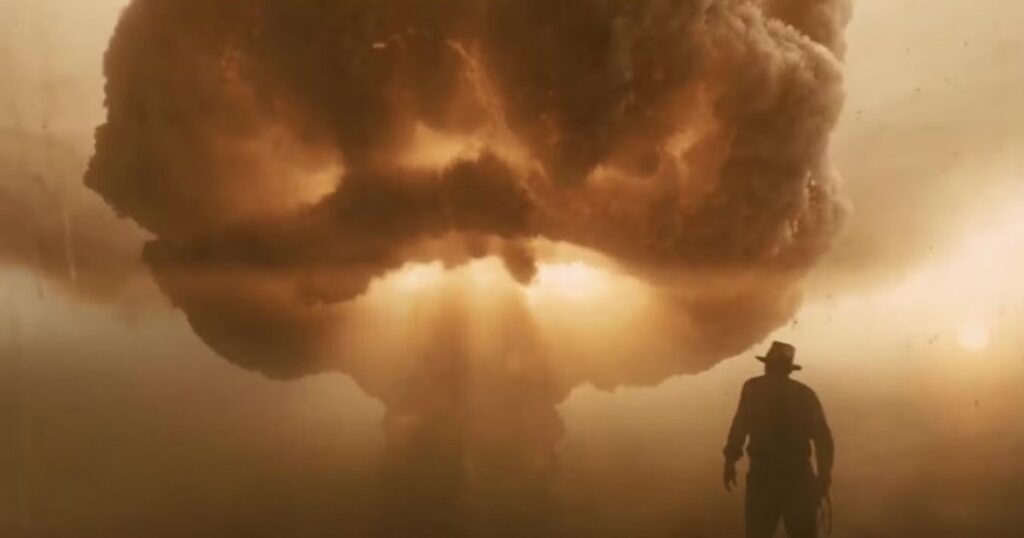
Written by David Koepp with story contributions from Steven Spielberg and George Lucas, Crystal Skull starts with a bang. And I mean a bang. After Indy uses gunpowder and magnetism to locate a mysterious mummified alien corpse, he escapes a double-cross and ends up trapped inside a nuclear test site. That’s actually a fantastic setup. You’re mixing Cold War paranoia, nuclear testing, mummies, and aliens into one opening sequence. Indy wandering through a fake suburban neighborhood moments before an atomic bomb detonates is an inspired idea. Unfortunately, then comes the refrigerator.
Indy climbs inside an old lead-lined refrigerator to survive the blast. To be fair, those refrigerators actually did contain lead lining, and the movie even points it out for the audience. But physics still exists. Even if the blast wave somehow didn’t kill him, the thermal pulse would have turned that refrigerator into an oven, and there isn’t a universe where he survives being launched hundreds of feet through the air without breaking every bone in his body.
That said, this moment probably receives more criticism than it deserves. This franchise has never been grounded in realism. We’ve watched Indy:
- Walk across invisible bridges.
- Escape an airplane using nothing but an inflatable raft.
- Witness supernatural miracles.
The refrigerator is ridiculous, but it’s still part of a wildly entertaining opening.
Dial of Destiny
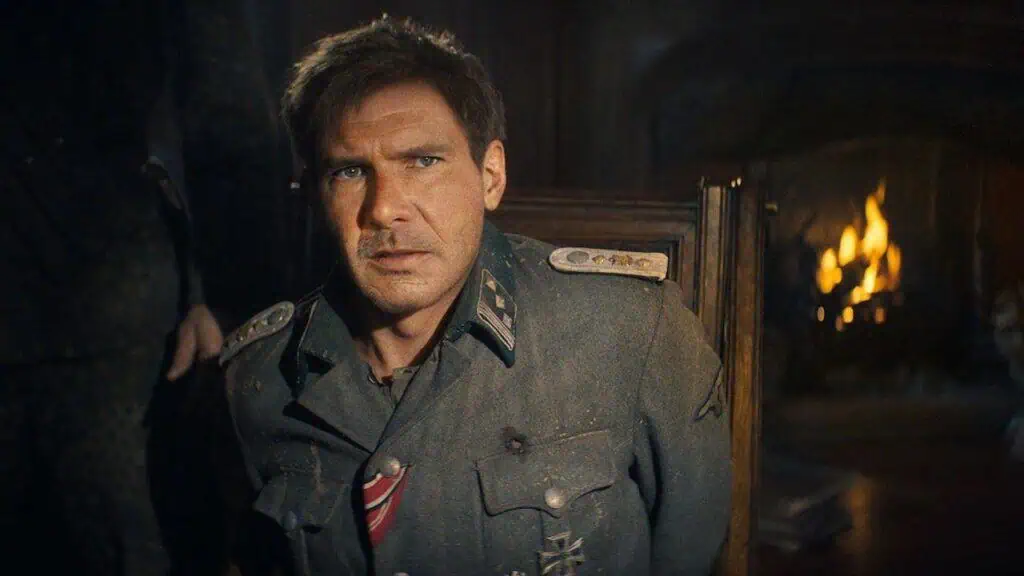
Now let’s look at Dial of Destiny. Do you even remember how this movie opens?
It begins with an extensively de-aged Harrison Ford in a World War II sequence where Indy and Basil Shaw recover one half of Archimedes’ Dial while fighting Nazis led by Dr. Voller, played by Mads Mikkelsen. By the time this movie is over, you’ll have heard the name Archimedes so many times you’ll start sounding like Brian Cox in Super Troopers, threatening to pistol-whip the next person who says it.
Back to Crystal Skull
Once the infamous nuclear blast is over, Indy teams up with Mutt Williams, played by Shia LaBeouf, to search for a missing colleague. Eventually they discover the mysterious crystal skull, which turns out to belong to an extraterrestrial… or, if we’re being technically correct, an interdimensional being.
Meanwhile, Cate Blanchett’s Irina Spalko and the Soviet forces are searching for the same skull. Their goal? Harness its psychic powers to influence American minds.
Along the way Indy reunites with Marion Ravenwood, and, surprise, Mutt is revealed to be Indiana Jones’ son. This entire storyline feels like it’s constantly teasing the audience with the possibility that Harrison Ford is about to hand the franchise over to Shia LaBeouf, and it’s incredibly frustrating.
Then Somehow Dial of Destiny Does Something Worse
After surviving four movies’ worth of impossible adventures, Indy returns in Dial of Destiny as a broken old man. He’s retiring from teaching. Then, almost entirely through exposition, we learn that Mutt died fighting in Vietnam. Off-screen. It’s handled with all the emotional subtlety of Happy Gilmore casually saying, “Yeah, she got hit by a bus.” As if that weren’t enough, Marion also left him because the grief destroyed their marriage.
So before this movie even starts, it has already erased nearly everything Crystal Skull gave Indy at the end:
- His son is dead.
- His marriage collapsed.
- He’s lonely.
- He’s miserable.
Yes, this serves director James Mangold‘s intended character arc. But narratively, it also feels like taking a wrecking ball to the previous ending. It reminds me of those horror sequels that immediately undo the previous movie’s ending because the new writers wanted a clean slate.
Helena Shaw and the Replacement Problem
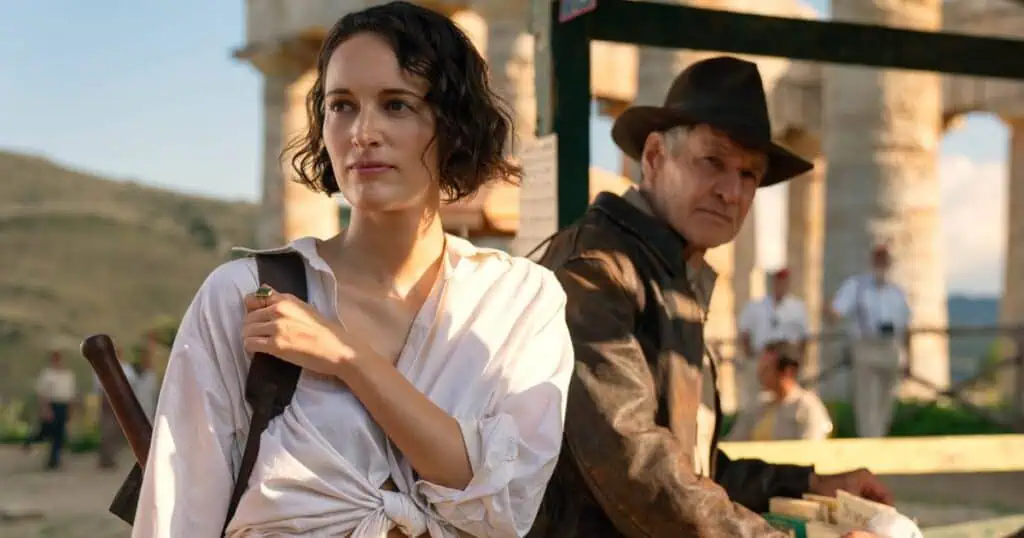
Then the movie repeats the exact same mistake Crystal Skull was criticized for. Instead of simply giving us one last Indiana Jones adventure, it spends a huge portion of its runtime introducing Helena Shaw. Putting aside every internet culture-war argument surrounding the character, there’s a much simpler storytelling question: Why bring Indiana Jones back if you’re going to spend so much time convincing us how awesome someone else is? Helena is a capable archaeologist, treasure hunter, and antiquities smuggler who repeatedly reminds everyone how independent she is. Meanwhile Indy often feels like a passenger in his own movie.
The rest of Dial of Destiny follows Indy, Helena, and a brand-new sidekick named Teddy as they race the Nazis to find the other half of Archimedes’ Dial. The adventure takes them to Greece, underwater shipwrecks, and eventually into the film’s time-travel finale. Along the way they briefly team up with Antonio Banderas, who is so underused it’s almost criminal. Teddy’s unibrow gets more screen time than Banderas does.
One sequence that absolutely deserves credit, though, is Indy diving into a shipwreck filled with aggressive eels. Swapping snakes for eels was a clever twist, and it’s easily one of the movie’s strongest action scenes. Unfortunately, it’s surrounded by action that rarely reaches the excitement of the original trilogy.
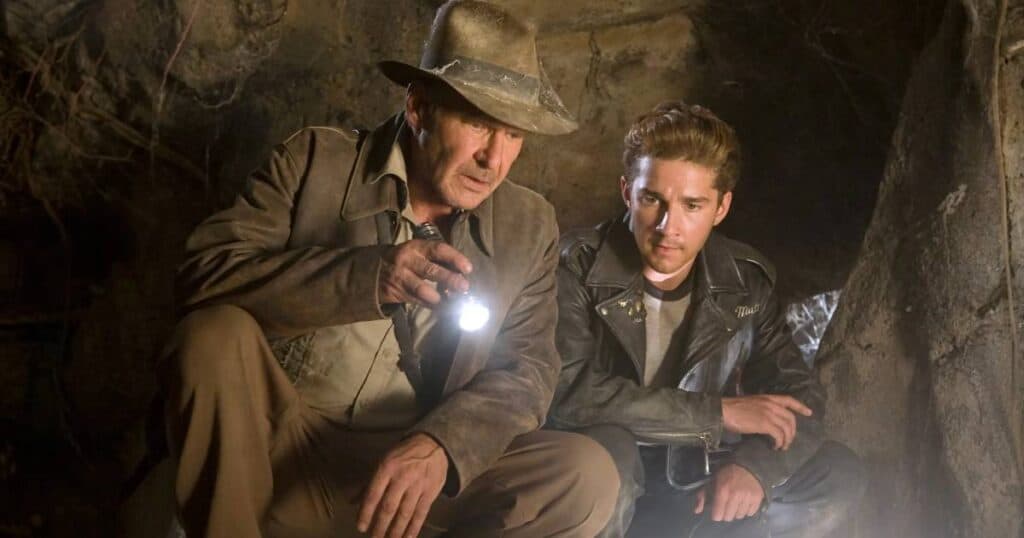
Meanwhile, Crystal Skull goes in the complete opposite direction. Sometimes too far. Case in point: Mutt swinging through the jungle on vines alongside an army of CGI monkeys.
Every time that scene appears, I feel like Jim Carrey in Liar Liar spraying water everywhere while yelling, “Oh, come on!” Some action scenes are so absurd that a movie never fully recovers from them.
Both films rely heavily on coincidence, plot convenience, and heroes surviving situations that should absolutely kill them. Eventually, though, they reach their climactic set pieces.
Here’s where things get interesting.
Crystal Skull builds toward aliens / interdimensional beings. That’s actually a pretty exciting direction for Indiana Jones. And contrary to popular belief, that idea wasn’t really Spielberg’s. George Lucas had been pushing for the alien storyline for years and deserves most of the credit or blame for that creative decision.
Dial of Destiny, meanwhile, builds toward time travel. That sounds like a bold idea. In execution, it’s considerably less satisfying. Watching Indy beg to remain in the past and die in history isn’t adventurous. It’s depressing. Even worse, the movie doesn’t allow him to make that decision himself. Helena simply punches him unconscious and drags him back to the present.
Whether you agree with his choice or not, stripping Indiana Jones of his own agency during the emotional climax of his final movie is an incredibly strange storytelling decision.
Winner: Kingdom of the Crystal Skull
Neither story is flawless. Both lean heavily into fantasy. But aliens feel more like an Indiana Jones adventure than watching a broken old hero beg to stay behind in history. Crystal Skull wins this category fairly comfortably.
Which Movie Has the Better Villains?
Do we really have to choose? Neither movie exactly gives us Belloq or Donovan.
Crystal Skull
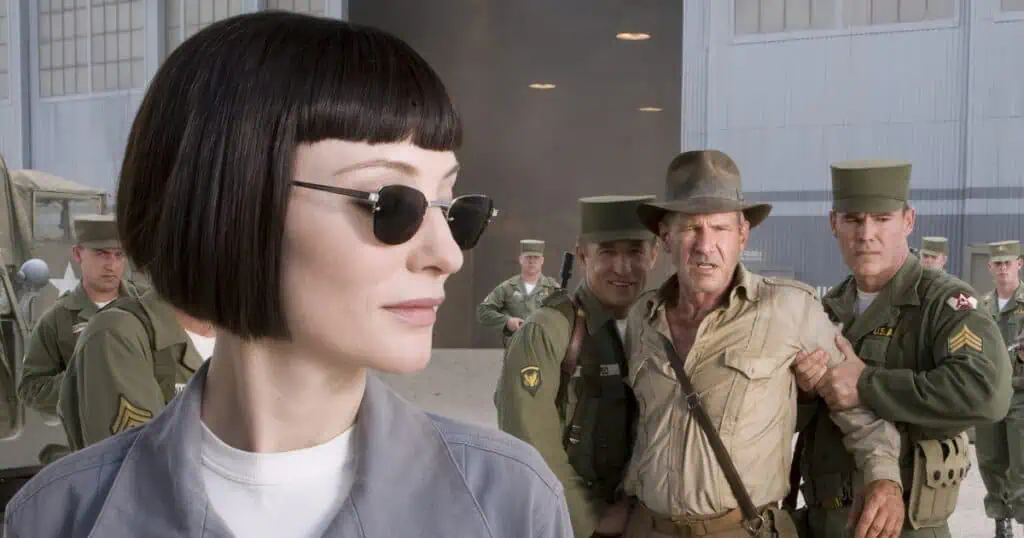
Cate Blanchett plays Irina Spalko. Blanchett is excellent, as always, and she certainly looks the part of a Cold War villain. Even if her haircut occasionally makes her resemble Courteney Cox in Scream 3. The problem isn’t Blanchett. It’s the writing. What does Spalko actually do? Mostly chase people. She lacks memorable scenes. She never feels especially dangerous. Her plan remains oddly vague, and despite all the talk about psychic warfare, she never reaches the iconic status of previous Indiana Jones villains.
Compare her to villains who:
- ripped beating hearts out of people’s chests,
- chose the wrong Holy Grail,
- or literally melted on screen.
Spalko never gets a defining moment.
Then there’s Mac. He’s a double agent. No, wait. Now he’s loyal. Actually, he’s a triple agent. Thrilling.
Dial of Destiny
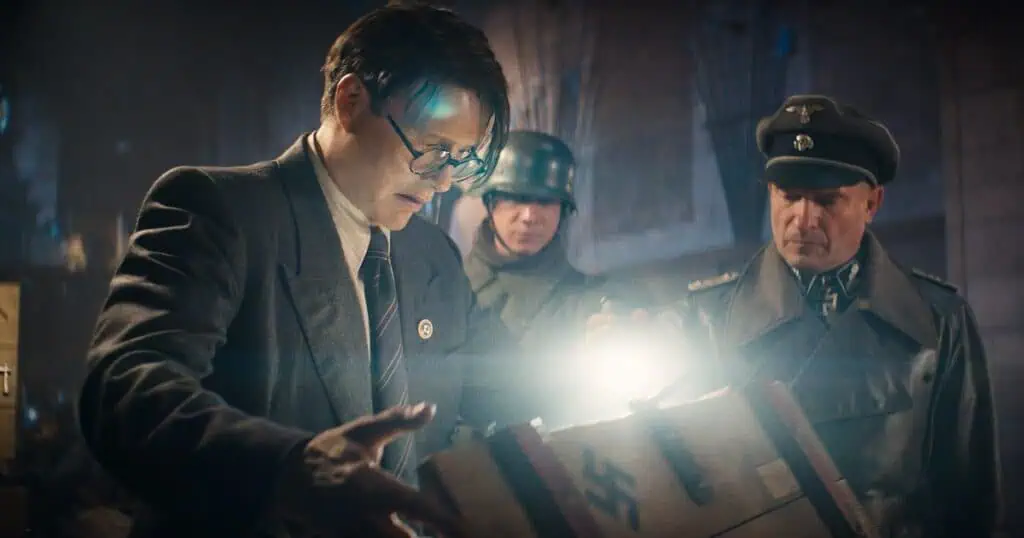
I don’t know what Dial fans are laughing about. Your villains aren’t exactly unforgettable either. Who looked at Mads Mikkelsen and thought: “You know what’s unexpected? Let’s have him play another sinister European villain.” It’s inspired casting in the same way casting Dwayne Johnson as a muscular guy would be.
Mads is always compelling. The script just doesn’t give him much to work with. His motivation is at least more interesting than Spalko’s. Rather than winning World War II, Voller believes Hitler made critical mistakes. His goal is to travel back in time, eliminate Hitler, and lead Nazi Germany to victory himself.
That’s immediately more compelling than psychic Soviet propaganda. Unfortunately, after establishing that premise, the movie mostly has Voller stand around looking intimidating.
Then there’s Boyd Holbrook’s henchman. He spends the movie looking like he’s about to become Indy’s final physical opponent. Especially once the film introduces an enormous bruiser who seems destined for an old-school David-versus-Goliath fistfight.
It never happens. What a waste.
Winner: Dial of Destiny
This isn’t exactly a landslide, but Voller’s plan is at least memorable, even if the execution isn’t. The real villains in both movies, however, might actually be the side characters.
Which Film Has the Better Side Characters?
Oh boy. We’ve gone from bad to worse.
Mutt Williams (Crystal Skull)
Let’s start with Mutt. This isn’t Shia LaBeouf’s fault. At the time, Spielberg liked him, Hollywood loved him, and he was starring in everything. David Koepp reportedly reworked Mutt into a rebellious 1950s greaser to better fit LaBeouf’s screen persona. The problem? Nobody walked into an Indiana Jones movie hoping to spend half the runtime meeting Indiana Jones Jr.
The writing practically screamed: “Harrison Ford is getting older, so here’s the replacement.” That immediately put audiences on edge.
Even if you enjoy LaBeouf’s performance, Mutt is written as an exaggerated stereotype. The comb. The leather jacket. The butterfly knife. The “don’t talk about my mama” attitude. We’ve met this guy before.
Then the movie reveals he’s Indiana Jones’ son. Suddenly every fear about replacing Harrison Ford feels justified. The motorcycle. The hat. The constant comparisons. It’s all laying the groundwork for a passing-of-the-torch movie.
Ironically, George Lucas himself would later make it clear: Indiana Jones is Harrison Ford. The ending even reinforces that idea when Mutt reaches for the famous fedora, only for Indy to reclaim it before the credits roll. The audience breathed a sigh of relief.
Until…
Helena Shaw (Dial of Destiny)
…they tried the exact same thing again.
Enter Helena Shaw. To be fair, Lucasfilm repeatedly insisted she wasn’t intended to replace Indiana Jones. But intentions and presentation aren’t always the same thing.
Once again, the final Indiana Jones movie spends an enormous amount of time asking us to invest in someone who isn’t Indiana Jones. Personally? I just didn’t enjoy Helena. Not the performance. The character. You could argue she’s intentionally written as an anti-sidekick. Someone who challenges Indy instead of admiring him. That’s perfectly valid. But I didn’t buy a ticket to spend two hours watching someone constantly tell Indiana Jones why he’s wrong.
Mutt, for all his flaws, at least felt like someone learning from his father. Helena often feels like she’s there to prove she’s smarter than everyone else, including the hero whose name is in the title. That gets old. Fast.
Then there’s Teddy. He arrives seemingly out of nowhere. He contributes very little beyond being another energetic kid tagging along for the adventure.
Antonio Banderas? Painfully underused. Sallah? Reduced to little more than an extended cameo. Basil Shaw? Mostly exists to move the plot from Point A to Point B.
At this point, it almost doesn’t matter how flawed Crystal Skull’s supporting cast is. Yes:
- Professor Oxley spends most of the movie acting like he accidentally wandered into another dimension.
- Mac is forgettable.
- Several characters are underwritten.
But Helena alone tips the scales.
Winner: Kingdom of the Crystal Skull
Not because its supporting cast is particularly great. Because Dial of Destiny’s feels considerably more frustrating.
Which Movie Has Better Special Effects?
The original Indiana Jones trilogy always felt physical. Dirty. Sweaty. Dangerous. You could almost feel the heat coming off the desert. The snakes looked real. The insects made your skin crawl. The stunt work had genuine weight.
Crystal Skull replaces much of that tactile realism with glossy CGI. The jungle chase becomes so overloaded with digital effects that it often resembles an expensive video game cutscene more than an actual adventure film. That’s especially unfortunate because Spielberg still stages several sequences well. The motorcycle chase through Marshall College has terrific momentum and reminds you what he’s capable of.
Dial of Destiny doesn’t necessarily look cartoonish. Instead, it often feels synthetic. The opening train sequence is technically impressive, but the digital de-aging and distant CGI stunt work constantly remind you you’re watching visual effects instead of people performing dangerous stunts. The underwater eel sequence is excellent. The airplane finale? Not so much. It becomes visually overwhelming, with so much happening on screen that you start feeling disconnected from the action.
Compare that to Indy fist-fighting a giant German soldier atop a moving tank in The Last Crusade. One sequence feels immediate. The other feels manufactured.
Neither movie truly recaptures the tactile magic of the original trilogy. But if I have to choose…
Winner: Kingdom of the Crystal Skull
Its worst moments are more embarrassing. But they’re also more energetic. At least it occasionally looks like it’s having fun.
Which Movie Treated Indiana Jones’ Farewell Better?
You’ll notice I intentionally left Marion Ravenwood out of the side-character discussion. That’s because she’s central to the biggest difference between these two movies.
Kingdom of the Crystal Skull
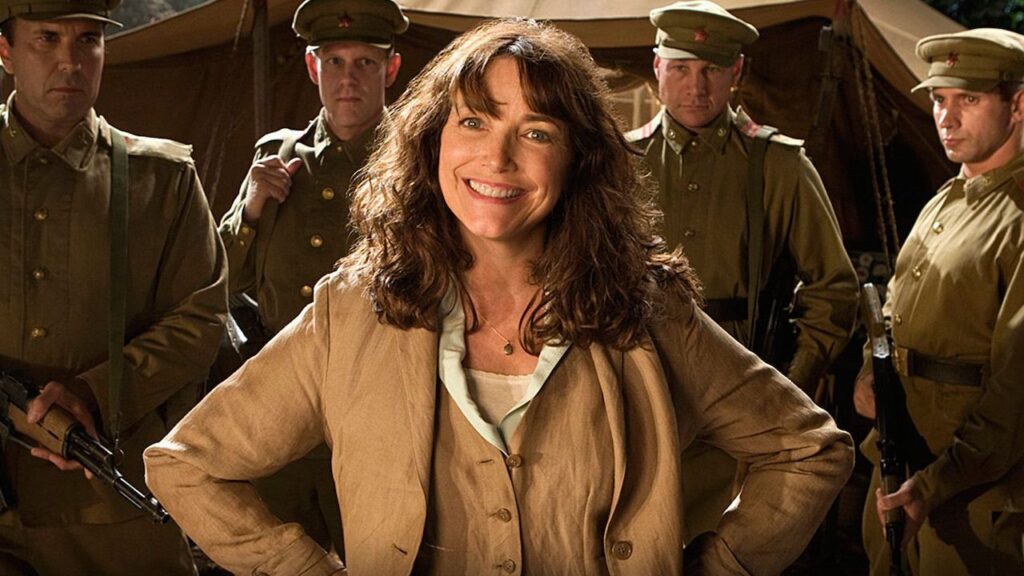
Marion’s return is undeniably convenient. She suddenly reappears after years apart, and before long she and Indy are slipping back into their old rhythm like no time has passed. Is it contrived? Absolutely. Is it also kind of charming? Yes.
The movie never really slows down to explore the emotional weight of Indy discovering he has an adult son he never knew existed. That’s a genuinely heartbreaking revelation that gets pushed aside because there’s always another chase, another sword fight, or another exploding vehicle waiting around the corner. Still, by the time the credits roll, Indiana Jones ends up somewhere hopeful.
- Oxley regains his sanity.
- Indy is reinstated at Marshall College and promoted to Associate Dean.
- He marries Marion.
- He has a family.
- His future finally looks peaceful.
Even if there had never been another Indiana Jones movie, you could accept this as his ending. It wasn’t perfect, but it was happy.
Dial of Destiny
Apparently, that wasn’t enough. There was still another movie to make.
The first thing Dial of Destiny does is dismantle almost everything Crystal Skull left behind. Mutt? Dead. Marion? Gone. Indy? Alone.
Instead of meeting him as the legendary adventurer we’ve followed for decades, we’re introduced to an exhausted old man who’s simply waiting to retire.
Now, to be fair, James Mangold clearly wanted to tell a story about aging, regret, and finding purpose again. There’s absolutely room for that kind of story. The problem is how the film gets there. It doesn’t build toward Indy’s loneliness. It begins there by erasing nearly every positive development from the previous film.
Whether you loved Crystal Skull or hated it, it’s hard not to notice that Dial spends its opening act undoing almost everything its predecessor accomplished.
The De-Aging Debate
The de-aging technology deserves some credit. Honestly, it looks far better than it has any right to. There are moments where it’s remarkably convincing. But I still couldn’t fully buy into it. Maybe that’s just personal preference. I’d rather watch an older Harrison Ford doing his best, with the occasional stunt double, than a digital recreation that constantly reminds me computers are involved.
It never completely disappears. You’re always aware you’re watching technology.
The Biggest Problem
The real issue isn’t the CGI. It’s how Indiana Jones himself is treated. The movie doesn’t simply portray him as old. It repeatedly strips him of agency. He spends much of the film:
- grieving,
- reacting,
- getting rescued,
- or being lectured.
Then comes the climax.
Indy decides he wants to remain in the past. Whether you agree with that decision or not, it’s his decision. Except the movie doesn’t allow him to make it. Helena punches him unconscious. He wakes up back home.
His farewell isn’t built around his own choice. It’s built around someone else’s. That decision has divided audiences ever since the film’s release, and I completely understand why.
Then, after all that emotional devastation, Marion suddenly returns. The reconciliation is sweet on paper. But because the movie itself created the tragedy only a couple of hours earlier, it also feels strangely manufactured. It’s difficult to shake the feeling that the film broke Indiana Jones simply so it could put him back together again.
Winner: Kingdom of the Crystal Skull
This category isn’t close. Whatever problems Crystal Skull has, it allows Indiana Jones to finish his story with hope.
Dial of Destiny asks us to spend most of the movie watching one of cinema’s greatest heroes lose almost everything before hurriedly trying to restore part of it at the very end.
For me, that’s a much harder sell.
Final Verdict
So, which movie wins? Surprisingly, this really isn’t close.
- Story: Kingdom of the Crystal Skull
- Villains: Dial of Destiny
- Side Characters: Kingdom of the Crystal Skull
- Special Effects: Kingdom of the Crystal Skull
- Indiana Jones’ Farewell: Kingdom of the Crystal Skull
That gives Kingdom of the Crystal Skull four categories to one. Despite everything people have criticized it for over the last fifteen-plus years, I’d still rank it comfortably above Indiana Jones and the Dial of Destiny.
That’s saying quite a bit. Crystal Skull interrupted what had been a perfect trilogy. It gave us the infamous refrigerator scene. It buried the series beneath layers of glossy CGI. It introduced Mutt Williams and flirted with the idea of passing the fedora to someone else.
Those are legitimate criticisms. But even with all of those missteps, it still feels like an Indiana Jones movie. There’s still a sense of fun. There’s still energy. There’s still optimism. Most importantly, there’s still Spielberg.
Why Spielberg Still Matters
I’m still sore at Spielberg after Disclosure Day myself. But I can also admit something. Having him behind the camera matters. Even when Crystal Skull makes baffling creative decisions, there are flashes of the old magic. You can still recognize the filmmaker who gave us Raiders of the Lost Ark, Temple of Doom, and The Last Crusade. The pacing. The visual storytelling. The adventure. It’s still there, even if it’s buried beneath CGI monkeys and refrigerator physics.
By comparison, Dial of Destiny often feels weighed down by its own sadness.
Indiana Jones movies have always balanced danger with fun. Temple of Doom gets incredibly dark at times. But even in its bleakest moments, it never forgets it’s supposed to be an adventure.
Dial spends so much time reminding us how broken Indy has become that the audience eventually starts feeling just as exhausted. And that’s the biggest disappointment of all.
Final Thoughts
Neither of these movies belongs alongside the original trilogy. If given the choice, I’d still rather remember Indiana Jones riding off into the sunset with his father at the end of The Last Crusade. That’s the ending that always felt complete.
But if you force me to choose between the two modern sequels? I’ll take the aliens over the dial every single time.
What do you think? Is Kingdom of the Crystal Skull actually the better movie? Or does Dial of Destiny deserve more credit than it gets? Let me know in the comments, and thanks for reading.











The comment section exists to allow readers to discuss the article constructively and respectfully, focused on the topic at hand.
What’s Not Allowed