

PLOT: Long-buried wounds rise to the surface when iconic pop star Mother Mary reunites with her estranged best friend and former costume designer, Sam Anselm, on the eve of her comeback performance.
REVIEW: If you caught the trailer for Mother Mary and walked into the theater expecting a high-octane pop star thriller or a glossy musical extravaganza, you might want to double-check the director’s name, not to mention the studio releasing it. This is a David Lowery/A24 film through and through, and for anyone expecting something other than a dense, atmospheric arthouse drama, you should probably look elsewhere
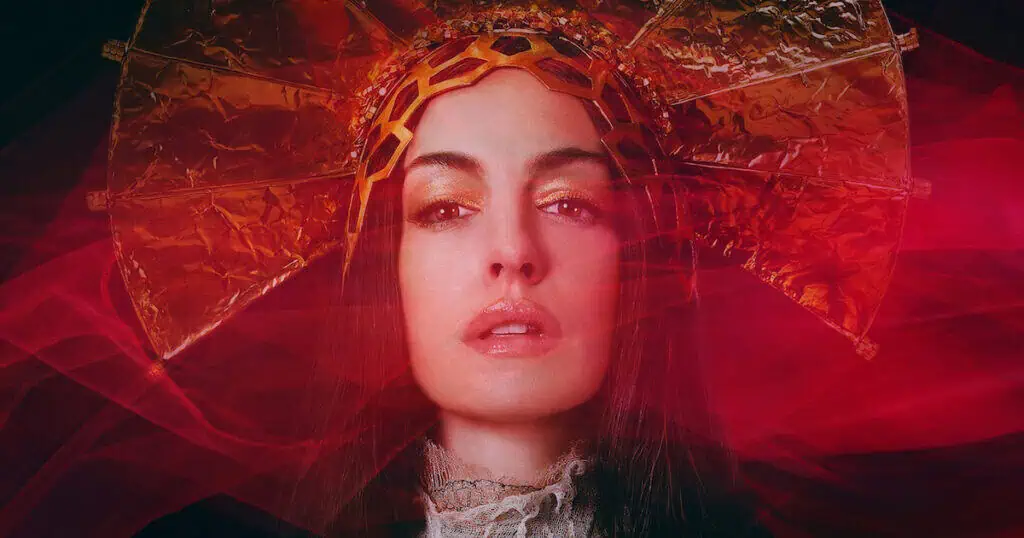
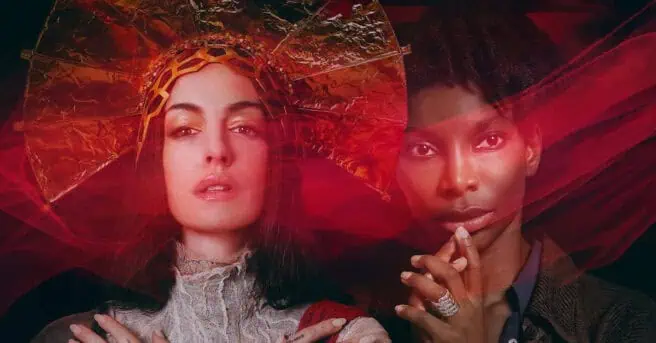
The story centers on a world-famous pop icon who goes by the stage name Mother Mary (Anne Hathaway). When we meet her, she’s at a total breaking point, overworked, creatively hollowed out, and haunted by a public image that no longer feels like her own. In a desperate attempt to find her soul again, she retreats to the English countryside to find Sam (Michaela Coel), a brilliant fashion designer who styled Mary during her rise to fame. Years ago, the two had a bitter falling out when Mary’s ego and the demands of her brand pushed Sam away. Now, Mary has returned with a specific request: she needs Sam to design the look for her massive upcoming comeback performance. The movie essentially becomes an autopsy of their relationship as they hole up in Sam’s workshop while they attempt to collaborate on a garment that is supposed to redefine Mary’s entire career. It’s a story about the cost of collaboration and the ghosts we leave behind in the people we used to love.
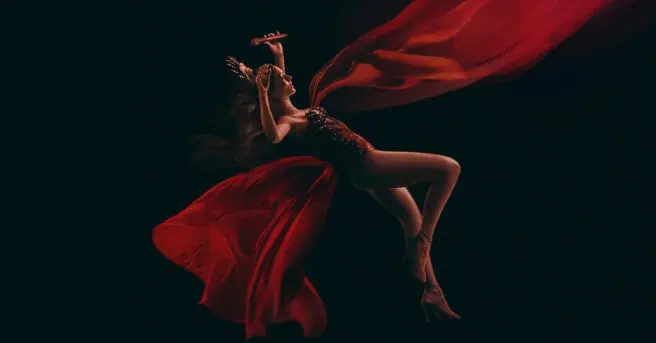
The heart of this film is the duality of Anne Hathaway. Look, she’s already proven over the years how talented she is, but it takes a special kind of talent to act the way she does here. She portrays Mary as a fundamentally broken person, someone you can tell is wanting to collapse and burst into tears at any moment, but she holds it back with an agonizing intensity. Then, in the blink of an eye, she transitions into this untouchable pop star who seems like she is on top of the world. There’s also a moment where has to perform a dance number with no music that gives Isabelle Adjani vibes from Possession. On the flip side, we have a powerhouse performance from Michaela Coel. While Hathaway is the emotional lightning rod, Coel is the film’s anchor. Even in the scenes where she has no speaking lines, the way she emotes completely steals the scene. She represents the invisible side of art as the creator who stays in the shadows while the icon takes the stage. She’ll without a doubt be on my radar for anything she does in the future, and quite honestly I fully trust her handling A24’s remake of Bloodsport.
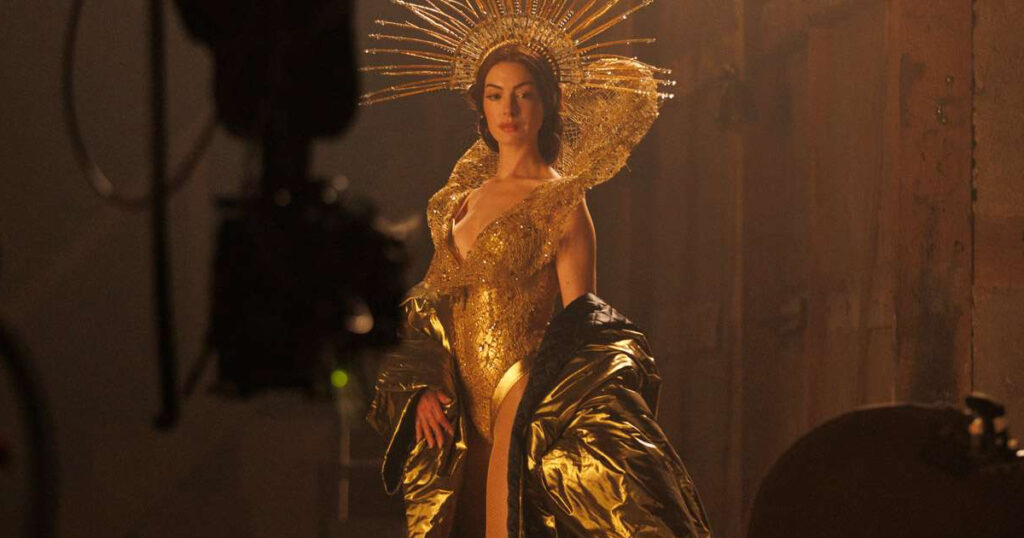
The structure of the film is unique because about 90% of it plays out like a grand stage play. It’s almost entirely these two women in a single location, hashing out their history and fighting through the creative process. But do not let that description fool you into thinking it is static or small. Lowery keeps the momentum alive by seamlessly transitioning between these quiet, intense workshop scenes and sweeping, high-energy set pieces of Mother Mary’s concert performances or hallucinatory flashbacks. It’s a brilliant balancing act where the film feels incredibly intimate one second and then explodes into a grand, cinematic spectacle the next.
Lowery populates this world with a supporting cast that brings layers to the central tension. Hunter Schafer appears as Hilda, Sam’s assistant, who has a sense of loyalty to the workshop that helps us see Sam as a respected leader in her own right. Then you have FKA Twigs, who plays a brief, yet pivotal role in reconnecting Sam and Mary through a moment involving a simple red fabric that adds to the film’s more surreal, otherworldly energy.
There’s also a sort of meta-layer to this film that feels like it is reflecting on Lowery himself. He’s a filmmaker who has spent the last decade bouncing between haunting, minimalist gems like A Ghost Story and the high-gloss machinery of live-action Disney remakes like Pete’s Dragon or Peter Pan and Wendy. In many ways, Mother Mary feels like a director wrestling with his own identity. Much like Mary returning to Sam to find the soul of her art after being swallowed by the pop-star machine, this film feels like Lowery returning to the experimental, vibe-heavy sandbox where he truly shines. It’s the story of an artist almost losing themselves in the industry and fighting to get back to what they love in the process.
Technically, the movie is flawless. The cinematography treats every frame like a museum-quality painting, and the soundtrack is incredible. With original music from Charli XCX and Jack Antonoff, the songs feel like authentic pop-era artifacts as well as straight up bangers. They’re not just background noise, either, but the vehicle through which we see Mary’s psyche deteriorate and rebuild. I found myself toe-tapping to the beat one minute, to being moved to tears to the next. And yes, Hathaway herself provides the vocals. This will certainly be added to my vinyl collection.
Does the movie trip over itself? Occasionally. Toward the end, it definitely gets heavy-handed with the metaphors and leans into a bit of pretension. The symbolism becomes surreal and overt, almost like the film is daring you to get it. Believe me, it’s not going to be for everyone. However, when you have something that is this gorgeous to look at with incredible performances across the board, a little pretension is okay. Mother Mary is a bold, haunting exploration of what it costs to be an artist, and it’s a journey I will be thinking about for a long time.








The comment section exists to allow readers to discuss the article constructively and respectfully, focused on the topic at hand.
What’s Not Allowed