

Why did Poltergeist III turn out so differently from the first two films? Part of the answer lies in one of the most tragic stories in horror movie history.
Making movies is hard. Between developing a script, casting talent, and safely recreating what you imagine in your head on the big screen, it’s a labor that even the most creative minds can struggle to endure. In some cases, real-life tragedy can make an already difficult production nearly impossible.
In the case of Poltergeist III (1988), the uphill battle of making a worthy sequel slowly became an impossible mission. The sudden death of star Heather O’Rourke during post-production forced major changes to the film, complicated its marketing, and forever altered the trajectory of the franchise.
Today we’re taking a closer look at the troubled production of Poltergeist III and explaining exactly how Heather O’Rourke’s untimely death changed the movie audiences eventually saw.
Who Was Heather O’Rourke?
Heather O’Rourke was born in 1975 in San Diego, California to a blue-collar family. Her mother worked as a seamstress and her father was a carpenter. While her older sister Tammy pursued acting professionally, few could have predicted that Heather would become one of the most recognizable child stars of the 1980s.
According to Hollywood legend, Steven Spielberg was developing Poltergeist when he spotted Heather having lunch with her mother at MGM Studios. The young girl, with her platinum blonde pigtails and bright personality, immediately caught his attention. Heather was offered the role of Carol Anne Freeling and accepted almost immediately. The casting decision helped launch her career and reportedly moved Drew Barrymore into a supporting role in Spielberg’s E.T. the Extra-Terrestrial.
At only six years old, Heather found herself starring in a major motion picture. Thankfully, by most accounts, the experience was positive. Spielberg reportedly helped comfort the young actress during the production’s more frightening scenes, and Heather quickly became the emotional center of the film.
When Poltergeist became a major hit, Heather became an overnight star. Television appearances followed, including roles on Happy Days and Webster. She later returned as Carol Anne in Poltergeist II: The Other Side, delivering another well-regarded performance despite the sequel’s mixed reception.
Everything seemed to be moving in the right direction. Then came Poltergeist III.
The Development of Poltergeist III
Development on a third Poltergeist film began in 1986. Screenwriter Brian Taggert teamed with director Gary Sherman to develop a new direction for the franchise. Rather than returning to suburban California, Sherman proposed relocating the story to Chicago and setting much of the film inside a towering skyscraper.
It was a clever idea. Sherman believed the close proximity of neighbors inside a high-rise building could create a different kind of horror. Terrifying events could unfold right next door while nobody noticed. The building’s height also introduced fears involving balconies, elevators, and the possibility of falling.
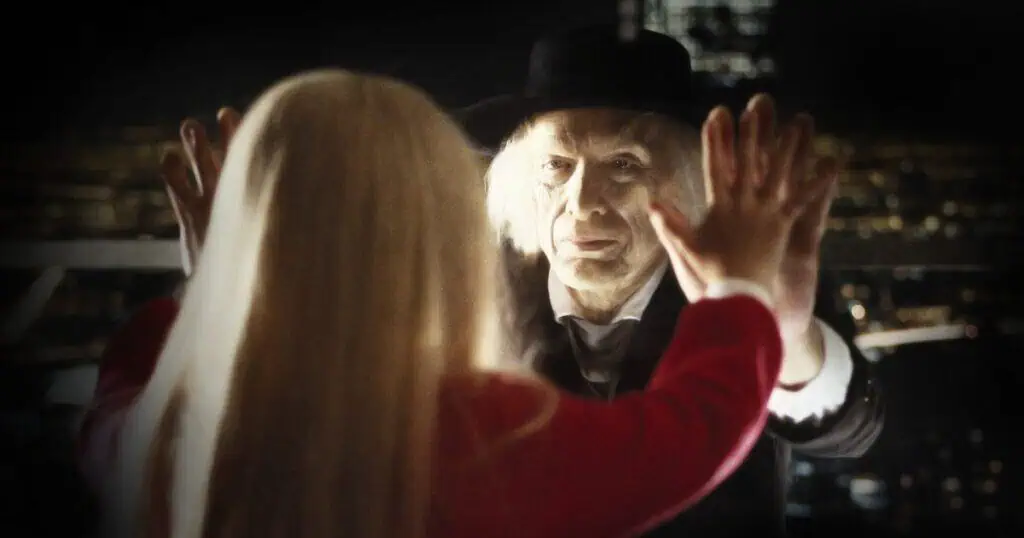
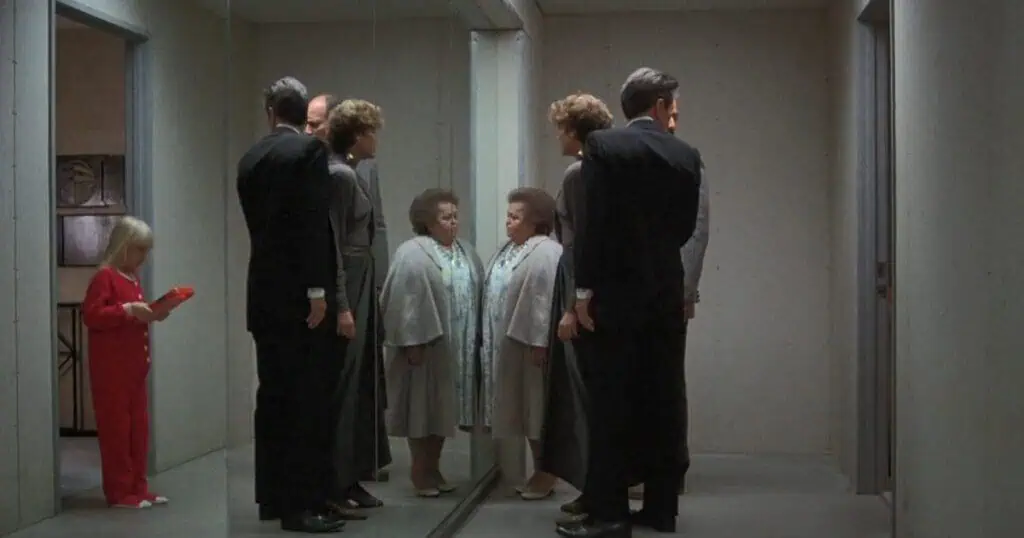
While shaping the story, Sherman and Taggert drew inspiration from Lewis Carroll’s Through the Looking-Glass, leading to the movie’s heavy use of mirrors and distorted reflections.
The film ultimately followed Carol Anne after she moves to Chicago to live with her wealthy aunt and uncle inside the John Hancock Center. As supernatural forces return, Reverend Kane begins contacting Carol Anne from limbo, resulting in haunted mirrors, frozen hallways, and some genuinely imaginative visual effects.
Heather O’Rourke’s Illness During Filming
By the time filming began, Heather had started experiencing severe stomach pain. At first, nobody thought the symptoms were particularly serious. However, her condition gradually worsened and eventually required medical attention during production.
Heather was initially diagnosed with Giardiasis, a parasitic infection reportedly linked to contaminated water. As her condition continued to deteriorate, doctors later diagnosed her with Crohn’s disease.
The treatments were difficult for a young actress to endure. Steroid medications caused swelling in her face and affected both her confidence and energy levels while filming.
Despite these challenges, Heather completed her principal photography by the end of 1987. Unfortunately, the worst was still to come.
The Death of Heather O’Rourke
In January 1988, while Poltergeist III was still in post-production, Heather O’Rourke suddenly became gravely ill. After exhibiting flu-like symptoms, she collapsed at home and was rushed to the hospital.
During transport she suffered cardiac arrest. Doctors were able to briefly resuscitate her and perform emergency surgery, but Heather suffered another cardiac arrest shortly afterward and died on January 31, 1988. She was only 12 years old.
Her death shocked Hollywood and initially confused medical professionals because she had not displayed the typical symptoms associated with a severe intestinal disorder. Subsequent medical findings concluded that complications involving an intestinal condition ultimately led to septic shock and cardiac arrest.
The tragedy devastated her family, friends, castmates, and filmmakers. It also dramatically changed Poltergeist III.

How Heather O’Rourke’s Death Changed Poltergeist III
Many people assume Heather’s death had little impact on the movie because she had already completed her scenes. The reality is more complicated.
The Original Ending
Before Heather’s death, the filmmakers intended to reshoot portions of the ending. The original version reportedly featured fewer casualties and a more hopeful resolution.
However, the film initially received a PG rating from the MPAA, and the studio wanted changes that would secure a PG-13 rating.
The Reshoots
After Heather died, Gary Sherman found himself in an impossible position. The planned reshoots could no longer be completed as originally intended.
A body double had to be used in order to finish certain sequences, forcing Sherman to reconstruct the ending under incredibly difficult circumstances.
Sherman later admitted that the experience was emotionally overwhelming and that at one point he considered abandoning the project entirely.
Studio pressure ultimately convinced him to finish the film. The result was the disjointed ending audiences saw in theaters.
Marketing a Movie After Tragedy
Once the film was complete, another problem emerged. How do you market a movie after the death of its young star?
According to Sherman, nearly every promotional idea felt exploitative. The filmmakers wanted to avoid turning Heather’s death into a marketing hook, but that also made it difficult to generate excitement for the movie.
Several cast members reportedly avoided participating in publicity campaigns because interviews inevitably returned to discussions about Heather’s passing. By the time the movie arrived in theaters, the tragedy surrounding the production had already become widely known.
Critical Reception
Poltergeist III was released on June 10, 1988. The film became the lowest-grossing entry in the original trilogy, earning approximately $14.6 million against a budget of less than $10 million.
Critical reaction was largely negative. Roger Ebert and Gene Siskel both criticized the film, particularly its writing and repetitive dialogue.
The New York Times was equally unimpressed, arguing that director Gary Sherman focused more on visual effects than creating a coherent supernatural world.
Many viewers came away with the impression that Poltergeist III was an unnecessary sequel that failed to capture the magic of the original film.
Was the Ending Really the Problem?
Here’s where things get interesting. Gary Sherman has often suggested that the altered ending played a major role in the movie’s poor reception.
But does that theory actually hold up? Not entirely.
The ending certainly doesn’t help the movie, and it’s easy to see why Sherman remains frustrated by the circumstances surrounding its creation. However, even if the original ending had remained intact, it’s difficult to imagine Poltergeist III suddenly transforming into a forgotten masterpiece.
The larger issues run deeper. The screenplay introduces new ideas but struggles to develop them. The characters never become as memorable as those in the original film, and the story lacks the emotional impact that made the first movie special.
The ending may have hurt the film, but it probably didn’t doom it.
The Special Effects Deserve More Credit
One aspect of Poltergeist III that often gets overlooked is its special effects work. The franchise has always relied heavily on spectacle, and the third film delivered some surprisingly ambitious practical effects.
Many of the mirror sequences were created physically on set rather than through optical tricks or post-production effects.
At the time, much of the work was genuinely impressive. Unfortunately, strong visual effects can only carry a movie so far. Without a stronger story, many viewers never fully appreciated the craftsmanship behind the production.
Does Poltergeist III Deserve Reconsideration?
Nearly forty years later, Poltergeist III remains a difficult movie to evaluate. It’s not great, but it isn’t the complete disaster some people claim it is either.
The film occupies an awkward middle ground. It’s not scary enough to rival the original, but it’s not outrageously bad enough to become entertaining camp. Its greatest flaw may simply be that it’s average.
The tragedy surrounding the production understandably dominates discussions about the film, but the movie itself still contains interesting ideas, memorable visuals, and a few genuinely effective moments. Whether that’s enough to justify a reappraisal is ultimately up to each viewer.
Conclusion
Looking back today, Poltergeist III remains one of horror cinema’s most fascinating “what if?” stories. Heather O’Rourke’s death unquestionably affected the production, altered the ending, complicated the marketing campaign, and cast a shadow over the film’s release. But while those factors contributed to the movie’s troubled legacy, they don’t entirely explain its disappointing reception.
The truth is probably somewhere in the middle. Poltergeist III is neither a hidden masterpiece nor a complete failure. It’s a flawed sequel forever tied to one of Hollywood’s most heartbreaking tragedies. And that reality continues to shape how audiences remember it nearly four decades later.
Frequently Asked Questions
How old was Heather O’Rourke when she died?
Heather O’Rourke was 12 years old when she died on January 31, 1988.
What caused Heather O’Rourke’s death?
Heather O’Rourke died from complications related to a congenital intestinal condition that led to septic shock and cardiac arrest.
Did Heather O’Rourke finish filming Poltergeist III?
Yes. Most of her scenes had already been completed before her death, but planned reshoots required filmmakers to use a body double.
Was Poltergeist III changed after Heather O’Rourke died?
Yes. The ending was significantly altered during post-production, and additional scenes were filmed using a stand-in.
Why is Poltergeist III considered controversial?
The film became controversial because of Heather O’Rourke’s death, its troubled production history, and ongoing debate over whether the altered ending hurt the movie.












The comment section exists to allow readers to discuss the article constructively and respectfully, focused on the topic at hand.
What’s Not Allowed