

Before becoming one of the most influential filmmakers in history, Steven Spielberg directed episodes of Night Gallery, Columbo, Marcus Welby, M.D., The Psychiatrist, The Name of the Game, and several television movies including Duel, Something Evil, and Savage. These early television projects helped Spielberg develop the suspense, visual storytelling, emotional depth, and filmmaking techniques that later defined classics like Jaws, E.T., Raiders of the Lost Ark, Jurassic Park, and Schindler’s List.
- Spielberg’s first major directing assignment was the Night Gallery segment “Eyes” starring Joan Crawford.
- Columbo: Murder by the Book is widely considered his television breakthrough.
- Duel remains one of the greatest TV movies ever made.
- Many Spielberg trademarks first appeared during his television years, including ordinary people confronting extraordinary situations.
- His television work served as a training ground before his theatrical breakthrough with The Sugarland Express and Jaws.
This ranking considers historical significance, influence on Spielberg’s later films, critical reputation, technical achievement, and overall importance to his development as a filmmaker.

11. Marcus Welby, M.D. — “The Daredevil Gesture” (1970)
Release Year: 1970
Series: Marcus Welby, M.D.
Genre: Medical Drama
Why It Matters: Helped Spielberg develop emotional storytelling and character-driven drama.
After Night Gallery, and taking an entire year off just to write, Spielberg moved into more traditional television with Marcus Welby, M.D., directing the episode “The Daredevil Gesture.” This is not the kind of credit people bring up when they talk about Spielberg. Nobody says, “Ah yes, the true beginning of Jurassic Park is Marcus Welby.” But these assignments mattered. They taught him discipline. They taught him speed. They taught him how to deal with actors, emotion, structure, and dramatic storytelling.
Spielberg would later become known for spectacle, but spectacle only works if the people inside it matter.
The episode deals with teenagers and how our protagonist deals with bullying and an unstable home life, both of which Spielberg could relate to. A medical drama forces a director to deal with suffering and healing. Young Spielberg needed that. He needed to learn that cinema is not just movement. It is empathy.

10. Night Gallery — “Make Me Laugh” (1971)
Release Year: 1971
Series: Night Gallery
Genre: Horror / Fantasy
Why It Matters: An early showcase for Spielberg’s growing confidence as a visual storyteller.
Spielberg returned to Night Gallery for “Make Me Laugh,” another Rod Serling story. This one is about a failing comedian who desperately wants the power to make people laugh.
Again, the theme feels strangely Spielbergian. A performer wants to connect with an audience. He wants magic. Spielberg uses the episode to experiment. That experimental hunger becomes one of the defining features of Spielberg’s career. He never stops treating filmmaking like a problem to solve.
“Make Me Laugh” shows Spielberg playing with rhythm and tension. That is what makes these episodes beautiful. They’re not masterpieces, they’re practice swings.

9. Owen Marshall: Counselor at Law — “Eulogy for a Wide Receiver” (1971)
Release Year: 1971
Series: Owen Marshall: Counselor at Law
Genre: Legal Drama
Why It Matters: Spielberg gained increased creative control and experience with institutional drama.
By this time Spielberg had a little more power and weight to throw around at the studio. He initially turned down the job due to not liking the script. But the studio wanted the hot young talent, so they allowed a rewrite and gave him more creative control.
This is another legal-drama assignment that could easily disappear into the fog of forgotten television. But in the larger Spielberg story, it matters because it places him inside institutions: law, authority, public judgment, and moral conflict.
Like many classic television episodes, it has become difficult to find today.

8. The Psychiatrist — “The Private World of Martin Dalton” (1971)
Release Year: 1971
Series: The Psychiatrist
Genre: Psychological Drama
Why It Matters: Introduced themes involving lonely and misunderstood children.
This episode matters because it brushes against one of Spielberg’s deepest lifelong subjects: The lonely child.
A troubled young boy retreats into fantasy, and suddenly you can feel the early shape of a theme that would follow Spielberg for decades. Spielberg understands childhood not as cuteness but as intensity. Childhood in his films is enormous. Children are frightened, ignored, misunderstood, or left alone with impossible feelings. But they also carry wonder. They carry belief. They carry the ability to see what adults have forgotten how to see.

7. Savage (1973)
Release Year: 1973
Format: Television Movie
Genre: Political Thriller
Why It Matters: Allowed Spielberg to explore media, politics, and institutional power.
Spielberg’s final television movie before his theatrical feature debut with The Sugarland Express was Savage, starring Martin Landau as a television journalist investigating a political scandal.
This is one of the least remembered projects in Spielberg’s career. Even Spielberg reportedly wasn’t fond of it. But it still matters. It shows him creating tension without fantasy, monsters, aliens, or supernatural threats. The themes of journalism, power, scandal, and truth would later appear in films such as The Post.
6. Something Evil (1972)
Release Year: 1972
Format: Television Movie
Genre: Horror
Why It Matters: Feels like an early blueprint for ideas later explored in Poltergeist.
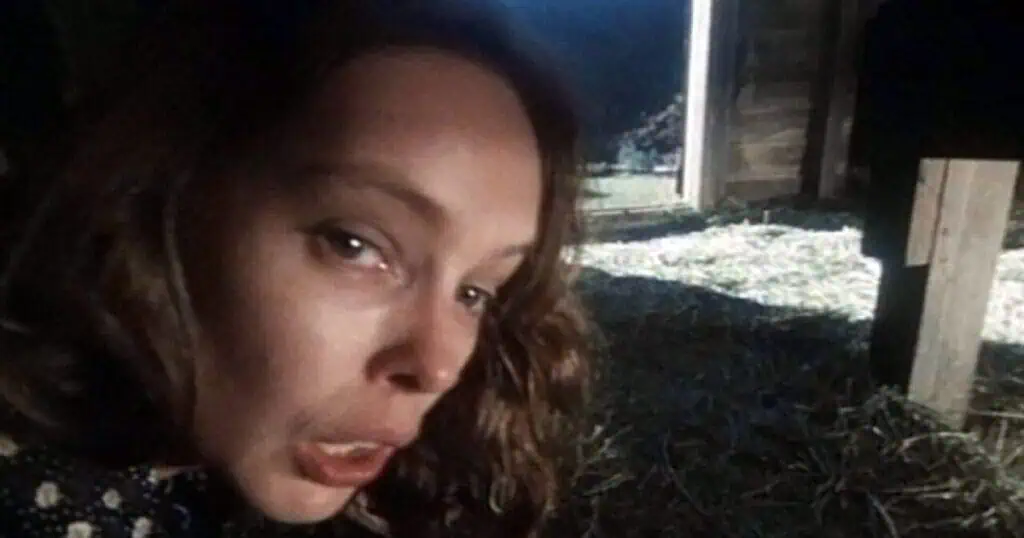
After Duel, Spielberg directed Something Evil, a television horror movie about a family moving into a Pennsylvania farmhouse occupied by a demonic force. This one is often forgotten, but it is fascinating.
A family moves into a haunted house. That is Poltergeist energy before Poltergeist. The film is not as strong as Duel, but you can see Spielberg’s eye developing. He is interested in atmosphere. He is interested in children in peril. He is interested in unseen forces hiding inside ordinary American life.

5. The Name of the Game — “L.A. 2017” (1971)
Release Year: 1971
Series: The Name of the Game
Genre: Science Fiction
Why It Matters: Spielberg’s first major science-fiction world-building exercise.
Here’s one of the strangest early Spielberg credits: “L.A. 2017.”
This one is wild. It presents a futuristic nightmare where environmental collapse forces people underground. It is darker, colder, and stranger than many people associate with Spielberg. Yet that darkness would remain throughout his career.
You can see traces of Minority Report, A.I., and other future projects beginning to emerge here.

4. Night Gallery — “Eyes” (1969)
Release Year: 1969
Series: Night Gallery
Genre: Horror
Why It Matters: Spielberg’s first major professional directing assignment.
Imagine being in your early twenties and suddenly your job is to direct Joan Crawford. Not some random actress. Joan freakin’ Crawford. Classic Hollywood royalty.
The legendary actress was hesitant to work with such an inexperienced director. Somehow Spielberg won her over. Crawford would later insist the crew treat him with respect and reportedly predicted he would become one of the biggest directors in the world.
“Eyes” tells the story of a wealthy blind woman who undergoes an operation that allows her to see briefly before a citywide blackout. Even here, Spielberg is already experimenting with camera movement, light, shadow, and emotional point of view. He is trying to make television feel bigger than television.
3. The Psychiatrist — “Par for the Course” (1971)
Release Year: 1971
Series: The Psychiatrist
Genre: Drama
Why It Matters: Spielberg later called it his best television work.
This episode deals with a golf champion confronting cancer and mortality. Look closely and you can see another Spielberg theme emerging: Ordinary people facing forces larger than themselves.
Before he made audiences afraid of sharks, dinosaurs, and extraterrestrials, he was learning how to photograph fear in a hospital room and in a human face. The power of the close-up goes a long way here.
Spielberg later referred to this as his best television work. Many who have seen it in recent years continue to praise it as one of the hidden gems of his early career.

2. Columbo — “Murder by the Book” (1971)
Release Year: 1971
Series: Columbo
Genre: Mystery
Why It Matters: Spielberg’s television breakthrough.
Here’s one of the big ones: Spielberg directed the first regular episode of Columbo.
Suddenly, the young director starts looking like a major filmmaker. The episode is stylish, confident, clever, and beautifully controlled.
What makes it fascinating is that Spielberg does not direct it like anonymous television. He gives it shape, atmosphere, and visual intelligence. You can feel him thinking in images.
Peter Falk reportedly needed convincing before agreeing to work with the young director, but after seeing Spielberg’s earlier work he became a believer. The result remains one of the most celebrated episodes in the history of Columbo.

1. Duel (1971)
Release Year: 1971
Format: Television Movie
Genre: Thriller
Why It Matters: The project that launched Spielberg’s career and paved the road to Jaws.
This is where everything changes. Duel is one of the greatest television movies ever made.
A man driving through the California desert is terrorized by a massive truck. That is the premise. A man, a car, a truck, a road, and fear. But Spielberg transforms that simplicity into pure cinema.
The truck becomes a monster. Not the driver; the truck itself.
It is impossible not to see the connection between Duel and Jaws. Both feature ordinary protagonists facing relentless predators. Both rely on suspense, anticipation, and the fear of what may be coming next.
Duel was such a success that it eventually received an international theatrical release. The student had become a filmmaker, and Hollywood noticed.
Steven Spielberg’s Television Career Timeline
- 1969 — Night Gallery: “Eyes”
- 1970 — Marcus Welby, M.D.: “The Daredevil Gesture”
- 1971 — Night Gallery: “Make Me Laugh”
- 1971 — The Name of the Game: “L.A. 2017”
- 1971 — The Psychiatrist: “The Private World of Martin Dalton”
- 1971 — The Psychiatrist: “Par for the Course”
- 1971 — Columbo: “Murder by the Book”
- 1971 — Duel
- 1971 — Owen Marshall: “Eulogy for a Wide Receiver”
- 1972 — Something Evil
- 1973 — Savage
- 1974 — The Sugarland Express
- 1975 — Jaws
What Television Gave Spielberg
The beautiful thing about Spielberg’s television career is that it reminds us television is not a lesser art form. It’s where artists learn to move fast. It is where they learn discipline, and where they learn to survive.
Horror. Mystery. Science fiction. Medicine. Law. Politics. Childhood. Monsters. Suspense. It was all there. Watching early Spielberg is like watching lightning learn where to strike. Before Steven Spielberg became the filmmaker who changed Hollywood, television gave him a place to practice. Assignment by assignment, problem by problem, episode by episode.
Then came The Sugarland Express. Then came Jaws. Then came the rest of film history.
FAQ
What was Steven Spielberg’s first directing job?
Spielberg’s first major professional directing assignment was the Night Gallery segment “Eyes” in 1969.
What was Steven Spielberg’s best television movie?
Most critics and historians consider Duel (1971) to be Spielberg’s greatest television production.
Did Steven Spielberg direct Columbo?
Yes. Spielberg directed the acclaimed episode “Murder by the Book,” one of the most celebrated episodes in the series.
Which Spielberg TV project most influenced Jaws?
Duel is often considered a direct precursor to Jaws because both stories feature an ordinary man hunted by an almost mythical predator.
What was Spielberg’s final television movie before becoming a theatrical filmmaker?
Savage (1973) was Spielberg’s last television movie before his theatrical breakthrough with The Sugarland Express.
How many television episodes did Steven Spielberg direct before Jaws?
Before directing Jaws in 1975, Spielberg directed multiple television episodes across several series, along with television movies including Duel, Something Evil, and Savage.
Final Thoughts
Steven Spielberg’s television career may be overshadowed by the success of Jaws, E.T., Raiders of the Lost Ark, and Jurassic Park, but these early television projects reveal the foundations of his filmmaking style. From the suspense of Duel to the visual experimentation of Night Gallery and the storytelling precision of Columbo, Spielberg’s television work remains essential viewing for anyone interested in the evolution of one of cinema’s greatest directors.




















The comment section exists to allow readers to discuss the article constructively and respectfully, focused on the topic at hand.
What’s Not Allowed