


The late ’90s were still a time when you could go into a movie without being completely spoiled by a random image or post online. These days, even the studios themselves don’t give you a chance to experience a film’s twist before it’s revealed.
Over the last three years of the ’90s, I was lucky enough to experience the glory of going into a mind-(bleep) of a movie three times. One was Dark City in 1998. The last was the grandfather of all mind-(bleeps), The Matrix in 1999. But the one that not enough people give credit to—for just how insane it was to experience—was Event Horizon in 1997.
Event Horizon, just by seeing the poster, might have seemed like another Alien-type film. You weren’t sure, honestly. And when I went into the theater, boy, was I in for a wild ride—and so were audiences. Sadly, when it was released, Event Horizon disappeared into the dark. Critics didn’t like it, and the film (like the crew of the ship) was dead on arrival, making only $42 million at the box office on a $60-million budget.
But over the years, Event Horizon has become a cult classic—and for good reason. The film is brutal, beautiful, and has a depth to its story and design that goes beyond the typical fare director Paul W. S. Anderson has produced with the Resident Evil franchise or The Three Musketeers. Where many of his films are literally video games, Event Horizon is a horrifying peek into obsession and literal hell. So let’s journey into the unknown as we chart the path of Event Horizon.
Event Horizon actually started out as a very Alien-type film. But Anderson didn’t want to do another movie ripping off the granddaddy of sci-fi horror. So he reworked the script, which evolved into what they called a “haunted house in space” story—but it became much, much more. This included bringing in Se7en’s writer, Andrew Kevin Walker, who would bring hell with him.
The story evolved into one about Dr. William Weir, who is asked to join a recovery mission for the ship he designed—the Event Horizon—which appears desolate and unmanned after being lost for years. The crew of the Lewis and Clark, led by Captain Miller, boards the ship—and that’s when the absolute horror of what happened begins to unfold. One by one, the crew pays the price.
The Event Horizon has returned from literal hell, possessed by the demonic forces it encountered, having already decimated its original crew and passengers in terrifying ways. The film follows the crew of the Lewis and Clark as they try to uncover what’s killing them as it did the others, leading up to an explosive finale that’s almost ambiguous—as the Event Horizon may very well still be in evil’s grip.
Anderson’s film was dark—again, this can’t be overstated. When the original cut was turned in, it received an NC-17 rating, which surprised the studio and resulted in the film being cut down to achieve an R rating upon release.

Anderson’s rewrite turned the film into a hybrid of many inspirations, drawing from centuries of artistic depictions of hell. That meant the hell scenes shown in the film went hard. They were inspired by classic and Renaissance paintings depicting the tortures of hell, such as those by Hieronymus Bosch.
The original crew’s deaths and tortures were extreme: intestines being ripped out, cannibalistic orgies, body parts—including breasts—being removed, horrific dental torture, and more. Real amputees were used for the dissection scenes—so that gives you an idea of why the NC-17 rating happened. Oh, and adult film actors were used to ensure “realism” for the orgy and sex scenes.
Apparently, 30 minutes of footage was cut, leaving the film at a brisk 96 minutes. The original cut was supposedly found over 10 years ago, but word is it had to be destroyed during restoration efforts—or maybe hell just wanted its family videos back. Some of these scenes reportedly wound up in a salt mine in Dracula land—aka Transylvania. No, really.
The Event Horizon itself was beautifully designed, based on art and writings like Dante’s Inferno and heavily inspired by Hellraiser. I dare you to look at Sam Neill’s final appearance in this and not think “Cenobite.” Notre Dame was also used as inspiration for parts of the Event Horizon’s design. There are even hidden coffin shapes in its corridors.
As I mentioned, the film is filled with inspiration from other movies. Hellraiser, obviously—but also, for those who remember, Sam Neill himself played the Antichrist in The Omen: The Final Conflict. Yes, kids—Alan Grant was a really bad man way back when.
Weir’s wife Claire’s suicide reminds me of the scene in The Shining with the woman in Room 237. In fact, much of Event Horizon evokes The Shining, with the ship becoming like the Overlook Hotel—a place corrupted by the evil and spirits that dwell within it.
The distress signal calling out “Save me” in Latin recalls The Exorcist, where Regan’s skin cries out “Help me.”
Another nod seems to be to Solaris, which has a dark relationship at its core: the main character encounters a resurrected version of his wife, who had killed herself after he left her. On the ship, she returns again and again—either he kills her, or she kills herself.
The special effects and design of the film were amazing for such a modest budget. The sets were all built at Pinewood Studios. Michael Kamen and the electronic group Orbital created a hybrid score that worked beautifully, blending classical and futuristic elements—much like the film itself.

The cast was spectacular. I’ve already mentioned Sam Neill, who seems made for horror and unhinged roles (please watch Possession if you haven’t—it’ll stay with you). Laurence Fishburne, as Captain Miller, was a fantastic choice and would later create the iconic Morpheus in The Matrix. But here, he delivers one of the best last lines of the ’90s.
Joely Richardson played Starck, a role originally written for a man. Jason Isaacs was DJ, the medical officer. Sean Pertwee, son of the third Doctor Who, Jon Pertwee, portrayed Smitty, the pilot—he’d work with Anderson again the following year in Soldier. Jack Noseworthy played Justin, who has a very rough time both inside and outside the ship. Richard T. Jones played Cooper, who gets one of the funniest lines in the movie about getting something “hot and black” in you—not an original line, but still funny.
As I said, when it was released, the film didn’t do well. But over the last—ouch—nearly 30 years, it’s become a classic, thanks not only to what we’ve discussed but also to the way people continue to analyze it. Event Horizon blended science fiction with spiritual horror to create something unique. While Hellraiser: Bloodline attempted this by bringing Pinhead to space, Event Horizon did it with a story that explored the darkness within us all.
My personal theory—one I came up with the first time I saw the film—makes a lot of sense, especially considering Dr. Weir’s obsession and how he reacts aboard the ship. Here’s my theory (and if Anderson ever reads this, I’d love to know if it’s true): I believe that Weir, a scientist who believed in a literal hell, built the ship secretly for that purpose. The ship’s design—and especially the drive that powers it—suggests he combined occultism with science to find a way into hell, a black hole of damnation. (Interestingly, Disney’s The Black Hole also showed us a literal hell for its main villain to abide in for eternity.)
I think this because, in much Christian mythology, suicides are condemned to hell—and Claire’s death was by suicide. Weir built the Event Horizon to find his wife, and he does. It’s also interesting that he becomes blinded yet able to “see” after his encounter with her—perhaps a nod to the fact that he was blind to her depression in life, but now, blinded in death, he finally sees her and all the horrors of hell.
Over the years, Event Horizon has become a great discussion film, with many horror writers and aficionados praising it as an ambitious work that merges genres in a unique and terrifying way. Last year, Variety even ranked it the 94th greatest horror film of all time—not small praise.
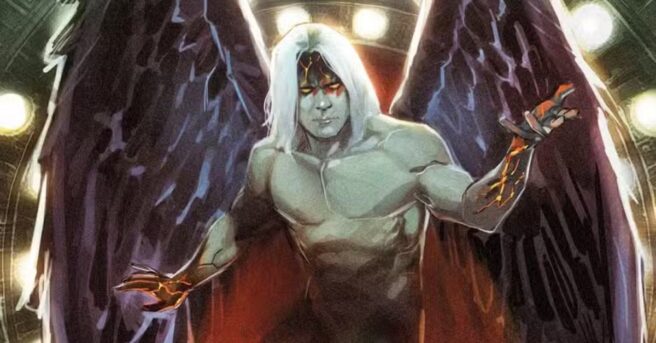
This year, the world returned to Event Horizon thanks to IDW Comics, which released a prequel story titled Event Horizon: Dark Descent. The comic reveals what actually happened to the ship’s original crew. It makes clear that Paimon, King of Hell, motivated the ship’s creation, using Weir’s dead wife as a lure to influence him into completing the vessel. While it’s not confirmed that Weir knowingly made this choice, it’s made clear in the comic that he was influenced.
The comic goes hard on the blood, gore, and true horror of what happened to the crew. And no one is safe—because, well, we already know what happens to them. Like The Last Voyage of the Demeter or Rogue One, it’s not a happy story.
The world of Event Horizon clearly isn’t dead. With the comic mini-series and ongoing interest, there’s still hope for more. While a sequel film was once discussed, it never came to be. It might have followed the few survivors of the incident—and remember, the ship was still out there at the end…at least part of it.
The possible continuation now lies in the realm of streaming, with director Adam Wingard—known for The Guest and the recent Godzilla films—wanting to bring it back from the pits of hell. According to him, there’s already a script; it’s just a matter of timing.
I, for one, would love to return to the dark, gothic future world of Event Horizon. The film still holds up and remains one of the bloodiest science fiction movies ever made. While we may never see all the hell that Anderson and his team created, we have enough to haunt our nightmares.
And the movie makes it clear: hell isn’t below us—it’s above us… and sometimes, within us.





















The comment section exists to allow readers to discuss the article constructively and respectfully, focused on the topic at hand.
What’s Not Allowed