

A few weeks ago, we launched a contest inviting readers to submit personal essays about what’s gone wrong with the movie business—and how it might win back the audiences that seem to have largely abandoned it. We received many excellent entries, but five stood out as the best. We’ll be publishing one each day this week.
Here’s the first, courtesy of Mr. Eric Stumpf!
Once upon a time, going to the movies wasn’t just entertainment—it was a cultural event.
People lined up around the block for opening nights, and new releases sparked nationwide conversations. Today? The magic feels lost. Theaters are emptier. Box office returns are flatter. And for every hit like Sinners, there are a dozen bloated flops hemorrhaging millions. So, what happened to the film industry—and more importantly, how do we save it?
Let’s start with the obvious: Hollywood has a creativity problem. Theaters are flooded with soulless sequels, hollow remakes, and reboots nobody asked for. Nostalgia has been weaponized as a business model. From Indiana Jones and the Dial of Destiny to The Marvels, the industry keeps banking on old IPs to do the heavy lifting, only to be shocked when audiences don’t show up.
The Marvels, once considered a guaranteed moneymaker by virtue of being a Marvel film, ended up being the lowest-grossing MCU movie to date, pulling in just $206 million worldwide on a reported $220 million budget—before marketing. That’s not a bump in the road; it’s a warning flare. Studios are spending hundreds of millions chasing “guaranteed hits,” and they’re striking out more often than not. Even Ant-Man and the Wasp: Quantumania, meant to kick off Phase Five of the MCU, was a box office disappointment, grossing $476 million worldwide against a $200 million budget and massive marketing costs—reportedly resulting in over $100 million in losses.
Now compare that to Sinners, a modestly budgeted original film that tapped into genuine audience interest. Or Talk to Me, the breakout horror hit from the Philippou Brothers (discovered through their YouTube channel RackaRacka), which was produced for just $4.5 million and grossed nearly $92 million worldwide. That’s not just a win—it’s a grand slam on a shoestring budget.
Here’s the truth: audiences are hungry for originality. They want fresh stories, new voices, and bold ideas—not carbon copies of things they’ve already seen. The problem is, the industry has become too risk-averse to listen.
The Solution: More Bets, Smaller Bets
If studios want to stay alive, they need to radically rethink their approach—starting with how they spend money.
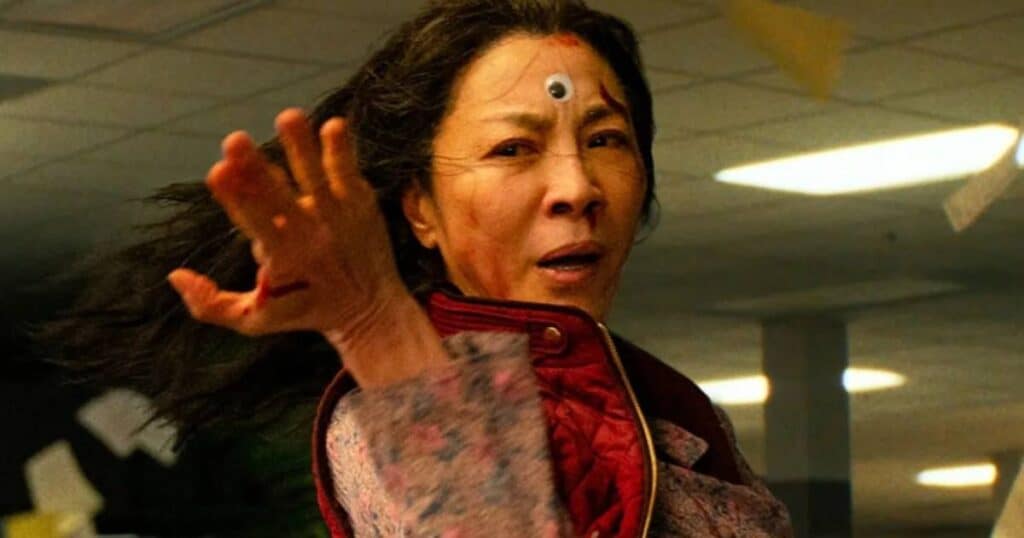
Instead of dropping $200 million on a single tentpole, why not divide that into 20 films at $10 million each—or 40 at $5 million? Not only would this hedge your bets financially (all it takes is a couple of hits to make your money back), but it also opens the door to creative risks. With lower budgets, you can afford to try new genres, cast unknowns, and let fresh voices take the reins. Worst-case scenario: a flop that doesn’t bankrupt you. Best case? The next Get Out, Everything Everywhere All At Once, or A Quiet Place—all made for under $20 million and all massive successes that dominated the cultural conversation.
To put this in perspective: Everything Everywhere All At Once was made for just $14 million and grossed over $143 million globally—while winning seven Academy Awards. A Quiet Place cost $17 million and earned over $340 million worldwide. These films weren’t based on existing franchises. They weren’t remakes or sequels. They were simply great stories, well told.
And if studios need help finding voices capable of delivering that kind of impact, they should look to where the talent already is: online. Just like A24 discovered the Philippou Brothers on YouTube, studios should be actively mining platforms like TikTok, Vimeo, and Instagram for short filmmakers and storytellers doing wild, experimental work on shoestring budgets. Give them a shot. Give them a budget. See what happens.
Don’t forget Skinamarink—a micro-budget horror film made for just $15,000 that went viral on TikTok and grossed over $2 million in theaters. That’s an ROI most executives would kill for.

The Streaming Shift
Of course, the shift to streaming has also shaken the industry. People aren’t racing to theaters like they used to because they know most movies will be available at home in a matter of weeks. But here’s the thing: streaming doesn’t have to be the enemy. It just has to be part of the plan.
Smaller-budget originals can thrive across platforms. Use theatrical releases as buzz generators—limited runs in key cities, film festival rollouts, and early critical acclaim. Then drop them on streaming when the heat is high. Not every movie needs to make a billion dollars at the box office. Some just need to build a loyal fanbase.
We’re already seeing this happen. The Fall of the House of Usher, Beef, and Ripley are all examples of streaming content that likely would have struggled under traditional theatrical models but found massive success and cultural resonance on Netflix. Why? Because they’re well-made, original, and not trying to be anything other than what they are.
Where We Go From Here
The bigger cultural issue is that movies no longer feel essential. Video games dominate the youth market—the global video game industry pulled in over $184 billion in 2023, compared to the global film industry’s $80 billion. Meanwhile, short-form content, podcasts, and prestige TV have all eaten into what used to be cinema’s cultural real estate.
But that doesn’t mean film is dead—it just means it needs to reclaim its identity.
Cinema has always been about vision. Scope. Emotion. Being transported. To win back audiences, you have to stop treating them like algorithms. Don’t ask what will trend. Ask what will resonate. Challenge them. Surprise them. Make them laugh, cry, scream, or rethink their lives. That’s what great movies do—and that’s what they can still do.
Final Thoughts
There’s no single fix for the movie industry’s woes. But if I had to boil it down to one idea, it’s this: stop trying to manufacture hits and start fostering passion. Hollywood used to be a dream factory. Lately, it feels more like a recycling plant.
Bring back the dreamers. The weirdos. The first-time filmmakers. Take chances on ten small stories instead of betting everything on one soulless mega-franchise. The audience is ready. You just have to give them something worth showing up for.
The blueprint is already there—Sinners, Talk to Me, Get Out, Everything Everywhere All At Once, Skinamarink—all prove that originality isn’t dead; it’s just being ignored.
The future of film is still wide open.
You just have to let new voices speak.
What did you think of Eric’s essay? Let us know in the comments and check out the prize he won:









The comment section exists to allow readers to discuss the article constructively and respectfully, focused on the topic at hand.
What’s Not Allowed