
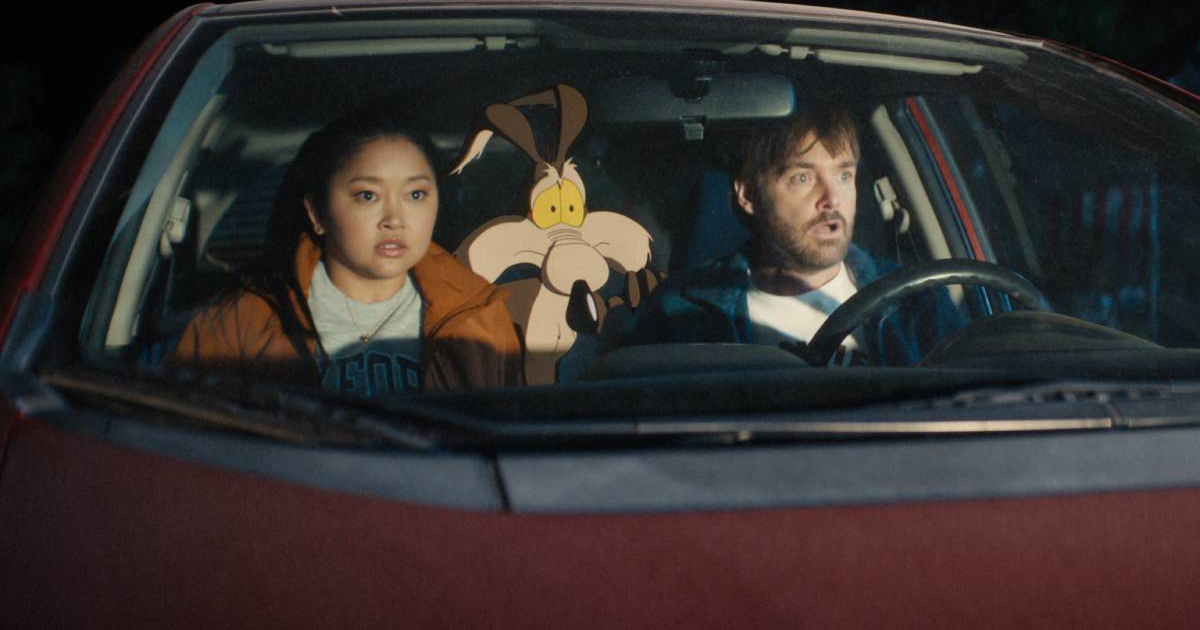
PLOT: When Wile E. Coyote decides he’s taken enough abuse from the Acme corporation and their catalog of faulty products, he enlists the help of an “ambulance chasing” lawyer to sue the company for all its worth.
REVIEW: Much like the Looney Tunes themselves, Coyote vs. Acme is a film that, after getting knocked down, got back up again, the pain of being put through the wringer be damned. If you don’t know the story of this film’s troubled release, allow me to catch you up real quick. As part of a move to get itself out of some hot water, Warner Bros. Discovery initially canceled Coyote vs. Acme alongside DC‘s Batgirl as part of a tax write-off, with executives saying the $30 million impairment charge was worth more than the cost of marketing and theatrical real estate. WB’s decision angered film fans worldwide, making the studio a target for negative press. Many speculated that WB vaulted the film because of its plot, which takes corporations like WB to task, making them look greedy, soulless, and corrupt. Following the backlash, Ketchup Entertainment swooped in and purchased the film from WB, effectively saving it from being mothballed for eternity.
If WB’s mission was not to draw negative attention to itself, the studio failed miserably. The funny thing is that, in my estimation, there isn’t anything in the film so damning that WB needed to get weird about its content. By making such a stink about the plot, WB created more of a headache for itself than if it had just let sleeping dogs lie. Thankfully, Ketchup Entertainment rescued this brilliant film, and instead of figuratively collecting dust on someone’s hard drive, we get to enjoy it and see what all the fuss was about. With all of that out of the way, let’s get to the good stuff.
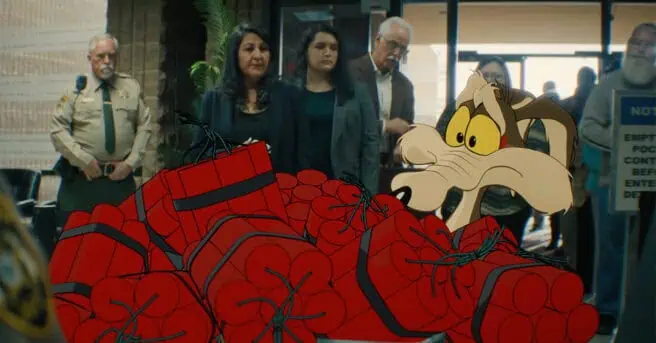
Following in the footsteps of live-action animated hybrids like Who Framed Roger Rabbit, Cool World, Looney Tunes: Back in Action, and Chip ‘N Dale Rescue Rangers, Coyote vs. Acme casts beloved animated characters as everyday citizens in our real world. Instead of using a hand-drawn approach, the Looney Tunes are computer-generated, but maintain an old-school look and feel. In the film, Wile E. Coyote is a victim of shoddy products sold to him by the Acme corporation. Try as he might, Wile E. cannot catch his elusive target, the Road Runner. One product after the next, his tools of the trade keep failing, his body racked with pain as he becomes burnt, crushed, and maimed under his own ambition. Someone must pay for his misery. That someone is the Acme corporation.
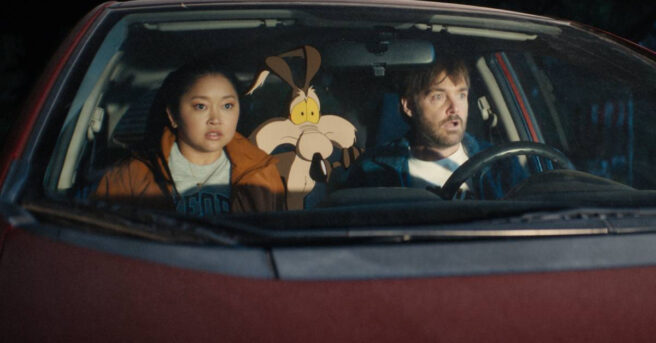
To prepare for court, Wile E. contacts Kevin Avery (Will Forte), a Lionel Hutz-like lawyer who specializes in quick-and-easy settlements instead of big-time court cases. Avery thinks Wile E.’s case is open and shut, but the coyote thinks his anguish is worth far more. When Wile E. takes it upon himself to present every piece of evidence he has against Acme to a court of law, the case attracts far more attention than Avery and his team bargained for. As the case explodes, Wile E., Avery, and his plucky niece and assistant, Paige Avery (Lana Condor), uncover a conspiracy that exposes Acme‘s dark history and its morally bankrupt war against toons.
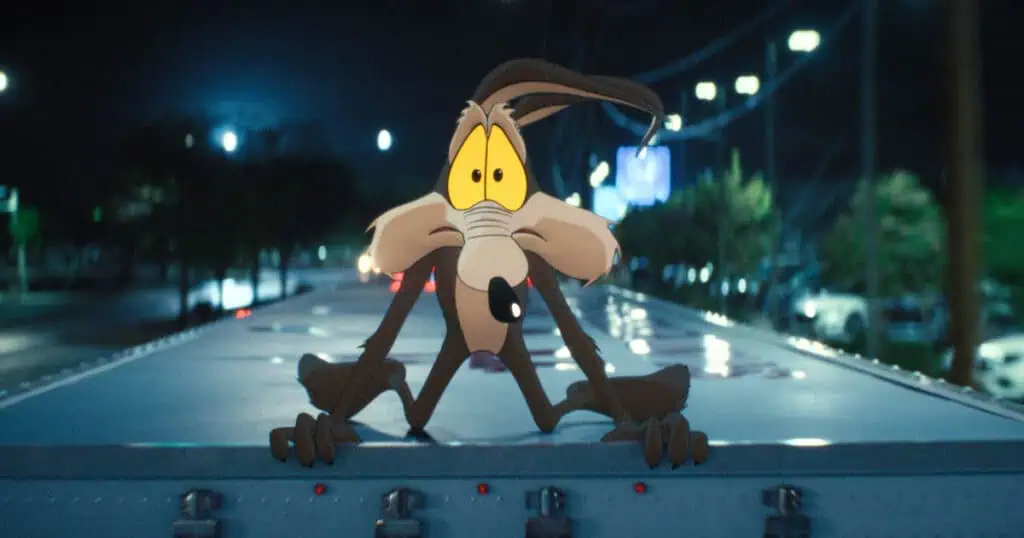
I’ll be straight with you, folks. Watching humans interact with Looney Tunes or Muppets is my bag. I can never get enough of it. It’s for that reason, and more, that watching Coyote vs. Acme was a joy from start to finish. The concept of the movie was enough to get me through the door, but the execution of the premise (and its polished presentation) is a chef’s kiss if you’re in on the joke, and long to see people in power get their comeuppance. In true Looney Tunes fashion, Wile E. doesn’t speak; he uses signs to communicate, and there’s a ton of comedy mined from Wile E.’s sign-based silence. Unsurprisingly, WiIe E. is charismatic, relatable, and devious in his starring role. The animation team makes him ultra-expressive throughout the film, adding nuance and a range of emotions to the character’s decades-long history.
Watching Wile E. and Will Forte interact is also a joy. We’ve come a long way since Back in Action, and the art of toons interacting with humans has never been better. Wile E. and Kevin behave like an Odd Couple for most of the film, bickering, competing, and keeping secrets from one another. Still, we get to see a tender side of their burgeoning friendship as the story continues. Who they are in general (and to each other) by the end of the journey feels earned and heartening.
Meanwhile, Lana Condor lights up the screen as Paige Avery. She plays the endearing character with a bounce in her step (you can literally watch her ponytail swish back and forth as she walks) and optimism in her heart. She brings additional brightness to the role and is something of a Looney Tunes character herself. She has solid chemistry with everyone, especially the toons. She’s the most capable person working at Avery’s law firm, and the way she Nancy Drews her way through the mystery is a lot of fun to watch.
On the villainous side of the spectrum, John Cena plays Buddy Crane, an attorney of the Acme corporation, alongside a supremely evil version of Foghorn Leghorn. Crane is delightfully deranged, and Cena plays him as such. He’s willing to do anything it takes to toe the line and please his corporate overlords. While not the most sinister villain in the film, Crane is a mirror for a person in power who does nothing to help others. That aspect of his character really comes into focus in the third act, when this movie shines brightest.
The first two acts are excellent, with the world of toons and humans clashing in a way that’s inventive and fun. There are all sorts of cameos and “chicken fat” to point out and appreciate. It’s like a Where’s Waldo book, but you’re looking for Gossamer, Hugo the Abominable Snowman, and Giovanni Jones. The movie is two parts detective comedy and one part courtroom drama, as Wile E.’s case against Acme goes to a higher court. During the third act, we see who the Acme corporation truly is and how it’s been manipulating us all for years. The movie suddenly becomes a meditation on corporations writ large. What they are, who they represent, and how they take advantage. This commentary could hit a little too close to home for some, and they didn’t want this movie saying the quiet part out loud.
It blows my mind to think that this movie could have stayed in a vault, unseen, considering the amount of hard work poured into it. For people who enjoy live-action animation hybrids, the Looney Tunes, and creative legal comedies, it’s a slam dunk. It’s a movie with a big heart and lots of jokes to tell that remind us why the Looney Tunes remain such an important part of animation history. Coyote vs. Acme is a fun way to get the band back together, and it deserves to be seen by everyone.

















The comment section exists to allow readers to discuss the article constructively and respectfully, focused on the topic at hand.
What’s Not Allowed