


PLOT: Jean Moulin (Gilles Lellouche) parachutes into Nazi-occupied France on the orders of General Charles de Gaulle to organize the highly fractured French Resistance. Soon, he’s betrayed and captured by the Gestapo, where he’s tortured by the infamous Klaus Barbie (Lars Eidinger). With Moulin knowing the structure of the Resistance inside and out, he has to withstand unimaginable torture in order to protect his comrades and keep the Resistance from being trampled by the Nazis.
REVIEW: One of the intriguing things about attending the Cannes Film Festival as an outsider — meaning someone not from France — is noticing how many of the films playing involve the French reconciling with what happened during WWII, with many of the selected films depicting both the Resistance (de Gaulle: Tilting Iron and now Moulin) but also collaborationists (Notre Salut — which I sadly missed).
Of all the heroes of the Resistance, no one is more venerated in France than Jean Moulin, with him also figuring prominently in the de Gaulle biopic, making the two movies pair well together. But while de Gaulle: Tilting Iron was a big-budget blockbuster, Moulin is a smaller, more intimate movie, with director László Nemes crafting an intimate, and often difficult-to-watch, portrait of one man’s heroism.
Indeed, Moulin did something few people could ever manage — he held up through weeks of mental and physical torture without ever revealing what he knew. In fact, his ordeal at the hands of the sadistic Klaus Barbie is so depraved that the movie actually had to tone it down somewhat, lest the film become too much of an ordeal. Yet Nemes makes his point: Moulin’s endurance and mental strength literally kept the Resistance alive at a time when it may well have crumbled. Had they been able to break him, the Resistance might have died with him.
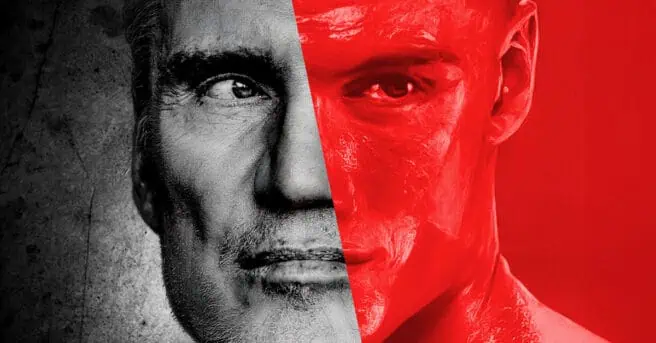
While the first half hour of the film works as a spy thriller, complete with noir-influenced 35mm photography (I actually got to see it on a 35mm print here at Cannes), dark alleyways, and whispered conversations, the majority of the movie is a two-hander between Gilles Lellouche’s Moulin and Lars Eidinger’s Barbie. The movie shows exactly how Barbie tried to break Moulin mentally before resorting to physical torture, initially adopting an almost collegial, friendly vibe before gradually increasing the tension. When he realizes Moulin, played by Lellouche as sturdy but also doubtful of his own capacity to withstand torture, won’t break, his truly unhinged, barbaric tactics begin, and they are hard to watch.

Eidinger could have portrayed Barbie as a foaming-at-the-mouth lunatic, but instead opts for a calm demeanor — until a well-observed scene where he finally snaps in the face of Moulin’s resistance. For people familiar with WWII history, Barbie is a particularly infamous figure, with his torture of French Resistance members (as well as the country’s Jewish population) so horrific that the movie can’t even delve too deeply into some of his more depraved tactics without risking exploitation. Adding to Barbie’s crimes is the fact that he spent much of his post-WWII life free, with the U.S. helping him escape to Bolivia and using him as an asset in anti-communist efforts. He was finally arrested in 1983 and spent his last years in a French prison, but he had thirty-eight years of freedom compared to the eventual eight he spent behind bars.
Yet, Moulin isn’t a story about evil triumphing. While Barbie may have escaped justice for a long time, when he went head-to-head with Moulin, he failed, and the film becomes a celebration of Moulin’s triumph — even if it came at an unbearably high cost. When physical torture failed to break him, Barbie turned his attention to Moulin’s comrades, even having his young cellmate partly blinded just to prey on Moulin’s empathy. All of that makes Moulin a grim watch, but rather than leave audiences depressed, I think it will instead inspire them through its depiction of true heroism, which in this case had nothing to do with brawn and everything to do with the ability to endure while doing and saying nothing. Moulin is a harsh movie, but a worthy one that does justice to the man it pays homage to.























The comment section exists to allow readers to discuss the article constructively and respectfully, focused on the topic at hand.
What’s Not Allowed