


There are probably a couple of things that come to mind when Oldboy comes up in conversation. Maybe it’s the hallway fight, all done in one brilliant shot that shows the perseverance of Oh Dae-su. Maybe it’s the octopus being eaten alive, all on camera. Or maybe it’s that twist (you know the one), the twist that shocked audiences and made this film a modern-day classic.
From a massive premiere at Cannes to getting Quentin Tarantino’s endorsement, we’re getting into it all. So join us as we see what happened to Park Chan-wook’s Oldboy.
Spoiler Warning
Obviously, we’re going to get into spoilers for this classic film, so make sure you’ve seen the big twist before it gets spoiled for you. Trust me, you’re going to want to experience it yourself.
Origins: From Manga to Screen
Oldboy first began its life as a Japanese manga, which ran from 1996 to 1998. It follows Shinichi Gotō, who is mysteriously kidnapped and held in solitary confinement for a decade. Once released, he sets out on a mission of revenge to find out who did this to him.
Running for 79 chapters, the story is quite different from the film we would eventually receive.
The Story and Its Infamous Twist
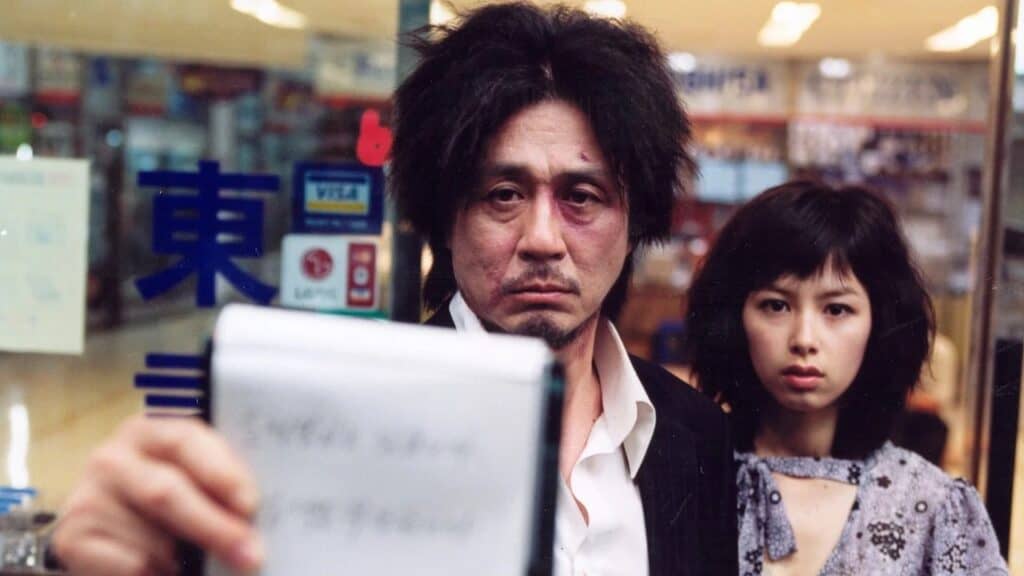
We follow Oh Dae-su in a similar situation, imprisoned and then released, but the details shift in key ways. After his release, he forms a romantic bond with a woman while still being tormented by his captor. He’s given five days to discover the motive for his imprisonment. If he succeeds, his tormentor, Lee Woo-jin, will kill himself. If he fails, Woo-jin will kill the woman.
The eventual reveal? Dae-su once witnessed Woo-jin committing incest with his own sister. When Dae-su spread the secret, it led to her suicide. Woo-jin’s revenge is brutal and calculated: he hypnotizes Dae-su into falling in love with Mi-do… who is revealed to be his own daughter.
It’s one of those endings that absolutely knocks you flat and leaves you thinking about it for days.
Development: Bringing Oldboy to Life
Producer Lim Seung-yong acquired the rights to the manga and considered adapting it into a film. After seeing Park Chan-wook’s work, especially Sympathy for Mr. Vengeance, he brought him on board. The story’s themes of revenge were a perfect match. They kept the core structure of the manga but added a unique and unforgettable style.
Casting and Performances
Choi Min-sik as Oh Dae-su
Given how demanding the role was, the filmmakers needed a powerhouse actor. Choi Min-sik, primarily a theater actor at the time, was their top choice, and they were thrilled to get him. He trained for six weeks, learned the fight choreography, and lost 20 pounds for the role. What impressed Park Chan-wook most was Choi’s confidence. He needed very little direction.
Ironically, the hardest scene for him wasn’t the action, it was the sex scene.
Yoo Ji-tae as Lee Woo-jin
On paper, Woo-jin could have been a bland villain. But Yoo Ji-tae elevated the role completely. He obsessed over every detail, asking endless questions and refining every line. He approached the character as a man whose mind had died, leaving only revenge behind. He even trained in yoga for the role and delivered a performance full of eerie control and charisma.
Kang Hye-jung as Mi-do
Kang Hye-jung was initially nervous about the role. But after guidance from the director, she leaned into that nervous energy, giving Mi-do her childlike, vulnerable quality. She even trained with a real sushi chef for authenticity.
Filming and Production
Filming took place in Seoul and Busan, South Korea, with the final scene shot in New Zealand. Production began with a ritual: the youngest and oldest crew members burned an effigy for good luck.
Choi Min-sik was in nearly every scene, and filming was intense. At one point, he even fell asleep during a take from sheer exhaustion.
The Iconic Hallway Fight
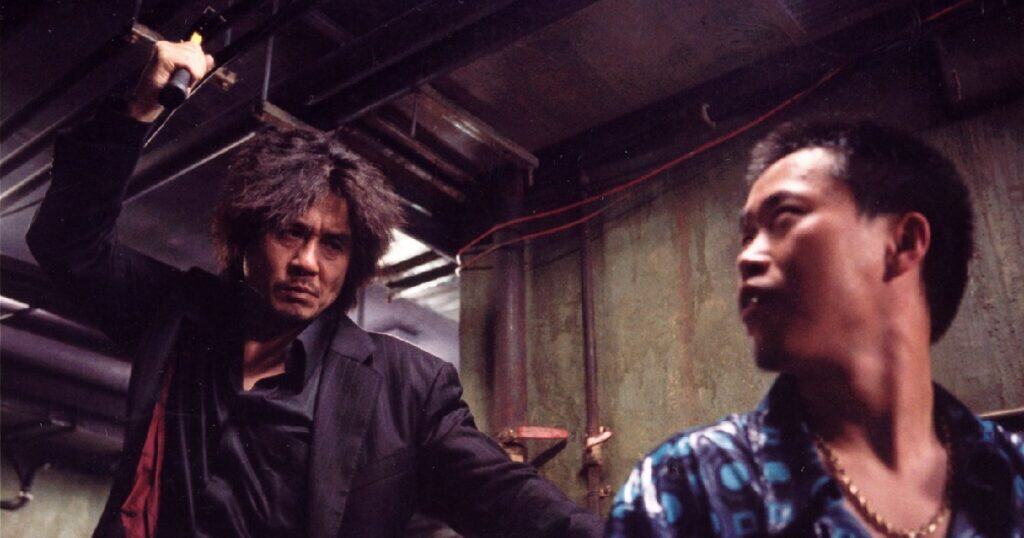
The famous corridor fight scene, shot to look like one continuous take, was filmed over three days.
Unlike modern films, which often rely on CGI stitching, Oldboy used almost none. The only digital effect in the sequence was the knife in Dae-su’s back. It remains one of the most iconic action scenes ever filmed.
Practical Effects and Controversy
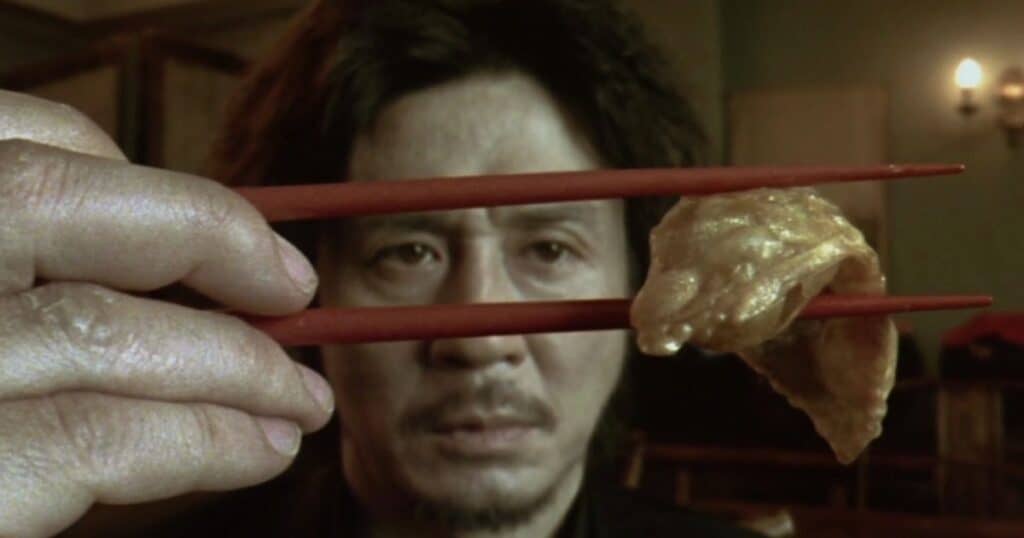
The ant hallucination scene required CGI, but most effects were practical. Then there’s the infamous octopus scene. Yes, it’s real.
Choi Min-sik actually ate live octopuses on camera. Being a Buddhist, he reportedly prayed after each take. That’s commitment.
Music and Score
The score was composed by Jo Yeong-wook, Lee Ji-soo, and Choi Seung-hyun. Each track was named after films, many inspired by film noir.
Using a small orchestra layered together, they created a rich and haunting soundscape.
The Ambiguous Ending
The ending of Oldboy is intentionally ambiguous. Did Dae-su erase the truth from his memory? Does he continue his relationship with Mi-do?
For such a dark film, it leaves just enough room for a strange kind of hope, depending on how you see it.
Release and Reception
Oldboy was released in South Korea on November 21, 2003. Its U.S. release didn’t come until March 25, 2005, nearly a year and a half later. It premiered at major festivals, including Sundance, and received overwhelming praise. Roger Ebert gave it four stars, and many critics called it one of the best films of the year.
Cannes and Global Impact
The film made its biggest splash at the 2004 Cannes Film Festival, where it won the Grand Prix. Quentin Tarantino, president of the jury, was a huge supporter of the film, boosting its global reputation significantly.
At the box office, it earned over $17 million worldwide, later reaching nearly $19 million after its 20th anniversary re-release in 2023.
The 2013 Remake
Yes… there was a remake. Directed by Spike Lee and starring Josh Brolin, the 2013 version was widely seen as unnecessary. Originally, Steven Spielberg and Will Smith were attached, but ultimately stepped away.
Many fans consider the remake pointless, often compared to other infamous remakes like Psycho (1998).
Legacy: A Modern Classic
Neon later released a stunning 4K restoration, bringing the film back to theaters. And honestly, there are few movies that deliver an experience like Oldboy. What starts as a simple revenge story becomes something far more disturbing, emotional, and unforgettable. It’s packed with iconic scenes and remains one of South Korea’s greatest cinematic exports.
Final Thoughts
What do you think about Oldboy? Where does it rank among the greatest South Korean films of all time? And… have you seen the remake? Let us know.
A couple of the previous episodes of the show can be seen below. To see more, head over to our JoBlo Horror Originals YouTube channel – and subscribe while you’re there!












The comment section exists to allow readers to discuss the article constructively and respectfully, focused on the topic at hand.
What’s Not Allowed