
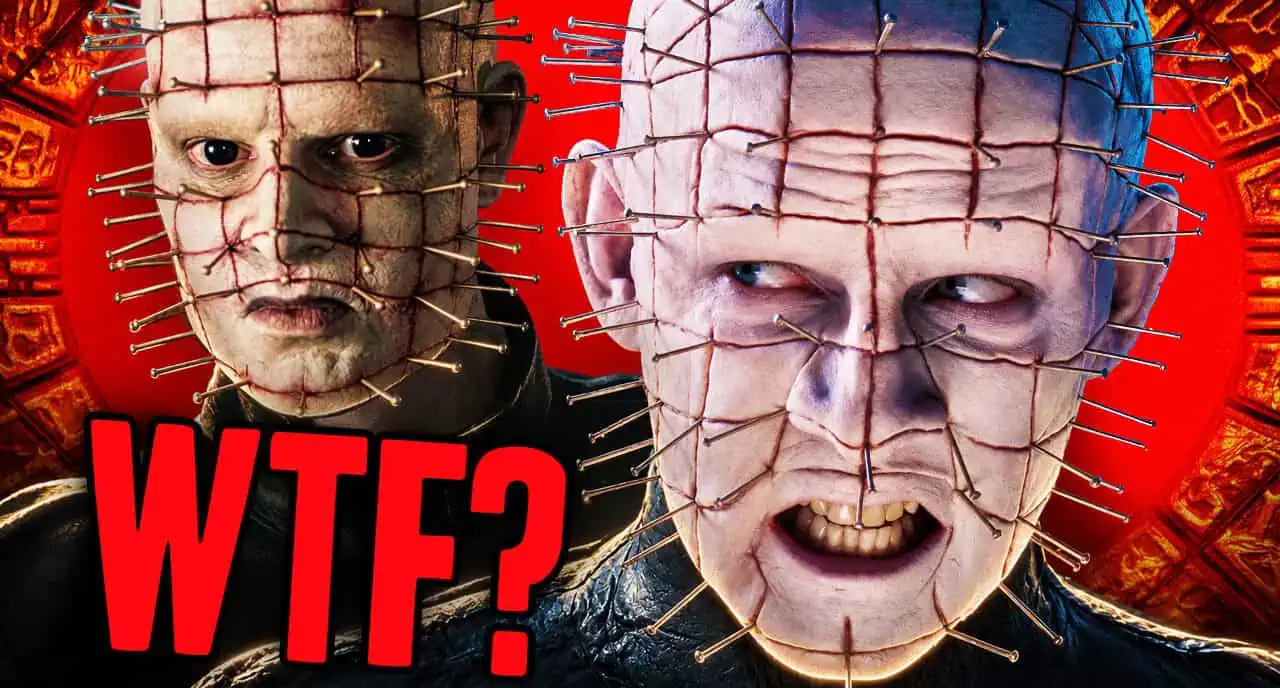
He’ll tear your soul apart and hates to waste good suffering. He enjoys a good puzzle and always makes time for his friends and coworkers. He’s been haunting our books, comics, movies, action figures, and even video games for more than 40 years. But how did Pinhead’s journey begin? The character has been portrayed by multiple actors, although Doug Bradley is as synonymous with the High Priest of Hell as Robert Englund is with Freddy Krueger. Clive Barker created him, but eventually had to let the reins go. As we saw in our retrospective on the Hellraiser movie series, Pinhead spent much of his later cinematic life trapped in a succession of mostly straight-to-video productions, not unlike the way he traps his victims in prisons of their own making.
What decision in the original movie almost changed pop culture entirely? And after more than 40 years of ups and downs in the cultural spotlight, where does Pinhead stand today? Let’s figure out that Lament Configuration as we look at What Happened to Pinhead.
The Origins of Pinhead: Clive Barker, Doug Bradley, and The Hellbound Heart
When he first appeared, Pinhead was an imposing, terrifying, and almost incomprehensible presence. Formerly known as the Lead Cenobite, Hell Priest, The Engineer, Cold Man, Dr. Paul Gregory, and the Pope of Hell, he offered pleasure and pain in equal measure, unlocking levels of suffering and sensation beyond human comprehension. Somewhere along the way, however, the character evolved into something quite different. When Jason, Freddy, Leatherface, and Michael Myers were taking breaks, sitting out, or caught up in legal battles, Pinhead somehow accepted the mantle of slasher villain and carried the torch. Unfortunately, he was also stuck in straight-to-video purgatory. Thankfully, there’s reason to hope that there’s more exciting Hellraiser material ahead.
Let’s start with the character’s origins, which go back further than some fans might realize. Clive Barker and Doug Bradley, two of the most important people in Pinhead’s history, have been friends for decades. Although the novella The Hellbound Heart introduced the character we would eventually know as Pinhead, the earliest ideas and themes behind him date back to 1973.
Barker and Bradley were working together on a play called Hunters in the Snow. Bradley played a character named The Dutchman, a torturer and undead inquisitor, while Barker directed. The character’s sadomasochistic tendencies would later find their way into the mythology of the Cenobites. A few years later, in 1978, Barker and several friends, including Bradley, made a 36-minute black-and-white short film called The Forbidden. Featuring music rather than dialogue, it follows a man who transforms into a living work of art. The film contains another interesting piece of Pinhead history: a wooden prop covered in nails that, under certain lighting, creates an image not entirely unlike the character’s eventual appearance.
These early projects established some of the themes and imagery that would eventually define the Hell Priest. However, Pinhead himself wouldn’t properly appear until The Hellbound Heart was published in 1986.
Barker had already experienced disappointment with his first two film projects. He enjoyed working on Transmutations, but was unhappy with the finished result of Rawhead Rex, which he felt had substantially altered the character he originally created for the page. During this period, he wrote The Hellbound Heart, drawing on experiences from his time working as a hustler in the 1970s. The appearance and philosophy of the Cenobites were also influenced by sadomasochistic clubs, particularly New York’s Cellblock 28. Barker even flirted with calling the eventual film adaptation Sadomasochists from Hell, a title that probably wouldn’t have gone over particularly well in the late 1980s.
The novella is broadly similar to the movie, although there are some important differences. The Cenobites of the Order of the Gash have a more androgynous appearance on the page, making it less obvious which are male and which are female. Their leader is known as The Engineer, while another Cenobite speaks with a feminine voice but has no clearly established gender. This particular creature has a grid-like tattoo covering its head, with jeweled pins driven into the skull.

How Doug Bradley Almost Didn’t Play Pinhead
When the film adaptation finally came together, Barker was given considerable creative freedom and ultimately wrote and directed Hellraiser in 1987. Bradley, who had been collaborating with Barker for years, was involved in the production but almost didn’t play the character who would become his signature role. He was offered a choice between two parts: the Lead Cenobite or Moving Man #2. Thankfully, he chose the Lead Cenobite. The role required extensive makeup, which initially concerned Bradley because it concealed much of his face. However, it was clearly the more memorable opportunity, even though the character appeared for only about eight minutes in the finished film.
At this point, the character wasn’t officially known as Pinhead. That name wouldn’t be spoken on screen until Hellraiser III: Hell on Earth. However, the production team and makeup crew had already adopted the nickname.
Even the character’s iconic appearance almost turned out differently. Barker’s original sketches featured quills protruding from the character’s head, an idea that would later be used for a character in Nightbreed. Budgetary limitations led to the use of six-inch nails instead, but that approach was considered too crude and didn’t quite capture the intended look. The production eventually settled on the pins that became one of horror cinema’s most recognizable designs. And just like that, Pinhead was born.
Doug Bradley Becomes the Face of the Hell Priest
Although several actors have portrayed Pinhead over the years, Doug Bradley remains as inseparable from the character as Robert Englund is from Freddy Krueger, Brad Dourif is from Chucky, or Warwick Davis is from the Leprechaun.
Born in Liverpool, Bradley attended high school with Clive Barker. His first three film appearances were all connected to Barker, including the first two Hellraiser movies and Nightbreed. Unfortunately, his voice was dubbed over in the original release of Nightbreed, although his performance was restored when the film was cleaned up for the director’s cut.
Bradley has enjoyed a respectable career outside the Hellraiser franchise, but I can’t help feeling he could have been utilized much more effectively in both horror and other genres. He appeared in other horror franchises, including Pumpkinhead and Wrong Turn, and also collaborated extensively with the metal band Cradle of Filth.
I’ve seen Bradley appear on podcasts and in interviews, and by all accounts from convention appearances, he’s a genuinely nice guy. He’s also become so familiar with the character’s elaborate makeup that he earned credits under his middle name, Bill Bradley, for makeup work on several Hellraiser films.
Hellbound Heart Becomes a Horror Franchise
The original Hellraiser was a major success, and the sequel went into development relatively quickly. The first movie’s poster had already given Pinhead a prominent place, despite his limited screen time. In Hellbound: Hellraiser II (1988), he was officially credited as Pinhead for the first time, and his screen time nearly doubled to around 15 minutes.
We also began learning more about his history. When preparing for the original movie, Bradley had asked Barker how he should approach the still-unnamed Cenobite. They decided that, whether five, ten, 100, or 1,000 years earlier, the character had once been human. This idea was based on a passage in the novella in which Frank recognizes that the Cenobites appear to have once been people before undergoing their transformations. The sequel reinforces that idea when the villainous Dr. Channard gains Cenobite powers and turns against his former allies. Although he dispatches them relatively easily, we get glimpses of their original human forms, including the Chatterer, who is revealed to have been a child.
Pinhead also briefly returns to his human appearance, using a photograph Kirsty discovers. It’s a small but important moment that establishes something fundamental about the character: the terrifying Hell Priest was once an ordinary man.

Hellraiser III: Hell on Earth Reveals Pinhead’s Human Identity
After the first two movies arrived in 1987 and 1988, audiences had to wait until 1992 for the third installment, Hellraiser III: Hell on Earth. Anthony Hickox directed, with Tony Randel involved in the screenplay. Barker’s involvement had diminished by this point. He received an executive producer credit after contributing the story for the previous sequel. Doug Bradley, however, was back in the leather and pins.
This movie also marked the beginning of the largely unfortunate Dimension Films era of Hellraiser. I do have a soft spot for Parts III and IV, particularly the right cut of the fourth film, but the franchise was clearly heading in a different direction.
Pinhead received even more prominent treatment on the poster, cementing his status as a horror icon. His screen time increased to around 20 minutes, giving us some of his most memorable sequences, including his introduction through the pillar and the climactic church confrontation. We also got the Barbie Cenobite, a ridiculous triple entendre, and the infamous CD Cenobite, which couldn’t be more representative of the 1990s if it tried.
More importantly, the film finally gave us a fuller account of Pinhead’s human origins. The character, now officially called Pinhead on screen, was once Elliot Spencer, a captain in the British Expeditionary Force during World War I. After experiencing the horrors of the Battle of Passchendaele, Spencer suffered from post-traumatic stress and survivor’s guilt. He lost his faith in humanity and God, eventually concluding that nothing mattered. He wandered the world seeking to bury his pain through hedonism and nihilism. In 1921, somewhere in British-ruled India, he discovered the Lament Configuration and became immersed in the extraordinary combination of pleasure and suffering it offered. Eventually, Spencer transformed into a Cenobite.
The film’s conclusion sees Spencer help defeat Pinhead, restoring some of the intelligence and complexity associated with the character in the original movies and novella. It also gives us a glimpse of the man beneath the pins, something that would become increasingly important to the franchise’s mythology.
Pinhead Takes Over Comics and Joins Motörhead
There would be another four-year wait before the next theatrically released movie, Hellraiser: Bloodline, arrived in 1996. However, Pinhead wasn’t sitting around doing nothing in the meantime. Epic Comics, Marvel’s more adult-oriented imprint, published a lot of material expanding the Hellraiser universe. Between 1989 and 1992, readers got the 20-issue Hellraiser comic series. From 1991 to 1994, additional one-shots, adaptations, and crossovers followed. These included an adaptation of the third movie, a crossover with Marshall Law, and a Clive Barker universe mashup called Hellraiser vs. Nightbreed: Jihad.
Most of the comics focused on the larger mythology rather than Pinhead specifically. However, from 1993 to 1994, a six-issue series simply titled Pinhead gave the character his own adventure. The story took readers through different periods of history, from prehistoric cavemen to the Aztecs and the Inquisition. It was a fun side excursion for a character who had already established himself as a permanent fixture in horror culture.
Pinhead also branched out into music videos. In 1992, he appeared alongside Motörhead in the appropriately titled video for their song Hellraiser. The clip features frontman Lemmy eventually sitting across a card table from Pinhead and apparently beating him at their game. Earlier in the video, the band performs for an unusual audience consisting of Pinhead and several of his Cenobite companions. They even kidnap an unfortunate Motörhead roadie. It’s exactly the kind of crossover that can help a horror character become bigger than the original movies. Pinhead was no longer confined to the Hellraiser franchise; he was becoming part of everyday pop culture. The appearance also gave Bradley some metal credibility, which he would build upon through his later work with Cradle of Filth.
The early 1990s were a particularly good period for the Hell Priest, with movies, comics, and music videos all contributing to his growing popularity. Unfortunately, his next cinematic adventure would mark the beginning of the end of an era.
Hellraiser: Bloodline Sends Pinhead Into Space
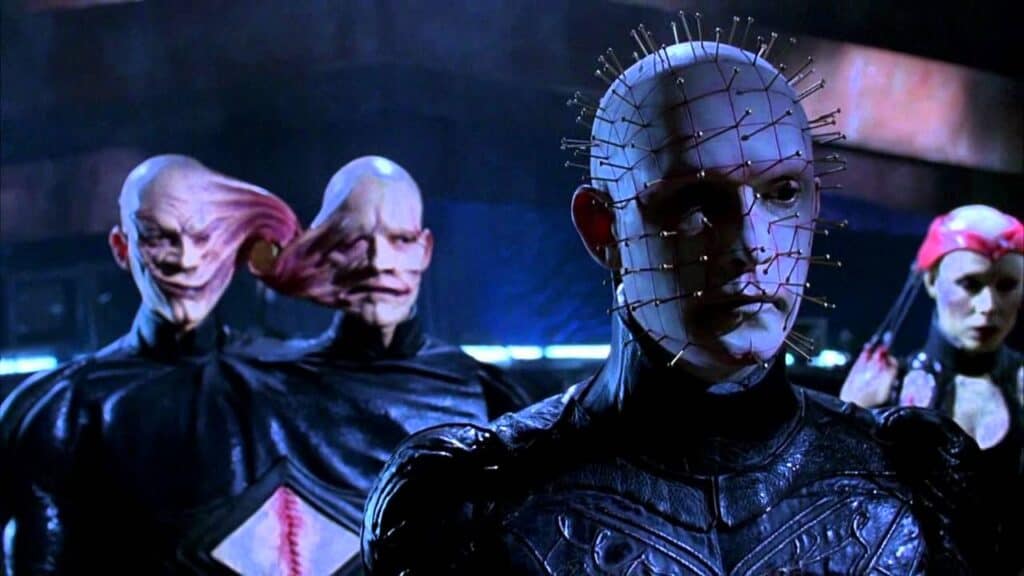
In 1996, the Hellraiser universe, the Lament Configuration, and Pinhead himself took the journey that many horror icons eventually make. That’s right: sadomasochism in space!
Hellraiser: Bloodline spends time exploring the history of the Lament Configuration’s creator and introduces demons accustomed to a very different kind of suffering. However, it also serves as a direct continuation of the third movie. Many viewers don’t realize that the first four films actually form a connected story. That’s probably because the reputations of Parts III and IV, particularly the heavily reworked 85-minute theatrical cut of Bloodline, have made the overall narrative difficult to appreciate.
Once Pinhead appears, he gets around 20 minutes of screen time and battles other demons while remaining committed to Hell’s new policy regarding suffering. The final sequence takes place in 2127, with the movie strongly implying that Pinhead has either been destroyed permanently or trapped inside a space station designed as the ultimate anti-Lament Configuration.
But why should the permanent destruction of a horror character stop a studio from making money? Dimension Films had other ideas, and the next decade would be particularly unpleasant for Pinhead and the Hellraiser franchise.
The Dimension Films Years: Pinhead Gets Lost in Straight-to-Video Purgatory
After Bloodline, Barker stepped away from the franchise. He had become increasingly unhappy with its direction, particularly after the changes introduced in the third and fourth movies. Doug Bradley, however, stayed on to carry the torch.
The next four movies arrived between 2000 and 2005, and they followed a couple of frustrating trends. Several weren’t originally conceived as Hellraiser movies at all, with the Lament Configuration and Pinhead added later to connect them to the franchise. The bigger problem was that, regardless of their titles, these barely felt like Hellraiser movies.
Across all four films, Pinhead received approximately 17 minutes of combined screen time. Yet who remained the focal point of every poster? That’s right. Pinhead.
In Hellraiser: Inferno, he appears for roughly five minutes during the final portion of the movie. In Hellraiser: Hellseeker, he gets another brief appearance near the end. Hellraiser: Deader gives him similarly limited screen time, along with a few brief appearances to the protagonist. Finally, Hellraiser: Hellworld marked Doug Bradley’s last on-screen performance as Pinhead. Unfortunately, the character barely appears and is eventually revealed to be part of a drug-induced fever dream. By this point, he had essentially become a slasher villain rather than the mysterious, calculating figure audiences originally encountered. I spent an entire video examining the Dimension Films entries, and if anything, my opinion of most of them has only soured since.
Doug Bradley Leaves, and Pinhead Gets a New Face
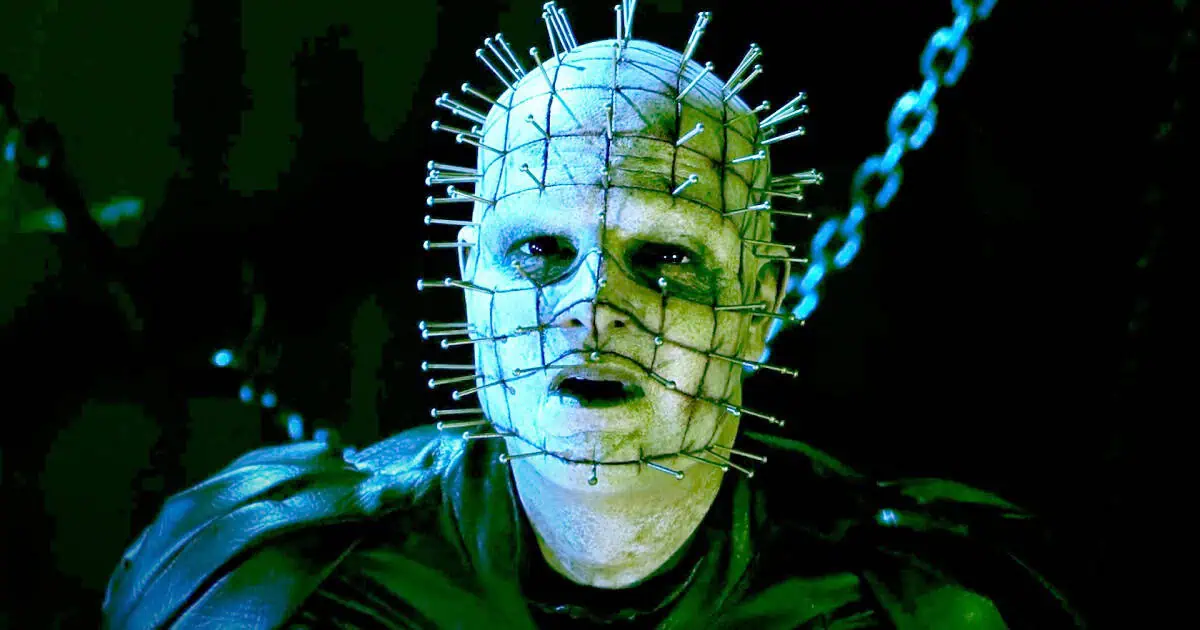
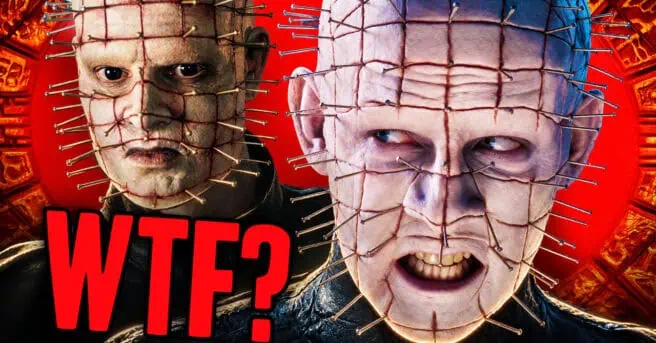
Hellraiser: Hellworld effectively closed the book on Bradley’s tenure, but Pinhead wasn’t finished. After a six-year gap, 2011 brought Hellraiser: Revelations, an extremely low-budget production that introduced Stephan Smith Collins as the new on-screen Hell Priest. Interestingly, voice-over performer Fred Tatasciore provided the character’s voice.
The movie is awful. Once again, Pinhead was featured prominently on the cover, although this time he looked worse for wear. Even when the previous movies weren’t particularly good, Bradley still gave the character his all and looked the part. With Collins, the magic was gone. Despite having only around six minutes of screen time, the character felt more like something from a fan film or student production than the Pinhead audiences knew.
Thankfully, not everything was lost during this difficult period.
Clive Barker Returns to Pinhead in Comics and Novels
While the movies were struggling, Boom! Studios was working to give Hellraiser fans something worthwhile. From 2011 to 2015, and again in 2026, the publisher released comics expanding the mythology of the franchise. More material is also planned for 2027.
These stories explored the larger universe while giving readers a darker look at Elliot Spencer’s human life before becoming a Cenobite. Barker wrote a substantial amount of this material and returned to calling the character The Priest, as he had never been particularly fond of the Pinhead nickname. The comics also serve as a continuation of the early movies. We discover that Spencer wasn’t necessarily a good person even before the horrors of World War I changed him. He physically abused his wife and inflicted psychological damage on his daughter. In one particularly disturbing revelation, his final test to become a Cenobite involved fathering a child with his own daughter after struggling with his desires toward her for years. There’s nothing quite like Clive Barker to make a terrifying horror villain seem less disturbing than his human counterpart!
Barker also returned to the world of novels in 2015 with The Scarlet Gospels, an actual sequel to The Hellbound Heart. The book expands the Barker universe by bringing in Harry D’Amour, a character from several of his other stories. Pinhead is on a mission to kill magicians, steal their power, and establish himself as a ruler in Hell. It’s a fun, if grim, excursion into the mythology and gives the character room to breathe outside the movies.
In 2018, Barker returned again with The Toll, written by his assistant and based on Barker’s ideas. The story fills in the period between The Hellbound Heart and The Scarlet Gospels.
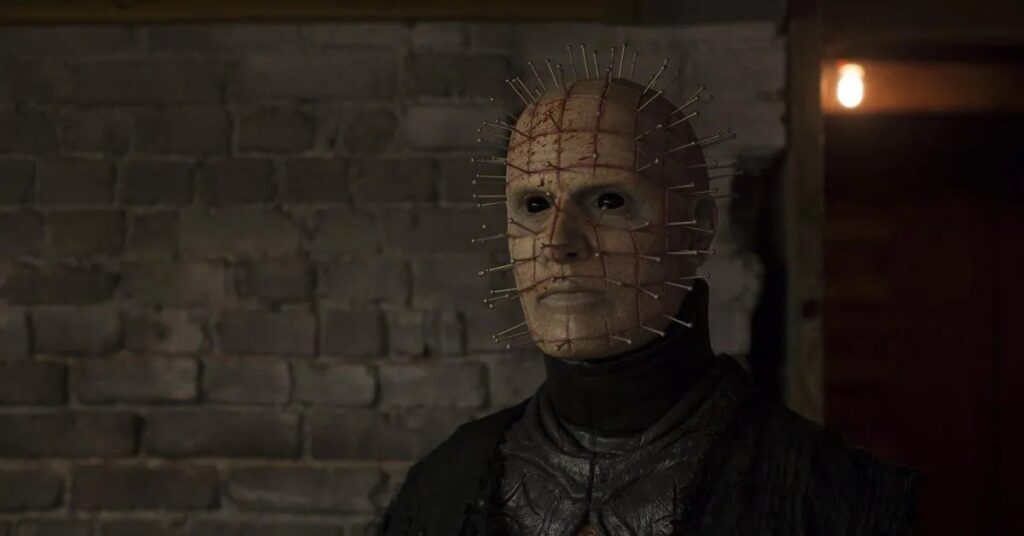
That same year also brought another straight-to-video movie, Hellraiser: Judgment. While it was an improvement over Revelations, it still fell well short of the franchise’s high points. Paul T. Taylor took over the role of Pinhead, and he actually made for a solid representation of the character. Although he appears for less than ten minutes, Pinhead functions more as an authority figure in Hell than as the movie’s central antagonist. It’s an interesting change, even if the film itself doesn’t entirely work.
Hellraiser (2022) Gives Pinhead a New Beginning
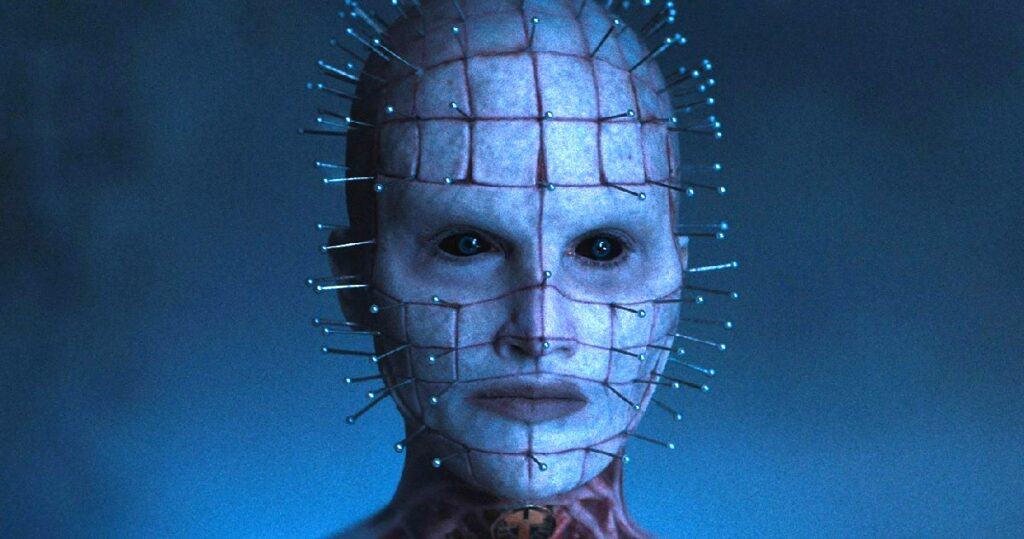
The 2022 Hellraiser reboot finally brought the franchise back to a level of respectability and offered a full-circle moment for Pinhead. Doug Bradley didn’t return, with Jamie Clayton taking over the role of the Lead Cenobite. Her performance was a particularly interesting choice because it harkened back to the original novella, where the Priest’s gender is ambiguous and the character speaks with a raspy feminine voice. Clayton gets around ten minutes of screen time, which is actually a good thing. The character’s appearances feel special and menacing rather than overused. More importantly, this version of Pinhead behaves less like a conventional murderous villain and more like the keeper of the Lament Configuration, fulfilling their duty to Leviathan regardless of who comes into contact with them.
This was the Hellraiser movie, and particularly the Pinhead portrayal, that fans needed. It’s also a fitting bookend to the original films. The character once again feels mysterious, otherworldly, and terrifying, rather than simply another slasher villain.
Pinhead Finally Enters the World of Video Games
While Jason, Freddy, and other horror icons were appearing in video games throughout the 1980s, Pinhead had to wait much longer for his gaming debut. His first notable appearance came in the unauthorized fighting game Terrordrome, a free-to-play title that horror fans should check out. He subsequently appeared as Nail Head in the exploration and action game Terraria in 2015 before joining the horror royalty assembled in Dead by Daylight. Doug Bradley even returned to voice the character! Unfortunately, players who hadn’t purchased Pinhead and his Cenobite companions by April 2025 lost access to the content following licensing changes.
But that wasn’t the end of his gaming adventures. First teased in July 2025 and released in October 2026, Clive Barker’s Hellraiser: Revival arrived for current gaming platforms. I was lucky enough to get my hands on the physical collector’s edition, and despite a few minor issues, the game is beautiful. More importantly, Pinhead is used exactly as he should be, with Doug Bradley once again providing his voice. The game itself is incredible, although there’s enough disturbing material that it’s generally not safe to show too much of it on YouTube.
Pinhead even experiences a degree of character development through a ritual of rebirth. The process gives him a new skin and elevates him and his Cenobite companions into a deeper circle of Hell.
With more comics expected in 2027 and the possibility of additional downloadable content for the recently released game, there’s plenty of reason to believe the character’s story still has room to grow.
What’s Next for Pinhead?
After more than 40 years, Pinhead has experienced just about everything. He’s gone from a terrifying supporting character in a relatively modest horror movie to one of the genre’s most recognizable icons. He’s appeared in novels, comics, music videos, video games, and a succession of movies that have ranged from excellent to downright disappointing.
The good news is that Jamie Clayton’s performance in the 2022 Hellraiser demonstrates that the character can continue beyond Doug Bradley’s legendary portrayal. Bradley will always be the definitive Pinhead for many fans, but there’s room for someone else to bring something new to the role while respecting everything that came before.
Whatever happens next will ultimately be decided by whoever opens the box. Just don’t call him Pinhead. You might find out what happened to the Hell Priest on a deeply personal level.










The comment section exists to allow readers to discuss the article constructively and respectfully, focused on the topic at hand.
What’s Not Allowed