
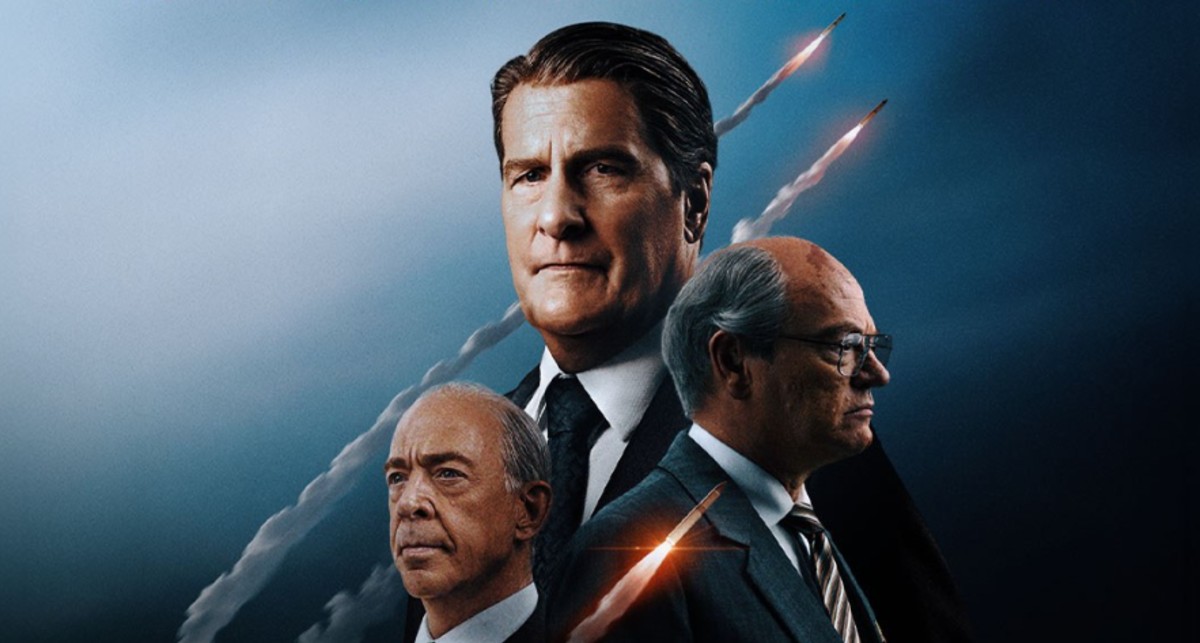
Plot: President Reagan races against time to salvage a deal with Soviet leader Mikhail Gorbachev that could dismantle nuclear arsenals–or ignite disaster. With pressure mounting from advisors, intelligence agencies, and history itself, every word spoken brings the world closer to peace… or destruction.
Review: With the two-hundred-and-fiftieth anniversary of the Declaration of Independence coming just over a month ago, we have already seen a bland political drama about George Washington, so why not add another? Shifting to the more recent 1980s, The Brink of War is a detailed insider look at the 1986 Reykjavík Summit between the Soviet Union and the United States, which could have been a turning point in the Cold War, hinging on a single word that collapsed the talks. Led by Jeff Daniels as President Ronald Reagan and Jared Harris as Soviet general secretary Mikhail Gorbachev, The Brink of War is a faithful recreation of a pivotal event in American-Soviet relations. It is also boring.
At the height of the Cold War, with thousands of nuclear weapons pointed at each other, President Ronald Reagan (Jeff Daniels) and Soviet leader Mikhail Gorbachev (Jared Harris) agreed to a summit at the neutral site of Reykjavik, Iceland, to discuss potential disarmament to avoid mutually assured destruction. Gorbachev had been the top official of the U.S.S.R. for a year while Reagan was in his second term. Despite surviving an assassination attempt and the controversy surrounding the Iran-Contra affair, Reagan was focused on trying to negotiate a peace between the United States and the Soviet Union. With everything at stake, the Reykjavik Summit seems like an ideal setting for a tense, political drama that illustrates the divide between East and West, democracy and socialism, but instead just serves as a recreation of a bunch of people talking in rooms. Much of The Brink of War is centered on Gorbachev sparring verbally with Reagan with Jared Harris repeatedly slamming his hands in frustration while Reagan calmly rebuttals and asks for breaks.
There is little energy in The Brink of War outside of Jared Harris’ exasperated Mikhail Gorbachev. Long one of the best supporting actors working today in everything from Mad Men and Fringe to The Crown and Foundation, Harris shows us Gorbachev as a steadfast leader who is willing to negotiate but not give in to the demands of the United States. On the other side of the table is the great Jeff Daniels, who somehow makes movie-star-turned-politician Ronald Reagan into the blandest and most boring president we have seen in a feature film. Daniels brings zero charisma to his take on Reagan, unlike Dennis Quaid’s far more idealized portrayal in 2024. Daniels portrays Reagan as an understated leader who seeks to compromise even if those around him advise against it. There is also J.K. Simmons as Secretary of State George Schulz, who is a key advisor to Reagan but doesn’t do much, serving as a sounding board here and there. Even the first ladies, Raisa Gorbacheva (Branka Katic) and Nancy Reagan (Hope Davis), exist simply to bounce exposition off of the two world leaders when the film needs to transition out of the negotiations, giving the movie something to do other than show two men talking at a table.
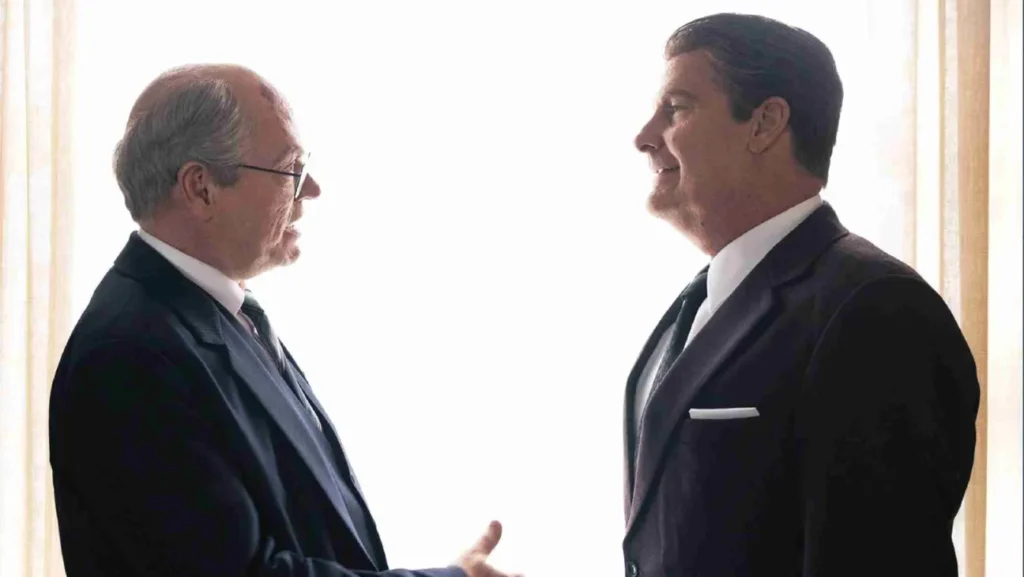
The key to making a good political thriller rooted in history is to build dynamic pacing or a sense of impending stakes. The Cuban Missile Crisis movie Thirteen Days, the Watergate scandal in All the President’s Men, and Ben Affleck’s acclaimed Argo all managed to do this by keeping the pulse of the film at maximum. The Brink of War tries to convey the distance between Reagan and Gorbachev by intercutting shots of the table they sat at, which shortens or elongates depending on the proposed accords. It is a literal illustration of the negotiation process and one that is not subtle in the least. The Brink of War focuses on hand-wringing and the characters tossing and turning rather than presenting any organic tension. Every time the movie begins to build some intensity, one of the protagonists suggests taking a break, sending the characters off to their rooms to have an unecessary side conversation that feels like padding out the running time.
The feature directorial debut of Michael Russell Gunn, The Brink of War was filmed at the actual site of the summit in Iceland with multiple transition scenes showing the ethereal Scandinavian locales. Gunn has experience writing for Jeff Daniels as story editor on Aaron Sorkin’s The Newsroom as well as scripting episodes of Designated Survivor and Billions, but his in depth research and interviews with George Schulz before his 2021 passing add a deep realism to The Brink of War. But, realistic doesn’t always equate to interesting or even entertaining. The Brink of War has multiple instances of characters censoring themselves by saying “gosh darn” or similar bland swear words, easily earning the movie its PG-rating. The film rarely rises to the point of being any more engaging than the dramatic reenactments seen in History channel documentaries that use actors to dramatize moments from contemporary events.
Released by Angel Studios, The Brink of War feels sanitized and safe and appropriate for watching at any age level but only as required viewing as part of a school assignment. Despite the title and the prospect of the talks resulting in potential nuclear annihilation, the movie never feels like much more than a blip in history that eventually led to accords between the United States and the Soviet Union. Maybe a movie about the actual treaty, signed a year later, would have made for a more interesting story. Or, maybe there just isn’t enough here to make a worthwhile cinematic experience. Jeff Daniels underwhelms and Jared Harris impresses while J.K. Simmons, Aya Cash, Hope Davis, Guy Burnet, Branka Katic, and the rest of the cast do their best with a dialogue-heavy and clunky story that is just not worth the two hour investment.
The Brink of War is now playing in theaters.



























The comment section exists to allow readers to discuss the article constructively and respectfully, focused on the topic at hand.
What’s Not Allowed