
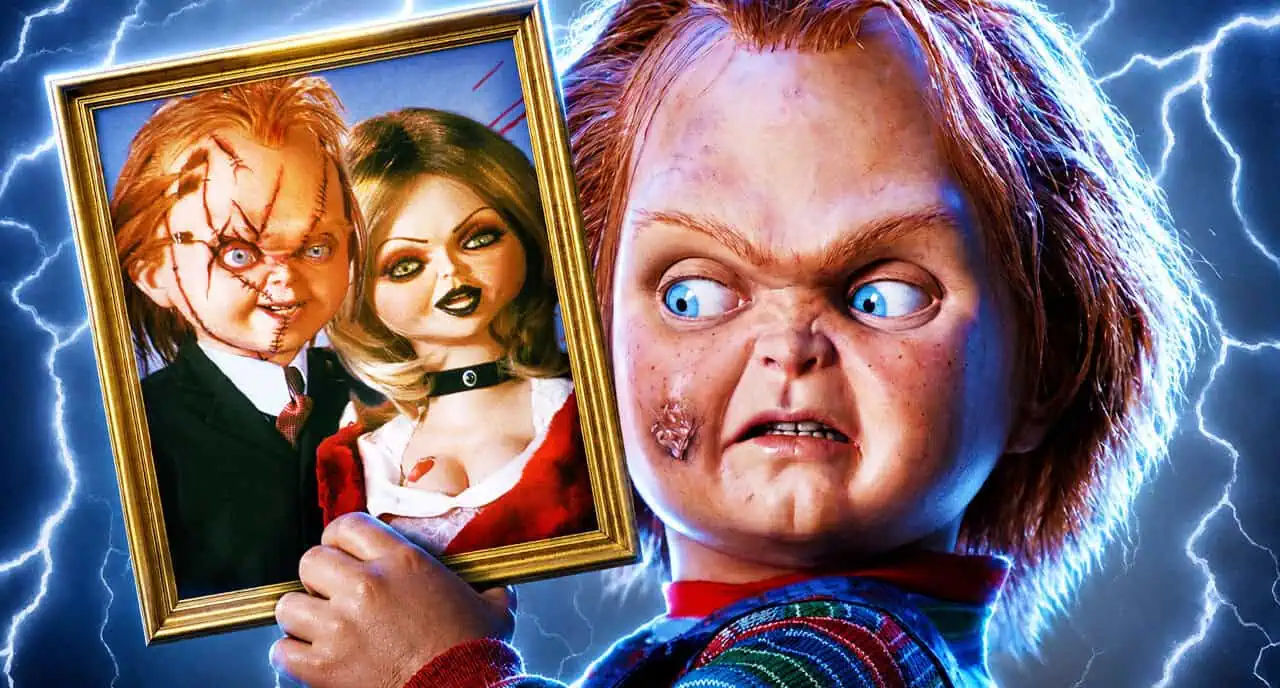
The Child’s Play franchise is one of the strangest cases in horror history. We often talk about how different writers and directors bring new ideas to famous horror series, but most franchises keep the same basic vibe. Friday the 13th, A Nightmare on Elm Street, and Saw evolve over time, yet they still feel recognizably like themselves. Child’s Play is different.
After Child’s Play 3, the series didn’t just change, it transformed so completely that it stopped using the Child’s Play name altogether. The tone shifted from suspenseful horror to self-aware comedy, then to outright dark comedy, and later to a mix of reboot, sequel, and franchise crossover.
So what happened?
- Why did the series abandon the Child’s Play title?
- Why do the later movies feel so different from the original trilogy?
- Did the 2019 remake bring the franchise back to its roots?
- And who is most responsible for the dramatic shift in tone?
Let’s take a deep dive into what happened after Child’s Play 3.
The Original Trilogy Was Shockingly Consistent
It doesn’t get talked about enough, but the first three Child’s Play movies are one of the strongest three-film runs in horror. Despite changing directors, supporting casts, and even studios, those movies maintain the same core identity:
- Chucky is dangerous first and funny second.
- The story follows Andy Barclay’s ongoing trauma.
- The supernatural rules remain mostly consistent.
- The movies are horror films, not comedies.
That consistency is what makes the later shift so jarring.

Why Child’s Play Was a Huge Hit
Child’s Play (1988)
Release date: November 9, 1988
The original film was a runaway success, earning about $44 million worldwide on a budget of under $15 million. The hook was simple but fresh: a killer doll.
Yes, horror had used ventriloquist dummies before—Dead of Night, Magic, Tales from the Crypt—but an ordinary toy becoming a serial killer was a genuinely novel idea for a mainstream 1980s horror movie. The key creative team included:
- Tom Holland (director and co-writer)
- Don Mancini (story creator)
- John Lafia (co-writer)
Mancini has cited influences such as The Twilight Zone episode “Living Doll” and Trilogy of Terror.
The movie also benefited from strong performances by Catherine Hicks, Chris Sarandon, and, most importantly, Brad Dourif, whose voice work became the franchise’s secret weapon.
Universal Took Over the Franchise
One major behind-the-scenes change happened immediately. The first film was produced by United Artists, but the company was being acquired by a parent corporation that wanted to reduce horror production. A bidding war broke out, and Universal Pictures won the rights.
Tom Holland did not return for the sequel, reportedly due to creative and production conflicts on the first film. Chris Sarandon and Catherine Hicks also exited the series. This sounds like the kind of upheaval that usually hurts a franchise. It didn’t.
Child’s Play 2 Proved the Series Could Survive Major Changes
Child’s Play 2 (1990)
Release date: November 1990
John Lafia, who had been denied the director’s chair on the first film, finally got his chance. New additions to the cast included:
- Jenny Agutter
- Gerrit Graham
- Christine Elise as Kyle
Returning:
- Alex Vincent as Andy
- Brad Dourif as Chucky
Despite a new director, new supporting cast, and a different studio, Child’s Play 2 became one of the most beloved horror sequels ever made, earning roughly $35–36 million on a $13 million budget. Many fans, including plenty of us at JoBlo, argue it’s even better than the original.
This is important: changing directors and actors did not change the franchise’s identity.
Child’s Play 3 Was Rushed Into Production
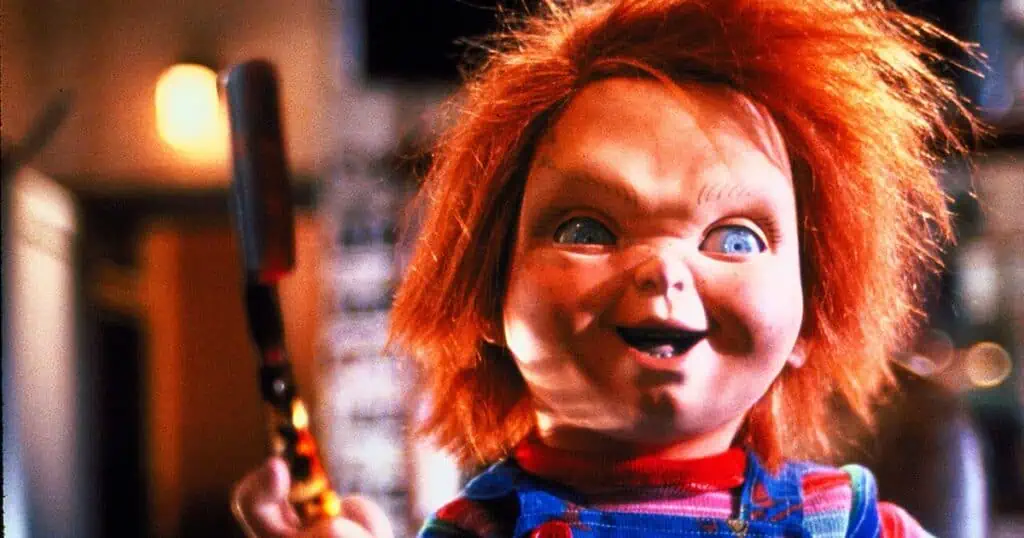
Child’s Play 3 (1991)
Release date: August 30, 1991
Universal moved incredibly fast.
- Child’s Play 2 released in November 1990.
- Child’s Play 3 arrived just nine months later.
Director Jack Bender replaced John Lafia, and Don Mancini received sole screenwriting credit.
The movie jumped forward in time with an older Andy played by Justin Whalin. The biggest problem wasn’t the cast or the director, it was the schedule. Mancini has said the film was developed before Part 2 even finished its theatrical run, leaving little time to refine the script.
The result was the first clear commercial warning sign: Child’s Play made $44 million at the box office. Child’s Play 2 made between 35 and 36 million. Child’s Play 3 dropped to $20 million.
The franchise was shelved for more than six years.
Why the Original Trilogy Still Works
What makes the first three movies feel like a complete story?
Chucky Has Clear Rules
Charles Lee Ray transfers his soul into a doll through voodoo. He must:
- Transfer his soul into the first person who learns the truth.
- Deal with the doll becoming more human over time.
Those rules create suspense and give the movies internal logic.
Andy Has a Real Character Arc
- Part 1: Innocent child who believes his doll is alive.
- Part 2: Traumatized survivor trying to warn adults.
- Part 3: Protector trying to save another child from Chucky.
That through-line gives the trilogy emotional weight, something the later movies struggle to maintain.
The Real Turning Point: Bride of Chucky
Bride of Chucky (1998)
Release date: October 16, 1998
A lot of people assume the series changed because it stopped using the Child’s Play title. That’s not actually the reason. The title changed because “Chucky” had become the recognizable brand. By the late ’90s, Chucky was appearing on MTV, at theme parks, and in pop culture generally.
The real turning point was creative. Producer David Kirschner and Don Mancini decided the franchise needed to become more self-aware, more stylish, and less repetitive.
Mancini has openly credited Kevin Williamson’s Scream with inspiring a fresh direction.
Director Ronny Yu brought a flashy visual style and blended horror, comedy, road-movie elements, and romantic subplots.
The movie was a commercial success, making around $50 million worldwide on a $25 million budget, the highest-grossing entry in the franchise at the time. And this is where the franchise began to feel like a different property.
Why Bride Works Better Than the Movies That Followed
Even though Bride of Chucky changes the tone, it still has a few things anchoring it to the earlier films:
- Brad Dourif’s performance.
- Practical-effects Chucky.
- Genuine horror sequences.
- A relatively straightforward plot.
Ronny Yu’s direction gives the movie energy that helps smooth over the tonal shift. That becomes important when we get to the next film.

Seed of Chucky Changed the Franchise Completely
Seed of Chucky (2004)
Release date: November 12, 2004
This is the movie where the series stops being horror. Don Mancini finally directed a Chucky film himself, and he brought deeply personal themes into the story, including ideas about identity, family, and acceptance.
There is absolutely nothing wrong with those themes. The issue is genre. Seed of Chucky is primarily a dark comedy, not a horror movie. Instead of Andy Barclay vs. a killer doll, the film focuses on Chucky and Tiffany’s child, Glen/Glenda, with obvious references to Ed Wood’s Glen or Glenda. The result alienated a large portion of the existing audience.
Worse, it arrived during an awkward period for horror:
- studios were obsessed with remakes,
- PG-13 horror was dominating,
- and audiences weren’t looking for a campy, self-referential Child’s Play sequel.
The film underperformed financially and effectively put the theatrical series on ice again.
Don Mancini Isn’t the Villain of the Story
This is the part that often gets oversimplified. Yes, the franchise became dramatically different once Mancini gained more creative control. But blaming him alone ignores several factors:
- studio interference,
- changing horror trends,
- budget cuts,
- distribution changes,
- and the difficulty of keeping a 30-year-old horror property fresh.
Mancini clearly understands film and character writing. His later movies and TV series have passionate fans. The problem is that the franchise evolved into something that no longer resembled the original trilogy.
Curse of Chucky Tried to Return to Horror
Curse of Chucky (2013)
Release date: September 24, 2013
After a nine-year gap, Mancini returned as writer and director. The film was originally announced as a reboot before being reworked into a sequel. It brought back:
- Brad Dourif
- Jennifer Tilly
- Alex Vincent
- and introduced Fiona Dourif, who became one of the best additions to the entire franchise.
With a reported budget of around $5 million and a direct-to-video release, the goal was clear: make Chucky scary again. And for much of its runtime, it works.
The problem is that the movie eventually reconnects itself to the increasingly complicated continuity of the later sequels, adding new backstory and bending established rules. So while Curse is arguably the closest thing to the original trilogy since 1991, it never fully commits to being a clean return to basics.
Cult of Chucky Doubled Down on the Weirdness
Cult of Chucky (2017)
Release date: October 3, 2017
This sequel reunited almost everyone:
- Brad Dourif
- Fiona Dourif
- Jennifer Tilly
- Alex Vincent
- Christine Elise
Instead of simplifying the mythology, it expanded it with multiple Chuckys, possession variations, and heavy franchise crossover elements. For longtime fans, it’s fascinating. For anyone hoping for the suspense-driven horror of the first three films, it feels even further removed.

The 2019 Remake Wasn’t Really Child’s Play
Child’s Play (2019)
Release date: June 21, 2019
This was the franchise’s chance to truly start over. Instead, it became a completely different movie. Changes included:
- Chucky is AI, not possessed.
- No Charles Lee Ray.
- No voodoo.
- No soul-transfer rules.
- Mark Hamill replaces Brad Dourif.
Hamill does a great job, and the movie is surprisingly entertaining. It was also highly profitable, earning about $45 million worldwide on a $10 million budget. But it doesn’t feel like Child’s Play. Ironically, if you removed the Chucky name, it would probably be remembered as an early “killer AI toy” movie released years before M3GAN exploded.
So What Actually Happened to Child’s Play?
After looking at the entire franchise, I don’t think there’s a single culprit. The series changed because of three forces colliding: Studio pressure after Child’s Play 3, Don Mancini gaining increasing creative control, and changing horror trends from the late ’90s through the 2010s.
The shift happened in two stages: Bride of Chucky marked the transition from horror to horror comedy, and with Seed of Chucky, the horror largely disappeared. That second jump is the one the franchise never fully recovered from.
The Final Verdict
The Child’s Play franchise is almost impossible to watch as one continuous series. It’s really multiple franchises sharing the same doll:
- The original horror trilogy.
- The self-aware comedy era.
- The direct-to-video mythology era.
- The unrelated AI remake.
And despite all the sequels, reboots, TV shows, and continuity twists, one thing remains true: the original trilogy still stands as one of the best runs in horror history.
The sauce may have been lost after Child’s Play 3, but those first three movies remain nearly untouchable.



The comment section exists to allow readers to discuss the article constructively and respectfully, focused on the topic at hand.
What’s Not Allowed