


PLOT: The life of Bruce Dern, one of the best character actors to emerge from the “New Hollywood” of the seventies, and who is still going strong at close to ninety years old.
REVIEW: The name Mike Mendez is one that should be familiar to many of our readers. Usually working in the genre space, Mendez has directed films like Big Ass Spider, Don’t Kill It, The Gravedancers, and The Convent, but now takes a wholly unexpected — but welcome — detour into non-fiction. For years, he has been close friends with actor Bruce Dern, with the two regularly having brunch together at iHop in Los Angeles, where Dern has spent years entertaining Mendez with his true Hollywood stories. Now, Mendez has taken those stories and woven them into a film that played very well here at Cannes, where it was programmed as part of the Cannes Classics lineup — with Dern himself, as well as his daughter Laura Dern (who figures prominently in the documentary), both in attendance.
Dern has truly had an amazing career, with roles in Coming Home, The Burbs, Nebraska, Once Upon a Time in Hollywood, The Hateful Eight, and many more (and he’s not retired either). Yet, the part he’s most infamous for is playing the villain in The Cowboys, where he became the first man to kill John Wayne on screen (and shooting him in the back to boot). In this documentary, Dern, who remains an extremely compelling raconteur, tells us about his unique rise to fame, which was a long time coming and never quite as lasting as the typical Hollywood fantasy might have you believe.
To hear Dern himself tell it, the secret to his longevity is endurance. Being a lifelong runner who has logged over 100,000 miles (equal to four times around the Earth), his philosophy is that everyone hits their peaks and valleys, but as long as you keep going, you’ll be successful. Indeed, Dern, who openly admits he had whole decades where he didn’t get a ton of quality work, has had many of his best roles in the twilight of his career, with Nebraska and The Hateful Eight being two notable highlights.

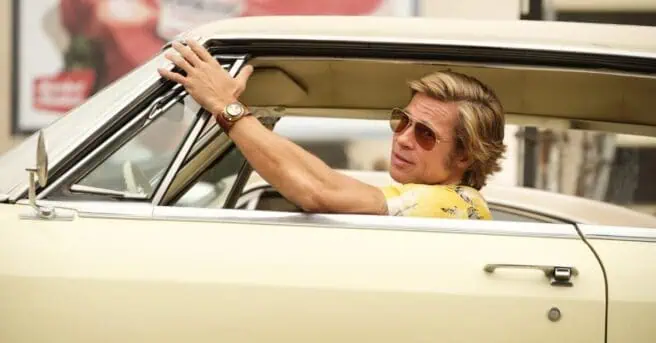
The documentary is lovingly made, with Mendez’s affection for Dern obvious throughout. While best known for playing psychopaths, everyone makes it a point to state that Dern himself is as far removed from his characters as you can get, with his daughter Laura in particular remembering him as a loving father. Many of Dern’s collaborators are interviewed, with the increasingly reclusive Jack Nicholson (with whom he co-starred in The King of Marvin Gardens) participating via a voice message that finds him sounding in good health. The stories are great, with Alexander Payne, Joe Dante and Quentin Tarantino all raving about his performances and his tendency to do “Dernsies,” which are unscripted, improvised moments (we did a story yesterday about how one Dernsie took his Once Upon a Time in Hollywood co-star Brad Pitt aback).
Tarantino in particular reveres Dern’s performances, but makes it a point to acknowledge that some of Dern’s best-ever work has been totally lost to posterity, as he was a frequent villain-of-the-week on TV westerns, where he often delivered knockout performances. Walter Hill (his director from The Driver), in particular, raves about an episode of Gunsmoke that starred Dern and his contemporary Warren Oates as rivals, saying it’s like a New Hollywood-quality western that just happened to have been made for TV a decade earlier.
What’s interesting is how Dern digs into his past, revealing that he’s actually from an aristocratic, blue-blood family, and that his role in The Great Gatsby, where he played the “old money” Tom Buchanan, was not the stretch people thought it was — although he always tried to distance himself from that world, and he was cut off financially early on. He also gives fascinating insight into one of his best roles, as Jane Fonda’s PTSD-afflicted soldier husband in Hal Ashby’s Coming Home, admitting that the fact he himself used a loophole to get out of the draft left him feeling a sense of guilt and shame that he worked into the role.
At the same time, Dern’s sense of humor, which is on full display in the interviews, is given some much-needed focus, with Joe Dante saying Dern’s improvisations led to some of his funniest moments in The Burbs. We also learn the secret to Dern’s longevity, which is his lifelong commitment to running and avoidance of alcohol and smoking (although he admits he lost a decade of his life to a crippling Vicodin addiction thanks to an on-set injury).
Dernsie: The Amazing Life of Bruce Dern is a must-watch for lovers of Hollywood history, and even casual fans might find themselves with a long list of movies to check out, including underrated gems like Silent Running or the deeply strange Tattoo. As far as Hollywood documentaries go, this is one of the best in recent memory.














The comment section exists to allow readers to discuss the article constructively and respectfully, focused on the topic at hand.
What’s Not Allowed