
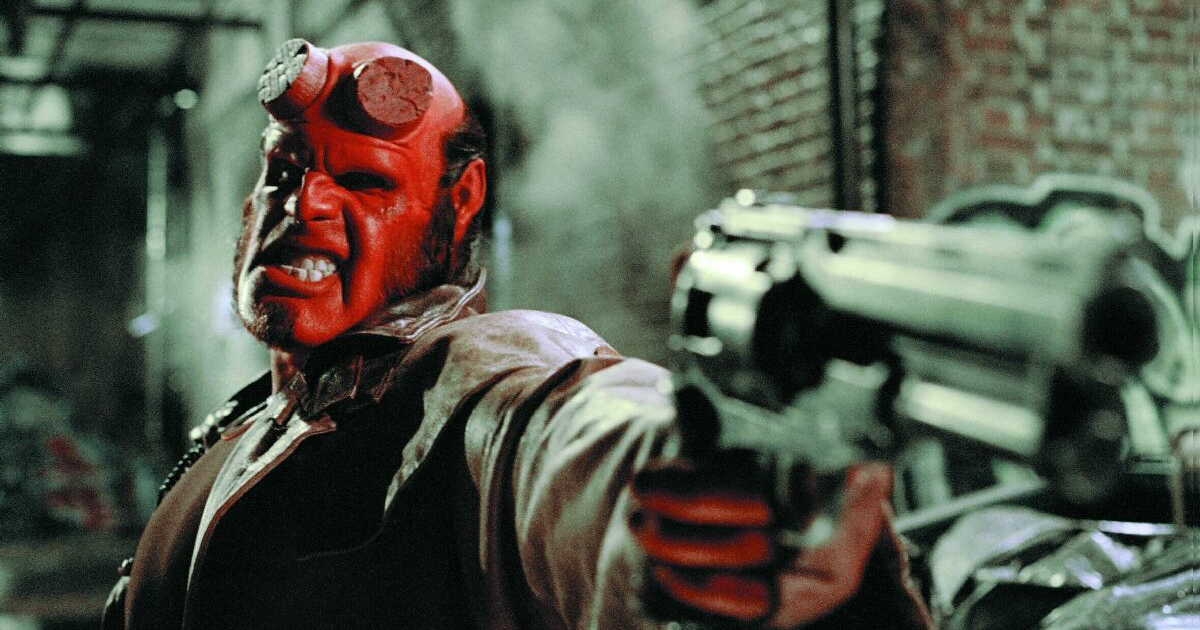

Hellboy is an anomaly. He was born in Hell, raised to serve the greater good on Earth, and in some ways is more human than… humans.
But what you may not know is just how meaningful the creation and continued publication of this big red spawn of Satan has been to comic books and comic book cinema.
From the pages of Dark Horse to the big screen, and many failed franchise attempts in between, Hellboy remains one of the greatest characters in comic book history. The character’s first cinematic outing is still one of the most enjoyable and beloved superhero movies out there, and the fight to get it made (and made the way it was) was the stuff of legend. And unlike the characters of Marvel and DC, the successes (and failures) of this character rest on the shoulders of just one man. Mike Mignola.
Today we’re exploring the complete story of Hellboy, from Mike Mignola’s earliest sketches, to the comic book that changed independent publishing, to the failed movie attempts that nearly killed the character’s chances of reaching Hollywood, and finally to the Guillermo del Toro films that introduced Hellboy to millions of viewers around the world. And spoiler alert, it was one HELL of a journey. Let’s get into it.
The Creation of Hellboy
Years before the first appearance of Hellboy, his eventual creator, Mike Mignola, was already breaking into comics with a reputation for being talented beyond his years. In 1982, Mignola was working at Marvel Comics and making his living by drawing Hulk and even doing some early work on Rocket Raccoon. He was respected for being unique and ignoring what was popular in comics at the time. Instead of rendering characters with subtle thin lines and excessive detail, he made oblong shapes and shrouded them in black shadows, which created a cinematic and rich visual style. Where most artists focused on anatomy and muscle definition for their heroes, Mignola was more interested in what was hiding in the shadows. And in the ’80s, this became his trademark.
The idea for Hellboy reportedly emerged in the early 1990s when Mignola sketched a demon character for a convention promotional image. The drawing featured a large red demon carrying a belt full of skulls. The character had a simple label underneath…
“Hell Boy.”
After drawing it up, Mignola would find himself constantly thinking about the sketch and mentally making notes on who the character was. Mignola is famously obsessed with horror, specifically Victorian-era folklore and monster stories. He would spend hours at a time thinking about a comic book world where all the gothic creepy-crawlers and mysterious ghouls existed in the same place and time.
Instead of creating another superhero, Mignola envisioned the hero of his world as a paranormal investigator who traveled the world battling monsters, ghosts, witches, vampires, and ancient gods. The twist was that the hero himself was a demon. Being that Mignola was already in the industry, it wouldn’t take long for this concept to find its way into print. In 1993, Dime Press published a book that featured a promotional image of Hellboy tucked away inside the back pages. No information about the character was given, but readers would notice the character. Later that same year, San Diego Comic-Con Comics issue #2 was released at the event. In that issue was a 4-page mini-story that introduced readers to the character with a proper panel-to-panel story.
Seed of Destruction
And by 1994, Hellboy would go from an underground indie character in other comics to being the star of the show in his very own dedicated series when Dark Horse Comics came to Mignola with an offer. They wanted to publish a series called Hellboy: Seed of Destruction and would give Mignola full creative control. He’d retain his rights to the character and lore, and he’d be able to get paid to draw monsters all day while writing the stories his way… which, by the way, included having scripting assistance from the legendary John Byrne. This was a dream come true for comic artists in those days. Other than Image Comics, Dark Horse was the only other credible independent publisher in those days. Mignola signed the deal and readers loved the comics.
Hellboy: Seed of Destruction was a smash hit. In the span of just 2 years, Mignola went from being a freelance artist at the Big 2 publishers to being one of the most respected breakout creators in the industry. All he ever wanted to do was draw monsters and make a living with his imagination, and he was overwhelmed by the success. And then… he did something risky.
Instead of immediately resuming with a new series of Hellboy books, Mignola did a bunch of spinoff and miscellaneous one-shots to flesh out the world Hellboy lives in, rather than strictly focusing on the character himself. But that didn’t matter. Readers were eating it up as Mignola and Byrne dominated the indie comics game. Hellboy’s comic book popularity would continue to grow, attracting readers more and more as the comics came out. And when something is making waves in one industry, it doesn’t take long for other industries to start capitalizing on it.
Hollywood Comes Calling
Hollywood got word of this indie comic phenomenon, and talks of adapting it to film began as early as the late ’90s. Producers began gauging studio interest, letters and meeting requests began showing up at Mignola’s office, and all the while the fans were clamoring for more Hellboy. But there was a problem…
In the ’90s, comic book movies weren’t seen as gigantic blockbuster events that raked in stupid amounts of money. They were risky, niche, and usually pretty bad, with the only comic book movies at the time being things like Superman in the ’70s and ’80s, Howard the Duck, Dolph Lundgren’s Punisher, and Tim Burton’s Batman movies. Simply put, this was unknown territory in terms of predicting its success. Hellboy was popular, but he wasn’t Batman. He wasn’t Superman or Spider-Man or the X-Men; he was the strange demonic Victorian hero who investigates monsters. And for some reason… studios found that “too hard to market.”
This makes sense, as looking at the source material leaves a lot of questions on the table when adapting it to film. The character looked unusual, the mythology was dense, the tone blended horror, fantasy, comedy, and action, and the makeup and VFX alone would likely cost a fortune. This was NOT an easy sell. And while this is all going on, one die-hard Hellboy fan was making his own waves in the movie industry… mister Guillermo del Toro.
Guillermo del Toro Enters the Picture
Long before directing the film, Guillermo del Toro fell in love with Mignola’s comics. And this wasn’t surprising at all. I mean, del Toro’s creative interests overlapped perfectly with Mignola’s. Both creators were obsessed with monsters, they both loved gothic folklore, they both embraced shadowy, haunting imagery, and most importantly, both men viewed monsters as tragic, sympathetic figures rather than simple villains. When del Toro read Hellboy, he immediately recognized something special. He began pursuing the rights and advocating for a film adaptation. Of course… the challenge was convincing studios that audiences would actually watch it.
So, del Toro gets in touch with Mignola and starts expressing his immense interest in the property. His good friend Ron Perlman was also interested and seemed to relate to Hellboy in a way which made him feel protective of the character. And obviously, looking at Ron Perlman, you can clearly see that he was getting involved because he was born to play the character. Del Toro would pitch his ideas to Mignola and just about every studio in town between movies for years, while other indie characters like Todd McFarlane’s Spawn would see massive success with its HBO animated series and then flop hard with the theatrical film. In some ways, the failure of Spawn in live action only lowered del Toro’s chances of convincing a studio to greenlight his Hellboy movie. But then the new millennium came.
Bryan Singer’s X-Men, Sam Raimi’s Spider-Man, del Toro’s Blade II, and the soon-to-be Nolan Batman trilogy were proving to be financially viable movies in Hollywood. The age of black leather and dark heroism was upon us, and that gave Hellboy some traction. At least enough to attract Lionsgate, who greenlit Hellboy in 2005 for a theatrical release in 2007. But there was another problem… as is the case with so many adaptations in Hollywood, the studio had their own ideas about how to adapt the comic. They wanted a tried-and-true leading man for the titular character. Someone with star power who could get this thing off the ground and bring in audiences. The problem was that del Toro had spent so much time developing ideas with Ron Perlman that he wrote the script with his specific sensibilities in mind, even going as far as writing in his contract that he wouldn’t make the movie unless Perlman was cast as Hellboy. This wasn’t ideal for studios, and it caused a lot of back-and-forth negotiations before del Toro was actually ready to walk away. Only then did Lionsgate come to their senses and offer Perlman the role.
Next, Lionsgate wanted something commercially appealing like Spider-Man. Again, this makes sense because those movies were making huge money at the box office. But del Toro wasn’t interested in dumbing down the lore or watering down the character. He wanted to make HIS Hellboy movie, not A Hellboy movie. Another thing Mignola respected about the filmmaker.
Del Toro got his way, though, and he delivered what many fans (including myself) consider to be the definitive film version of the character.
Hellboy Hits the Big Screen
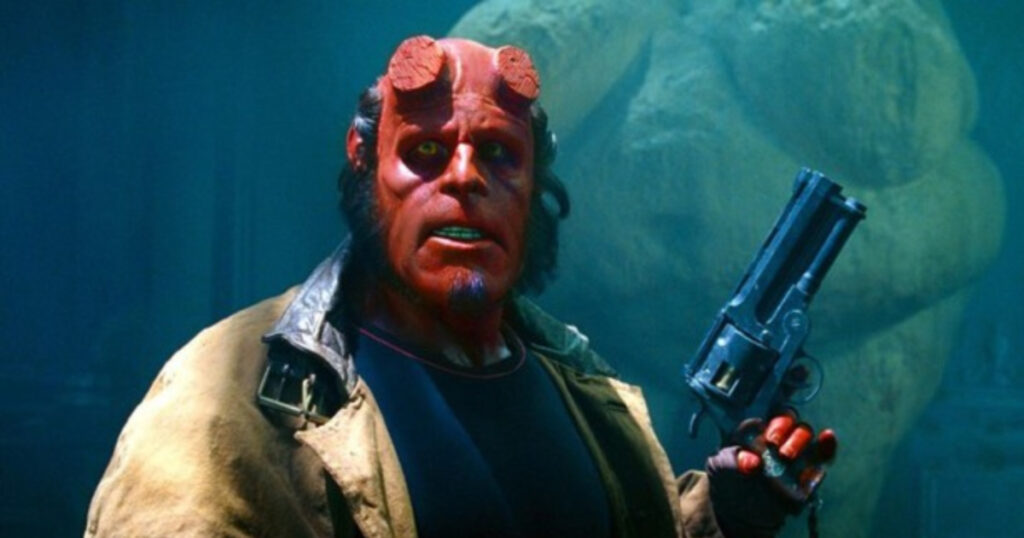
In the film, which borrows heavily from Seed of Destruction, we open in 1944 when the villain, Grigori Rasputin, and his group of Nazi soldiers build an interdimensional portal to Hell in hopes of releasing an army of demons to recruit them to the war. Thanks to a scientist called “Broom” and his team of patriotic mercenaries, they stop the Nazis before the ritual is complete. With their interference, one soul is able to escape. A tiny red creature with a giant stone fist, a tail, and a set of horns. While the creature is clearly a demon, its behavior elicits sympathy from Broom and his squad, and they adopt the baby demon with intentions to raise him as a member of their task force, but also as a son to Broom. He lovingly calls this adorable little hellion Hellboy.
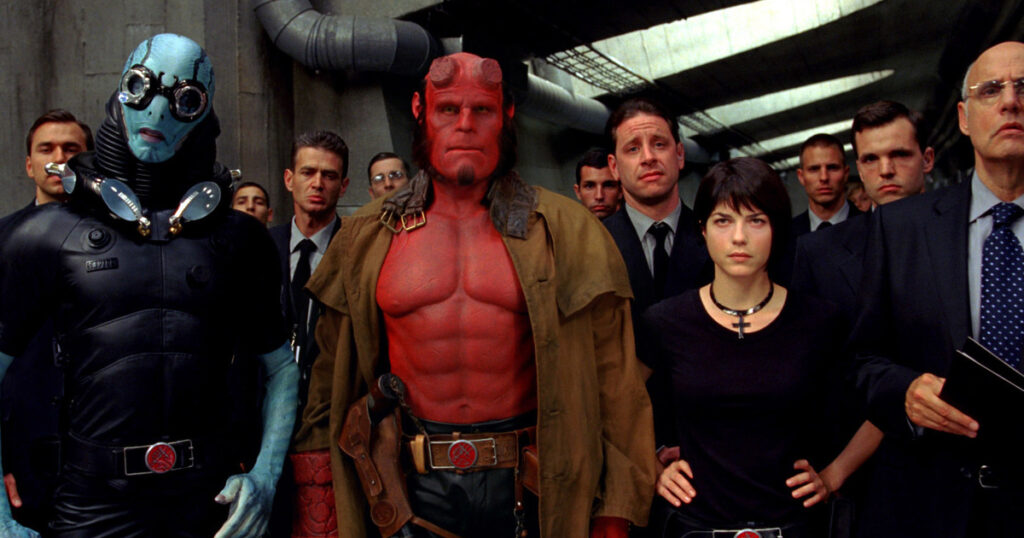
Years later, the task force has evolved into a government organization called BPRD (Bureau for Paranormal Research and Defense), and Hellboy is their most trusted (and reckless) agent. Joining him are his new human handler, Officer John (that schmuck—and played by Rupert Evans), Abe Sapien, the human fishboy (Doug Jones), and the apple of Hellboy’s eye, Liz Sherman (Selma Blair).
Together the crew must battle demons, monsters, and all forms of evil in their ultimate goal to stop Rasputin once and for all. And this movie kicks so much butt. It didn’t feel like your run-of-the-mill superhero movie. Instead of diluting it for mass consumption, del Toro fully leaned into Mignola’s visual style and created a living comic book. But not JUST a living comic book, a living MIKE MIGNOLA comic book.
Bringing Mignola’s World to Life
Many of Mignola’s visual ideas were translated directly to the screen. Del Toro wasn’t interested in making Hellboy look realistic. He wanted the movie to feel like a dark fairy tale. Something that the director has made his trademark in the years since. And the practical makeup effects became one of the film’s greatest strengths. If this movie had been made by a mega studio like Disney or WB, this character would be CGI and would probably just look like the red Hulk with stumps for horns, but not here. Ron Perlman disappeared beneath hours of prosthetic work, yet his performance remained warm, funny, and deeply human. This character wasn’t beyond taking a beating, cracking a joke, or shamelessly failing to keep a low profile while stalking Liz on her date with John. His personality was developed with care. Audiences connected with the character because Perlman captured the central contradiction at Hellboy’s core. He looked like a monster, but he behaved like a regular blue-collar guy. This demon was (dare I say) charming.
Much of this distinctive look comes from del Toro’s lifelong fascination with monsters. Unlike many superhero films of the era, where monsters were typically portrayed as villains to be defeated, Hellboy treats its creatures as characters with personality and emotion. Practical makeup, elaborate prosthetics, animatronics, and detailed costumes give the film’s creatures a tangible physical presence that computer-generated imagery simply couldn’t replicate at the time. Abe Sapien is a perfect example. Nearly every detail of the character, from the translucent fins to the expressive eyes, was achieved through practical craftsmanship, making him feel like a real being sharing the screen with the actors rather than a digital creation.
The Production Design
The film’s production design is equally important. The headquarters of the Bureau for Paranormal Research and Defense isn’t a futuristic high-tech base like the X-Mansion or the Batcave. Instead, it’s an aging underground labyrinth filled with pipes, rusted machinery, ancient stonework, and dim industrial lighting. It feels less like a superhero headquarters and more like an abandoned castle hidden beneath modern civilization. This combination of gothic architecture and industrial machinery creates a visual identity that perfectly reflects Hellboy himself, a supernatural creature living in the modern world.
Color also plays a major role in distinguishing the film. Many superhero movies of the early 2000s either leaned into bright comic-book colors or adopted the desaturated blue-and-gray palettes that would become popular throughout the decade. Hellboy instead embraces rich earth tones, warm ambers, deep reds, and muted greens. Firelight, candlelight, and golden practical lighting dominate many scenes, giving the movie a warm, storybook atmosphere. Hellboy’s bright red skin becomes an intentional focal point against these darker environments, ensuring the character always commands attention without relying on exaggerated digital enhancement.
The film’s costume also does the movie a lot of favors. Hellboy doesn’t wear a sleek superhero costume or armored suit made of CG. His outfit is remarkably ordinary, actually, with a worn leather trench coat, cargo pants, combat boots, and his oversized stone Right Hand of Doom, which looks so good in this movie. The clothing looks used rather than pristine, reinforcing the idea that Hellboy is a working-class paranormal investigator rather than a glamorous superhero. Every scratch, stain, and wrinkle contributes to the lived-in realism that defines the film’s visual style.
Action and Atmosphere
Even the action sequences prioritize atmosphere over spectacle. Rather than relying on rapid editing and excessive CGI destruction, del Toro stages many confrontations inside elaborate practical environments such as nasty abandoned subway tunnels, crumbling mausoleums, and shadow-filled cathedrals. These locations become characters in their own right, enhancing the sense of mystery and history surrounding the story. The monsters don’t just randomly appear in generic city streets; they emerge from places steeped in myth and forgotten history.
Why Hellboy Works
But what this singular film really accomplished was understanding the source material. Many comic characters become trapped by continuity. Their stories grow increasingly complicated. Hellboy avoided that problem. At its core, the premise remains incredibly simple—a demon chooses to be a good person. Everything else builds from that idea. The stories can be funny, they can be tragic, they can even be horrifying.
But the emotional center never changes. Hellboy constantly faces expectations about who he should become. His greatest act of heroism is refusing to accept those expectations. That’s what made readers connect with the comics, and that’s what made audiences connect with the film.
A man obsessed with drawing monsters got a film adaptation from a man obsessed with filming monsters, and they delivered us a VERY GOOD movie about monsters. But also, a very good movie about choosing your own path and deciding your own identity.
The Legacy of Hellboy
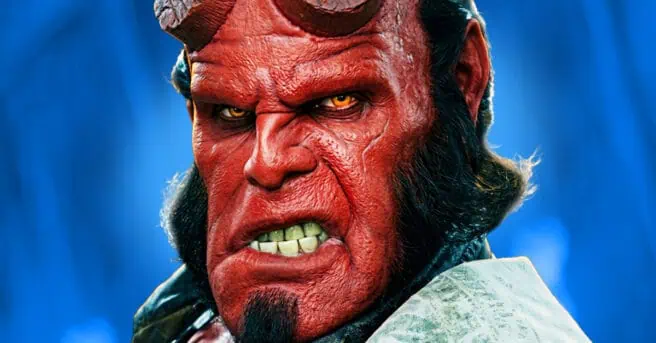
The del Toro films became cult classics and introduced millions of people to a character who might otherwise have remained a comic book secret. Even decades later, Hellboy continues to stand apart from other comic heroes. He’s not the strongest. He’s not the smartest. He’s not the most famous. But few characters feel as personal to their creator. Most comic worlds don’t feel as rich and distinctive, and few heroes have spent so much time proving that destiny doesn’t define who you are. For a demon summoned to bring about the end of the world, that’s a pretty remarkable legacy.
The movie received a sequel titled Hellboy: The Golden Army, which some say is better than the original and some say is not as good. If you’d like to hear me talk about that one, or the very disappointing David Harbour reboot, or the low, LOW-budget Hellboy: The Crooked Man installment, let me know in the comments because I’ve got plenty to say.























The comment section exists to allow readers to discuss the article constructively and respectfully, focused on the topic at hand.
What’s Not Allowed