


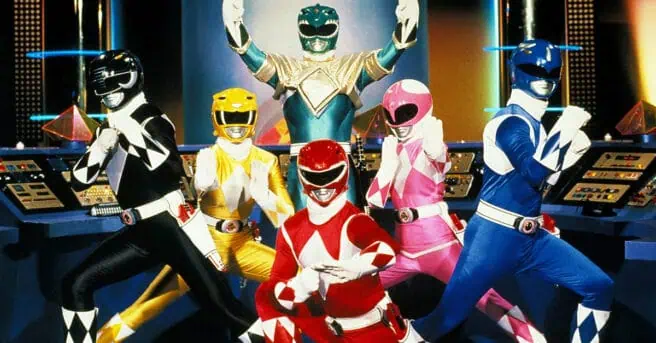
How did a simple kids morning show turn into an empire worth billions of dollars that had kids obsessed, parents helpless, and political pundits enraged? What was the magic fairy dust behind these products that has those same kids (now grown adults) still spending thousands of dollars on cheap plastic toys in thin cardboard boxes more than 30 years later? And how did Mighty Morphin Power Rangers become one of the pillars of maybe the greatest decade ever to be a kid?
Prepare to be morphed into a Mega Nostalgia-Zord as we take a toy-by-toy trip down memory lane and remember the Power Rangers toys that had us playing alone in our basements or beating each other up in our backyards with their accessories. Specifically zeroing in on the original glory days of 1993-1995 in Mighty Morphin Power Rangers lore, including the 1995 film and their modern re-releases, this is a toy-by-toy look at the Power Rangers craze that took over the ’90s.
The Show
Mighty Morphin Power Rangers was a phenomenon of the ’90s built brick by brick to be a toy-selling machine. If New Line Cinema is the house that Freddy Krueger built, then Power Rangers toys are the house that built Saban Entertainment.
Saban Entertainment and Fox Kids smartly adapted the Japanese series Super Sentai by using already filmed karate and action footage from Japan. They would then shoot scenes in America featuring a group of cool, good-natured teenagers outside of the costumes while dubbing the action scenes later, saving massive amounts of money by not filming the fights themselves.
Even better? Most of the toys were already designed from the Japanese series they were adapting. For the most part, they simply needed new paint, stickers, packaging, and slightly softened weapon edges for safety. It was a home run. An easy home run. A juiced-up 1998 Mark McGwire swinging the biggest bat you’ve ever seen at an underhanded meatball pitch in a Little League-sized stadium kind of home run.
The newly redesigned toys were introduced directly through the show and immediately placed onto store shelves for kids everywhere. It was the perfect rollout. Except there wasn’t enough supply to meet the demand.
From its debut on August 28, 1993, Mighty Morphin Power Rangers shot to number one almost instantly. The entire thing was basically one giant toy commercial for kids. Bandai reportedly received more than 450 calls a day from stressed-out parents upset over empty toy shelves. The company made nearly a billion dollars in a single year. It was all we talked about in school. You started your day with the Rangers. You went to school and talked about Rangers. You colored Power Rangers coloring books. You went home and played Rangers in the streets with your friends. You did karate moves on the trampoline. It was awesome.
As kids kicked, flipped, and karate chopped their way across neighborhoods everywhere, parents began to worry the show was too violent. Kids were imitating the martial arts moves at school and even wearing toy gloves that played sound effects and the theme song. The criticism escalated from concerned parents to organized groups and eventually to Congress itself as Power Rangers became one of the most visible targets in the broader 1990s debate over violence in children’s television. Sounds like somebody needed to morph into someone without a stick up their butt.
Still, the controversy only made the show even more famous. Kids watched more than ever before and bought more toys than ever before.

The Original Toys
The original Power Rangers figures released in Fall 1993 were bigger and boxier than later versions. Standing eight inches tall, they had a more doll-like appearance and even received later variants capable of performing karate kicks. The packaging was incredible. The triangular-shaped boxes featured loud, traffic-stopping colors and instantly stood out on toy shelves.
The first series featured the original five Rangers and retailed for around $7.49. As previously mentioned, many of these figures were direct reuses of Japanese molds from Kyōryū Sentai Zyuranger. The same approach applied to Megazords, weapons, and Morphers, which were largely adapted versions of existing Japanese toys.
But who cared? They rode the damn tiger. Literally.
Also released in 1993 was the Evil Space Aliens collection featuring Rita Repulsa’s henchmen like Goldar, King Sphinx, and the Putty Patrol. And can we take a moment to acknowledge how genuinely terrifying the Putty Patrol actually looked? Scarier than anything in the latest Conjuring movies.
The Megazord Craze
Among all the toys released during the initial Power Rangers explosion, one stood above the rest both figuratively and literally: The original Megazord.
This massive boxed beauty featured five Dinozords that combined into a towering sword-wielding robot over ten inches tall. It was one of the most impressive toys imaginable for a kid in 1993 and still looks awesome today. For parents, however, it became Public Enemy Number One for their wallets. And yet, somehow, it only retailed for around $29.99 MSRP. You can barely get dinner at Dairy Queen for that price now.
1993 also introduced Battle Bikes, roleplay accessories, and countless smaller toy variations, all of which sold at an absurd pace. Bandai and Saban quickly realized they could dictate the toy market themselves simply by introducing new storylines, which also meant introducing new toys. Capitalism had never tasted so sweet.
The Green Ranger Changed Everything
Then came Season One, Episode 17: “Green With Evil.” Jason David Frank debuted as Tommy Oliver, and the entire franchise changed overnight. Tommy showed up cooler than everyone else, matched Jason in martial arts ability, and even started flirting with Kimberly. A lot of us genuinely felt betrayed on Jason’s behalf. Rita Repulsa brainwashed Tommy into becoming the evil Green Ranger, giving him the Dragon Coin and allowing him to infiltrate the Command Center, disable Alpha 5, and attack Zordon himself.
And naturally, he came with a whole new lineup of toys for kids to beg their parents for. The Green Ranger figure alone became iconic thanks to that incredible metallic green color scheme.
Then came the Dragon Dagger. Featuring electronic sounds and functioning as both a weapon and flute used to summon the Dragonzord, it instantly became one of the coolest toys of the era. To this day, if somebody pulls a flute out during a fight, you should probably run.
And then there was the Dragonzord itself, which, of course, could combine with the Megazord. Because obviously it could.

Lord Zedd, the White Ranger, and Auto-Morphin Figures
Season Two introduced Lord Zedd, a terrifying new villain created partially with toy sales in mind. Unlike many earlier figures adapted from Japan, Lord Zedd was largely an original Bandai America creation.
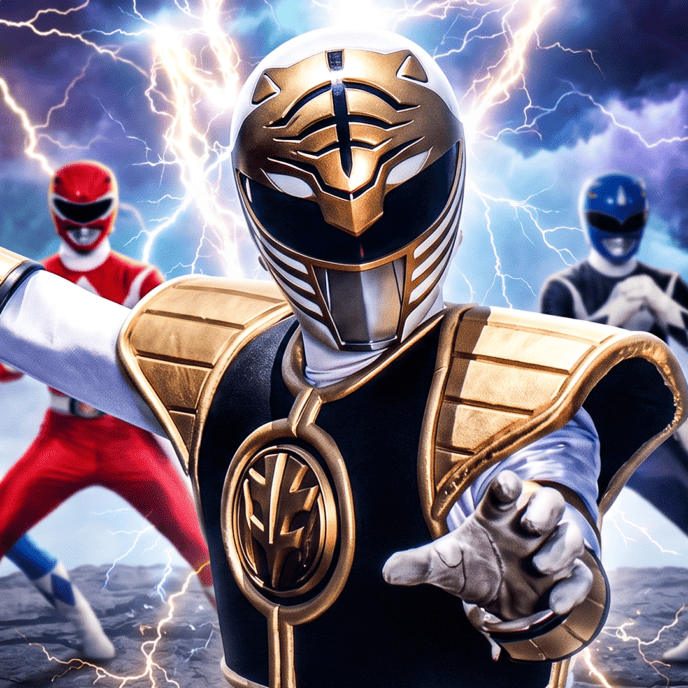
Then came Tommy’s return as the White Ranger. Kids absolutely lost their minds. The White Ranger brought a new figure, the White Tigerzord, and Saba the talking Tiger Saber featuring electronic sounds and extending blade action.
Meanwhile, Bandai continued innovating with the wildly popular Auto-Morphin Rangers. These smaller figures featured flipping heads that transformed from civilian faces into Ranger helmets with the push of a lever. The line expanded endlessly with Micro Machines, dolls, roleplay gear, Titanus, Thunderzords, and more merchandise than anyone could reasonably keep track of.
The Power Dome Playset
If someone owned the Power Dome Morphin Playset, you knew they were serious collectors. The massive set recreated the Rangers’ Command Center complete with Zordon’s floating head and Alpha 5 running around in panic mode. The included voice changer that transformed your voice into Zordon sounded terrible. And we absolutely loved it.
The toy itself was cheaply made even at the time, but none of that mattered when Zordon lit up inside your bedroom. The packaging alone practically hypnotized kids into wanting every accessory shown on the sides of the box.
Morphers, Weapons, and Roleplay Toys
The roleplay toys might have been the biggest drivers of all. The original Power Morphers included lights, sounds, and Power Coins, allowing kids to “become” Rangers themselves for around ten bucks. The Sound Effects Gloves played swooshes, clangs, and even the theme song while kids karate chopped each other across suburban America.
Then there was the Blade Blaster. Debuting early in Season One, the weapon could transform from dagger mode into blaster mode and included electronic lights and sounds. In true ’90s fashion, the Blade Blaster was often packaged with a Power Morpher and multiple coins for around $16.99. That same bundle today would probably require financing.
Bandai also released the Power Blaster, which combined all five Ranger weapons into one giant monstrosity. These toys may have made billions of dollars, but more importantly, they gave kids endless afternoons outside punching, flipping, yelling, and overacting in cul-de-sacs everywhere.

The 1995 Movie Toys
Between Seasons Two and Three, Mighty Morphin Power Rangers: The Movie finally hit theaters. Unlike the television show, the movie used zero recycled Super Sentai footage. Everything was created from scratch. The toys, however, still reused plenty of body molds and articulation styles. But the new paint jobs, branding, and chrome-heavy designs looked incredible.
The movie figures may honestly be the coolest Power Rangers toys ever made. Standing roughly 5.5 inches tall, the movie Rangers featured stunning chrome paint applications and sleek packaging designs dominated by whites, blues, and blacks.
The White Ranger figure looked absurdly cool. And yes, we fully understand how ridiculous that sounds.
The Ninjetti Problem
The movie also introduced Ninjetti versions of the Rangers. On paper, “ninja Power Rangers” sounds awesome. In execution? Your mileage may vary.
Fans expected fully chrome movie suits based on the toy marketing, but the actual film costumes were only lightly upgraded with shinier armor and chest emblems. Worse, the movie spent large portions of its runtime replacing those suits entirely with bizarre ninja costumes that looked like the Rangers went shopping at a desert flea market sponsored by Jared Leto.
Still, the movie delivered some fantastic toys, including the Ninja Megazord, Falconzord, and Ninja Megafalconzord.
Ivan Ooze and Movie Villains
The movie also introduced Ivan Ooze, one of the franchise’s most memorable one-off villains. And more importantly for toy companies: SLIME. Kids could buy Ivan Ooze figures, slime accessories, and ooze-themed toys like the Ooze Knuckle Extruder.
The film also introduced the Tengu Warriors, Hornitor, Scorpitron, and various other movie-exclusive creatures. Eventually, all of these toys blended together on shelves alongside the ongoing TV merchandise in one giant avalanche of Power Rangers branding.
The Endless Merchandise Explosion
The craze expanded far beyond action figures. By 1995, if you could stick a Power Rangers logo on something, it existed. Lunch boxes. Watches. Underwear. VHS tapes. Band-Aids. Communicators. Stopwatches. Everything became a Power Rangers product. Even the communicators themselves were recreated as toys, including versions released through McDonald’s Happy Meals.
It was impossible to escape. And nobody wanted to.

Modern Re-Releases and Nostalgia
The nostalgia never died. Bandai’s 2013 Legacy Collection brought back highly detailed recreations of classic figures, Megazords, Morphers, and accessories with premium packaging and collector-focused designs. Then came Hasbro’s Lightning Collection beginning in 2019, modernizing the figures with updated articulation, cleaner packaging, and full-scale helmets.
More recently, the Power Rangers Re-Ignition line has attempted to recreate many of the original toys at more affordable price points. Some work better than others. The designs are often bulkier, cheaper feeling, and less shiny than the originals… and apparently modern toy companies are terrified of reflective stickers for some reason.
Still, the fact these toys continue returning to store shelves decades later says everything you need to know about the lasting power of Mighty Morphin Power Rangers.
Why Original Power Rangers Toys Are Worth Thousands Today
The collector market for original Power Rangers toys has become massive. Sealed Megazords routinely sell for over $1,000 on eBay. Shogun Megazords approach $800. Metallic Ranger sets sell for hundreds. Sealed Power Dome playsets can cross the $800 mark. Even modern Legacy Collection items now command huge prices online.
Companies like Mezco continue producing premium collector items aimed directly at adults who grew up during the original craze. It makes perfect sense. The original Mighty Morphin Power Rangers era wasn’t just a toy line. It was a full-blown cultural event. These toys didn’t just sell products. They sold imagination. They sold playground status. They sold afternoons spent fighting imaginary monsters with your friends until the streetlights came on.
And decades later, people are still willing to pay top dollar to hold a little piece of that feeling again.









The comment section exists to allow readers to discuss the article constructively and respectfully, focused on the topic at hand.
What’s Not Allowed